

In the landscape of American contemporary art, few institutions have held as much cultural weight while remaining as fiercely independent as Aljira, a Center for Contemporary Art. Founded in the post-rebellion era of Newark, New Jersey, the nonprofit space served for 35 years as a vital sanctuary for artists whose work challenged the status quo, critiqued the mechanisms of racial capitalism, and pushed the boundaries of social engagement.
Now, eight years after its abrupt closure, the Newark Museum of Art is set to honor this storied legacy. Opening October 15, 2026, and running through June 30, 2027, the exhibition Dreamtime in Newark: Aljira and the Making of Global Contemporary Art serves as both a retrospective and a profound reclamation of art history. Featuring 66 works by 43 influential artists, the exhibition traces the indelible mark Aljira left on the global art market and the careers of luminaries like Dawoud Bey, Firelei Báez, and Jeffrey Gibson.
A Chronology of Resistance and Curation
The story of Aljira is inextricably linked to the history of Newark itself. Following the 1967 Newark Rebellion—a six-day period of civil unrest sparked by systemic police brutality—the city became a crucible for radical social change and the Black Arts Movement.
The Founding Years (1983–1990)
In 1983, Guyanese artists Victor Davson and Carl E. Hazlewood established Aljira, drawing its name from an Australian Aboriginal term for "dreamtime." The timing was significant: the city was beginning to see the emergence of alternative art spaces, such as the pioneering Aard Studio Gallery (founded in 1972). Aljira, however, distinguished itself through a rigid, uncompromising intellectual mission.
By 1987, the organization was already making waves with the seminal exhibition With and Without Acclaim: International Black and Hispanic Artists. At a time when mainstream institutions were largely indifferent to the contributions of minority artists, Aljira provided a platform that was as much a political statement as it was an aesthetic one.
Expansion and Global Reach (1990s–2000s)
As the gallery moved into a smaller, more intimate space near the Newark Museum of Art, its focus sharpened on the urban environment. Davson and Hazlewood began to curate exhibitions that dissected the encroaching gentrification of downtown Newark, framing their programming around the concept of "racial capitalism."

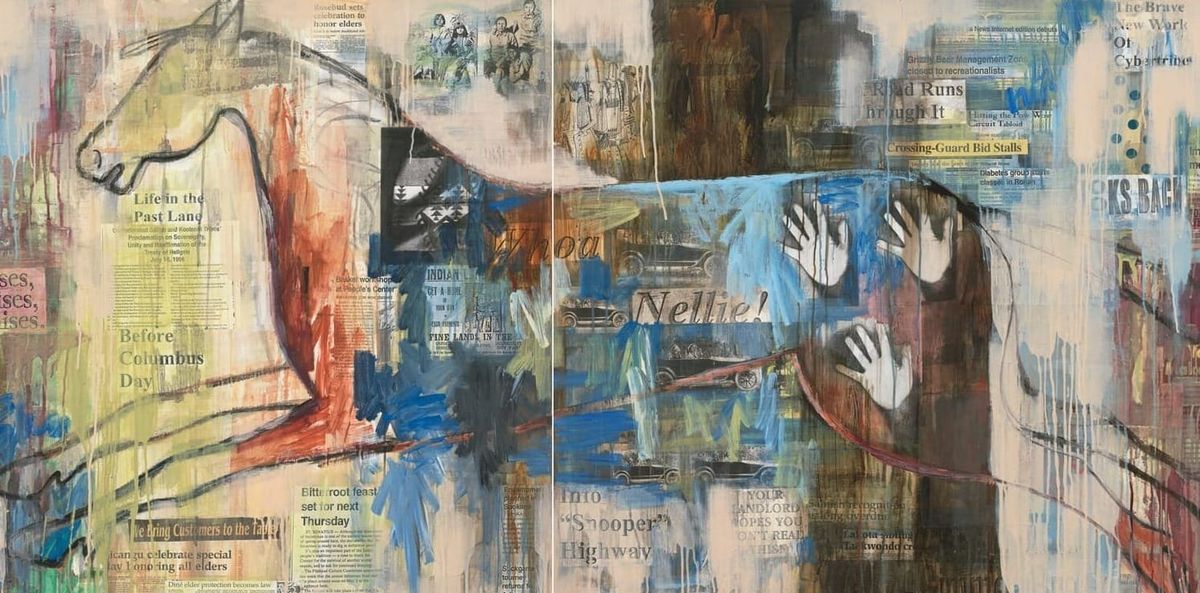
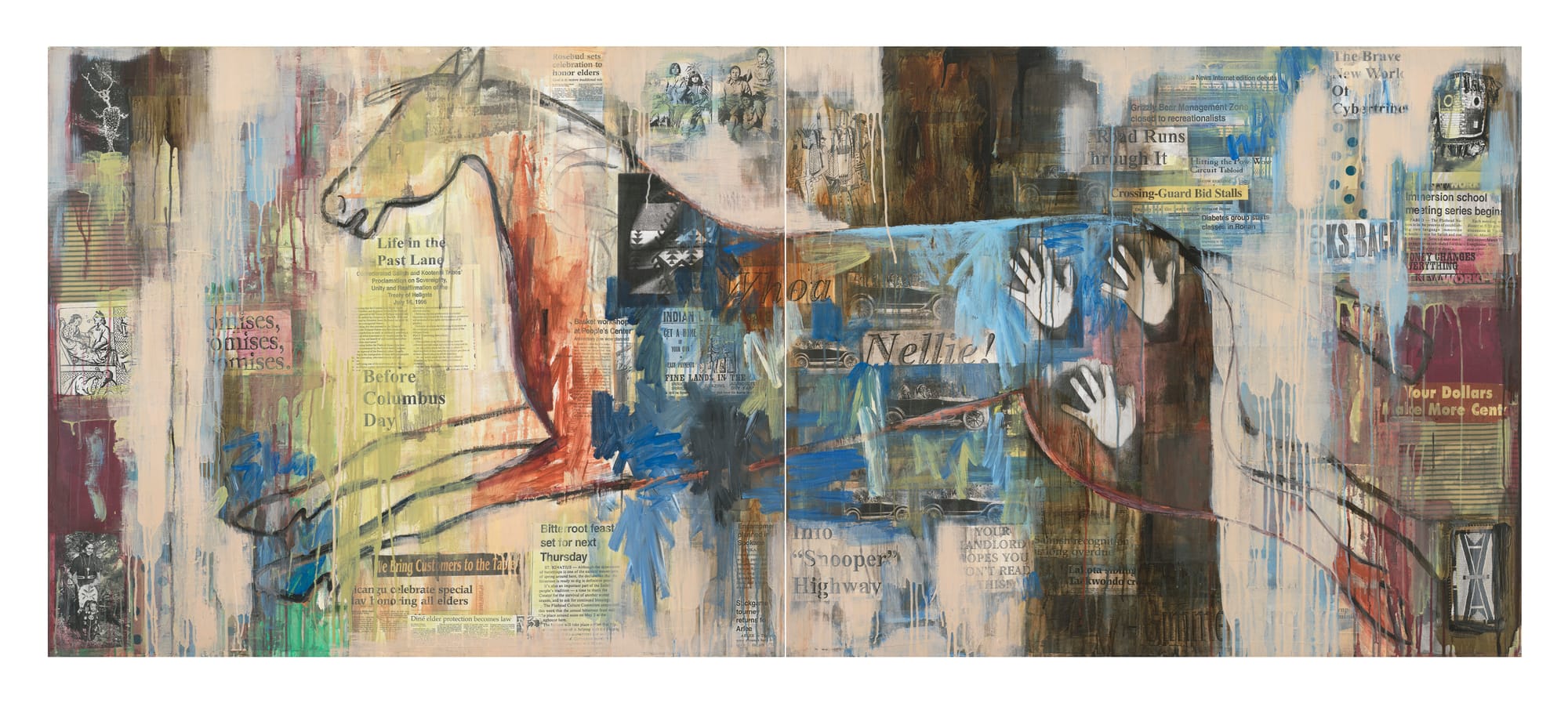
Their ambition, however, was never purely local. In 1994, the duo brought their curatorial vision to an international stage with Current Identities: Recent Painting in the United States, presented at the International Biennial of Painting in Cuenca, Ecuador. By championing figures like Jaune Quick-to-See Smith and Emilio Cruz, Aljira proved that a Newark-based nonprofit could dictate the terms of global contemporary discourse.
The Twilight and the Archive (2008–2018)
The 2008 financial crisis proved a turning point for many nonprofits, and Aljira was no exception. Despite its immense cultural capital, the organization struggled with mounting debt over the subsequent decade. In 2018, Aljira abruptly ceased operations. In the aftermath, the preservation of its history became a priority. Davson, alongside artist Cecily Cottingham, spearheaded an archive project, ensuring that the ephemeral nature of the gallery’s run did not result in the erasure of its contributions.
Supporting Data: The Impact of the Emerge Program
One of the most critical aspects of Aljira’s success was its commitment to mentorship. The "Emerge" program, a professional development initiative for emerging artists, served as a launchpad for talents who would go on to reshape the international art world.
Artist Jeffrey Gibson, reflecting on his participation in the program in the early 2000s, recalled the vibrancy of the community that Aljira fostered. "I remember meeting a diverse group of artists from Brooklyn, Manhattan, and Queens who were all traveling to participate in the program," Gibson noted in a statement to Hyperallergic. "I know that starting it in Newark and finding a brick-and-mortar space was not easy, but I think Aljira has had a huge impact on the greater New York area art scene."
The upcoming exhibition at the Newark Museum of Art will highlight the breadth of this impact by presenting the work of artists who were part of the Aljira ecosystem, including:
- Amiri Baraka: A titan of the Black Arts Movement.
- Emilio Cruz: A master of visceral, emotionally charged painting.
- Frank Bowling: An internationally celebrated abstract painter.
- Hew Locke: Known for his intricate explorations of colonial history and power.
Official Perspectives: A Curatorial Mandate
The guest curator for the retrospective, Alliyah Allen, provides crucial context for the exhibition in the forthcoming catalog. She writes that the organization’s early exhibitions were "strategic in their resolve to call out inequities and institutional deficiencies."
For Allen, Aljira was not merely an exhibition space; it was an incubator for institutional critique. By platforming underrepresented voices at a time when major museums were largely exclusionary, Davson and Hazlewood effectively forced the art world to acknowledge that "global contemporary art" was an incomplete narrative without the inclusion of minority and marginalized perspectives.
Implications for the Future of Art Institutions
The closure of Aljira in 2018 was a sobering reminder of the precarity faced by even the most vital cultural institutions. However, Dreamtime in Newark suggests a shift in how museums view their role in regional history. By dedicating 4,500 square feet to the legacy of a defunct nonprofit, the Newark Museum of Art is validating the importance of grassroots, artist-led spaces in the broader canon of art history.
The Gentrification Paradox
The exhibition also invites a necessary conversation about the very neighborhood Aljira once fought to protect. As Newark continues to undergo rapid redevelopment, the issues of displacement and racial capitalism—which Aljira critiqued decades ago—remain more relevant than ever. The exhibition acts as a bridge between the historical struggles of the 1980s and the urban anxieties of the 2020s.
Institutional Memory and Documentation
Finally, the transition from a physical gallery space to an archive project and, eventually, a museum retrospective, highlights the evolution of institutional memory. The efforts of Davson and Cottingham to preserve the organization’s records have provided a roadmap for future generations of curators. It underscores a fundamental lesson: the value of an arts organization is not measured by the length of its lease, but by the intellectual lineage it leaves behind.
As visitors walk through the halls of the Newark Museum of Art this October, they will not just be looking at paintings, sculptures, and mixed-media installations. They will be witnessing the endurance of a "dreamtime" that, despite the closure of a physical building, continues to influence the trajectory of contemporary art. Aljira’s legacy serves as a testament to the fact that when artists are given the agency to define their own spaces, they create something that no financial crisis or institutional apathy can truly erase.
 Basiran
 Muslim
 Evan Lee Salim
