

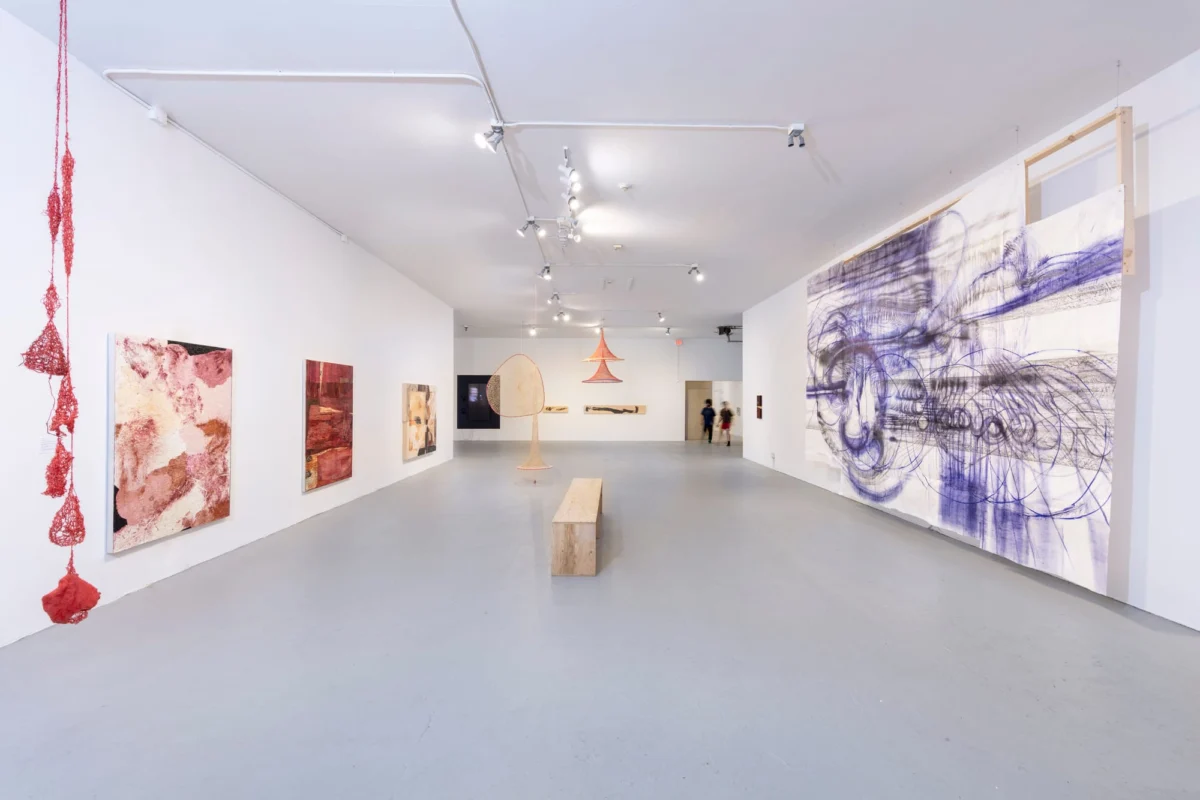
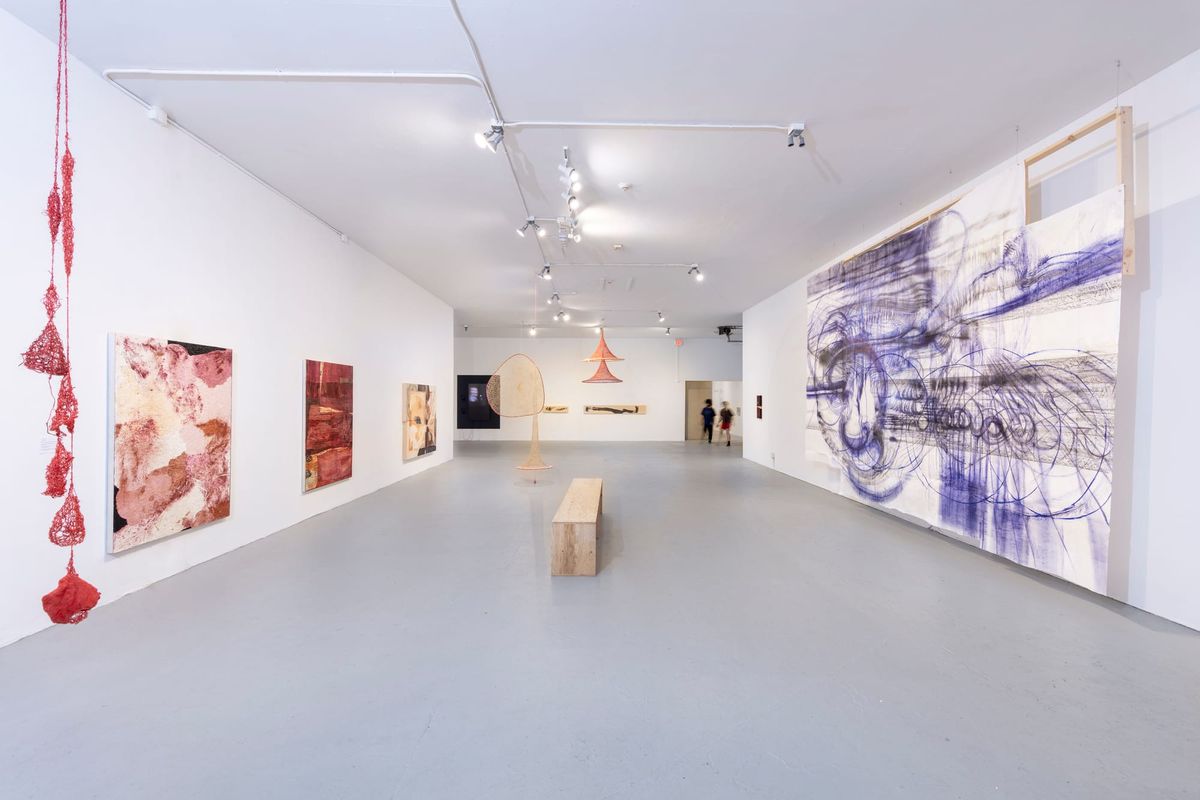
The Milton Avery Graduate School of the Arts at Bard College (Bard MFA) is poised to celebrate a significant chapter in its storied history. As the institution commemorates its 45th anniversary, it has unveiled plans for Reassembly, the highly anticipated thesis exhibition featuring the graduating Class of 2027. Taking place from July 11 through July 19, 2026, this multi-site presentation will span the historic Bard College campus in Annandale-on-Hudson and the newly acquired Massena Exhibition Center in Barrytown, New York.
More than a mere academic requirement, Reassembly represents the culmination of a rigorous, low-residency journey that challenges the boundaries of contemporary artistic practice. By positioning the work of 28 diverse practitioners within the landscape of the Hudson Valley, the exhibition invites the public to engage with the next generation of voices in moving image, music/sound, painting, photography, sculpture, and writing.
The Chronology of the Exhibition
The events surrounding Reassembly are designed to bridge the gap between performance-based inquiry and static installation. The programming kicks off on the evening of Friday, July 10, at 7:00 PM, with a series of thesis performances held at Olin Hall on the main Bard College campus. This opening night is intended to set the tone for the exhibition, emphasizing the temporal and ephemeral nature of the artists’ research.
The following day, Saturday, July 11, the focus shifts to the Massena Exhibition Center in Barrytown for the official opening reception, running from 1:00 PM to 4:00 PM. The Massena Campus, a recent addition to Bard’s intellectual and physical footprint, serves as the primary anchor for the exhibition. Visitors will have access to the galleries through July 19, providing a nine-day window to explore the sprawling, multidisciplinary works.
A Site of "Reassembly": Curatorial Vision
The exhibition is guided by the curatorial framework of Mike Curran, an arts writer and alumnus of the Center for Curatorial Studies at Bard College (CCS Bard). Curran notes that the title, Reassembly, is both a literal description of the students’ return to campus and a thematic provocation.
"The exhibition demonstrates a wide breadth of contemporary approaches to art-making," Curran explains. "But among their common interests are a remaking of seemingly stable artistic conventions, a reimagining of social structures, and a remixing of inherited grammars. Within this framework, the Massena Campus itself has become a site of reassembly."
Curran’s perspective suggests that the exhibition is not merely a collection of finished objects, but a dialogue about the current state of the art world. "In a context where political, social, and ecological crises accelerate at a rapid speed, the demands placed on art to act as an antidote have become increasingly incoherent," he writes. "Resisting these conditions, the works invite you to move through the exhibition with intention and invest in their provocations."
The Class of 2027: A Multidisciplinary Cohort
The 28 artists featured in Reassembly represent a cross-section of global contemporary practice. The cohort is defined by its refusal to adhere to traditional disciplinary silos, a hallmark of the Bard MFA model. The graduating class includes:
- Ihab S Balla, Nico Cadena, Madeline Casteel, Cydne Jasmin Coleby, and Dominic Coles
- Michael Dikta, ruby aiyo gerber, Alexis Gideon, Brooke Holm, and Joselia Rebekah Hughes
- Maite Iribarren Vázquez, Maren Jensen, Kehan Lai, Audrey Landgren, and Weihui Lu
- Shea Lynch, marlow magdalene, Leila Mesdaghi, Saiya Miller, and Ankita Mishra
- Sean Morel, Dainesha Nugent-Palache, Marina Papazyan, Río Sofia, and Helena Tan
- Robbie Wing, JinJin Xu, and Syd Yocom
These individuals arrive at their thesis year after a demanding curriculum that involves three 8-week summer sessions on the Bard campus, punctuated by extended periods of independent, self-directed research.
Institutional Context: 45 Years of Innovation
To understand the significance of Reassembly, one must look at the history of the Milton Avery Graduate School of the Arts. Founded in 1981, it was the first program of its kind to pioneer the low-residency MFA model. This structure was designed to provide a "community of artists" for students who may already be established in their careers or who require the flexibility to maintain a studio practice while engaging in high-level intellectual discourse.
The school brings together faculty and students across six core disciplines: Moving Image, Music/Sound, Painting, Photography, Sculpture, and Writing. By forcing a collision between these fields—often through shared critique sessions and interdisciplinary workshops—the program has fostered an environment where the "remixing of grammars," as Curran describes it, is the baseline rather than the exception.
The 45th anniversary of the school provides a backdrop of institutional stability that stands in stark contrast to the experimental, often chaotic, nature of the works on display. As the school enters its fifth decade, the acquisition of the Massena Exhibition Center highlights a commitment to growth and a physical manifestation of the school’s expanding influence in the region.
Implications for Contemporary Art
The focus of the Reassembly exhibition on "inherited grammars" and "stable artistic conventions" points toward a broader trend in MFA thesis exhibitions. Increasingly, candidates are moving away from the "white cube" expectation of polished perfection and toward a more process-oriented transparency.
By framing the exhibition as a "reassembly," the curators and artists are acknowledging the fragmented nature of post-pandemic life and the exhaustion of traditional institutional narratives. The exhibition suggests that art is no longer tasked with "fixing" the world—an impossible burden given the rapid pace of global crisis—but rather with providing a space for "intentional movement" and "investment in provocation."
For critics and collectors, the exhibition offers a rare glimpse into the laboratory of the future. The work of the Class of 2027 serves as a litmus test for the issues that will occupy the galleries and cinemas of the next decade. From the intersection of digital media and social critique to the re-evaluation of material culture, these students are actively engaged in the project of constructing a new lexicon.
Logistical Details for Attendees
For those planning to attend, the split-site nature of the exhibition requires careful navigation. The Friday, July 10, performance event at Olin Hall (35 Henderson Cir Dr, Red Hook, NY) is essential for those interested in the temporal, body-based, and sound-focused works.
The main exhibition at the Massena Campus (30 Seminary Drive, Barrytown, NY), beginning on July 11, will serve as the hub for the visual arts and installation-based projects. The opening reception, held on Saturday, July 11, from 1:00 PM to 4:00 PM, will offer the best opportunity to engage directly with the artists and the curatorial team.
As the Bard MFA Class of 2027 steps into the professional world, Reassembly serves as their formal introduction to the public. It is a testament to the endurance of the low-residency model and a bold statement on the necessity of art in a fractured age. Whether one is a seasoned curator, a fellow traveler in the arts, or a member of the local community, the exhibition promises to be a challenging, immersive, and necessary experience in the heart of the Hudson Valley.
For further details on the artists, the specific programming, and updates regarding the Massena campus accessibility, please visit the official program website at bard.edu/mfa.
 Muslim
 Evan Lee Salim
 Jia Lissa
