

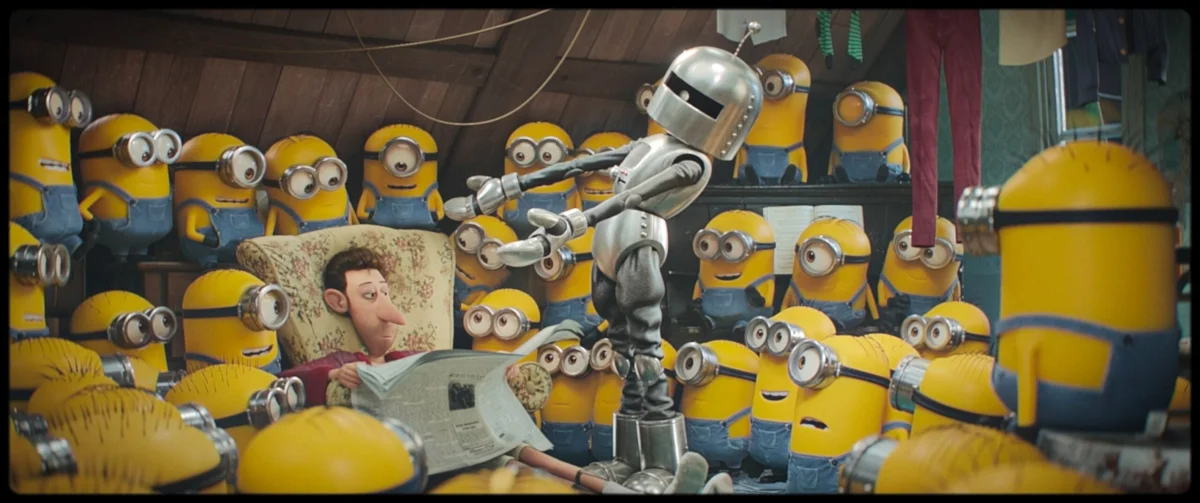
LOS ANGELES — In the high-stakes theater of the July 4th holiday weekend, a familiar yellow tide rose to the top of the domestic charts, but with significantly less force than industry analysts had predicted. Minions & Monsters, the latest installment from the juggernaut Illumination entertainment factory, secured the number one spot in America, yet the victory carries a bittersweet aftertaste for Universal Pictures.
Despite the festive backdrop of one of the most lucrative weekends in the cinematic calendar, the seventh film in the Despicable Me universe—and the third standalone Minions entry—stumbled to a franchise-low domestic opening. While the film’s global footprint remains sturdy, the domestic numbers suggest a potential cooling of a brand that has, for over a decade and a half, been considered "bulletproof."
Main Facts: A Victory Tempered by Diminishing Returns
The 5-day holiday weekend saw Minions & Monsters pull in approximately $62 million domestically. While a $60M+ opening would be a triumph for most original animated properties, for the Minions, it represents a sharp departure from the historical trend of "mega-openings."
To put the performance in perspective, the film was positioned as the primary anchor for a holiday weekend that usually serves as a cornerstone for annual theatrical revenue. However, the broader market failed to rally. Rentrak reported that this July 4th weekend was down a staggering 23 percent compared to the same period in 2025. Total domestic box office receipts for all films combined reached only $121.3 million, a figure that signals a cooling theatrical climate.
Key Financial Indicators:
- Domestic 5-Day Opening: $62 million (Franchise low).
- Domestic 3-Day Weekend: $36.4 million.
- Global Total (To Date): $160.5 million.
- Production Budget: $85 million.
- Critical Reception: 91% on Rotten Tomatoes; 69 on Metacritic; "A-" CinemaScore.
While the domestic numbers are underwhelming by franchise standards, the global outlook remains profitable. With a modest production budget of $85 million—a hallmark of Illumination’s efficient production model—the $160.5 million global haul already puts the film on the path to profitability. However, the prestige of the "billion-dollar franchise" is under scrutiny as domestic enthusiasm appears to be waning.
Chronology: Sixteen Years of Despicable Dominance
To understand why a $62 million opening is being viewed through a lens of concern, one must look at the meteoric rise of the franchise since its inception.
- The Genesis (2010): Despicable Me introduced the world to Gru and his yellow henchmen, becoming an overnight sensation and establishing Illumination as a rival to Pixar and DreamWorks.
- The Peak (2022): Following the pandemic, Minions: The Rise of Gru shattered expectations. It secured the second-biggest opening of the franchise and eventually became the highest domestic earner in the series, totaling $370.5 million. This was fueled in part by the viral "Gentleminions" social media trend.
- The Sustenance (2024): Despicable Me 4 continued the momentum with a $75 million 3-day opening, eventually grossing $361 million domestically.
- The Pivot (2026): Minions & Monsters arrived with high expectations but faced a different theatrical landscape. The 3-day portion of its opening ($36.4 million) was nearly half that of its predecessor, Despicable Me 4.
The rapid-fire release schedule—seven movies in 16 years—has kept the brand in the public eye, but the latest data suggests that the "must-see" urgency that once defined the Minions may be evolving into "wait-for-streaming" complacency.

Supporting Data: Demographics and Competitive Pressures
Analysis of the opening weekend audience reveals a puzzling trend: the audience that showed up was virtually identical in composition to previous hits, yet there were simply fewer of them.
Audience Breakdown
Demographic data shows that the split between male and female viewers, as well as the ratio of viewers over and under the age of 25, remained consistent with The Rise of Gru and Despicable Me 4. Racial demographics also mirrored previous successful entries. This suggests that Illumination hasn’t lost a specific "type" of viewer; rather, the brand is experiencing a general contraction in its total reach.
The "Toy Story" Factor
A significant hurdle for Minions & Monsters was the continued dominance of Toy Story 5. In its third weekend, the Pixar sequel earned $31 million, trailing the Minions by only a slim margin to take second place. While the Despicable Me franchise has survived competition before—notably The Rise of Gru vs. Lightyear and Despicable Me 4 vs. Inside Out 2—the sheer longevity and critical acclaim of Toy Story 5 may have finally siphoned off the family audience’s "second-viewing" dollars.
The "Supergirl" Slump
The overall health of the July 4th box office was further hampered by the catastrophic second-weekend collapse of Supergirl. The superhero epic plummeted 74 percent, scraping together only $9.6 million. When the "tentpole" films of the summer fail to provide a "rising tide" for all ships, even established franchises like the Minions feel the draft.
Official Responses and Market Analysis
While Universal and Illumination have not issued an official "state of the union" regarding the lower domestic numbers, the studio’s strategy remains focused on long-term brand health and diversification.
Industry analysts point out that Illumination’s real strength lies in its diversified portfolio. Earlier this year, The Super Mario Galaxy Movie crossed the $1 billion threshold, proving that the studio is no longer dependent solely on yellow henchmen for its billion-dollar ambitions.
"Illumination is in a period of transition," says media analyst Sarah Vance. "They are moving from being ‘The Minion Studio’ to being ‘The Nintendo and Animation Powerhouse.’ While the domestic numbers for Minions & Monsters are a letdown, the $85 million budget is their secret weapon. They don’t need a billion dollars to make a massive profit, unlike their competitors at Disney or Warner Bros., who often spend $200 million or more on production alone."

The film’s high critical marks are also a point of pride. Critics have noted that Minions & Monsters is perhaps the most "sophisticated" entry yet, serving as an homage to Old Hollywood with numerous references to silent films and the Golden Age of cinema. This creative swing may have alienated some younger toddlers while endearing the film to older critics and cinephiles, resulting in the high 91% Rotten Tomatoes score.
Implications: Is "Minion Fatigue" Real?
The central question facing the industry is whether Minions & Monsters represents a temporary dip or the beginning of the end for the franchise’s dominance.
The Case for Fatigue
Seven films in 16 years is an aggressive output. With the arrival of Minions & Monsters, the market may have reached a saturation point. If the film follows the typical "legs" of the franchise—roughly 5X its initial weekend gross—it is projected to top out at $175 million domestic. While successful, this would be less than half of the domestic total of The Rise of Gru.
The Shift to Originality and New IP
Illumination appears to be anticipating this shift. The studio has already dated an original project, Not Alone, for April 16, 2027. Furthermore, the burgeoning partnership with Nintendo is set to expand. Following the success of the Mario films, an unspecified Nintendo-based movie is scheduled for 2028. Rumors of a Super Smash Bros. ensemble film or a Donkey Kong spinoff suggest that the studio is ready to let the Minions take a backseat to a new generation of icons.
The Streaming Effect
It is also worth noting the "Peacock Factor." The Super Mario Galaxy Movie is currently dominating the charts on Universal’s streaming platform. As family audiences become more accustomed to high-quality animation arriving on home screens within 45 to 60 days of theatrical release, the "event" status of a mid-tier sequel like Minions & Monsters is harder to maintain.
Conclusion
Minions & Monsters is by no means a failure; it is a profitable hit in an era where many films struggle to break even. However, it serves as a cautionary tale for the industry. Even the most recognizable characters are not immune to the pressures of a shrinking theatrical window and a crowded marketplace.
For now, the Minions remain the kings of the July 4th weekend, but their crown is slightly tarnished. As Illumination looks toward 2027 and 2028, the focus will likely shift toward the Mushroom Kingdom and original storytelling, giving the "little yellow pillboys" a well-deserved, and perhaps necessary, sabbatical from the spotlight.
 Sagoh
Sagoh
 rifanmuazin
 Neng Nana
