

Main Facts: A Convergence of Counter-Culture Icons
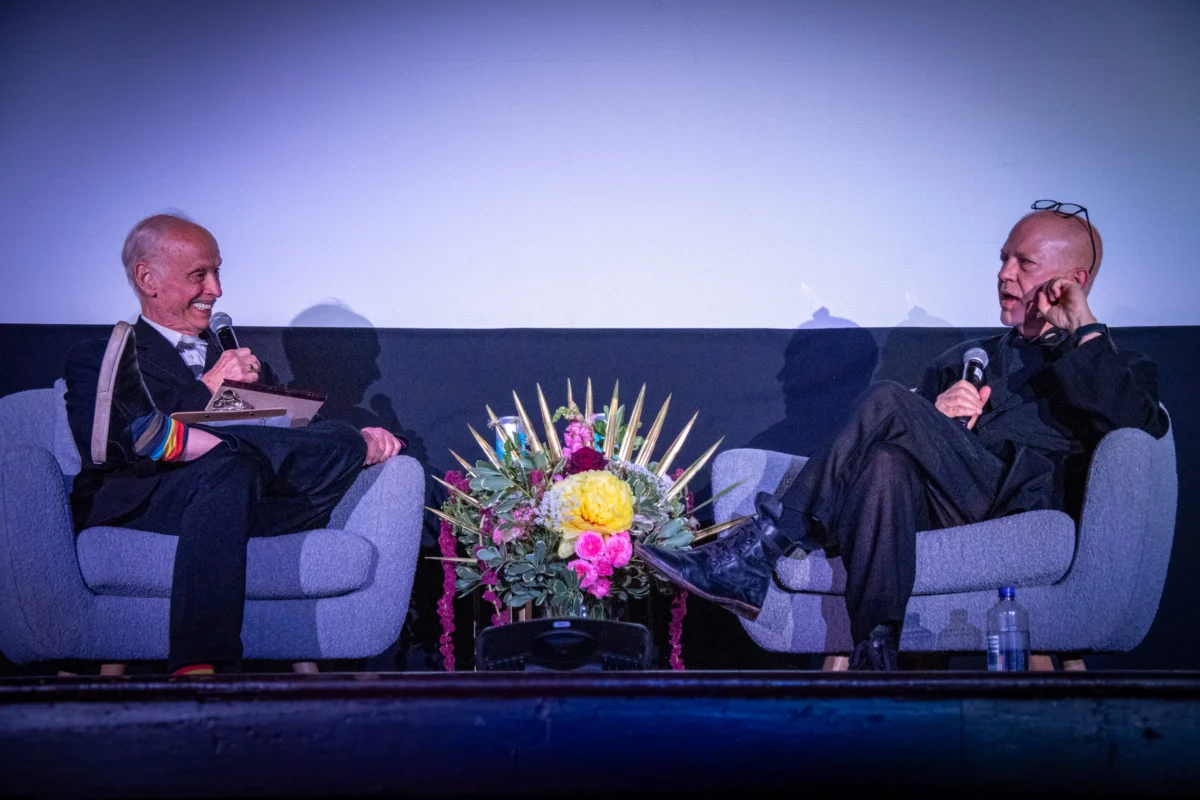
In a rare meeting of two of the most influential figures in American transgressive and mainstream media, the "Pope of Trash," John Waters, sat down with the reigning "King of Cable Television," Ryan Murphy, for a sprawling retrospective at the Provincetown International Film Festival (PIFF). The conversation, titled "Filmmaker on the Edge," served as a masterclass in the navigation of public taste, the subversion of genre, and the resilience required to thrive in an industry often hostile to "camp" sensibilities.
The dialogue comes at a pivotal moment for Murphy, who is currently navigating a prolific production slate that includes the upcoming Love Story: John F. Kennedy Jr. and Carolyn Bessette and a highly anticipated adaptation of Bret Easton Ellis’s The Shards. Waters, a long-time fixture of the Provincetown community for over six decades, provided a veteran’s perspective on the industry, having recently celebrated a new restoration of his 1977 cult classic, Desperate Living.
The core of the discussion centered on the friction between critical reception and commercial success. Murphy, whose career has spanned from the satirical high school drama Popular to the genre-defining American Horror Story, addressed the historical bias against "women-centric" and queer-coded narratives. He argued that the television critical establishment of the early 2000s—dominated by a specific demographic he characterized as "Docker-wearing" devotees of the anti-hero—was structurally ill-equipped to understand the heightened, soapy, and "ridiculous" worlds he sought to build.
Chronology: From the "Pope of Trash" to the "Master of the Macabre"
The event at Provincetown was not merely a promotional stop for Murphy but a celebration of a shared lineage. The timeline of the festival’s programming underscored the intersection of these two creators’ legacies.
The Waters Legacy in Provincetown
John Waters’ connection to Provincetown spans more than 60 years, a period during which he evolved from a radical underground filmmaker to a beloved cultural icon. Earlier in the festival, Waters presided over a screening of the new restoration of Desperate Living, a film that epitomizes his "trash aesthetic." The festival also featured the opening night presentation of Stop! That! Train!, directed by Adam Shankman—the man who famously adapted Waters’ Hairspray into the blockbuster 2007 musical. This served as a reminder of how Waters’ once-marginalized "filth" has been integrated into the Broadway and Hollywood mainstream.
Murphy’s Rise and the "Too Gay" Critique
During the conversation, Murphy traced his professional timeline back to his early struggles with network executives. He noted that his initial forays into television, such as Popular (1999–2001) and even the early seasons of Glee (2009–2015), were frequently met with executive pushback. The recurring criticism was that his work was "too gay" or "too niche."
Despite these hurdles, Murphy identified Glee, American Horror Story, and The People v. O.J. Simpson: American Crime Story as the three pillars that redefined his career. These projects allowed him to move from a "niche" creator to a mogul with the power to dictate the cultural conversation.

The Intersection of Feud and William Castle
While the two moguls have distinct styles, their paths crossed tangibly during the production of Murphy’s 2017 series Feud: Bette and Joan. Waters revealed that he met legendary actress Jessica Lange on that set while he was portraying the gimmick-loving horror director William Castle. In a moment of surreal symmetry, Waters recalled meeting Lange while she was fully transformed into Joan Crawford, telling her, "I was scared of you from Frances!"—referencing her 1982 portrayal of the doomed actress Frances Farmer.
Supporting Data: Ratings, Reviews, and the "Camp" Divide
The conversation delved into the data of success—specifically the inverse relationship that often exists between critical acclaim and audience engagement.
The "All’s Fair" Phenomenon
Murphy used his recent project All’s Fair, starring Kim Kardashian, as a primary case study. He noted that while the show received some of the most vitriolic reviews of his career, it simultaneously generated some of his highest viewership numbers.
- The Critical Gap: Murphy criticized the modern reviewing process, noting the "ridiculous" nature of critics reviewing an entire season based on a single episode.
- The Genre Heritage: He defended the show’s heightened tone as a deliberate homage to 1980s "super-soaps" like Dynasty and Falcon Crest. Murphy pointed out that while these shows were never "critically beloved" in their time, they remain cultural touchstones. "More people watch Dynasty today than St. Elsewhere," Murphy observed, highlighting the longevity of high-drama entertainment over "earnest" prestige dramas.
Redefining the Anti-Hero Era
Murphy offered a socio-cultural analysis of the 2000s "Golden Age of Television." He argued that the critical obsession with David Chase’s The Sopranos created a narrow definition of "quality" that excluded camp and female-led narratives.
- The Gender Bias: Murphy contended that male critics felt "threatened" by camp because they didn’t understand its intellectual depth or its roots in queer subculture.
- The Performative Peak: Waters echoed this sentiment by praising Darren Criss’s performance in The Assassination of Gianni Versace: American Crime Story, citing it as a pinnacle of acting within Murphy’s universe—a performance that managed to bridge the gap between "camp" and "prestige" by winning both an Emmy and a Golden Globe.
Official Responses: Navigating the Media Storm
A significant portion of the dialogue focused on how creators and stars handle the modern media apparatus. Murphy and Waters both expressed a seasoned indifference to negative press, though they acknowledged it affects younger creators differently.
Murphy on Critical Indifference
"I really don’t care anymore," Murphy stated regarding the reception of his newer works like The Beauty or Love Story. He explained that he now provides critics with full seasons upfront, inviting them to "say whatever you want." This shift from seeking validation to prioritizing artistic vision marks a new phase in his career as a mogul.
The Kardashian Factor
Murphy praised Kim Kardashian’s resilience and media savvy in the face of the All’s Fair backlash. According to Murphy, Kardashian was "never hurt" by the reviews. Instead, she used her massive social media platform (specifically Instagram) to lean into the controversy, jokingly asking her followers if they had seen the "critically beloved show."

Waters added his own endorsement of Kardashian, though for different reasons. He highlighted her advocacy work, noting, "I like her because she knows she goes in women’s prisons and gets drug dealers out of jail through Trump." This comment underscored Waters’ appreciation for figures who operate effectively within "absurd" political and social systems.
Implications: The Future of "Heightened Reality" on Screen
The meeting of Waters and Murphy signifies more than a mutual admiration society; it points toward a permanent shift in how television is produced and consumed.
The Death of the "Docker" Critic
Murphy’s assertion that the era of the "anti-hero-only" critic is ending suggests a more democratic future for television. As streaming services prioritize diverse niches, the "camp" aesthetic—once relegated to midnight screenings of Waters’ films—is now the primary engine for massive hits like American Horror Story. The implication is that "prestige" is no longer synonymous with "earnestness."
The Bret Easton Ellis Adaptation
The upcoming adaptation of The Shards represents a significant next step for Murphy. By taking on Ellis’s work—a writer known for his own brand of transgressive, often criticized, but deeply influential prose—Murphy is continuing his mission to bring "fringe" sensibilities to the center of the frame. Set for an August release on FX, the project will likely serve as another litmus test for the "critics vs. audience" divide.
The Legacy of the "Filmmaker on the Edge"
Ultimately, the Provincetown conversation highlighted a fundamental truth about American art: the "edge" eventually becomes the center. John Waters began his career as an outcast making movies in Baltimore that were banned or labeled "obscene." Today, he is a celebrated guest at festivals where he interviews the most powerful man in television.
Murphy, following in Waters’ footsteps, has taken that transgressive spirit and scaled it for a global audience. Whether he is chronicling the tragic romance of JFK Jr. or the soapy machinations of a Kardashian-led law firm, Murphy is proving that "camp" is not a lack of seriousness, but a different way of being serious. As Waters noted throughout the talk, a bad review is a small price to pay for cultural immortality. In the world of Murphy and Waters, the only true failure is being boring.
 Jia Lissa
 Lina Irawan
 Iffa Jayyana
