

In a move that has sent shockwaves through the American cultural and academic landscape, the White House has released a sweeping 162-page report titled Saving America’s Story. Released on July 4, 2026, the document functions as a formal indictment of the Smithsonian Institution’s curatorial direction, accusing the nation’s largest museum complex of abandoning its mandate to "foster patriotism" in favor of what the administration characterizes as "extreme political activism."
The report represents the latest—and most aggressive—chapter in a prolonged standoff between the Trump administration and the Smithsonian. By targeting the National Museum of American History (NMAH) specifically, the White House has signaled its intent to exert federal oversight over how American identity, race, and history are presented to the public. As the institution grapples with the threat of redirected funding and administrative interference, the debate over who owns the American story has reached a critical boiling point.
A Chronology of Conflict
The roots of the current crisis can be traced back to early 2025, when President Trump issued an executive order demanding an immediate cessation of what his administration termed "divisive narratives" across the Smithsonian’s 21 museums, research centers, and the National Zoo.
- March 2025: President Trump signs an executive order calling for a sweeping audit of the Smithsonian’s "race-centered ideology." The order mandates a review of exhibition materials, hiring practices, and public programming.
- Late 2025: Under immense political pressure, Smithsonian Secretary Lonnie Bunch is compelled to turn over thousands of internal documents, including sensitive records regarding curatorial processes and decision-making workflows, to the Domestic Policy Council.
- July 4, 2026: The White House publishes Saving America’s Story, a comprehensive report summarizing the findings of the investigation. The document explicitly calls for a "correction" of the historical narratives currently on display in Washington, D.C.
Throughout this period, the administration has consistently used the "power of the purse" as a cudgel. With the Smithsonian receiving over $1 billion in annual federal appropriations, the White House has repeatedly hinted that future funding could be contingent upon compliance with the administration’s aesthetic and ideological standards.
The Scope of the Allegations
The 162-page report is notable for its granular focus on specific exhibitions and even individual artifacts. The authors, led by the Trump-appointed Domestic Policy Council, focus their critique on NMAH Director Anthea M. Hartig. By framing Hartig as an "activist advancing an ideological agenda," the report personalizes the conflict, suggesting that the perceived shift in museum culture is a top-down phenomenon.
The "Anti-White" Charge
Perhaps the most inflammatory claim in the report is the accusation that the Smithsonian has engaged in "anti-White activism." The document alleges that the museum’s internal hiring and programming initiatives have prioritized non-English speakers and non-U.S. residents while systematically excluding "whites, Christians, males, and Americans." This rhetoric mirrors broader culture-war debates, moving the conversation from academic critique to identity politics.
Specific Targets of Disdain
The report highlights several specific instances where the administration believes the Smithsonian has failed the public:
- "Many Voices, One Nation": The administration singles out this long-running exhibition, accusing it of promoting "citizenship for millions of illegal aliens" by highlighting the contributions of immigrant populations to the fabric of American society.
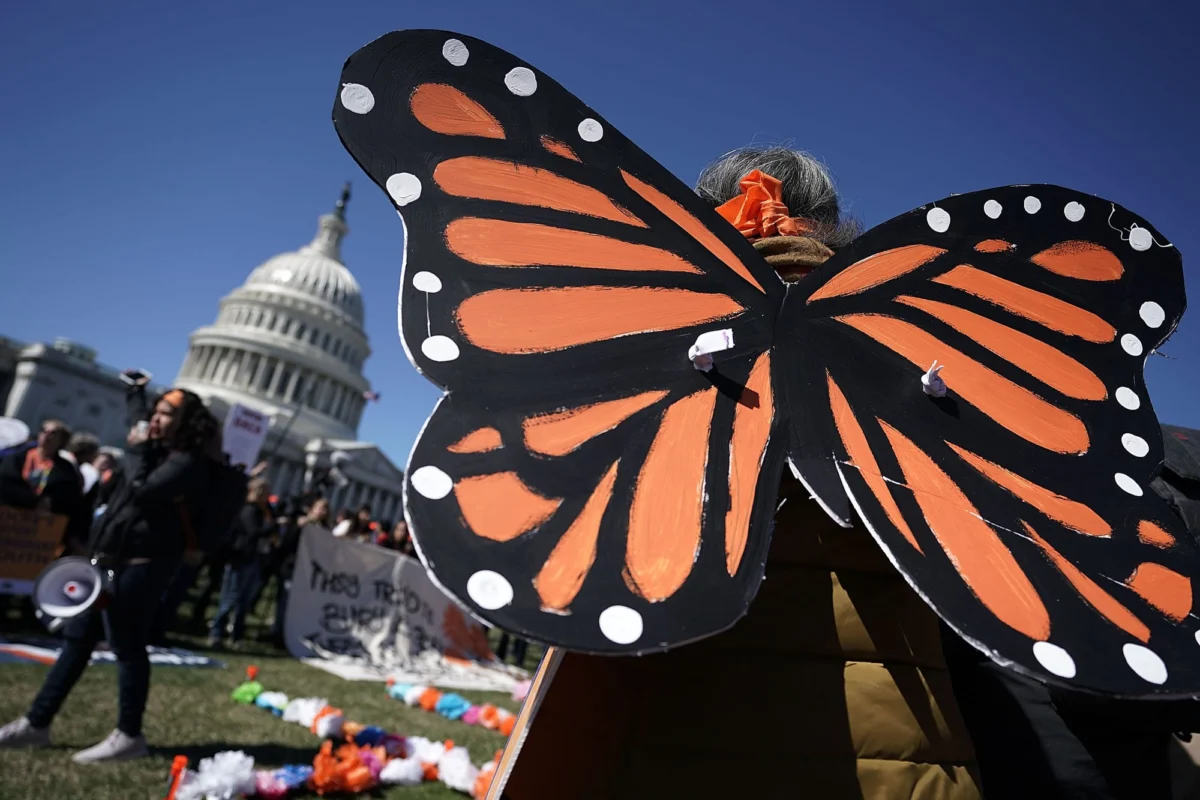
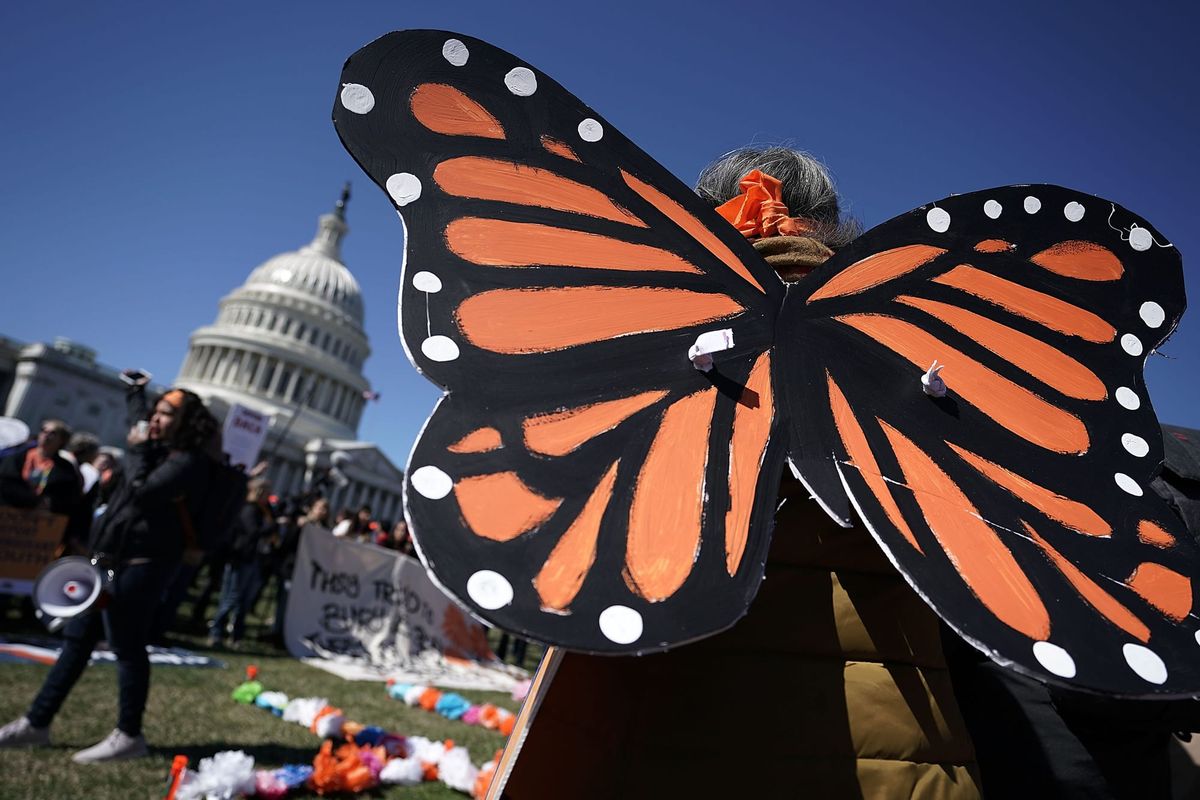
- Symbolic Protest Art: The report expresses particular hostility toward the inclusion of a pair of custom butterfly wings used in a 2018 immigration protest on Capitol Hill. The administration argues that such objects serve as political propaganda rather than historical artifacts.
- Historical Re-evaluation: The report explicitly criticizes the museum’s portrayals of Christopher Columbus as a "thief" and takes issue with the institution’s use of trans-inclusive language in its labels. Furthermore, the administration expressed dissatisfaction with the Smithsonian’s perceived lack of robust patriotic programming during this year’s Independence Day celebrations.
Institutional Independence vs. Federal Oversight
In the face of these allegations, the Smithsonian has maintained a stance of firm, albeit cautious, defiance. When approached for comment by Hyperallergic, a spokesperson for the Institution emphasized its historical role as a nonpartisan entity.
"For more than 180 years, the Smithsonian has served the American public with nonpartisan and independent scholarship," the spokesperson stated. "We remain committed to doing so."
However, this independence is increasingly under siege. Vince Haley, director of the Domestic Policy Council and a key architect of the report, struck a markedly different tone. In his statement accompanying the release, Haley suggested that the administration’s goal is a return to a "noble obligation" of storytelling.
"It is our hope and expectation that the Smithsonian will eventually rise once again to [a] noble obligation — to tell America’s story for our children, the world, and future generations of Americans," Haley wrote. The implication is clear: the current iteration of the Smithsonian is viewed as a failure, and the administration reserves the right to force an ideological pivot.
Implications for Cultural Institutions
The ramifications of this report extend far beyond the walls of the National Museum of American History. If a federal administration succeeds in dictating the contents of museum exhibits, it sets a dangerous precedent for the autonomy of cultural institutions across the United States.
The Fear of Erasure
Historians and curators have begun to mobilize, with many calling on the public to document current exhibits and labels. There is a palpable fear within the academic community that the administration may follow through on its threat to issue "content corrections," effectively purging artifacts or rewriting labels that do not align with the White House’s preferred version of history.
The Chilling Effect on Scholarship
The forced disclosure of internal curatorial documents has already created a "chilling effect" among staff at the Smithsonian and other federally funded cultural bodies. When the process of historical inquiry—which involves debate, revision, and the inclusion of diverse perspectives—is treated as a target for government investigation, the scholarship itself is compromised. Curators may begin to practice self-censorship to avoid becoming the next subject of a White House report.
A Test of Democracy
Ultimately, the conflict over the Smithsonian is a test of the role of history in a democratic society. The administration argues that museums should act as institutions of national cohesion, reinforcing a specific, traditional narrative. Conversely, critics argue that the Smithsonian’s role is to act as a mirror to the nation—flaws, contradictions, and all. By attempting to curate the national memory from the Oval Office, the current administration is forcing a confrontation between political utility and the preservation of objective history.
As the administration continues to zero in on cultural institutions, the public is left to wonder what the "corrected" future of the Smithsonian will look like. Will the museum remain a repository of the nation’s multifaceted reality, or will it be transformed into an instrument of executive messaging? For now, the exhibits remain as they are, but the eyes of the nation are fixed upon them, awaiting the next move in a struggle that will define the legacy of American public history for decades to come.
 Basiran
 Muslim
 Evan Lee Salim
