

Main Facts: The Rise of a Modern Auteur
In an era where the traditional Hollywood "star system" has largely been supplanted by intellectual property and shared cinematic universes, Christopher Nolan stands as a singular anomaly. He is one of the few directors working today whose name alone serves as a global brand, capable of drawing audiences to theaters for original, high-concept narratives that eschew the typical blockbuster formula.
From his humble beginnings as a micro-budget filmmaker in London to his current status as an Academy Award-winning titan, Nolan has redefined the boundaries of the "pop artist." His filmography is characterized by a relentless obsession with the mechanics of time, the fragility of memory, and the psychological toll of greatness. With the 2026 release of his thirteenth feature, The Odyssey—a gritty, horror-tinged reimagining of Homer’s epic—Nolan continues to challenge the limits of large-format celluloid and non-linear storytelling.

This retrospective analyzes the evolution of Nolan’s career, ranking his thirteen feature films from his experimental debut to his latest mythic masterpiece, while examining the data and official responses that have shaped his legacy.
Chronology: From 16mm Noir to the IMAX Horizon
The Early Years (1998–2002)
Nolan’s career began with the scrappy, black-and-white Following (1998), shot on a budget of just $6,000. It established his penchant for non-linear structures, a trait he perfected in the 2000 breakout Memento. By 2002, he moved into the studio system with Insomnia, proving he could handle A-list talent like Al Pacino and Robin Williams within a traditional noir framework.

The Blockbuster Transformation (2005–2012)
The "Dark Knight Trilogy" (Batman Begins, The Dark Knight, The Dark Knight Rises) fundamentally altered the superhero genre, grounding the Caped Crusader in a hyper-realistic, sociopolitical reality. During this period, Nolan leveraged his success to produce The Prestige and the dream-heist epic Inception, the latter of which became a cultural touchstone for "puzzle-box" cinema.
The Conceptual Epics (2014–2020)
Following the conclusion of his Batman saga, Nolan turned toward the stars and the past. Interstellar explored the intersection of relativity and human emotion, while Dunkirk stripped away traditional dialogue to create a sensory war experience. This era culminated in Tenet, a polarizing "spy-fi" film released amidst the global pandemic, which eventually led to a high-profile departure from his longtime home at Warner Bros.

The Universal Era and the Mythic Peak (2023–Present)
Moving to Universal Pictures, Nolan reached a new critical zenith with Oppenheimer (2023), sweeping the Academy Awards. This success set the stage for The Odyssey (2026), his most ambitious undertaking to date, blending ancient mythology with modern cinematic dread.
The Definitive Ranking: Nolan’s 13 Features
13. The Dark Knight Rises (2012)
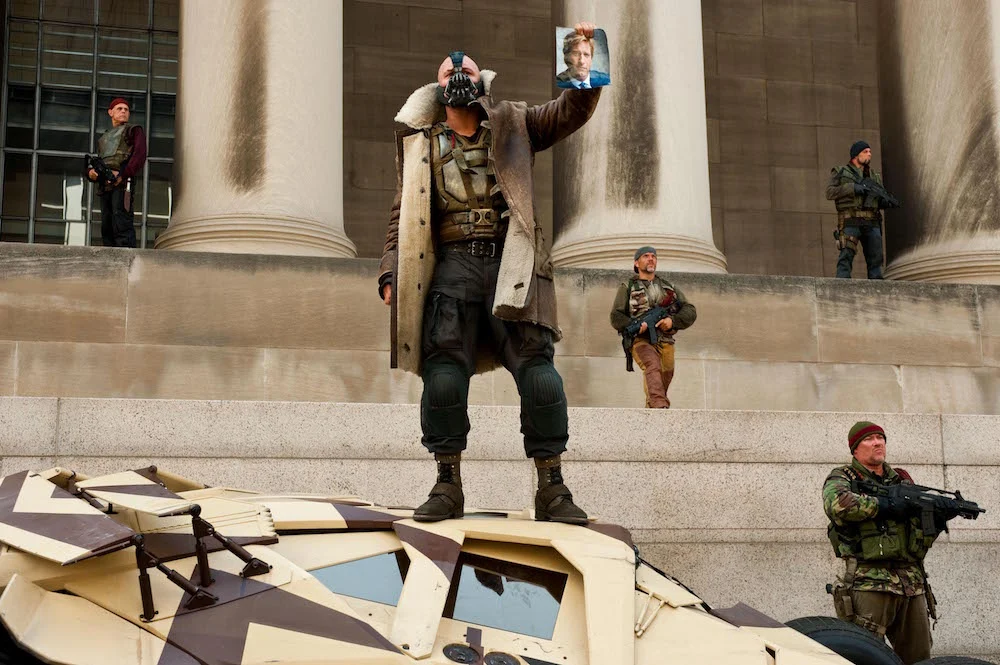
While a massive financial success, the conclusion to the Batman trilogy is often cited as Nolan’s most overstuffed work. Attempting to provide closure to a saga that had already peaked with its predecessor, the film struggles with a muddled political subtext and a protagonist who feels disconnected from the stakes. Despite Tom Hardy’s iconic physical performance as Bane, the film’s 165-minute runtime feels like a director "circling the drain" of a genre he had already conquered.

12. Following (1998)
A 69-minute exercise in raw suspense, Nolan’s debut is more significant as a blueprint than a standalone masterpiece. Shot on 16mm, it introduces "Cobb"—a name that would recur in Inception—and explores the thin line between inspiration and obsession. It is a "shaggy" but essential footnote for any student of Nolan’s formalism.
11. Tenet (2020)
Tenet is perhaps Nolan’s most technically proficient "bore." While the concept of "time inversion" is visually stunning, the film is hindered by wooden performances and an infamously difficult-to-decipher sound mix. It serves as the ultimate example of Nolan’s tendency to prioritize narrative engineering over emotional resonance.

10. Insomnia (2002)
Nolan’s only film without a solo or co-writing credit, this remake of a Norwegian thriller is a solid, professional morality play. Al Pacino’s performance as a sleep-deprived detective in the perpetual daylight of Alaska is haunting, but the film lacks the "magic trick" quality that defines Nolan’s best work.
9. Batman Begins (2005)
The film that saved the superhero genre. By treating Batman with "gray-toned grit" rather than cartoonish camp, Nolan established a realist aesthetic that would influence a decade of cinema. It remains a masterclass in the "origin story" format, even if the action sequences are somewhat claustrophobic compared to his later work.

8. The Dark Knight (2008)
Often ranked #1 by fans, this film’s legacy is inextricably tied to Heath Ledger’s monumental performance as the Joker. While the script is a "lumpy mishmash" of movements rather than acts, Ledger’s portrayal of chaos vs. compassion elevates the film into a Shakespearean tragedy that transcends its comic book roots.
7. Oppenheimer (2023)
A three-hour "thunderously intimate" character study, Oppenheimer proved that a biopic about a theoretical physicist could function as a high-stakes thriller. Using IMAX cameras to capture the landscape of Cillian Murphy’s face, Nolan explored the horror of opening a "Pandora’s Box" that can never be closed.

6. Interstellar (2014)
Nolan’s most sentimental work, Interstellar attempts to quantify love as a physical force of nature. While the "cosmic bookcase" finale remains divisive, the film’s visual majesty and Hans Zimmer’s organ-heavy score create an experience of profound awe. It is the work of a rationalist trying to solve the puzzle of the human heart.
5. Inception (2010)
The ultimate "puzzle movie." Inception is a celebration of what cinema can do—cross-cutting between four planes of reality to create a coherent, visceral momentum. Despite its heavy reliance on exposition (personified by Elliot Page’s Ariadne), it remains the most idiosyncratic and successful blockbuster of the 21st century.

4. Memento (2000)
A perfect marriage of form and function. By telling a story of memory loss in reverse, Nolan forces the audience to inhabit the protagonist’s fractured psyche. It is the "template" for his entire career, proving that the medium of film is indivisible from the message.
3. The Prestige (2006)
A "masterpiece of misdirection." This period drama about rival magicians is Nolan’s most personal film, serving as a metaphor for the director’s own craft. It investigates the "perils of ambition" and features career-best work from Christian Bale and Hugh Jackman, plus a legendary cameo by David Bowie as Nikola Tesla.

2. The Odyssey (2026)
Nolan’s latest triumph. By stripping the Greek gods of their physical forms and turning them into "unseen presences," Nolan transforms a 3,000-year-old poem into a modern survival horror. Matt Damon’s Odysseus is a "haunted man weary of warfare," and the film’s jaw-dropping sequences—specifically the Cyclops encounter—set a new bar for practical visual effects.
1. Dunkirk (2017)
The pinnacle of Nolan’s "all-caps" film language. Dunkirk is a sensory assault that deconstructs time (one week on land, one day at sea, one hour in the air) to explore the banality and madness of war. It is a virtually bloodless, yet profoundly unnerving, work of raw spectacle that finds order in chaos. It is, quite simply, Nolan’s best film.

Supporting Data: The "Nolan Effect" by the Numbers
To understand Nolan’s standing, one must look at his unparalleled box office and critical track record:
- The Billion-Dollar Club: The Dark Knight and The Dark Knight Rises both eclipsed the $1 billion mark, proving that "prestige" blockbusters could compete with traditional popcorn fare.
- The "Oppenheimer" Phenomenon: Grossing over $950 million, it remains the highest-grossing R-rated biopic in history and the highest-grossing Best Picture winner in decades.
- The 70mm Evangelist: Nolan is credited with single-handedly keeping the 70mm and IMAX film formats alive. For The Odyssey, Universal reported that over 40% of the opening weekend domestic gross came from premium large-format screens.
Official Responses: From Warner Bros. to Universal
Nolan’s career has not been without controversy. His "highly publicized spat" with Warner Bros. in 2020 regarding their "Project Popcorn" day-and-date streaming strategy led to a seismic shift in the industry.

- The Warner Bros. Fallout: Nolan famously referred to HBO Max as "the worst streaming service" at the time, defending the theatrical experience as a vital cultural institution.
- The Universal Partnership: Donna Langley, Chairman of Universal Pictures, stated upon the release of The Odyssey: "Christopher Nolan is a filmmaker who demands the biggest possible canvas. Our partnership is built on the shared belief that cinema is an event."
- The Actor’s Perspective: Matt Damon, discussing his role in The Odyssey, noted: "Working with Chris is like joining a high-stakes engineering project. You aren’t just acting; you are a gear in a massive, beautiful machine."
Implications: The Future of the Auteur
The success of The Odyssey reinforces a vital truth for the future of Hollywood: there is still a massive global appetite for director-driven, original epics. Nolan has effectively become his own franchise.
As the "star system" continues to fade, the "Director-as-Star" model pioneered by figures like Hitchcock and Spielberg finds its modern champion in Nolan. His insistence on practical effects, film over digital, and the sanctity of the theater provides a roadmap for how cinema can survive the streaming age. By looking back to ancient myths (The Odyssey) and forward to the limits of physics, Christopher Nolan has ensured that as long as he is behind the camera, the world will be watching closely.
 Jia Lissa
 Iffa Jayyana
