

Introduction: A Monument in the Crosshairs
New York City is no stranger to public art that stirs the pot, but the latest project from Sicilian-born sculptor Sergio Furnari has transcended mere aesthetic debate, plunging into the volatile depths of American political polarization. Furnari has announced his intent to install a commemorative monument of the late right-wing firebrand and podcaster Charlie Kirk in the heart of Times Square.
Scheduled for a symbolic unveiling on September 10—marking the first anniversary of Kirk’s assassination—the project has become a lightning rod for vitriol, debate, and legal uncertainty. As Furnari prepares for what he calls a “tribute to dialogue,” he finds himself battling a tidal wave of online harassment, threats of vandalism, and a complete lack of municipal authorization. For the artist, this is not an act of political grandstanding; it is, he insists, a divine mandate. “God gave me permission,” Furnari told Hyperallergic, effectively dismissing the bureaucratic hurdles that typically govern public art in New York City.
Chronology of a Polarizing Project
The origins of this monument trace back to the seismic shift in the American cultural landscape following the death of Charlie Kirk. Kirk, a prominent figure in the conservative movement and a co-founder of Turning Point USA, was fatally shot by a rooftop sniper while addressing an audience at Utah Valley University last year. His death ignited a global debate, with supporters viewing him as a martyr for free speech and detractors decrying his influence as a purveyor of far-right, inflammatory rhetoric.
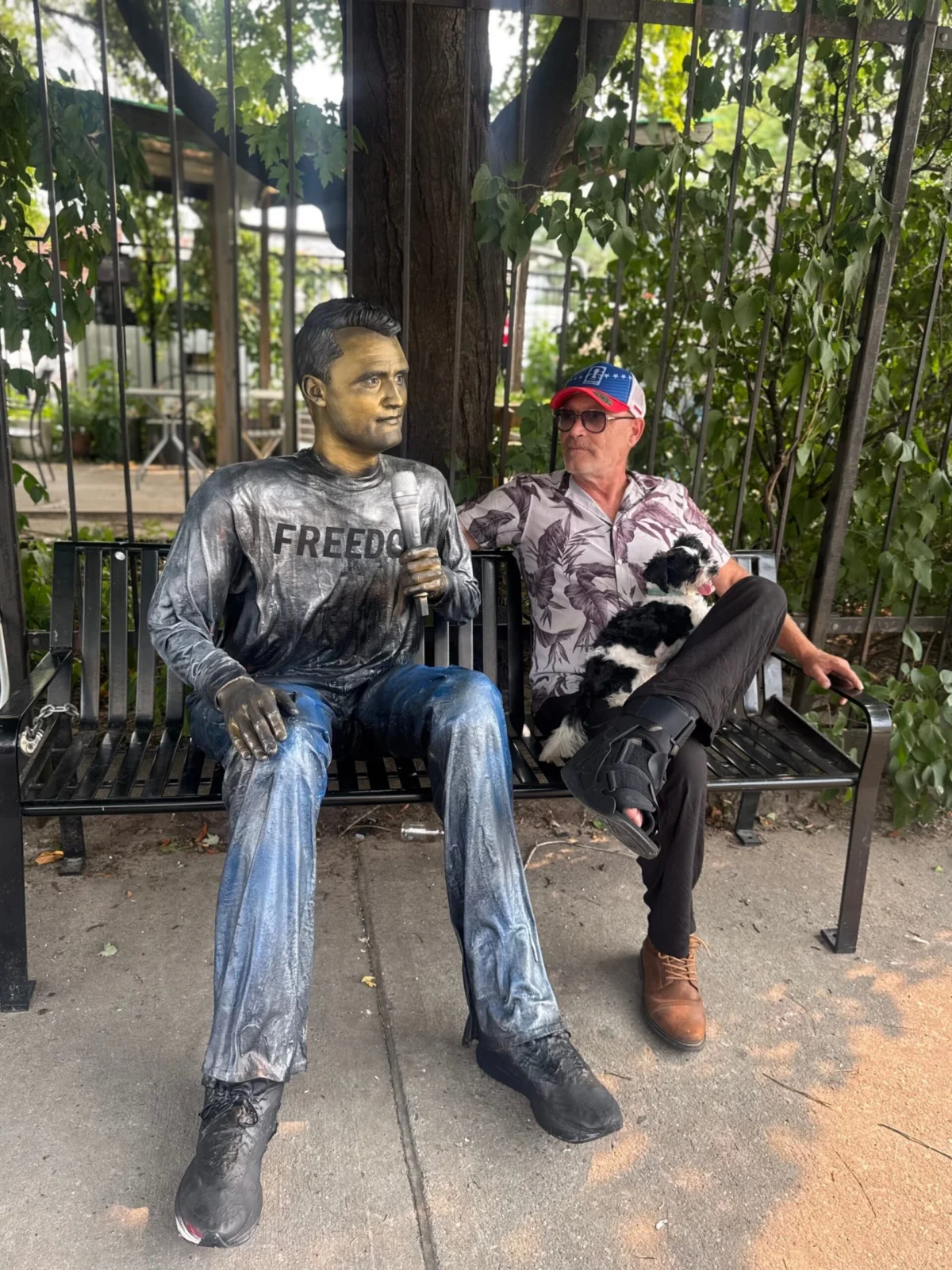
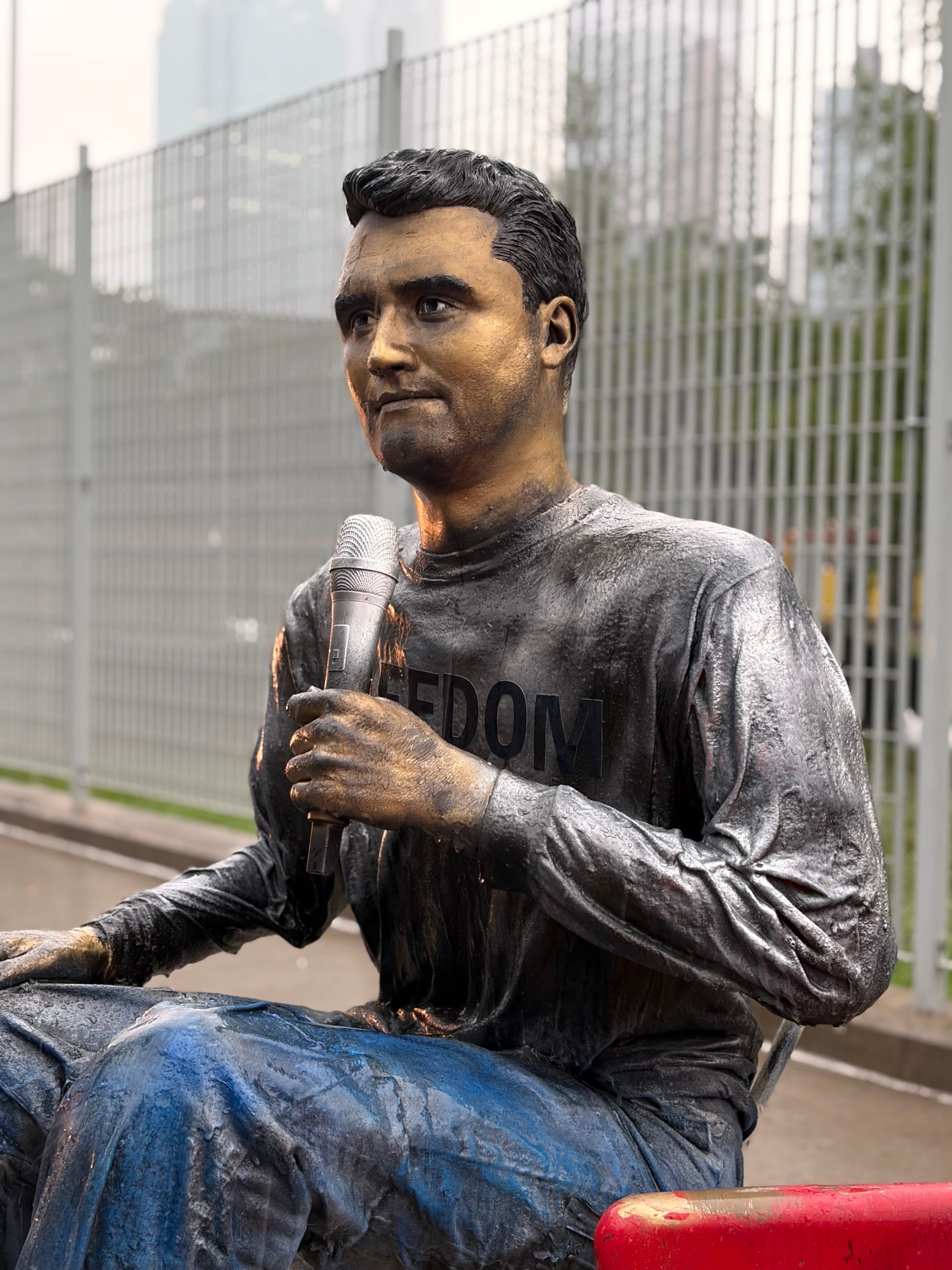
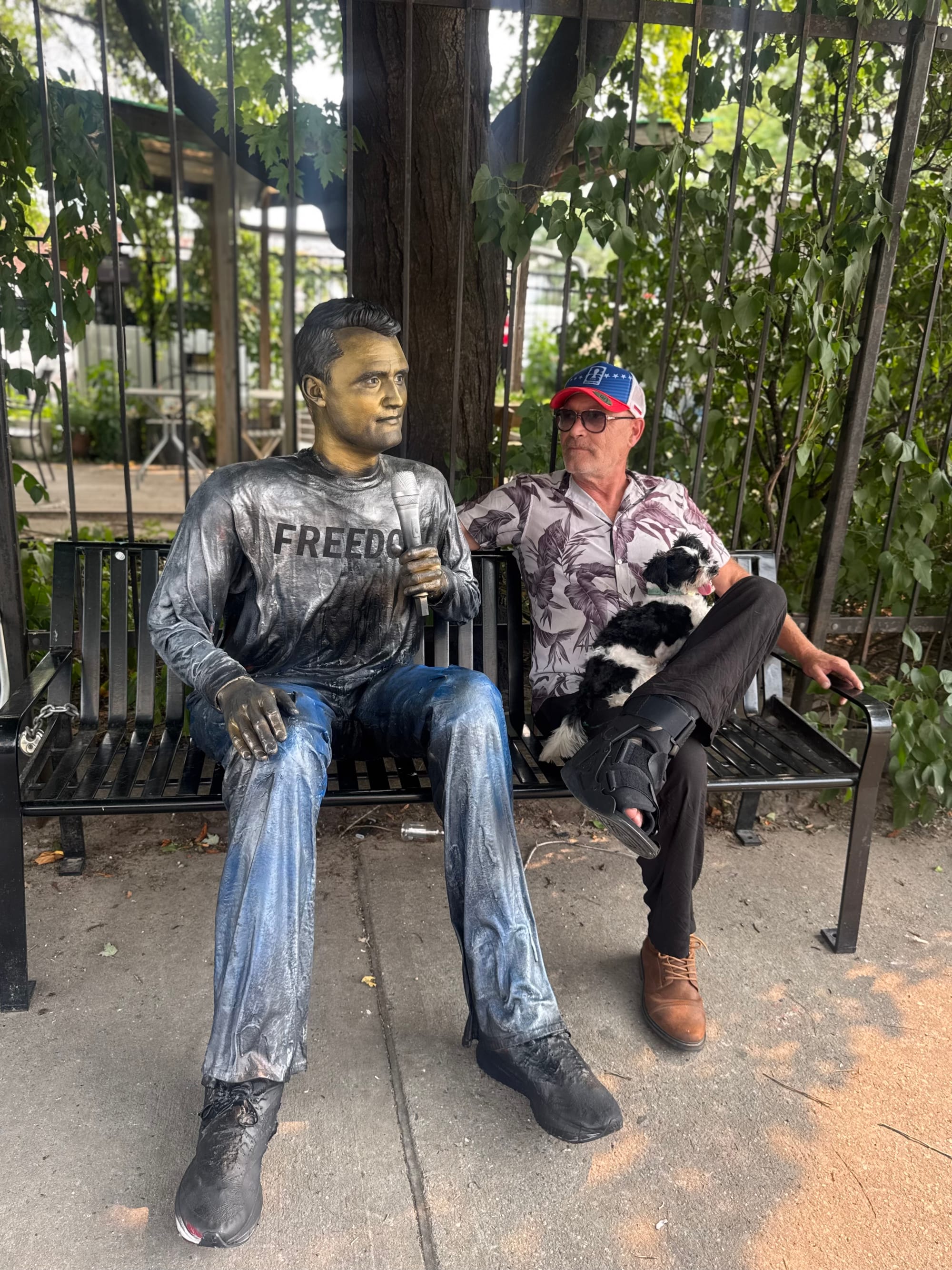
Following the assassination, the conversation surrounding Kirk’s legacy grew increasingly fraught. While the New College of Florida expressed early intentions to commission a formal statue of the activist to champion “civil discourse,” Furnari took a different route. Operating independently, he began work on a cast-steel sculpture depicting a seated Kirk, microphone in hand, wearing a shirt emblazoned with the word “FREEDOM.”
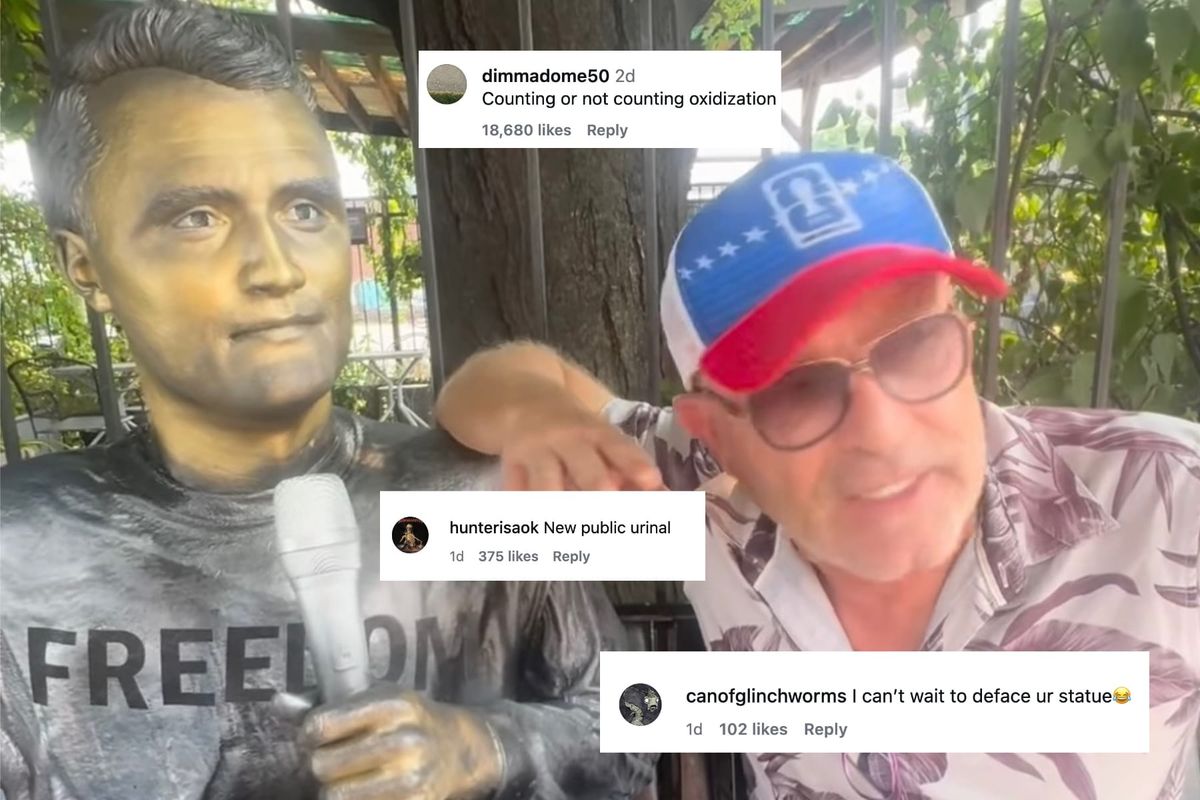
Throughout the summer of 2026, Furnari began teasing the project on his social media platforms. The reaction was instantaneous and overwhelmingly hostile. Instagram users flooded his comment sections, not with artistic critique, but with dark humor, mockery, and explicit threats. Some commenters have jokingly referred to the site of the proposed installation as a “new public restroom,” while others have openly discussed plans to deface or urinate on the bronze figure. Despite the escalating vitriol, Furnari has remained defiant, even using the backlash as fuel for his artistic resolve. “Now what happens is that the more they threaten me, the more I want to make multiple statues,” he noted.
Supporting Data and The Artist’s Stance
Furnari’s approach to the monument is, by his own admission, unconventional. He has launched a crowdfunding campaign via GiveSendGo, seeking to raise $150,000 for the installation and ongoing maintenance. As of mid-July 2026, the campaign has garnered roughly $3,500, a figure that reflects the polarizing nature of his subject.
When questioned about his political alignment, Furnari is quick to distance himself from the “MAGA” label. He describes his motivation not as an endorsement of Kirk’s specific policy stances—many of which, including Kirk’s views on immigration, he claims to disagree with—but as a defense of the act of speaking itself.
“You know, when I used to see him before his death, I was like, ‘Okay, this guy is crazy,’” Furnari admitted. He expressed regret that he never had the opportunity to engage in a formal debate with the podcaster. For Furnari, the statue serves as a placeholder for the "open dialogue" he feels is missing in contemporary society. He sees the public square as a place for contestation, and by placing the statue of such a controversial figure in the busiest intersection of the world, he is forcing a physical manifestation of that contestation.
The First Amendment and the “Culture of Consequence”
The controversy surrounding the statue is deeply rooted in the wider context of how Kirk’s death affected the American public sphere. His assassination acted as a stress test for the limits of the First Amendment in the digital age.
In the months following the event, the "culture of consequence" became a defining feature of the national discourse. Organizations and academic institutions scrambled to navigate the fallout of public statements regarding the assassination. A notable example is the case of Karen Leader, a tenured associate professor of art history at Florida Atlantic University, who was placed on administrative leave after sharing social media posts critical of Kirk’s ideologies.
This environment of professional and social retribution has made the prospect of a physical monument to Kirk feel, to many, like a provocative escalation. Furnari’s project is seen by his critics not as art, but as a political weapon. Conversely, his supporters argue that if the public square is to remain a space for free expression, it must be capable of hosting figures who are, for many, deeply offensive.
Official Responses and Regulatory Reality
The legal reality of Furnari’s plan is stark: he has not received, nor has he sought, any permits from the Times Square Alliance or the New York City Department of Parks and Recreation. In the eyes of city officials, the installation would be an illegal obstruction, subject to immediate removal.
Furnari’s history suggests he is no stranger to this regulatory friction. In 2021, the city removed his red heart sculpture from Central Park—a piece that had initially been funded by a city grant—due to a failure to secure the proper permitting for its display. When pressed on the current lack of authorization for the Kirk statue, Furnari’s response was characteristically dismissive: “Permit from who? Who’s gotta give me a permit if today I wanna write a song, or sculpt a rose? … God gave me permission.”
This philosophical rejection of municipal oversight places him on a collision course with city authorities. Should he proceed with an unsanctioned installation on September 10, it is highly likely that the statue would be removed within hours, if not minutes, of its placement, potentially resulting in fines or further legal action against the artist.
Implications for Public Art and Free Speech
The Furnari case raises profound questions about the nature of public art in a hyper-polarized society. Can a city like New York maintain a space for "neutral" art when the subject matter is a lightning rod for extreme political violence?
The implications are twofold:
- The Erosion of Civility: The visceral, often violent nature of the online backlash suggests that the public is losing its appetite for monuments that represent "the other side." The threat of vandalism suggests that public art is no longer being viewed as a static cultural object, but as a target in a broader political war.
- The Limits of Artistic Sovereignty: Furnari’s insistence on "divine" rather than municipal permission challenges the role of the city as a curator of its own spaces. While his stance is rooted in a traditional view of the artist as an independent agent of truth, it ignores the reality of public safety and urban order.
As the September 10 deadline approaches, the situation remains fluid. Furnari continues to promote his project, while critics continue to organize their dissent. Whether the statue ever sees the light of day in Times Square is almost secondary to the reality that it has already succeeded in its primary goal: forcing a confrontation between two irreconcilable visions of American public life.
Ultimately, the monument stands as a testament to the fact that, in 2026, even the most traditional form of art—the bronze statue—has been subsumed by the digital speed and fury of the culture wars. Whether viewed as an act of profound courage or a calculated provocation, Sergio Furnari’s sculpture of Charlie Kirk is destined to be a footnote in the history of a city that, for better or worse, remains the global stage for America’s most heated arguments.
 Basiran
 Muslim
 Evan Lee Salim
