

Introduction: A World in Flux
The international landscape is currently navigating a complex convergence of geopolitical tension, demographic shifts, and public health crises. From the volatile streets of Kashmir to the corridors of the United Nations, global leaders and humanitarian agencies are grappling with challenges that threaten regional stability and human security. As the world marks the somber 12th anniversary of the MH17 tragedy, the persistent need for accountability remains a cornerstone of international diplomacy. Simultaneously, the demographic profile of migration is undergoing a historic transformation, even as health authorities scramble to contain a surging Ebola epidemic in Central Africa.
1. Kashmir: A Region at a Boiling Point
In the lead-up to the Legislative Assembly elections scheduled for July 27, the Kashmir region has descended into a cycle of violence that has claimed dozens of lives. The unrest, primarily driven by the Joint Awami Action Committee (JAAC)—a coalition representing traders, students, and legal professionals—has prompted a harsh response from authorities.
Chronology of Escalation
The tensions, which began to boil over in June, escalated rapidly as the JAAC mobilized protests against perceived administrative grievances. The government’s response was swift: the committee was officially proscribed under stringent anti-terrorism legislation. Authorities cited threats to public order and national security as the justification for the ban, leading to a wave of arrests targeting key organizational leaders.
Official Responses and Human Rights Concerns
The Office of the United Nations High Commissioner for Human Rights (OHCHR) has voiced profound alarm regarding the state’s reaction. Spokesperson Jeremy Laurence issued a stern critique of the crackdown, noting that "the criminalization of a civil society organization and the imposition of strict limitations on gatherings raise serious concerns about infringements on the rights to freedom of expression, peaceful assembly, and association."
The UN has specifically urged the restoration of full internet access, which has been severely restricted, hindering both communication and economic activity. The OHCHR is calling for an immediate pivot toward "meaningful and inclusive political dialogue" to address the foundational grievances of the Kashmiri population rather than relying on securitized responses.
2. The New Face of Migration: Women on the Move
A landmark report from UN Women has unveiled a profound demographic shift in Europe and Central Asia: women now account for 54 percent of all migrants in the region. This statistic challenges traditional narratives that have historically portrayed the migrant experience as predominantly male.
Supporting Data and Trends
According to the UN Women report, Women on the Move in Europe and Central Asia, the motivations for migration are evolving. More women are now migrating independently—seeking education, professional advancement, and personal safety—rather than traveling as dependents to join family members.
This trend is intensifying under the weight of several regional stressors:
- Conflict: The ongoing war in Ukraine and other localized instabilities have forced millions to flee, with women comprising the vast majority of those exiting Ukraine and Moldova for the European Union.
- Climate Pressure: Extreme heat, flooding, and droughts are acting as "threat multipliers," pushing women out of rural areas where livelihoods have become untenable.
- Economic Opportunity: Despite systemic barriers, the search for "decent work" remains a primary driver for professional women.
The Human Cost and Policy Implications
Despite their increased presence, migrant women remain disproportionately vulnerable. The report highlights that many highly educated women are forced into low-skilled, insecure, and underpaid positions, leaving them susceptible to exploitation. Furthermore, women and girls are the primary victims of human trafficking networks operating across the region.
Belén Sanz Luque, UN Women Regional Director for Europe and Central Asia, summarized the situation, stating: "Migration has the face of a woman. It is time we see it." UN Women is now advocating for policy reforms that include expanded safe migration pathways, the recognition of foreign professional qualifications, and the mandatory inclusion of women in decision-making processes regarding migration policy.
3. Ebola Crisis: A Surge in the Democratic Republic of the Congo
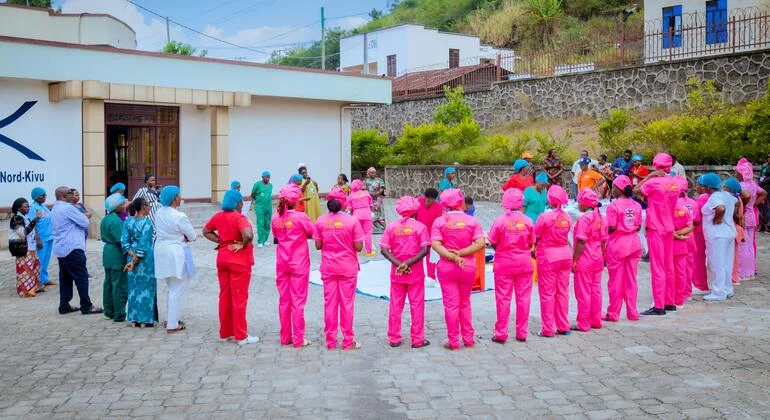
The Democratic Republic of the Congo (DRC) is facing a critical juncture in its battle against Ebola. The International Organization for Migration (IOM) reported a staggering 70 percent surge in cases over the last fortnight, with more than 40 new cases identified daily.
Implications of "Community Deaths"
The most alarming indicator of the current outbreak is that 60 percent of deaths are occurring within households rather than medical facilities. This suggests a systemic breakdown in surveillance and a lack of public trust in formal healthcare infrastructure. Frantz Celestin, IOM’s Regional Director, warned that the current data is likely just the tip of the iceberg, as the true scale of the epidemic remains obscured in remote regions.
Geography and Vulnerability
The outbreak has officially breached the borders of two additional provinces: Haut-Uele and Tshopo. The high mobility of populations in eastern DRC, coupled with the presence of approximately 150,000 internally displaced persons (IDPs) in IOM-supported sites, creates a high-risk environment for rapid transmission.
The IOM is currently prioritizing:
- Surveillance: Intensified monitoring at key border crossings.
- Logistics: Expanding efforts along the Congo River, a major artery for both trade and disease transmission.
- Collaboration: Working with neighboring Uganda, where the virus has also been detected, to synchronize cross-border health responses. As of mid-July, the combined toll across the region stands at over 2,000 cases and 700 deaths.
4. MH17: Twelve Years of Seeking Accountability
The 12th anniversary of the downing of Malaysia Airlines Flight MH17 has served as a solemn reminder of the necessity of international justice. On July 17, 2014, the flight, en route from Amsterdam to Kuala Lumpur, was destroyed over the Donetsk region of Ukraine, resulting in the tragic loss of all 298 passengers and crew.
The Quest for Justice
The victims—predominantly Dutch, Malaysian, and Australian nationals—remain the focus of ongoing legal and diplomatic efforts. UN Secretary-General António Guterres utilized this anniversary to reaffirm his commitment to the families of the victims. Through his spokesperson, the Secretary-General emphasized the importance of upholding the principles of international law.
The Role of International Law
The tragedy remains subject to the provisions of UN Security Council Resolution 2166, which mandates a full, thorough, and independent international investigation. The work of the Joint Investigation Team (JIT) has provided the evidentiary backbone for these efforts, yet the Secretary-General’s call serves as a pointed reminder to all UN Member States that cooperation is not optional. The persistence of the international community in this matter underscores a vital precedent: that the perpetrators of crimes against civilians in conflict zones must be held accountable, regardless of the time elapsed or the geopolitical complexities involved.
Conclusion: The Interconnected Path Ahead
The events detailed in this brief—the suppression of civil liberties in Kashmir, the demographic shift in European migration, the epidemiological struggle in the DRC, and the quest for justice for MH17 victims—may appear distinct, but they are linked by a common theme: the struggle to uphold human dignity in an increasingly unstable world.
Whether through the protection of women’s rights, the strengthening of health systems, or the relentless pursuit of justice for victims of conflict, the international community remains at a crossroads. As these crises unfold, the role of multilateral institutions in facilitating dialogue and enforcing accountability becomes more essential than ever. The coming months will likely test the efficacy of these global systems as they seek to mitigate the human cost of these ongoing challenges.
 Lina Hope
 Asro
Asro
 Layla Zulfa
