

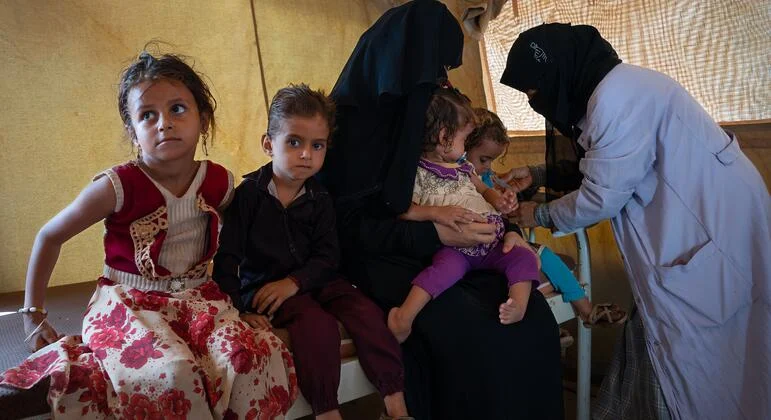
DJIBOUTI CITY – A harrowing new report from the Integrated Food Security Phase Classification (IPC) index has sounded an emergency alarm for the Horn of Africa, revealing that over 256,000 people in Djibouti—representing a staggering 25 percent of the nation’s total population—are teetering on the precipice of crisis or emergency-level hunger.
The findings, released on July 17, 2026, underscore a rapid and dangerous deterioration in food security across the country. As the international community grapples with the compounding effects of climate volatility and economic instability, humanitarian agencies are calling for immediate, large-scale intervention to prevent a localized catastrophe from spiraling into a wider humanitarian disaster.
Main Facts: A Population in Peril
The IPC analysis paints a grim portrait of life in Djibouti for the latter half of 2026. The data indicates that approximately one-quarter of the population is expected to face severe food consumption deficits in the coming months.
Central to this crisis is the plight of refugees and displaced persons. In the Ali Addeh and Holl-Holl camps, the situation is particularly dire. Nearly 70 percent of the inhabitants in these settlements—exceeding 21,000 individuals—are currently classified under the "Crisis" level or above on the IPC scale. These households are almost entirely dependent on external food assistance, which has proven insufficient to meet the basic caloric needs of the residents.
The report emphasizes that the primary drivers of this crisis are not singular, but rather a "perfect storm" of climatic, economic, and structural pressures. Without a swift infusion of resources, the vulnerability of these households will likely lead to a further descent into even higher levels of acute malnutrition and potential mortality.
Chronology: The Road to the July Emergency Alert
To understand the current crisis, one must look at the trajectory of the past several years in the Horn of Africa, a region perpetually buffeted by environmental and geopolitical shocks.
- 2024–2025: The region began feeling the cumulative impact of prolonged drought cycles, followed by erratic rainfall patterns linked to the El Niño phenomenon. During this period, Djibouti’s local pastoralist communities began reporting the loss of livestock—a primary source of livelihood and nutrition.
- January–March 2026: Inflationary pressures began to mount. Global food prices, exacerbated by supply chain disruptions, hit the import-dependent economy of Djibouti with particular force. Local market prices for staples like flour, oil, and sugar soared, rendering them inaccessible to the poorest segments of the population.
- May 2026: Early indicators from humanitarian monitors suggested a dip in food security levels. Initial reports flagged that the lean season—the period between harvests—was beginning earlier than anticipated, putting additional strain on government and NGO food reserves.
- June 2026: The Integrated Food Security Phase Classification (IPC) technical working group conducted an intensive, month-long analysis of district-level data, incorporating nutrition surveys and market price assessments.
- July 17, 2026: The official IPC report is released, confirming the emergency-level hunger spike and calling for immediate "urgent actions" to reverse the trend.
Supporting Data: Dissecting the Drivers of Hunger
The IPC analysis identifies three pillars of the current food insecurity:
1. The El Niño Effect
Climate change remains the primary architect of instability in the Horn of Africa. The recent El Niño cycle has triggered extreme weather events that have disrupted agricultural cycles and pastoral grazing patterns. In Djibouti, where arable land is scarce, the shift in weather patterns has rendered traditional coping mechanisms—such as nomadic herding—increasingly unsustainable.
2. Economic Volatility and Inflation
Djibouti is heavily reliant on food imports, making it uniquely sensitive to global commodity price fluctuations. As the global economy faces inflationary headwinds, the purchasing power of the average Djiboutian household has plummeted. Even when food is available in markets, the cost of entry has become prohibitive for the bottom quartile of the population.
3. Structural Dependence and Insufficient Aid
The humanitarian aid pipeline, while active, is failing to keep pace with the scale of the need. The IPC report notes that the scope of current food assistance is "generally insufficient." For refugee populations, the reliance on consistent, high-quality aid is the only buffer against starvation. When that aid is delayed or reduced due to funding gaps, the nutritional status of these populations declines almost immediately.
Official Responses: A Call for Global Solidarity
In the wake of the report, humanitarian organizations have issued a clarion call for a robust and coordinated response.
"Urgent actions are more than necessary to reduce consumption deficits and vulnerability," the IPC stated in their analysis. The organization is urging member states and international donors to prioritize funding for food security programs in Djibouti.
The IPC itself, established in the shadow of the 2004 Somalia famine, serves as the world’s watchdog for hunger. Its standardized scale—ranging from Phase 1 (Minimal) to Phase 5 (Famine)—is designed specifically to provide the empirical evidence required for governments to act before a situation becomes irreversible.
While no official government statement has yet outlined a comprehensive national policy shift in response to the July 17 report, international NGOs operating within the country are currently pivoting their strategy. Efforts are being redirected toward "resilience-building" initiatives, aimed at helping households mitigate the impacts of future price shocks and weather-related disasters.
Implications: The Long-Term Consequences of Acute Malnutrition
The implications of this hunger crisis extend far beyond the immediate need for calories.
Health and Development
Acute malnutrition, particularly in children and pregnant women, carries long-term developmental consequences. Stunting, cognitive impairment, and weakened immune systems are the lasting legacy of periods of food deprivation. The medical facilities in refugee camps, already understaffed and undersupplied, are bracing for a surge in malnutrition-related complications.
Regional Stability
History has shown that mass food insecurity is a catalyst for instability. When large portions of a population are unable to feed their families, the social contract is strained. There is a palpable concern among regional analysts that if the situation in Djibouti is not addressed, it could lead to increased internal migration, competition for resources, and heightened tension in the region.
The Role of Technology and Monitoring
The reliance on the IPC’s data serves as a reminder of the vital importance of real-time monitoring. By creating a standardized language for hunger, the international community is better equipped to mobilize resources. However, the report is a stark reminder that data alone cannot prevent starvation. Without the political will to fund and deliver aid, the most sophisticated monitoring systems in the world will merely document a catastrophe that could have been prevented.
Conclusion: A Window for Intervention
The situation in Djibouti is currently at a crossroads. While the figures are distressing, the crisis is not yet at the level of widespread famine. There remains a narrow window of opportunity to intervene. By scaling up food assistance, stabilizing local market prices, and investing in climate-resilient livelihoods, the international community can move to secure the survival and dignity of the 256,000 people currently at risk.
As the UN continues to track the data, the focus for the remainder of 2026 will be on the efficacy of the humanitarian response. The people of Djibouti, and particularly those in the Ali Addeh and Holl-Holl camps, are waiting to see if the global commitment to "Zero Hunger" is more than just a goal on a page—they are waiting to see if it is a commitment to action.
For those interested in following the situation as it evolves, updates are available through the official UN News portal and the IPC information website. The international community is encouraged to support ongoing humanitarian relief efforts to ensure that the current "crisis" does not escalate into a full-scale tragedy.
 Lina Hope
 Asro
Asro
 Layla Zulfa
