

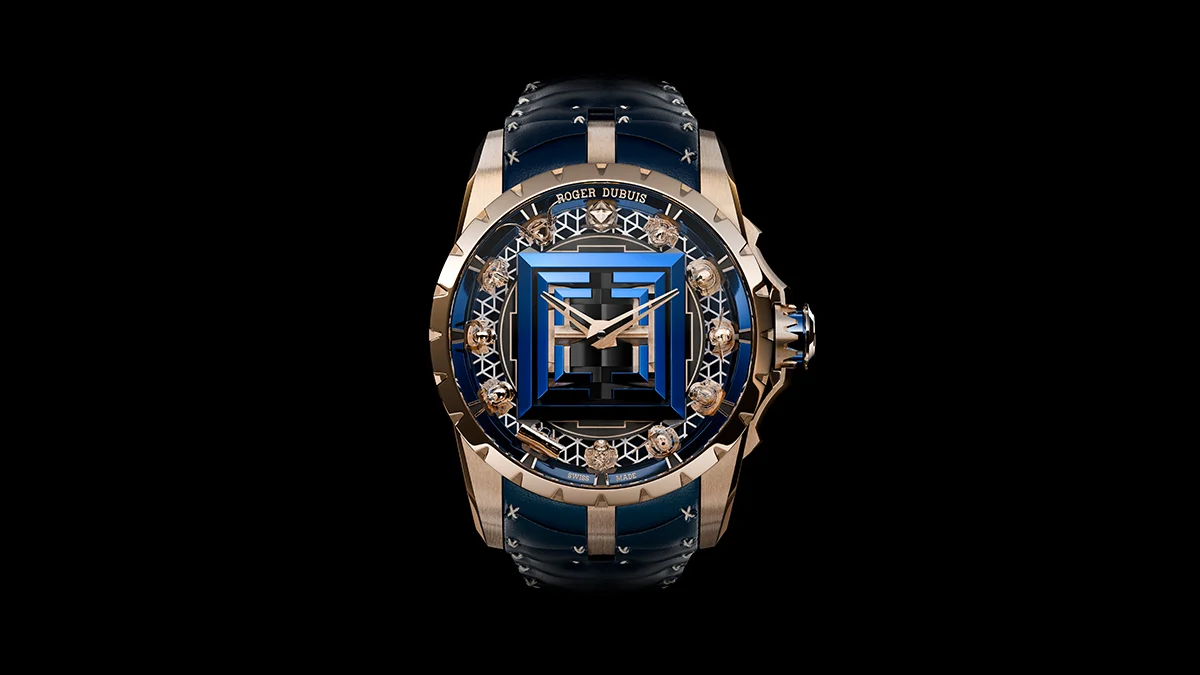
In the rarefied air of high horology, where technical precision often takes center stage, Roger Dubuis has consistently carved out a niche defined by radical design and an unapologetic embrace of artistic extremity. With the launch of the Excalibur Kabuto Legacy, the Swiss manufacture has ventured beyond the mere mechanics of timekeeping to create a bridge between the precision of modern Swiss engineering and the soul of 17th-century Japan. This limited-edition timepiece is not simply a watch; it is a profound exploration of bushido—the way of the warrior—encapsulated in a 45 mm masterpiece.
The Architecture of History: A Fusion of Eras
At the heart of the Excalibur Kabuto Legacy lies a narrative of transition and unity. The 17th century in Japan was a period of tectonic shift; the Sengoku period, characterized by fractured warlords and relentless conflict, gave way to the stability of the Tokugawa Shogunate. Roger Dubuis has chosen to immortalize this pivotal transition by placing 12 distinct samurai commanders, or bushi, as the hour markers.
This is no mere aesthetic flourish. The watch serves as a horological representation of the "circle of solidarity" that finally brought peace to a war-torn nation. By arranging these legendary figures around the dial, the watch invites the wearer to contemplate the weight of leadership and the fragility of peace.
The Art of the Micro-Sculpted Kabuto
Each commander is represented by a hyper-detailed, micro-sculpted kabuto—the traditional ceremonial helmet of the samurai. Crafted from 18-karat pink gold, these miniature helmets are works of métiers d’art that push the boundaries of what is possible on a watch dial. Each individual helmet requires between two and three days of manual labor, a testament to the uncompromising standards of the Roger Dubuis atelier.

The level of detail is staggering. Each helmet reflects the specific lineage and philosophy of the commander it represents:
- Tokugawa Ieyasu (12 o’clock): As the visionary Shogun, his kabuto is adorned with a fern, a symbol of longevity and the endurance of his political legacy.
- Honda Tadakatsu (1 o’clock): Known for his unwavering loyalty, his helmet is topped with deer antlers—a motif historically associated with divine protection.
- Sakai Tadatsugu (2 o’clock): A master of strategy and wisdom, his helmet features a sword motif, symbolizing the intellectual sharpness required to "cut away" the chaos of war.
- Sakakibara Yasumasa (3 o’clock): Famed for his moral fortitude, his kabuto features blades that represent the intersection of martial virtue and the spiritual soul of the warrior.
Chronology: From Battlefield to Bench
The development of the Excalibur Kabuto Legacy represents a multi-year effort to achieve historical authenticity. To ensure that the depiction of these commanders and their armor was not merely ornamental but historically accurate, Roger Dubuis engaged in a collaborative partnership with Frederik Cryns, a renowned professor of Japanese history and a key historical consultant for the critically acclaimed series Shōgun.
The timeline of the watch’s development involved:
- Historical Research & Curation (Months 1–8): Collaboration with Professor Cryns to select the 12 commanders who best represented the transition from chaos to the Tokugawa peace.
- Artisanal Design (Months 9–18): Translating historical artifacts into miniature 18-karat gold sculptures. This phase required testing various metallurgical processes to ensure that the delicate gold could withstand the rigors of watch assembly without losing the intricate details of the kabuto.
- Mechanical Integration (Months 12–24): Engineering the RD821 caliber to provide a stable, low-profile stage that would highlight—rather than overshadow—the dial’s complex artwork.
- Finishing & Certification (Final 6 months): Rigorous testing to ensure compliance with the Poinçon de Genève (Geneva Seal), the hallmark of the highest standard of horological finishing.
Supporting Data: Engineering Excellence
While the dial captivates the eye, the soul of the Excalibur Kabuto Legacy is the RD821 movement. This automatic caliber is the engine that drives the visual storytelling.

- Frequency: 4 Hz (28,800 vibrations per hour), ensuring steady, reliable timekeeping.
- Power Reserve: 60 hours, providing the wearer with weekend-proof functionality.
- Certification: The movement features 14 distinct finishing techniques—including circular graining, Côtes de Genève, and meticulous anglage—which together earned the watch the Poinçon de Genève.
- Aesthetic Accents: The center of the dial features an abstract, deep-blue reinterpretation of Edo Castle, the legendary stronghold of the Tokugawa clan. The blue hue is a deliberate reference to the indigo-dyed fabrics worn by samurai, adding another layer of historical nuance.
The case, crafted from 18-karat pink gold, is paired with a calfskin strap designed with stitched "tiles." This is not an arbitrary design choice; the stitching pattern is a direct reference to the lamellar armor plates (kote and do) worn by the samurai, effectively extending the armor motif from the dial to the wrist.
Official Responses and Philosophical Alignment
The significance of this release is perhaps best summarized by Professor Frederik Cryns. In an official statement accompanying the launch, Cryns noted: "Samurai culture produced some of the most extraordinary wearable art in human history. That this tradition of master craftsmanship now meets the art of haute horlogerie feels entirely fitting. Both disciplines demand the same uncompromising pursuit of excellence."
For Roger Dubuis, this partnership was about more than just marketing; it was about honoring the "hyper-horology" ethos of the brand. By aligning the discipline of the watchmaker with the discipline of the warrior, the manufacture has elevated the Excalibur line from a mere sports watch into a narrative device that explores themes of power, protection, and the legacy of the individual.
Implications for the Collector
The Excalibur Kabuto Legacy is not a watch for the masses. With only 28 pieces being produced globally, the timepiece is destined for the inner circles of the world’s most discerning collectors.

Why It Matters
- Cultural Preservation: In an era of mass-produced luxury, this watch serves as a preservation vehicle for 17th-century Japanese history.
- Investment in Artistry: The requirement of several days to hand-sculpt a single helmet suggests that the value of this piece lies as much in its artisanal provenance as its mechanical function.
- The "Hyper-Horology" Trend: Roger Dubuis continues to signal that the future of luxury watchmaking lies in the marriage of extreme mechanical capability and profound, often esoteric, storytelling.
As the watch industry continues to seek ways to remain relevant in a digital age, the Excalibur Kabuto Legacy offers a compelling blueprint: focus on the human story, leverage deep historical research, and never compromise on the technical rigor that defines a master horologist. For the 28 collectors who secure this piece, the watch will serve as a permanent, ticking monument to the spirit of the bushido—a reminder that, like a well-crafted blade, true quality is forged through fire, time, and absolute dedication.
 Evan Lee Salim
 Asep Darmawan
 Laily UPN
