

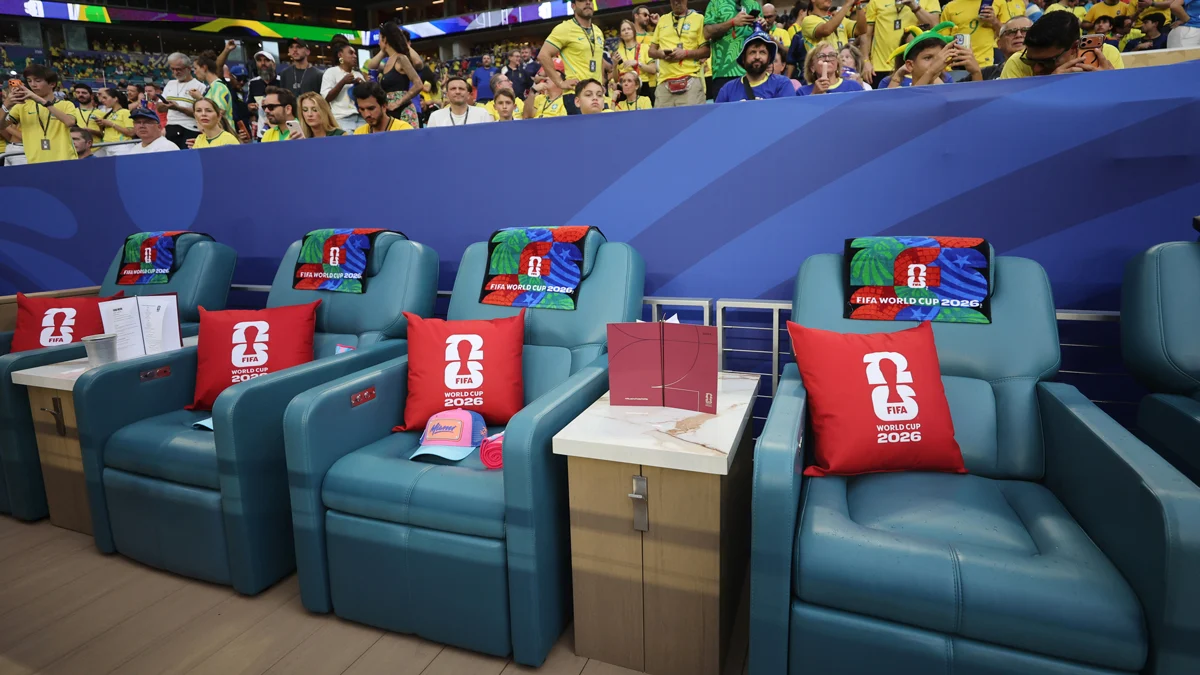
Football—the sport colloquially christened "the people’s game"—has long been defined by its democratic simplicity: a ball, two goals, and twenty-two players on a pitch. Yet, as the world gears up for the 2026 FIFA World Cup, that narrative is undergoing a radical, high-stakes transformation. With the tournament expanding to a record-breaking 48 national teams and 104 matches hosted across 16 cities in the United States, Mexico, and Canada, the spectacle is unprecedented. But for the average fan, the price of admission to this global festival has shifted from a hobbyist’s expense to a luxury investment, signaling a permanent evolution in the business of sports.
The State of Play: A Record-Breaking Tournament
The 2026 FIFA World Cup is, by every metric, the largest sporting event in history. By spreading the tournament across three nations and significantly increasing the number of matches, FIFA has created a logistical behemoth. However, this expansion has coincided with a surge in what economists call "prestige pricing."
"Cheap" seats for group-stage matches are currently hovering in the four-figure range, while premium tickets for high-profile fixtures have been seen trading for upwards of $10,000. This is not merely a byproduct of high demand; it is the result of dynamic ticket pricing models, soaring infrastructure costs, and a fundamental shift in how sporting events are marketed. The "people’s game" is increasingly being rebranded as an exclusive asset for the global elite, effectively pricing out the very fan base that built the sport’s foundational culture.
Chronology: The Evolution of Sports Tourism
The trajectory of sports as a luxury commodity did not happen overnight. To understand the current climate, one must look at the last five years of market development:
- 2021–2022: As global travel restrictions eased, a "revenge travel" boom merged with sports fandom. Interest in high-end hospitality at F1 circuits and tennis Grand Slams began to outpace traditional ticket sales.
- 2023: The "Taylor Swift effect" at Kansas City Chiefs games highlighted a new demographic: the "lifestyle fan." Sports venues became secondary to the social experience, driving demand for premium suites over standard seating.
- 2024: Formula 1 attendance records were shattered across all 24 races. Nielsen data confirmed that interest was no longer limited to traditional demographics, with massive growth among women and affluent consumers in the Middle East and Asia-Pacific.
- 2025: The lead-up to the 2026 World Cup saw the formalization of "ultra-exclusive" hospitality packages, with hotels in host cities pivoting their entire business models to offer million-dollar packages.
- 2026 (The Present): The arrival of the tournament marks the zenith of the "experiential exclusivity" era, where access to the stadium is merely the baseline, not the destination.
Supporting Data: The Trillion-Dollar Industry
The sports tourism sector is no longer a niche market; it is a macroeconomic powerhouse. Current valuations place the industry at approximately $707.29 billion, with projections suggesting it will balloon to $1.3 trillion by 2032.
This growth is fueled by the fact that global sporting events now account for roughly 10 percent of the total tourism market. When you combine the prestige of major events—the Olympics, the Super Bowl, the NBA Finals, and the FIFA World Cup—with the hospitality sector, the profit margins are astronomical.

According to Diedra Pyle, co-founder of Fioraé Luxury Travel, the demand is no longer just for a ticket. "Worldwide sporting events have skyrocketed in value because the demand for ‘access’ has replaced the demand for ‘attendance,’" Pyle explains. "The high-net-worth traveler isn’t looking for a seat; they are looking for a curated, friction-less, and exclusive environment."
The Architecture of Exclusivity: Official Responses and Offerings
Industry leaders are responding to this demand by stripping away the traditional stadium experience and replacing it with "total immersion." The official FIFA hospitality bundles have set a new standard. The "Follow My Team" packages, which offer access to multiple group-stage matches and premium lounge privileges, begin at $6,000. However, for the true elite, these are entry-level offerings.
Erica Jackowitz, co-founder of Rêve Travel Club, notes that for the most discerning clients, the cost of entry for the World Cup is closer to $32,000 per ticket. "Clients want to arrive and have every friction point removed," she says. "They aren’t just watching a match; they are utilizing private helicopter transfers to the Meadowlands and enjoying pre- and post-match experiences that are entirely shielded from the public."
Luxury hotels have joined this race to the top. In Miami, the W South Beach introduced a "Million-Dollar Soccer Superstar Package," which includes a police escort to the stadium, private residence stays, and curated local distillery tours. In Boston, the Liberty Hotel offered a $75,000 "Goal-den Legendary Experience," ensuring that the journey to Gillette Stadium is as refined as the game itself. These packages aren’t just services; they are social currency.
Implications: The Death of the Accessible Spectacle?
The shift toward "experiential exclusivity" has profound implications for the future of professional sports.
1. The Social Competition
"Just getting in isn’t good enough anymore," says Pyle. For the ultra-wealthy, attending a sporting event has become a status symbol, a fashion statement, and a conversation piece. The competition to be seen in the most exclusive suites—or to be in the "closest available seat to a celebrity"—has fundamentally changed the atmosphere of the stadiums. Sports have become a theater for the elite to interact with one another, with the match serving as a high-octane backdrop.

2. Pricing Out the Purists
The most visible casualty of this trend is the traditional fan. With knockout-round ticket prices rising by more than 34 percent, and the final match entry fees starting at $7,600, the demographic of the average stadium attendee is shifting. This creates a cultural vacuum in the stands. When the "people’s game" becomes a luxury item, the organic energy—the chanting, the camaraderie, and the raw emotion—is often replaced by the sterile silence of corporate hospitality.
3. The Future of Sports Business
As we look toward 2032, it is clear that the sports industry will continue to cater to the high-net-worth traveler. The financial logic is undeniable: why sell 50,000 tickets to the masses when you can curate 500 bespoke experiences for the ultra-wealthy that generate the same revenue with significantly less operational friction?
The 2026 World Cup serves as the ultimate proof-of-concept for this model. By marrying high-end hospitality, private aviation, and exclusive access, organizers have transformed a tournament into a luxury brand. While this undoubtedly ensures the financial health of FIFA and its partners, it raises a haunting question for the future of the sport: If the people can no longer afford to watch the "people’s game," does it remain the same sport, or has it become something else entirely—a plaything for the 1 percent?
For now, the answer seems to be a blend of both. The game on the pitch remains the same, but the game in the stands has changed forever. As the world watches in June 2026, it will be witnessing not just the best of football, but the peak of sports as a luxury product—a trillion-dollar business where the price of a ticket is now, quite literally, the price of entry into a new global aristocracy.
 Evan Lee Salim
 Laily UPN
