

Main Facts: The Intersection of Entertainment and Executive Power
In a primetime address delivered against a backdrop of escalating tensions with Iran and a Republican Party bracing for a high-stakes midterm season, President Donald Trump once again pivoted to a familiar refrain: the perceived illegitimacy of the 2020 U.S. presidential election. While the address was framed around "election vulnerabilities," it served primarily as a platform for the President to relitigate his loss to Joe Biden, further entrenching a narrative of systemic fraud that has come to define his political identity.
However, to understand the President’s current posture toward the foundational institutions of American democracy, historians and political analysts suggest looking back at a different kind of contest. Long before the "Stop the Steal" movement or the challenges to the Electoral College, Donald Trump was engaged in a bitter, years-long feud with the Television Academy.
The central thesis of this behavioral pattern is clear: for Donald Trump, any institution that does not grant him victory is, by definition, "rigged." This philosophy, which first manifested in the world of reality television and entertainment awards, has now been scaled to the highest levels of government, creating a paradigm where the legitimacy of an outcome is measured solely by his personal success.
Chronology: From Real Estate Ruin to Reality TV Royalty
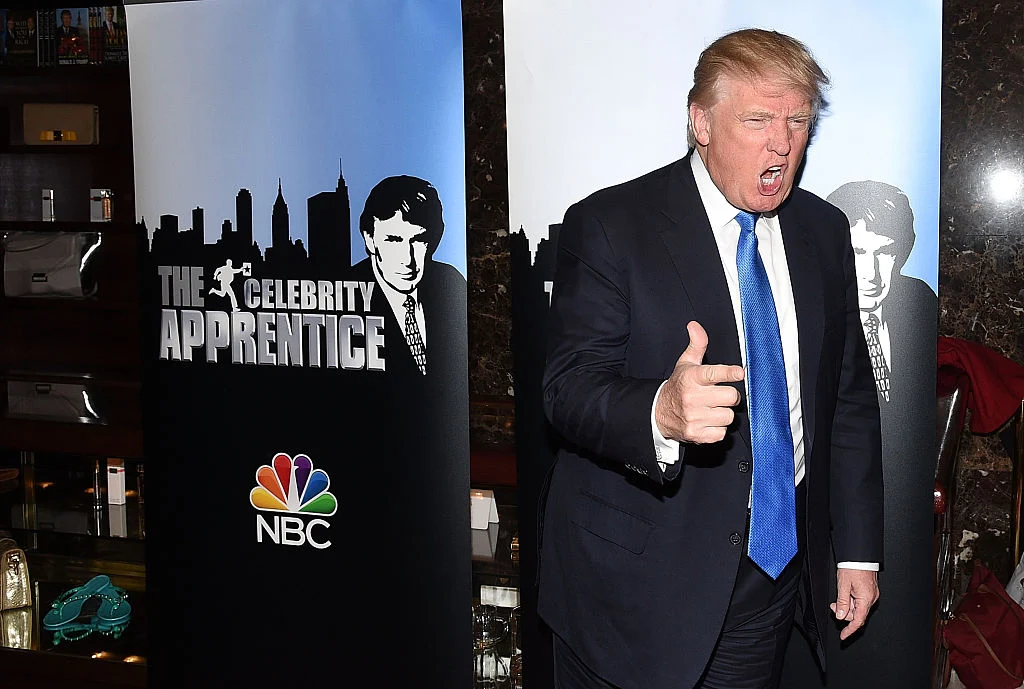
The transformation of Donald Trump from a struggling New York real estate developer to a national icon was facilitated almost entirely by NBC’s The Apprentice. To understand the weight he placed on the Emmys, one must first understand the financial and cultural stakes of his television career.
2004–2010: The Rebirth of a Brand
In the early 2000s, Trump’s real estate empire was under significant strain, burdened by massive debts and a string of casino bankruptcies. The Apprentice, which debuted in 2004, provided a lifeline. Produced by Mark Burnett, the show didn’t just offer a paycheck; it crafted a mythos of Trump as the ultimate arbiter of business excellence. Between 2004 and 2015, including the spin-off Celebrity Apprentice, Trump reportedly earned an estimated $427 million from the franchise.
2004–2005: The Initial "Theft"
In its debut season, The Apprentice was a cultural phenomenon, pulling in massive ratings and dominating the zeitgeist. Trump expected this success to be mirrored by the Television Academy. In 2004, the show was nominated for "Outstanding Reality-Competition Program." It lost to CBS’s The Amazing Race. In 2005, the results were the same. Despite the high ratings of the "You’re Fired" era, the industry peers who made up the Academy preferred the globetrotting production of its competitor.

2012–2014: The Social Media Campaign
Years after his peak ratings had passed, Trump’s resentment remained potent. He utilized the emerging power of Twitter to launch a sustained assault on the Emmys. In a series of posts that would later serve as a template for his political rhetoric, he called the voting process "dishonest," "a joke," and "totally political." He frequently claimed that the show lost because he "wasn’t part of the establishment" or because the Academy wanted to protect its "favorites."
2016: The Debate Stage
The transition from entertainment grievance to political strategy was completed during the third 2016 Presidential Debate. When moderator Chris Wallace asked Trump if he would respect the results of the upcoming election, the then-GOP nominee demurred, stating he would "keep you in suspense." This prompted his opponent, Hillary Clinton, to highlight his history of claiming "rigged" outcomes whenever he faced defeat, specifically citing his reaction to the Emmy losses.
Supporting Data: Ratings, Revenue, and the "Rigged" Metric
The data surrounding Trump’s tenure on television explains why the Emmy losses were felt so acutely. For Trump, ratings were the only true "vote," and he viewed critical acclaim or peer-reviewed awards as secondary—unless they were denied to him.
- Financial Impact: According to tax records and financial disclosures analyzed by The New York Times, the $427 million Trump earned from The Apprentice funded his lifestyle and business ventures during a decade where his core real estate holdings were often underperforming.
- The "Amazing Race" Dominance: Between 2003 and 2014, The Amazing Race won the Emmy for Outstanding Reality-Competition Program ten times. This sustained dominance by a single program became the focal point of Trump’s ire, leading him to claim that the Emmy’s voting block was a "closed circle" designed to exclude him.
- The Twitter Pattern: An analysis of Trump’s social media history reveals that the word "rigged" was used in relation to the Emmys and other entertainment venues (including the Oscars and the Miss Universe pageant when it didn’t suit his needs) dozens of times before it was ever applied to the Iowa Caucuses or the 2016 General Election.
Official Responses: Institutions Under Fire
The Television Academy, generally a body that avoids political fray, was eventually forced to respond to the future President’s accusations. As Trump’s rhetoric gained more traction among his followers, the Academy took the unusual step of defending its integrity through public educational campaigns.
The Television Academy’s Defense
In response to the "dishonest" labels, the Academy released detailed explainers on its voting process. They emphasized that winners are determined by a vast pool of thousands of industry professionals through a secret ballot managed by the accounting firm Ernst & Young. This mirrors the defense currently mounted by the Cybersecurity and Infrastructure Security Agency (CISA) and various Secretaries of State, who have spent the last several years explaining the mechanics of audit trails and canvassing to a skeptical public.
Hillary Clinton’s Warning
During the 2016 debates, Clinton’s response to Trump’s "rigged" rhetoric was prescient. She argued that his inability to accept the Emmy losses was not a humorous quirk, but a "troubling mindset."

"Every time Donald thinks things are not going in his direction, he claims whatever it is rigged against him," Clinton noted. She framed it as a rejection of the democratic spirit, which requires losers to accept outcomes for the sake of institutional stability. The audience laughed when Trump interrupted her to insist, "I should have gotten it," but the exchange underscored a fundamental divergence in how the two candidates viewed institutional authority.
Implications: The Erosion of Institutional Trust
The trajectory from the 2004 Emmys to the current challenges to U.S. election validity suggests that the "rigged" narrative is not a reaction to specific evidence, but a pre-emptive governing philosophy. The implications of this mindset for American democracy are profound and multi-faceted.
The Personalization of Legitimacy
Under this philosophy, the legitimacy of an institution is no longer tied to its adherence to rules, but to its loyalty to a specific individual. When the Emmy voters chose The Amazing Race, the Academy became "corrupt." When the courts rejected 2020 election challenges, the judicial system became "politicized." When the intelligence community provided assessments Trump disliked, it became the "Deep State." This shift replaces objective standards with a "cult of personality" metric.
The Normalization of Conspiracy
By applying the language of "rigging" to a low-stakes entertainment award, Trump socialized his base to accept the concept of systemic corruption in all facets of life. When he eventually applied that same language to the democratic process, the groundwork had already been laid. The supporters who believed the Hollywood "elites" were snubbing their favorite TV star were more likely to believe that those same "elites" were stealing their votes.
The Future of Democratic Transitions
The President’s recent address, occurring amidst international crises, reinforces the concern that the "Emmy mindset" has permanently altered the American political landscape. If a sitting President maintains that the only "fair" election is one he wins, the peaceful transfer of power—once the hallmark of the American experiment—becomes a conditional event rather than a guaranteed one.
Conclusion: The Punchline that Became a Warning
In 2016, the world laughed at the idea that a man would equate a television award with the presidency. However, the events of the last several years have turned that punchline into a sober warning. Donald Trump’s decade-long battle with the Television Academy was the laboratory in which he perfected the rhetoric of grievance. As he continues to question the validity of our democracy from the highest office in the land, it is clear that the "rigged" narrative is no longer a tool for television ratings—it is a challenge to the very architecture of the Republic. The institutions are only legitimate when they validate him; when they do not, they are the enemy. It is a philosophy that began on a soundstage in Los Angeles and now threatens the stability of the American democratic process.
 Jia Lissa
 Lina Irawan
 Iffa Jayyana
