

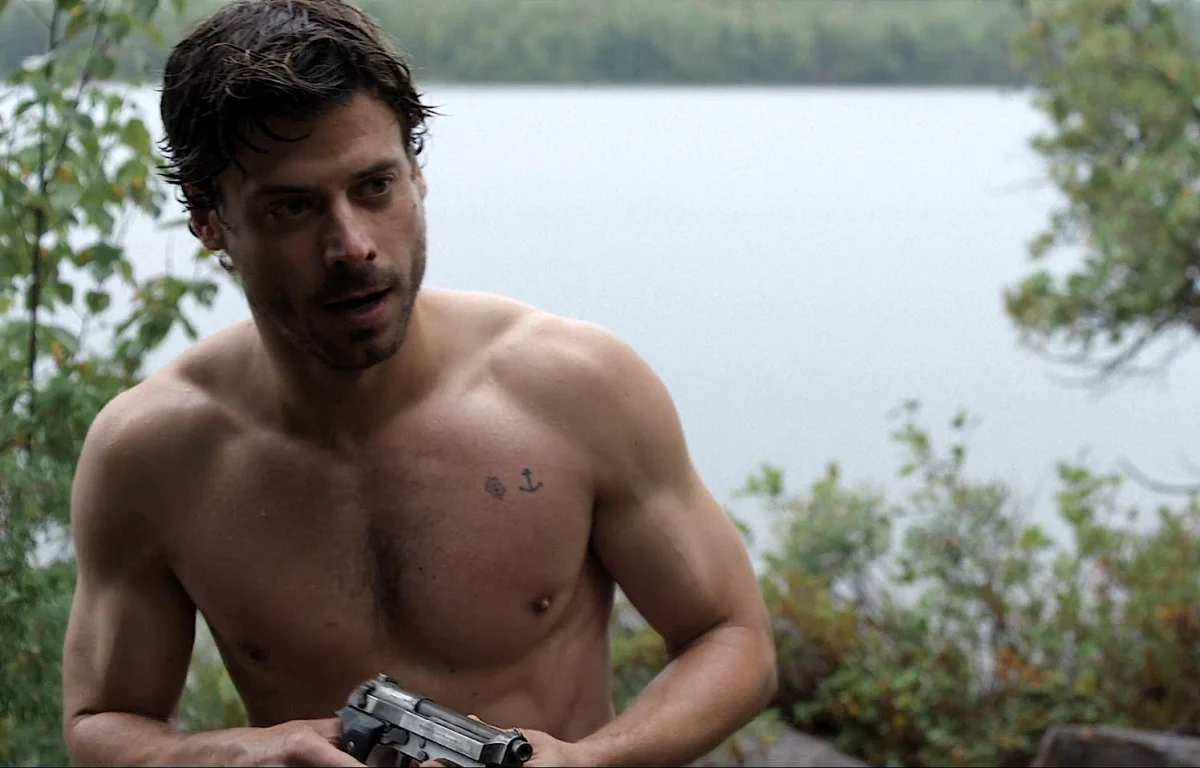
“Wolves don’t attack for no reason.” This clinical, almost detached reassurance serves as the opening gambit in Wiebke von Carolsfeld’s psychological thriller, Someone’s Daughter. Spoken by Sam (Pascale Bussières), a high-stakes defense attorney, to her former client Paul (François Arnaud), the line is intended to soothe a man trembling in the dark of the Canadian wilderness. However, as the film unfolds, the statement reveals itself to be a biting irony. In von Carolsfeld’s world, the most dangerous predators do not have fur or fangs; they wear tailored suits, hold law degrees, and exploit the “reasoning” of a flawed justice system to mask their instincts.
Premiering at the Fantasia International Film Festival on July 21, 2026, Someone’s Daughter has emerged as one of the year’s most provocative cinematic offerings. It is a film that takes the high-concept bones of a survival thriller and grafts them onto a searing autopsy of legal ethics and the "rape-revenge" subgenre.
Main Facts: A Subversive Premise
Someone’s Daughter centers on an agonizingly uncomfortable pairing. Sam is a successful defense attorney who, fifteen years prior, secured an acquittal for Paul, a man accused of a brutal sexual assault. The trial’s fallout was catastrophic: the accuser, a young woman named Lydia, succumbed to addiction and eventually died, a tragedy her father, Mr. Borden (Peter Outerbridge), blames squarely on the defense’s aggressive and dehumanizing tactics.
The film’s narrative engine ignites when Borden kidnaps both Sam and Paul, transporting them to a remote island in the lush, deceptive beauty of Quebec’s Eastern Townships. While the setup suggests a conventional survivalist horror—reminiscent of Sam Raimi’s blockbuster Send Help—von Carolsfeld quickly pivots. By removing the primary antagonist early in the first act, she forces the lawyer and the client into a vacuum where they must survive not just the elements, but the growing realization of their mutual moral decay.

Key Film Credits:
- Director: Wiebke von Carolsfeld
- Screenwriters: Wiebke von Carolsfeld and Doug Taylor
- Starring: Pascale Bussières, François Arnaud, Peter Outerbridge
- Festival Debut: Fantasia (July 21, 2026)
- Theatrical Release: October 23, 2026 (Canada)
- Grade: B+
Chronology of a Psychological Collapse
The film’s structure is a deliberate descent from external threat to internal horror. The chronology of the narrative is essential to understanding Sam’s psychological erosion.
The Abduction and the Catalyst
The film opens with the jarring abduction of Sam, who finds herself reunited with Paul under the most harrowing circumstances. Paul, now a man in his thirties who has lived a life of unearned freedom, is already in a state of panic. Mr. Borden, portrayed with a quiet, bone-deep weariness by Peter Outerbridge, does not intend to play a game of cat-and-mouse. After delivering a chilling indictment of Sam’s professional conduct—specifically her role in “destroying” Lydia on the witness stand—Borden performs a final, shocking act of protest. He rows into the lake and takes his own life with a shotgun, leaving his captives stranded with no map, few supplies, and a legacy of trauma.
The Trek through the Eastern Townships
What follows is a grueling multi-day hike through the dense Canadian woods. The cinematography captures the Eastern Townships not as a postcard-perfect landscape, but as a sprawling, indifferent green labyrinth. As Sam and Paul navigate the terrain, the survivalist elements—finding water, building fire, warding off the cold—become secondary to the dialogue.
The conversation initially revolves around Lydia. Sam, ever the pragmatist, tries to maintain a professional distance, reminding Paul of his victim’s name. Paul, however, remains trapped in a cycle of self-pity, claiming Lydia “ruined his life” despite his acquittal. This middle act is where the film’s tension peaks, as the physical proximity required for survival begins to feel like a violation.

The Erosion of Certainty
As the days pass, Paul’s mask begins to slip. He oscillates between a "man-child" needing Sam’s protection and a subtle manipulator. He confesses to a long-standing "crush" on Sam, eventually suggesting they "spoon for warmth." It is here that Sam’s professional confidence—the "level-headed machine" that won the case—begins to crack. She is forced to confront the reality of the man she helped set free, realizing that his innocence was perhaps a legal fiction she helped write.
Supporting Data: Genre Subversion and Literary Roots
To understand the impact of Someone’s Daughter, one must look at its place within the history of "rape-revenge" cinema. Traditionally, this subgenre (defined by titles like I Spit on Your Grave or The Last House on the Left) relies on graphic physical retribution. Von Carolsfeld, known for her literary adaptations and character-driven dramas, chooses a different path.
Statistical and Thematic Context
The film’s "brutality" is measured in minutes of silence and uncomfortable eye contact rather than gallons of blood. According to critical analysis from the Fantasia premiere, the film devotes nearly 70% of its runtime to dialogue-driven scenes between the two leads. This is a radical departure from survival thrillers like Send Help, which emphasize set-pieces and environmental hazards.
By focusing on the "philosophical rot" of the characters, von Carolsfeld highlights a different kind of violence: the systemic violence of the courtroom. The "supporting data" of the film’s world is the trial transcript—the way Sam used Lydia’s vulnerability against her to win a case. The film posits that the trauma inflicted by a "tough system" is just as enduring as physical harm.

Official Responses and Critical Perspective
The critical reception at Fantasia has been largely positive, with many praising the film’s restraint.
The Director’s Vision
In post-screening discussions, von Carolsfeld and co-writer Doug Taylor have emphasized that the film is not intended to be a sweeping indictment of the legal profession, but rather a "devastatingly accurate portrait of human complicity." Von Carolsfeld’s return to the director’s chair after a decade-long hiatus has been described as a "masterclass in tight control." Her background in literary adaptation is evident in the way the script treats the wilderness as a character that strips away the social veneers of its inhabitants.
Performance Analysis
Critics have singled out Pascale Bussières and François Arnaud for their nuanced performances. Bussières is tasked with playing a woman who has built her life on "impossibly tough problem-solving." Her transformation from a confident architect of the law to a vulnerable "someone’s daughter" is the film’s emotional backbone.
Arnaud, meanwhile, avoids the tropes of the "movie monster." His Paul is frightening because he is ordinary—a "walking liability" who cannot control his impulses but believes he is a "good guy." This ambiguity is what makes the film work; if Paul were a cartoon villain, the moral exercise would be moot.

Implications: The Mirror of Society
The final act of Someone’s Daughter leaves the audience with more questions than answers, which is precisely the point. The film’s implications reach far beyond the Canadian woods.
The Accountability Gap
The film suggests that true accountability is rarely found in a courtroom. Instead, it can only be engineered through circumstances where "uncomfortable truths can no longer be ignored." By placing Sam in a situation where she is essentially a "prison cellmate" to her own success, the film asks: What is the price of a "win"?
The Persistence of Predators
The "wolf" metaphor returns in the final scenes. Von Carolsfeld’s most chilling conclusion is that predators don’t always look like wolves. They often look like competitive swimmers, security experts, or charming ex-clients. The wilderness doesn’t change them; it simply removes the "distance" that society uses to keep them at arm’s length.
Comparison to ‘Promising Young Woman’
The film shares a thematic DNA with Emerald Fennell’s Promising Young Woman. Both films force characters who have enabled predators to inhabit the vulnerability of the victims. When Mr. Borden asks Sam to remove her makeup so he can see "what she really looks like," the answer—"someone’s daughter"—is a reminder that the victims of the "tough system" are not abstract names on a docket, but human beings with fathers, mothers, and lives.

Conclusion
Someone’s Daughter is a challenging, often claustrophobic experience that refuses to offer the catharsis of traditional genre cinema. It is a film about the "impressive reach of violence" and the way professional duty can often mask moral failure. As it prepares for its Canadian theatrical release on October 23, it stands as a testament to Wiebke von Carolsfeld’s ability to turn a high-concept survival story into a profound meditation on the darkness that lives within the civilized world.
In the end, the film suggests that while wolves may not attack for no reason, humans have developed a much more sophisticated—and much more dangerous—set of reasons to hunt.
 Jia Lissa
 Lina Irawan
 Iffa Jayyana
