

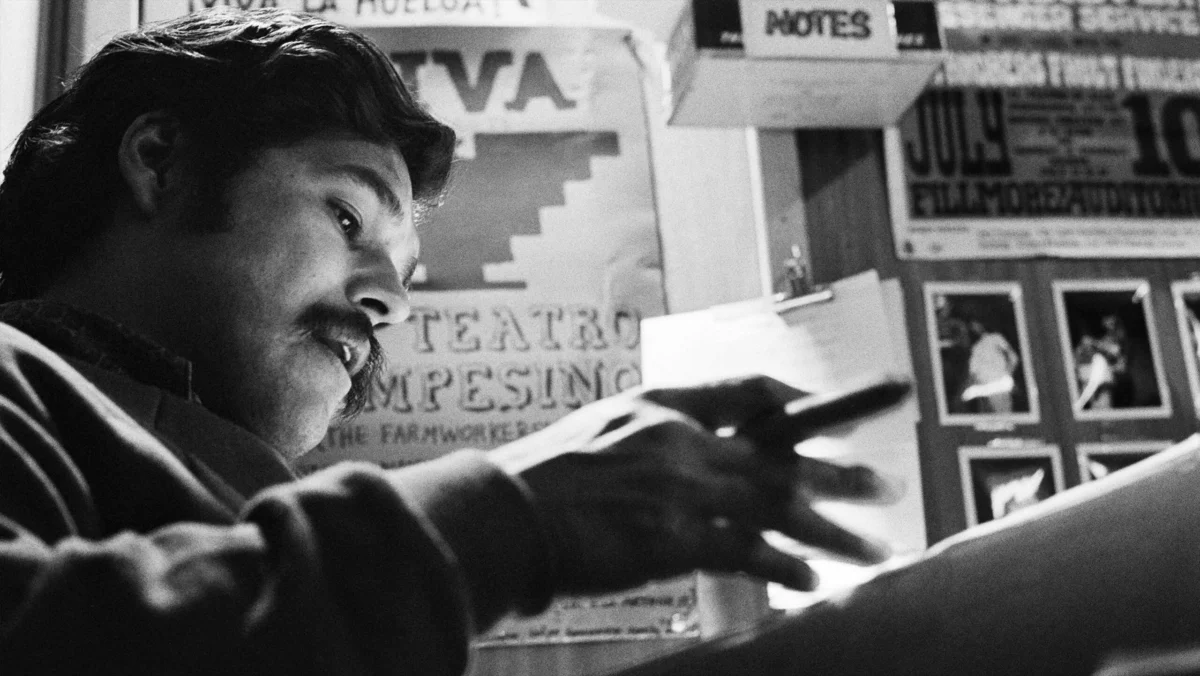
The specialized box office remains a vital, albeit volatile, ecosystem within the broader cinematic landscape. While summer blockbusters often monopolize the cultural conversation, the performance of independent films—particularly documentaries—serves as a barometer for the health of art-house cinema. This week’s Rentrak specialized chart, exclusively shared with IndieWire, highlights a significant triumph for grassroots distribution: the opening of American Pachuco: The Legend of Luis Valdez.
Despite a limited footprint, the film’s debut suggests a robust appetite for culturally specific, historically significant narratives. This success comes amidst a shifting distribution environment where self-released titles are increasingly finding ways to compete with mid-sized studio offerings.
Main Facts: A Strong Debut for a Chicano Legend
The primary headline of this week’s specialized chart is the impressive New York City opening of American Pachuco: The Legend of Luis Valdez. Directed by David Alvarado, the documentary is a comprehensive profile of the man widely regarded as the father of Chicano theater. The film arrived in Manhattan with significant momentum, having secured the prestigious Audience Award in the documentary category at this year’s Sundance Film Festival.
The film’s initial engagement was restricted to a single screen at the historic Film Forum in New York City. However, that single screen proved to be a powerhouse. While initial Rentrak data suggested a weekend haul of $5,072, figures provided directly by veteran theater booker Michael Tuckman indicated a much higher reality: roughly $7,500. This discrepancy is often seen in independent reporting, where "house" numbers from sold-out screenings (including a capacity crowd on Friday night) reflect the true ground-level demand.
Beyond American Pachuco, the chart reveals a mixed bag for independent cinema. Maddie’s Secret maintained its dominance at the top spot, crossing the coveted $1 million domestic milestone. Conversely, IFC’s Night Nurse suffered a catastrophic 92 percent drop in its second week, signaling the difficulties of sustaining momentum after an initial wide-ish release on 300 screens.
Chronology: From Sundance Accolades to Theatrical Rollout
The journey of American Pachuco from a festival darling to a theatrical contender has been marked by both critical acclaim and complex social discourse.
- January 2026: The film premiered at the Sundance Film Festival. It immediately resonated with audiences, ultimately winning the Audience Award for Documentary. Its portrayal of Luis Valdez’s life—from the migrant labor camps to the founding of El Teatro Campesino—was hailed as a definitive look at the Chicano movement.
- Spring 2026: As the film traveled the festival circuit, it became entangled in a broader cultural debate. Because Valdez’s story is inextricably linked with the United Farm Workers (UFW) and Cesar Chavez, the film’s release coincided with a series of public allegations regarding historical sexual abuse involving Chavez. This forced the filmmakers to navigate a delicate balance between honoring Valdez’s legacy and addressing the modern reckoning of his contemporaries.
- Summer 2026: Opting for a self-distribution model with the support of Michael Tuckman, the film bypassed traditional studio acquisition in favor of a targeted, grassroots rollout.
- The New York Premiere: The film opened at the Film Forum, capitalizing on the city’s sophisticated documentary audience. The sell-out crowds on opening night set the stage for its upcoming West Coast expansion.
- Future Expansion: The film is scheduled to open in Los Angeles this coming weekend across approximately twelve theaters. It will then expand to the San Francisco Bay Area on July 31, followed by a 20-market rollout throughout the remainder of the summer.
Supporting Data: Analyzing the Specialized Chart
To understand the significance of American Pachuco’s $7,500 opening, one must look at comparable titles and the broader chart data.

Comparison: ‘Time and Water’
Earlier this summer, Time and Water, another Sundance documentary, followed a similar trajectory. It opened on one screen in New York to $8,048. Over the course of seven weeks, that film utilized its strong per-screen average to "leg out" to a domestic total of $86,000. If American Pachuco follows this path, its strong performance in Latino-heavy markets like Los Angeles and the Bay Area could see it significantly outperforming Time and Water.
The Leaderboard: ‘Maddie’s Secret’
While documentaries are making waves, the specialized chart’s current leader is the narrative feature Maddie’s Secret. By adding another $80,000 this week, the film has officially surpassed the $1 million mark. In an era where many independent films struggle to reach six figures, this milestone confirms the film’s status as a "sleeper hit," driven by word-of-mouth and sustained interest in its specific genre niche.
The Cautionary Tale: ‘Night Nurse’
The most dramatic movement on the chart belongs to IFC’s Night Nurse. After a wide release on over 300 screens last week, the film’s theater count was slashed to just 33. The resulting $4,158 weekend—a per-screen average of only $126—represents a 92 percent decline. This highlights the "cliff" that many independent films face when they fail to capture an audience immediately in a semi-wide release; without the "event" status of a documentary like American Pachuco, narrative indies can be quickly squeezed out by theater owners.
Official Responses: Addressing Legacy and Controversy
The release of American Pachuco has required director David Alvarado to be more than just a filmmaker; he has had to act as a historian and a spokesperson for a movement.
The film features an "A-list" of Chicano and Hollywood icons, including Edward James Olmos, Lou Diamond Phillips, Dolores Huerta, Cheech Marin, Linda Ronstadt, and Taylor Hackford. Their participation underscores Valdez’s influence on American culture. However, the film’s proximity to the Cesar Chavez allegations has required a proactive response.
Alvarado has addressed the controversy in several Q&A sessions and interviews, stating that the film intends to provide a "truthful and unvarnished" look at the history of the Chicano movement. Supporters of the film argue that Alvarado’s forthrightness has actually aided the box office. Rather than shying away from the debate, the film has become a focal point for discussions on how to honor revolutionary art while acknowledging the flaws of revolutionary figures.
Michael Tuckman, the booker behind the film’s theatrical strategy, noted that the sell-out screenings in downtown Los Angeles and East LA are a testament to the "community-first" approach. By targeting theaters in neighborhoods where Valdez’s work has the deepest roots, the production is proving that there is a sustainable model for self-released ethnic and historical documentaries.

Implications: The Future of Specialized Distribution
The success of American Pachuco and the steady performance of other documentaries like Mary Oliver: Saved By the Beauty of the World and Peter Asher: Everywhere Man suggest several key trends for the future of the industry:
1. The Power of the "Audience Award"
The Sundance Audience Award remains one of the most reliable predictors of theatrical viability for documentaries. While critics’ awards may signal prestige, the Audience Award signals "watchability"—a crucial factor for theater owners when deciding whether to dedicate a screen to a non-fiction title.
2. The Viability of Self-Distribution
The $7,500 NYC opening of American Pachuco proves that filmmakers do not always need a major distributor like Neon, A24, or Searchlight to find an audience. With a savvy booker and a clear understanding of the target demographic, independent filmmakers can retain more of their box office revenue and maintain control over their film’s narrative.
3. The "Legs" of Cultural Documentaries
Unlike big-budget sequels that are "front-loaded" (making most of their money in the first weekend), specialized documentaries rely on longevity. The goal for American Pachuco is not a $10 million opening, but a steady presence over three months. By rolling out to 20 additional markets through August, the film is positioning itself for a long-tail life on VOD and streaming platforms, bolstered by its theatrical credentials.
4. The Challenges of Scaling
The collapse of Night Nurse serves as a warning. The "specialized" market is increasingly bifurcated between tiny, one-screen hits and films that try to scale too quickly. For an independent film, being on 300 screens is often a "no-man’s land"—too small for a massive marketing blitz, but too large to maintain a high per-screen average. The success of American Pachuco on a single screen suggests that "going small to get big" remains the most effective strategy for high-quality independent cinema.
As the summer continues, the industry will be watching the West Coast expansion of American Pachuco closely. If it can replicate its New York success in Los Angeles and San Francisco, it will solidify its place as one of the year’s most significant documentary achievements and a testament to the enduring legacy of Luis Valdez.
 Jia Lissa
 Lina Irawan
 Iffa Jayyana
