

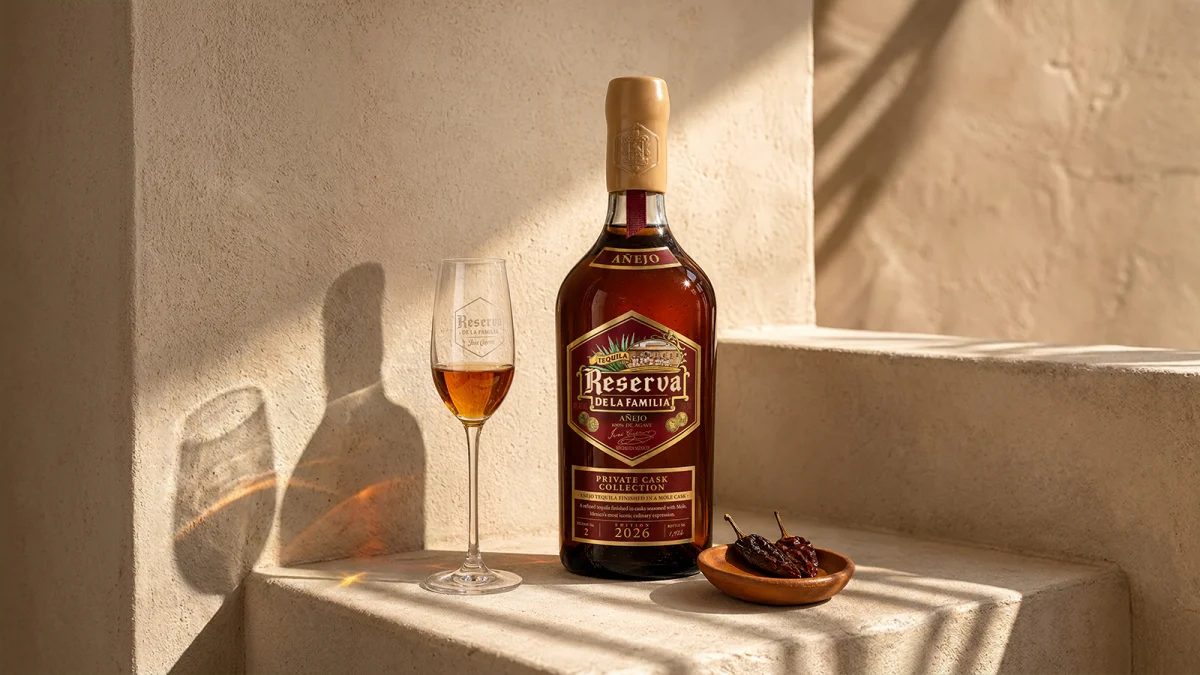
For decades, the name "Jose Cuervo" has occupied a complex space in the global spirits landscape. To the casual consumer, the brand is synonymous with "Especial," the ubiquitous mixto tequila that has fueled countless margaritas and college parties. However, beneath the shadow of its entry-level products lies a rich, storied history of high-end craftsmanship. This legacy is anchored by the Reserva de la Familia collection, a premium tier that has served as the brand’s intellectual and artisanal laboratory since its public inception in 1995.
In a bold move that challenges the boundaries of traditional tequila production, Jose Cuervo has unveiled its latest innovation: the Private Cask Collection Edition No. 2: Mole Cask. This release represents a significant departure from standard aging techniques, utilizing barrels seasoned with authentic Oaxacan red mole to finish the spirit. While the spirits industry has seen various "infused" or "finished" products, this marks a pioneering moment for the tequila category, positioning it firmly within the realm of high-concept, culinary-driven mixology.
The Main Facts: A New Frontier in Cask Finishing
The Private Cask Collection Edition No. 2: Mole Cask is not a flavored tequila in the traditional, additive-heavy sense. Instead, it is an exercise in structural nuance. Produced at the historic La Rojeña distillery in Tequila, Jalisco, the spirit begins its life with the traditional rigor expected of the Reserva de la Familia line. The agave piñas are slow-roasted in masonry brick ovens, fermented with a proprietary yeast strain, and subjected to double distillation in copper pot stills.
The magic—and the controversy—lies in the final maturation stage. After an initial aging period in a blend of new American and French oak barrels, the tequila is transferred to medium-toast American oak casks that have been meticulously seasoned with Oaxacan red mole.
According to Maestro Tequilero Alejandro Coronado, the seasoning process was a logistical feat. Rather than filling the barrels entirely with the complex, multi-ingredient sauce—which would likely have compromised the wood’s integrity and resulted in a syrupy, unbalanced mess—the team lined the interior of the barrels with the mole. The sauce was removed after the wood absorbed the essential aromatic compounds, ensuring that the tequila interacts only with the essence of the mole. The result is an 80-proof spirit that retains the structural integrity of a premium tequila while absorbing the savory, spicy, and earthy characteristics of the Oaxacan classic.
Chronology: From Family Reserve to Commercial Innovation
To understand the weight of this release, one must look at the evolution of the Reserva de la Familia brand. For over 300 years, the Cuervo family kept their finest private reserves for their own consumption and gifts for dignitaries. It was not until 1995 that this private stock was released to the general public, signaling a shift in how the industry viewed the aging potential of agave spirits.
The Extra Añejo Conflict
A pivotal moment in the history of the Reserva line was its early adoption of the "Extra Añejo" classification. Cuervo maintains that they released the first Extra Añejo under the Reserva name well before the Consejo Regulador del Tequila (CRT) formally established the category in 2006. This claim, however, is hotly contested by competitors like El Tesoro, who assert that they brought an Extra Añejo to market as early as 1994.
This historical friction highlights a broader trend: the race to define "ultra-premium" tequila. While other brands focused on long-term aging to mimic the profile of fine Cognac or Bourbon, Cuervo’s latest move with the Mole Cask suggests that the future of premium tequila lies not just in the duration of time spent in the barrel, but in the method of the finish. By introducing culinary seasoning to the maturation process, Cuervo is effectively shifting the conversation from "how long" to "how complex."
Supporting Data: The Science of Agave and Mole
The intersection of agave and mole is not entirely unprecedented, though it has historically been confined to the world of mezcal. The "pechuga" style of mezcal, where ingredients—often including fruits, nuts, spices, and even raw poultry—are suspended in the still during the final distillation, has long been a hallmark of Oaxacan tradition.
Last year, Del Maguey released a limited-edition mezcal utilizing the pechuga style, and independent producers like Tlamati have experimented with infusing agave aguardiente with restaurant-grade mole. However, these are artisanal, small-batch endeavors. Jose Cuervo’s move to scale this process—using a barrel-finishing technique rather than a distillation infusion—is a technological leap.
The profile of the Mole Cask is, by all accounts, a masterclass in sensory layering. Tasting notes reveal a robust front-palate of black pepper, followed by a mid-palate complexity that includes grass, chili, cacao, and leather. The finish is described as long and lingering, with a distinct, surprising note of pine needles. This confirms that the seasoning process effectively transferred the aromatic profile of the guajillo and red ancho chiles, cinnamon, cloves, and anise used in Coronado’s mole recipe without muddling the underlying agave notes.

Official Responses and Culinary Philosophy
Maestro Tequilero Alejandro Coronado has emphasized that this project was driven by a desire to honor Mexican culinary heritage. "The goal was never to create a ‘mole-flavored’ tequila," the brand stated. "It was to create a dialogue between two of Mexico’s most sophisticated cultural exports."
The choice of Oaxacan red mole is significant. It is widely considered the most complex of the various mole varieties, requiring a balance of heat, fat, and sweetness. By forcing the tequila to "breathe" in an environment previously occupied by these ingredients, the brand has created a spirit that functions almost like a pre-mixed cocktail in its complexity, yet remains legally classified as a pure tequila.
The industry response has been one of cautious intrigue. While some purists argue that any influence beyond the agave and the oak is a dilution of the terroir, others view this as the natural progression of the category. As global markets move toward "sipping spirits," the demand for flavor profiles that extend beyond the traditional vanilla and caramel notes of long-aged oak is reaching an all-time high.
Implications: A Shift in the Tequila Paradigm
The launch of the Mole Cask has significant implications for the future of the tequila industry.
1. The Rise of the "Finish"
Historically, tequila has been defined by its aging categories: Blanco, Reposado, Añejo, and Extra Añejo. The success of this release could signal a move toward a new taxonomy in tequila, where "Finished" becomes as important as "Aged." We may see more distilleries experimenting with local culinary staples—such as coffee, fruit, or even regional spices—as a means of differentiation.
2. Premiumization and Consumer Education
At a suggested retail price (SRP) of $120, this is clearly a product aimed at the connoisseur. It serves to educate the consumer that Jose Cuervo, a brand often associated with high-volume, lower-cost spirits, is capable of high-level artisanal output. This is a critical branding strategy intended to bridge the gap between the bar rail and the luxury collector’s cabinet.
3. The Culinary-Spirits Convergence
The Mole Cask represents the blurring of lines between the kitchen and the bar. As chefs and bartenders continue to collaborate, the idea of a spirit that is "seasoned" by a chef’s recipe—rather than just aged in wood—could become the next big trend. It positions tequila not just as a spirit to be mixed, but as a component of a larger culinary experience.
4. Regulatory Challenges
As these creative finishes become more common, the CRT will likely face increased pressure to regulate what constitutes an "authentic" finish. While the Mole Cask does not add ingredients to the finished liquid, the line between "seasoned barrel" and "added flavor" is thin. The industry will need to establish clear guidelines to ensure that innovation does not lead to a decline in quality or a move toward artificial additives.
Conclusion: A Bold Step Forward
The Private Cask Collection Edition No. 2: Mole Cask is an audacious experiment. By marrying the ancestral techniques of Tequila production with the complex, layered tradition of Oaxacan mole, Jose Cuervo has managed to create a product that feels both ancient and entirely new.
Whether this becomes the industry standard or remains a fascinating curiosity depends on how the market receives it. However, the move itself is a clear signal that the world of premium tequila is no longer content with simply following the rules of Bourbon and Cognac. Instead, it is looking inward to its own rich, vibrant culture for inspiration. As the tequila category continues its meteoric rise in the global market, this release proves that the most exciting frontier for agave spirits isn’t just about where it comes from, but how far the makers are willing to push the boundaries of what it can be.
Available for pre-order now, the Mole Cask is not just a bottle of tequila—it is a statement on the future of Mexican luxury.
 Asep Darmawan
 Laily UPN
