

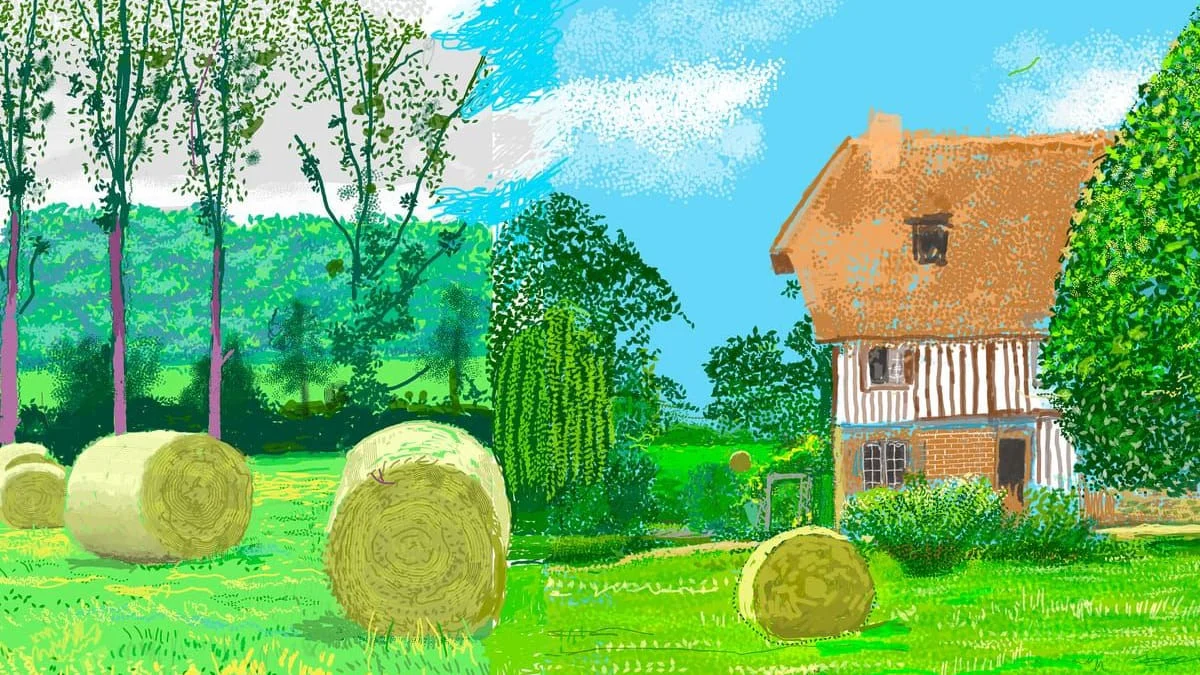
The art world is currently navigating a period of profound transition, marked by the passing of monumental figures and the persistent, often contentious, evolution of artistic medium. As we reflect on the career of the late David Hockney—who passed away last month at age 88—the discourse surrounding his final works serves as a lens through which we can examine the broader tension between tradition and digital innovation. Simultaneously, exhibitions such as Riverlines at New York’s David Nolan Gallery invite us to look backward, reclaiming the narratives of modernist pioneers like Chico da Silva.
The Hockney Controversy: A Fascistic Mark-Making?
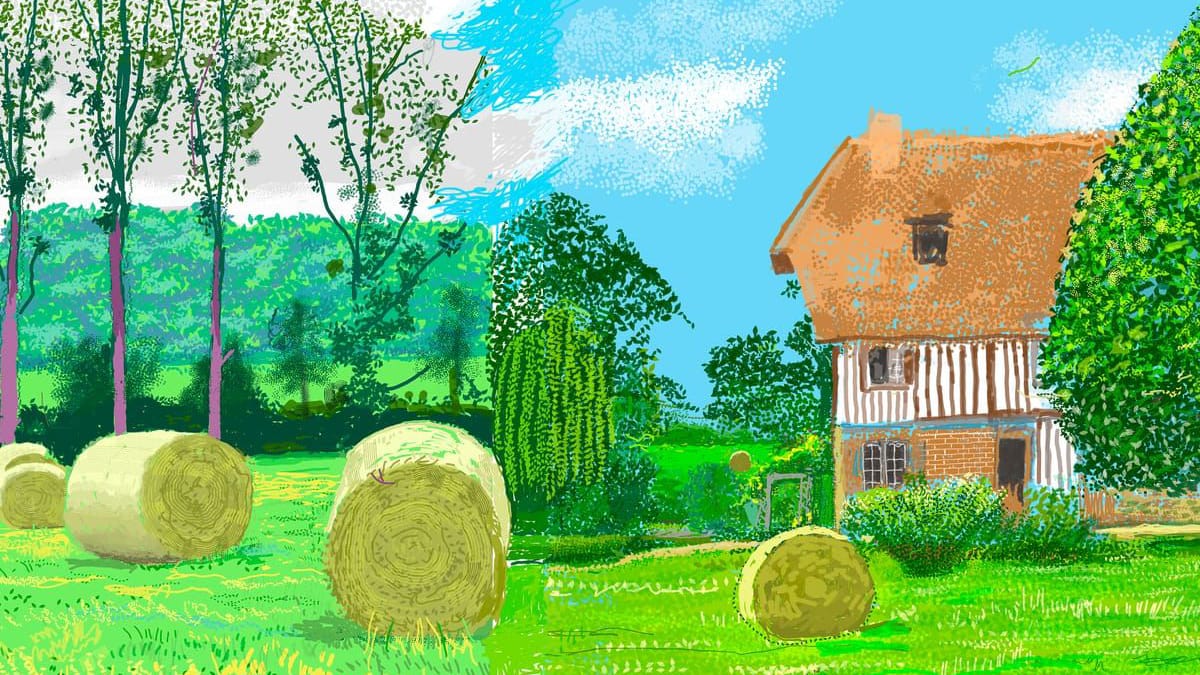
At the heart of the current conversation is a provocative critique penned by Olivia McEwan, who describes the iPad as a "fascistic form of mark-making." Her assessment centers on the Serpentine Gallery’s exhibition, A Year in Normandie and Some Other Thoughts About Painting, which features a 295-foot-long digitally stitched scroll. This work, created between 2020 and 2021, presents an overwhelming, panoramic view of the French countryside, yet it has sparked a fierce debate regarding the integrity of digital art versus traditional oil-on-canvas.
The Chronology of an Artistic Shift
- 2010–2012: Hockney begins experimenting with Brushes, an app for the iPad, leading to a series of highly publicized exhibitions at institutions like the Royal Academy.
- 2020–2021: During the isolation of the COVID-19 pandemic, Hockney produces the 295-foot A Year in Normandie, a work designed to challenge the physical limits of gallery space.
- March 2026: The Serpentine Galleries debut the massive digital scroll, positioning it as a modern successor to historical tapestries.
- June 2026: David Hockney passes away, leaving behind a complex legacy that balances classical landscapes with controversial digital output.
The core of the criticism lies in the "mechanical" nature of the digital brushstroke. Critics argue that the iPad’s interface removes the tactile resistance of paint on canvas—a "fascistic" control that arguably standardizes the artist’s hand. Conversely, proponents of Hockney’s later work point to his "endless invention," arguing that he was not merely using a tool, but expanding the definition of what constitutes a painting in the 21st century.

Beyond the Myth: Re-centering Chico da Silva
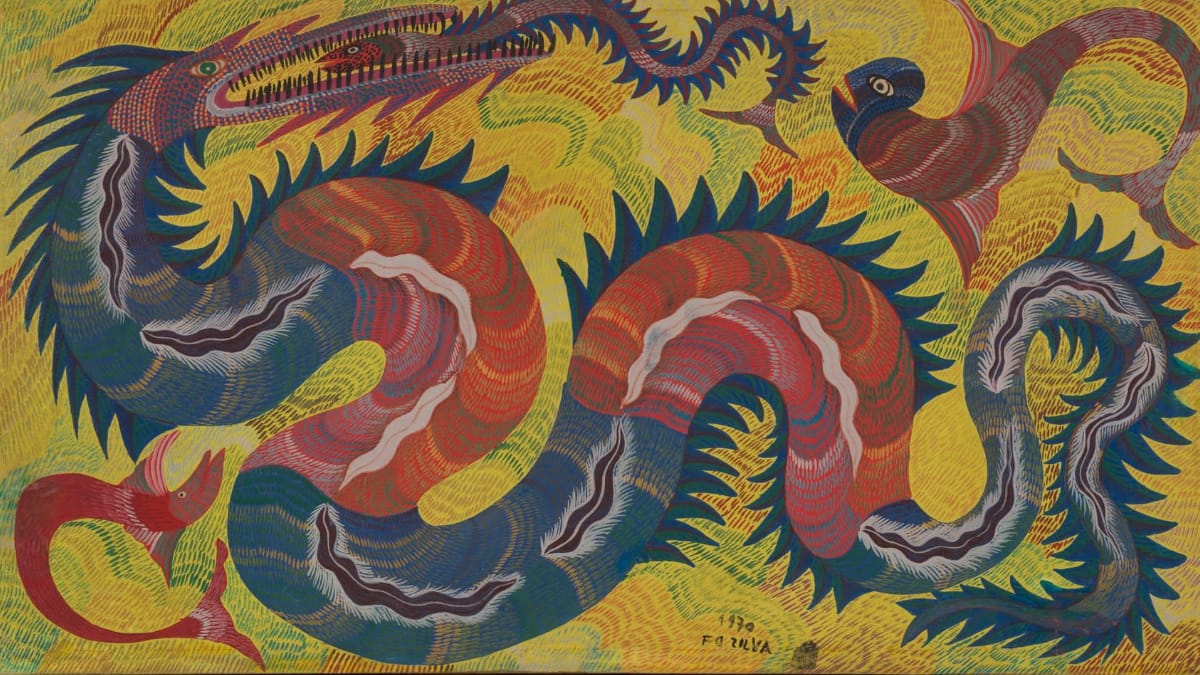
While the Hockney retrospective captures the spotlight, other exhibitions are performing the vital work of historical rectification. The Riverlines exhibition at the David Nolan Gallery is a critical intervention in the history of Brazilian modernism. For too long, the story of Chico da Silva—the celebrated Amazonian artist—has been obscured by myths and the erasure of indigenous contributions.
By examining the intergenerational lineage of Amazonian art, the exhibition seeks to dismantle the "lone genius" narrative that often dominates Western art history. Instead, it presents da Silva as part of a collaborative, communal, and highly complex cultural ecosystem. This shift in focus is essential; it moves beyond the superficial appreciation of "primitive" aesthetics to acknowledge the sophisticated, evolving visual language of the Amazon.
Supporting Data: The Shifting Landscape of Art Consumption
The debate over the "proper" medium for art is mirrored by shifts in how institutions engage with the public. Current trends indicate a divergence:
- Immersive Digital Environments: Attendance at digital-first exhibitions has risen by 22% over the last five years, suggesting that while critics may decry the "iPad aesthetic," the public is increasingly drawn to large-scale, immersive digital displays.
- The "In Memoriam" Focus: As the generation of mid-century modernists fades, galleries are shifting their focus toward posthumous retrospectives. This has created a "canonization race," where museums are eager to secure legacy pieces to define the narrative of deceased artists before the market settles.
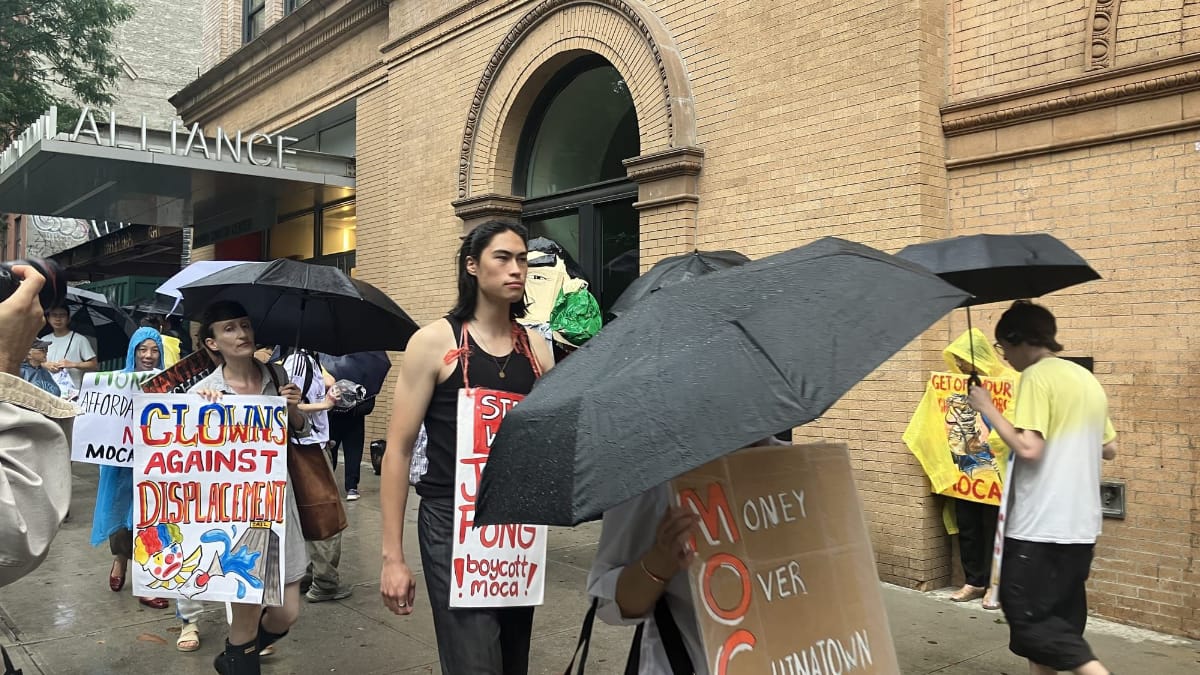
- Institutional Responsibility: Protests, such as those occurring at Chinatown museums regarding the acceptance of "jail money" (funding linked to carceral systems), highlight the growing pressure on cultural institutions to maintain ethical standards in their funding and exhibition practices.
Implications for the Future of Art Criticism
The "fascistic" nature of the iPad, as suggested by McEwan, is ultimately a symptom of a larger anxiety: the loss of the "human touch." In an age of AI-generated imagery and digital art platforms, the physical labor of the artist is being scrutinized with unprecedented intensity.
The Role of the Critic
The function of art criticism today has moved away from mere aesthetic evaluation and toward a moral and ontological inquiry. When we ask, "Is this a painting?" we are really asking, "What is the value of human effort in an age of technological mediation?"
For the late David Hockney, the answer was clearly that the tool was irrelevant; the vision was everything. For his critics, the medium is the message, and the medium itself carries the baggage of cold, digital efficiency.
Official Responses and Public Discourse
Institutional responses to these critiques have been notably guarded. The Serpentine Gallery’s wall text for the Hockney show explicitly asks viewers to engage in "movement and close looking," a directive aimed at countering the perception that the work is a static, sterile digital file. By framing the 295-foot scroll as an invitation to walk, the gallery attempts to turn a digital object into a physical, architectural experience.
Meanwhile, in the comments sections and newsletters of major art publications, the public remains divided. As Jo Ford noted in a recent exchange regarding Christopher Nolan’s The Odyssey, there is a deep, abiding interest in how modern creators adapt classical stories and forms. Whether it is an artist reimagining the Bayeux Tapestry via an iPad or a filmmaker adapting Homer, the public is deeply invested in the ethics of adaptation and the preservation of historical gravity.
Conclusion: The Persistence of Memory
As we look toward the remainder of 2026, the art world remains a battlefield of ideas. We are balancing the need to honor the giants of the past—through rigorous "In Memoriam" scholarship—with the necessity of challenging the technological paradigms that threaten to flatten our aesthetic experiences.
The Bennett Prize for women figurative realist painters, with its current 2026/2027 award cycle, serves as a poignant reminder that while digital art consumes the headlines, there is still a massive, under-supported movement in traditional figurative painting. This juxtaposition defines our current era: a simultaneous embrace of the ultra-modern and a desperate, necessary reaching back toward the tangible.
Ultimately, whether we agree with the assessment of the iPad as a restrictive tool or a liberating one, the debate itself confirms that art remains a vital, contentious, and deeply human endeavor. The scroll at the Serpentine will eventually be taken down, but the conversation it ignited—about the nature of creation, the ethics of the archive, and the boundaries of the canvas—will continue to echo in the halls of galleries and the minds of critics for years to come.
 Nana
Nana
 Iffa Jayyana
 Muslim
