

By Global News Desk
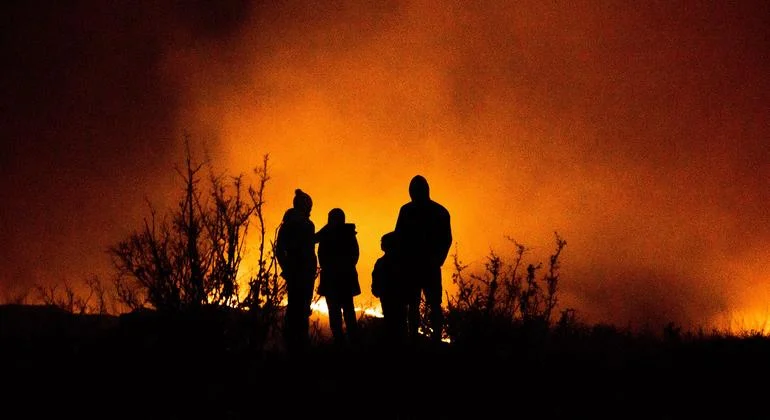
Europe is currently grappling with an unprecedented environmental catastrophe as a series of ferocious wildfires tear across the continent, leaving a trail of destruction that has pushed emergency services to their absolute breaking point. From the sun-scorched plains of Spain to the rugged landscapes of southern France, the year 2025 has become a grim milestone in the history of European climate disasters.
According to data from the World Health Organization (WHO), the scale of the devastation is staggering. In 2025 alone, wildfires have consumed 2.2 million hectares of land across the WHO European Region—a dramatic and terrifying surge from the 1.4 million hectares recorded in 2022. As the flames continue to consume forests, homes, and livelihoods, the international community is sounding the alarm: the "new normal" of the climate crisis has arrived, and it is burning.
The Core Crisis: A Continent Under Siege
The situation in the Iberian Peninsula is particularly dire. In Spain and Portugal, the frequency of wildfires has more than doubled compared to the previous year, leaving local authorities overwhelmed. On Friday, Madrid declared a national emergency as massive infernos encroached on the capital’s outskirts. The fires were so aggressive that over 10,000 residents were forced to flee their homes in a desperate bid for safety.
"These are the worst fires we have ever seen in this region," the head of the regional government stated, reflecting the sentiment of exhausted firefighters and local officials who find themselves fighting an enemy that seems to adapt to their every move.
Simultaneously, southern France is reeling from a series of blazes that have forced the evacuation of approximately 63,000 people. Reports from national authorities indicate that at least 80 homes have already been reduced to ash, with the potential for further destruction rising as hot, dry winds fan the flames.
"Wildfires destroy homes and livelihoods, force evacuations, and place enormous pressure on emergency services and health systems," the WHO noted in a recent press release. "Tragically, they also claim lives."
Chronology of a Growing Disaster
The escalation of these fires is not an isolated event but rather the culmination of years of intensifying environmental stress.
- 2022: Europe experienced a record-breaking summer that saw 1.4 million hectares burned. At the time, scientists labeled it an anomaly, yet it served as a harbinger of the volatility to come.
- 2023-2024: During this period, the frequency of fires began to accelerate. Changes in land management, coupled with a string of record-breaking heatwaves, meant that the "fire season" began to bleed into the spring and autumn months.
- Early 2025: Experts noted an unseasonably dry winter, which left the soil moisture levels critically low. This lack of moisture acted as a massive catalyst when the first heatwaves of the summer struck in late June.
- July 2025: The current crisis reached a breaking point. In early July, images of thick, acrid smoke rising above Perpignan, France, became a symbol of the continent’s struggle. The rapid evacuation of tens of thousands in Spain and France marked a tipping point in the regional capacity to manage multiple, simultaneous disasters.
Supporting Data: The Statistics of Destruction
The numbers provided by the WHO paint a harrowing picture of a changing climate. The 57% increase in burned land between 2022 and 2025 is not merely a statistical fluctuation; it is a clear indicator of systemic shifts in the European environment.
Several factors contribute to this surge:
- Urbanization and Encroachment: As more people move into the "wildland-urban interface"—areas where human development meets forest—the risk of fire ignition increases, and the potential for structural loss rises exponentially.
- Extended Fire Seasons: Higher temperatures and prolonged drought conditions have effectively lengthened the time window during which forests are highly susceptible to ignition.
- Drier Conditions: Rising global mean temperatures have led to lower humidity levels and higher evapotranspiration rates, turning vast tracts of Mediterranean forests into veritable tinderboxes.
Official Responses: The Urgent Call for Energy Transition
The political response to the fires has moved beyond local firefighting efforts to a broader discourse on global policy. Simon Stiell, the UN’s top climate change official, issued a stark warning on Friday, asserting that the only viable long-term strategy for survival is a rapid, systemic pivot away from fossil fuels.
"Action now is the basis of long-term peace and security around the world," Stiell stated. His message is clear: the energy transition is no longer just an environmental goal; it is a matter of public safety and national security. The UN is pushing for member states to prioritize renewable energy infrastructure, which is seen as the primary lever to mitigate the warming that fuels these catastrophic weather events.
Meanwhile, the WHO is actively working with affected countries to bolster public health resilience. Their efforts include assessing regional risks, developing emergency planning protocols, and creating guidance on how to protect vulnerable populations from the combined effects of extreme heat and wildfire smoke.
Implications Beyond the Flames: A Public Health Emergency
While the immediate loss of property is devastating, the health implications of the wildfire crisis are perhaps even more insidious. The smoke generated by these fires contains a dangerous cocktail of particulate matter that travels hundreds of miles, impacting populations far from the front lines of the blaze.
Respiratory and Cardiovascular Risks
The WHO has issued specific warnings regarding the toxic nature of wildfire smoke. Fine particulate matter (PM2.5) can penetrate deep into the lungs and enter the bloodstream, triggering or worsening cardiovascular conditions. Children, pregnant women, the elderly, and individuals with chronic respiratory issues like asthma or COPD are at the highest risk.
Cognitive and Long-Term Health Effects
Recent research highlighted by the WHO suggests that wildfire smoke exposure is linked to more than just respiratory issues. There is growing evidence of links between smoke inhalation and cognitive impairment, memory loss, and even liver infections. The persistent inhalation of smoke is now recognized as a significant public health burden that can last long after the last ember has been extinguished.
Mental Health and Social Disruption
The trauma of evacuation, the loss of family heirlooms, and the uncertainty of living in fire-prone regions have led to a surge in mental health crises. Furthermore, the sheer scale of the fires disrupts access to essential public services. When clinics and hospitals are forced to evacuate or redirect resources to fire-related injuries, the broader community’s health suffers.
Staying Safe: Guidance for the Public
As the situation remains fluid, the WHO has provided a list of critical recommendations for those living in or traveling through affected zones:
- Heed Official Advice: Always prioritize directives from local authorities regarding evacuation orders or stay-at-home mandates.
- Minimize Outdoor Exposure: If you are in an area affected by smoke, keep windows closed and avoid strenuous physical activity.
- Wear Protective Masks: If you must venture outdoors, a high-quality, well-fitting mask (such as an N95 or equivalent) can help filter out harmful particulates.
- Stay Informed: Monitor official government alerts, which are designed to provide real-time updates on air quality and fire movement.
- Emergency Preparation: Ensure that your household has an emergency plan and that vulnerable family members are accounted for.
Looking Forward: A Resilient Future?
The events of 2025 serve as a brutal lesson for Europe. The continent’s infrastructure, public health systems, and emergency response capabilities are being tested by a climate that is evolving faster than current policy frameworks can adapt.
The WHO’s commitment to working with nations to build more resilient health services is a step in the right direction, but experts agree that it is a stopgap. As the climate continues to warm, the frequency and intensity of these wildfires are expected to increase further. Without a global, unified effort to transition to renewable energy and implement robust climate adaptation strategies, the scenes witnessed in Spain and France this year may soon become an annual, inescapable reality.
For now, the focus remains on the immediate survival of those caught in the path of the flames. However, once the smoke clears, the conversation must shift from disaster management to disaster prevention. The future of Europe’s forests—and the people who depend on them—depends on the actions taken today.
For those seeking further information or public health advice during this crisis, please visit the WHO official resource page.
Stay updated with the latest news by subscribing to the UN Newsletter or downloading the UN News app on iOS or Android.
 Nana Muazin
 Layla Zulfa
