

As the historic 61st Venice Biennale winds down its months-long run toward a late-November close, the global contemporary art calendar pivots sharply toward fresh horizons. Autumn has traditionally heralded a season of academic and cultural beginnings, but the current wave of international biennials and triennials opening across the globe suggests something much more profound. Far from operating as standard luxury showcases for the elite collector class, this season’s major recurring exhibitions—affectionately and colloquially dubbed "en-nials"—are functioning as urgent sounding boards for a world navigating compounding crises, systemic fractures, and ecological tipping points.
From Minneapolis to Mèrida, and from the nocturnal underbelly of New York City to the historical galleries of Gwangju and Toronto, curators and artists are asking hard questions about the survival of human culture. Rather than offering mere escapism, this season’s exhibitions grapple directly with post-industrial fatigue, forced migration, systemic violence, and the desperate need for spiritual and psychological reinvention.
Main Facts: A Snapshot of the Season’s Major Exhibitions
The international art circuit this autumn is defined by ambitious thematic programming that bridges localized urgency with global philosophical inquiries. While the Venice Biennale remains the heavyweight anchor of the calendar, a constellation of brand-new and deeply established recurring exhibitions are capturing the cultural zeitgeist:
- Walker Design Triennial (Beyond Materialism): Debuting at the Walker Art Center in Minneapolis, Minnesota (running October 17 through February 14, 2027), this landmark inaugural triennial pivots away from traditional post-industrial capitalism, fast fashion, and consumer-driven optimization, highlighting 95 works that champion spiritual cultivation and social responsibility.
- Bienal de Yucatán (Vocal): Marking its historic first edition across multiple venues in Mérida, Mexico (November 26 through February 28, 2027), this biennial gathers 75 international and local artists—including heavyweights like Yoko Ono, Teresa Margolles, and Rirkrit Tiravanija—to investigate the transformative power of language, idiom, and storytelling.
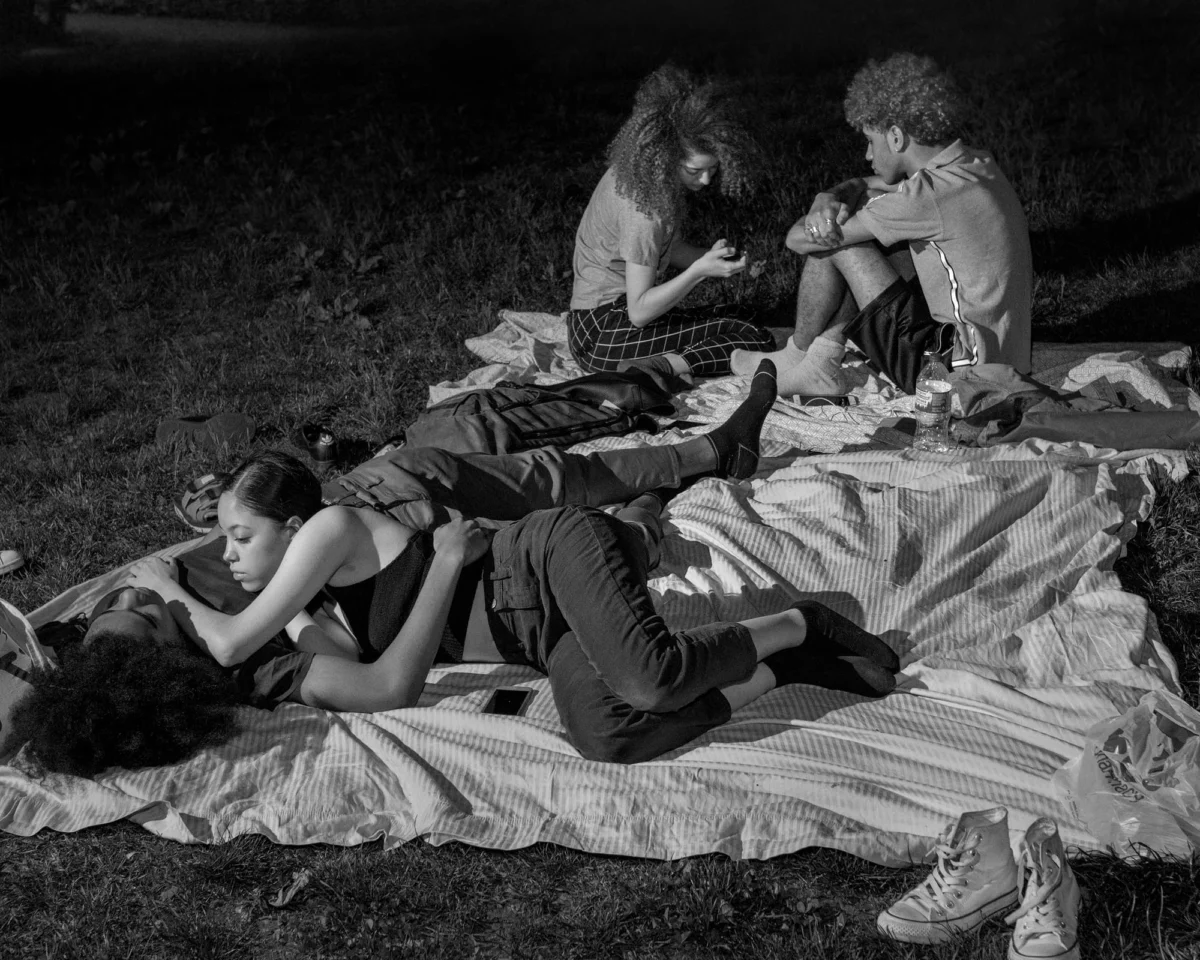
- Museum of the City of New York Triennial (The Photography Triennial: After Dark): Opening in East Harlem, Manhattan, on November 20 and running through April 25, 2027, this second iteration of MCNY’s photography triennial shifts its lens to the nocturnal vitality of the five boroughs, capturing nightlife, labor shifts, and hidden communities after sunset.
- Gwangju Biennale (You Must Change Your Life): Hosted at the Gwangju Biennale Exhibition Hall in South Korea through November 15, the 16th iteration of this prestigious exhibition takes its existential cue from Rainer Maria Rilke’s famous poetic mandate, utilizing deconstructed club rooms and digital collages to explore transformation.
- Toronto Biennial of Art (Things Fall Apart): Spanning various venues across Toronto, Canada (September 26 through December 20), the fourth edition of this biennial focuses on rupture, ecological justice, diaspora, and speculative futures through the lens of Indigenous and international creators.
Chronology of the 2026–2027 Autumn/Winter ‘En-Nial’ Circuit
The unfolding schedule of these global exhibitions highlights a relentless cross-continental dialogue happening throughout the closing months of the year and extending deep into 2027:

- Late September 2026: The Toronto Biennial of Art launches under the heavy, evocative title Things Fall Apart, setting an early tone of ecological and migratory rupture. Concurrently, the Gwangju Biennale continues its deep-dive exploration of personal and societal transformation under its Rilke-inspired banner.
- Mid-October 2026: The inaugural Walker Design Triennial opens its doors in Minneapolis, introducing audiences to a paradigm shift that strips design of its pure consumerist identity in favor of social problem-solving.
- Mid-November 2026: The Museum of the City of New York Triennial launches After Dark, illuminating the nocturnal cultural ecosystem of New York through the lenses of top-tier documentary and fine-art photographers.
- Late November 2026: The cultural calendar expands southward with the debut of the Bienal de Yucatán in Mexico, bringing global contemporary dialogue to Mérida, alongside the closing weeks of the 61st Venice Biennale.
- December 2026 through April 2027: As winter deepens, exhibitions like the Walker Design Triennial, the MCNY Photography Triennial, and the Yucatán Biennial remain active, providing ongoing intellectual refuges for winter visitors well into the first quarter of the new year.
Supporting Data and Curatorial Frameworks
To understand the weight of this season’s offerings, one must look closely at the data and curation driving these institutions. Far from being random assemblies of aesthetically pleasing objects, these exhibitions are underpinned by rigorous theoretical frameworks.
Moving Beyond the Post-Industrial Trap in Minneapolis
At the Walker Art Center, the statistics speak volumes about a systemic fatigue. The inaugural Beyond Materialism triennial features 95 distinct works created by an international array of artists, designers, and collaborative collectives. In an economic landscape oversaturated with polyester, fast-fashion trends, and digital impulse-buying (such as TikTok Shop duplicates), the exhibition seeks to decouple the concept of "design" from the relentless pursuit of profit optimization.
Works like Anna Aagaard Jensen’s Lady Chairs (2018) challenge patriarchal and utilitarian forms of seating, forcing viewers to physically confront how domestic spaces can cultivate psychological safety rather than passive consumption.
Mérida and the Power of 75 Voices
The inaugural Bienal de Yucatán arrives with significant institutional weight, securing 75 participating artists for its debut. By anchoring itself in Mérida—a city globally recognized for its enduring and resilient Mayan heritage—the biennial establishes a deliberate bridge between deep historical roots and hyper-contemporary global discourse. Featuring internationally celebrated figures such as Yoko Ono, Teresa Margolles, Rirkrit Tiravanija, Oscar Murillo, and Jean-Luc Moulène, the exhibition treats language not merely as a communication tool, but as a flexible sculptural material capable of reshaping political realities.

Capturing the Midnight Economy in New York
The Museum of the City of New York’s After Dark photography triennial builds upon the success of its 2023 predecessor by focusing intensely on the urban experience outside standard business hours. Featuring a powerhouse roster of photographers including Elle Pérez, Tommy Kha, Saint Piñero, Dina Litovsky, Mahka Eslami, Liz Deschenes, D’Angelo Lovell Williams, and Kia LaBeija, the exhibition documents how marginalized communities, nocturnal laborers, and creative subcultures find agency, safety, and ecstasy when the sun goes down. Williams’s striking work, Too Hot to Sleep (After Sylvester) (2025), serves as a visual anchor connecting contemporary queer intimacy with the rich, historic lineage of New York nightlife.
Official Responses and Curatorial Intent
Curators and institutional directors behind this season’s en-nials have been vocal about the necessity of art stepping into the vacuum left by traditional political and economic leadership. In an era often defined by analysts as one of "permacrisis"—characterized by overlapping economic instabilities, climate catastrophes, and geopolitical friction—the arts are being mobilized as vital spaces for emotional and psychological resilience.
Reflecting on the Gwangju Biennale’s theme, You Must Change Your Life, organizing curators emphasized that art can no longer afford to remain a passive mirror of society. Instead, it must act as an active catalyst for cognitive dissonance and behavioral shifts. The title, drawn from Rainer Maria Rilke’s interpretation of an ancient Greek statue, functions as a direct address to the gallery-goer: viewing art is no longer about passive appreciation; it is an existential demand for internal and external transformation.
Similarly, in Toronto, curators of Things Fall Apart framed their exhibition around the inevitability of structural collapse—whether through climate-induced flooding, systemic geopolitical displacement, or the fracturing of indigenous lands. Artists like Rebecca Belmore, whose gripping installation Flood (2025) confronts viewers with the crushing weight of ecological and historical displacement, position artistic practice as a form of sacred record-keeping. Through these official programming choices, museums are signaling that they are no longer just repositories of objects, but emergency response centers for the human psyche.

Implications: What This Means for the Future of Contemporary Art
The proliferation and evolution of these global biennials and triennials point to a transformative moment in the art world. Several key implications emerge from this autumn’s programming:
1. Decentralization of the Art World
For decades, the global art market was tethered almost exclusively to a handful of Western capitals and traditional hubs like New York, London, and Basel. The rise of the Bienal de Yucatán in Mexico, the enduring prominence of the Gwangju Biennale in South Korea, and localized triennials in regions like Minneapolis signal an ongoing and accelerating decentralization. Art is increasingly speaking from the periphery, valuing hyper-local cultural specificities over generalized Western market trends.
2. A Shift from Spectacle to Substance
The fatigue surrounding blockbuster, Instagram-bait art installations has reached a critical mass. Exhibitions like the Walker Design Triennial and the Toronto Biennial demonstrate a clear institutional pivot toward depth, ethical responsibility, and long-term social utility. When design exhibitions focus on spiritual cultivation rather than material acquisition, and when photography triennials examine the quiet dignity of the night shift rather than superficial glamour, it becomes clear that audiences are hungrier for truth than spectacle.
3. Art as Survival and Speculative World-Building
As global systems face unprecedented strains, artists are increasingly taking on the roles of historians, anthropologists, and speculative architects. Whether examining the ruins of extraction in Canada, the poetic potential of idioms in Mexico, or the resilient rhythms of nightlife in New York City, contemporary creators are proving that art is an indispensable survival tool. These fall en-nials do not offer easy answers to a troubled world, but they provide something infinitely more valuable: the shared space required to imagine a livable future.
 Nana
Nana
 Iffa Jayyana
 Muslim
