

By Tech Desk Staff
Published Live from Apple Park, Cupertino
Main Facts
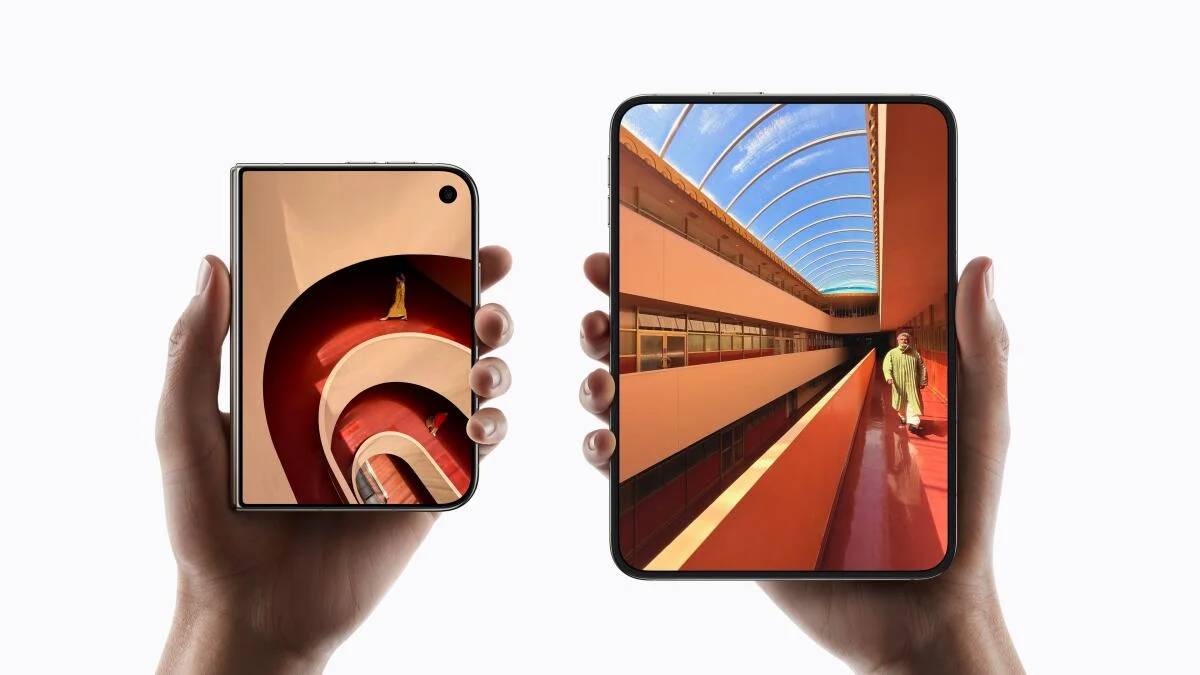
The years of speculation, patent filings, supply chain whispers, and consumer wishful thinking have finally come to a definitive end. At its highly anticipated "Surprise and Shine" keynote event in Cupertino, California, Apple officially pulled back the curtain on its worst-kept secret: its first-ever foldable smartphone, officially named the iPhone Duo.
Positioned as Apple’s definitive answer to foldable mainstays like the Samsung Galaxy Z Fold series and Google’s Pixel Fold lineup, the iPhone Duo arrives with a hefty price tag and a sprawling 7.6-inch inner display that folds seamlessly in half. Guided by Apple CEO John Ternus, the announcement dominated the tech industry’s collective consciousness almost instantly.
However, the ripple effects of the iPhone Duo’s debut extended far beyond Silicon Valley’s hardware divisions. Within minutes of the keynote concluding, the internet transformed into a battleground of viral marketing, corporate cheek, and absolute social media chaos. From rival smartphone manufacturers seizing the moment to take veiled (and not-so-veiled) jabs, to language-learning apps having existential crises over search engine optimization (SEO), and even dictionaries flexing their longevity, the rollout of the iPhone Duo proved to be as much of a cultural phenomenon as it is a technological milestone.
Chronology: From Rumors to the "Surprise and Shine" Reveal
To understand the magnitude of the iPhone Duo’s launch, one must look at the meticulously orchestrated timeline that led up to Wednesday’s keynote at Apple Park.
Years of Whispers and Waiting
For the better part of half a decade, analysts and tech enthusiasts whispered about an "iPhone Fold" or "iPhone Ultra" foldable device. While competitors such as Samsung—which debuted its Galaxy Z Fold 8 this past July—raced through multiple iterations of book-style foldables, refining hinges, reducing creases, and shrinking bezels, Apple remained notably silent. Industry watchers frequently speculated that Apple was taking a "wait-and-see" approach, allowing the market to mature before introducing a device that met its notoriously stringent hardware and design standards.
The Buildup to September
As summer 2026 wound down, the rumor mill reached a fever pitch. Leaks regarding hinge mechanisms, display suppliers, and operating system adaptations began to circulate daily. The excitement culminated in Apple’s official invitations for the "Surprise and Shine" event, sending tech journalists and consumers into a frenzy of predictions and guessing games.
The Unveiling
On Wednesday morning, Apple CEO John Ternus took the stage at Apple Park. Following updates to the broader ecosystem, the presentation reached its crescendo. Ternus introduced the iPhone Duo, detailing its internal engineering, its custom glass-polymer folding layer, and its expansive 7.6-inch inner canvas. The crowd inside the Steve Jobs Theater reacted with thunderous applause, while millions tuned into the livestream worldwide. Almost simultaneously, the corporate world outside Cupertino mobilized, ready to react to Apple’s latest hardware pivot.
Supporting Data: Specifications and Market Positioning
While the social media reactions provided the day’s entertainment, the hardware specifications of the iPhone Duo dictate its serious positioning in the high-end mobile market.
- Display Architecture: The device features a primary, flexible 7.6-inch inner OLED display engineered to minimize the crease typically associated with folding screens. When closed, it utilizes a durable cover screen optimized for one-handed tasks.
- Pricing and Tier: Launching at an undeniably premium price point, the iPhone Duo cements itself as an ultra-luxury device aimed squarely at power users, enterprise professionals, and early adopters who are willing to pay top dollar for Apple’s ecosystem integration.
- Competitive Landscape: Entering a market already inhabited by mature competitors like the Samsung Galaxy Z Fold 8 and the Google Pixel 11 Pro Fold, Apple enters from a position of relative lateness. However, historical precedent suggests that Apple’s entry into a new category often acts as a market validator, immediately expanding consumer awareness and mainstream adoption of folding technology.
Official Responses and Viral Reactions
If the engineering team at Apple spent years perfecting the iPhone Duo, the marketing and social media teams of competing brands—and completely unrelated entities—spent mere seconds formulating their online responses. The internet wasted no time turning the launch into a global spectacle.
Samsung’s Subtle (and Not-So-Subtle) Salvo
As Apple’s chief rival in the foldable space—having dropped its Galaxy Z Fold 8 just two months prior—Samsung Mobile did not hesitate to react. Known for its historically aggressive and playful marketing campaigns targeting Apple, Samsung took straight to X (formerly Twitter) with a post that was dripping with competitive irony. Though the specific metrics and phrasing of the initial tweet sparked widespread debate among digital marketers, the underlying message was clear: Samsung believes it has a massive head start in the foldable race, having refined its hardware across nearly a decade of trial, error, and iteration.
Duolingo’s SEO Meltdown
Perhaps the most unexpectedly hilarious reaction came from the official X account of language-learning giant Duolingo. Realizing overnight that their brand name suddenly shared linguistic space with Apple’s marquee product, the social media team behind the green owl began a very public, highly theatrical spiral regarding search engine optimization (SEO).
"It’s called the iPhone WHAT???" read one panicked post from the account. The brand playfully tagged new Apple CEO John Ternus, expressing mock horror at the thought of prospective language learners accidentally buying a $2,000+ folding phone instead of practicing their Spanish vocabulary. The surreal, self-aware marketing move instantly garnered hundreds of thousands of engagements, turning a potential brand confusion issue into a masterclass in viral engagement.
Merriam-Webster Brings Historical Flex
Not to be left out of the cross-industry roasting, American dictionary Merriam-Webster chimed in with a dry, impeccably timed piece of internet wit. Quote-tweeting the announcement, the dictionary’s official account declared with quintessential "just gonna leave this here" energy:
"Not to brag, but our product has been foldable since 1828."
The clever nod to bound paper books instantly resonated with users, serving as a humorous reminder of how quickly the definition of "foldable technology" has shifted over the last two centuries.
Implications: What the iPhone Duo Means for the Future
The launch of the iPhone Duo is far more than just a successful product drop or a trending topic on social media; it marks a watershed moment for the mobile industry at large.
1. Mainstream Validation for Foldables
For years, foldables have occupied a niche yet passionate corner of the smartphone market. High price points, durability concerns, and software fragmentation kept many mainstream consumers tethered to traditional slab phones. Apple’s entry changes the psychological calculus of the consumer market. By blessing the form factor with the "iPhone" moniker, Apple validates foldables as the future of mobile computing, likely driving a massive surge in consumer interest and pushing component manufacturers to innovate faster and cheaper.
2. Ecosystem Adaptation
Hardware is only half the battle. The release of the iPhone Duo forces developers to rethink how applications scale across changing screen real estates within iOS. Just as the iPad required a rethinking of app design years ago, the foldable iPhone demands fluid, dynamic interfaces that transition seamlessly from a compact cover display to a sprawling 7.6-inch tablet-sized workspace.
3. A New Era of Corporate Rivalry
The immediate, sharp-witted responses from Samsung, Duolingo, and others signal that the competitive gloves are off. As Apple steps onto turf it previously ignored, the tech landscape is bracing for a fiercely contested holiday shopping season and a fascinating multi-year battle over the hearts, minds, and wallets of elite consumers.
As the dust settles at Apple Park and the initial wave of memes washes over the internet, one thing remains certain: the folding era is officially here, and it’s going to be a wild ride.
 Neng Nana
 Azzam Bilal Chamdy
 Muslim
