

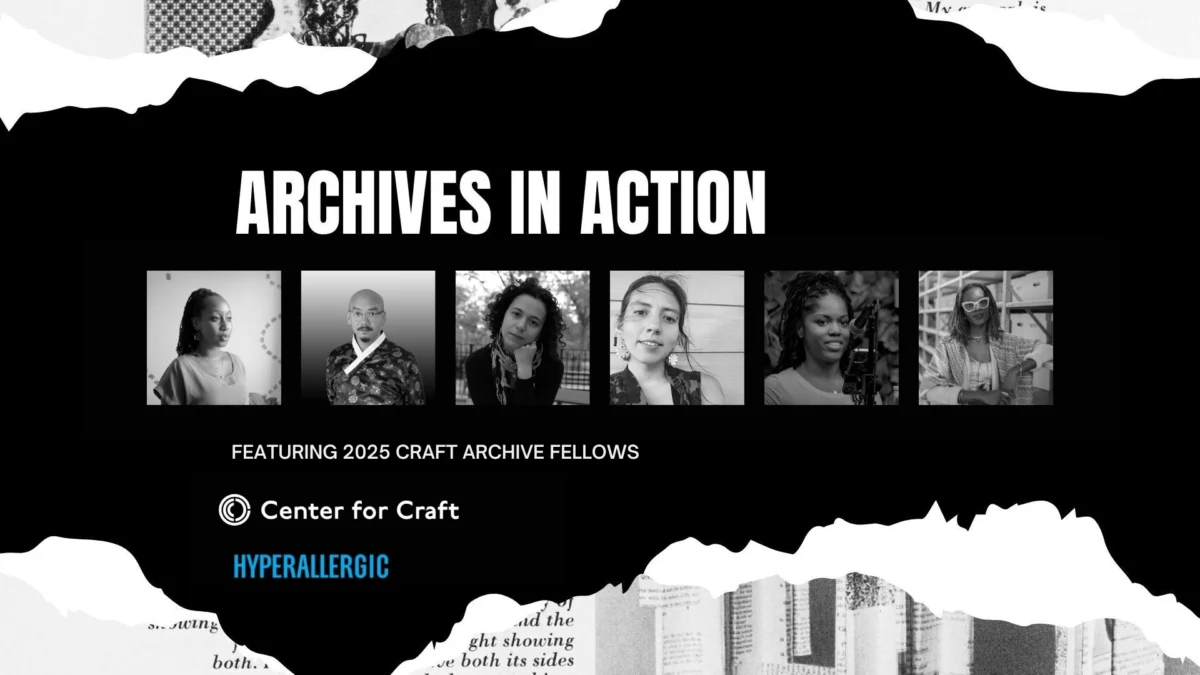
NEW YORK/ASHEVILLE — In an era where cultural heritage is increasingly vulnerable to erasure, the preservation of underrepresented histories takes center stage this autumn. The Center for Craft, in a dynamic partnership with the contemporary art publication Hyperallergic, has announced a major virtual event celebrating the 2025 Craft Archive Fellows. Titled "Archives in Action," the online panel discussion will take place on Wednesday, September 23, from 5:00 PM to 6:30 PM EST, offering global audiences an intimate look at the tireless work of unearthing marginalized craft traditions across the United States and beyond.
Moderated by Hyperallergic Associate Editor Lakshmi Rivera Amin, the public event will feature six visionary researchers who have spent months unearthing histories that mainstream art historical canons have historically overlooked. The panel will also feature Mellanee Goodman, the Center for Craft’s program director, curator, and material specialist, who will guide the conversation alongside the fellows.
The collaboration between the Center for Craft and Hyperallergic aims to democratize access to archival research. By publishing the fellows’ findings online for free, the partnership removes physical and economic barriers, ensuring that vital cultural knowledge reaches classrooms, community centers, and scholars worldwide.
Main Facts: The 2025 Craft Archive Fellows and Their Projects
The "Archives in Action" panel centers on the groundbreaking research published recently on Hyperallergic by the 2025 cohort of Craft Archive Fellows. Each project positions craft not merely as decorative or functional art, but as a crucial vehicle for cultural continuity, resistance, identity preservation, and survival.
The six featured projects and their creators include:
- Teju Adisa-Farrar (Atlanta, GA): The Colors All Around Us: George Washington Carver and the Missing Archive of Natural Dyes. This project reexamines the legacy of George Washington Carver and other formerly enslaved individuals, highlighting their sophisticated contributions to natural dyeing, pigment making, and ecological chemistry.
- Robert Choe-Henderson (Warne, NC): Decolonizing the Tongue: Hanji in Kozo Patches. Choe-Henderson explores Hanji—the ancient and resilient tradition of Korean papermaking—examining its cultural resonance and material survival in diasporic spaces.
- Amalia Uribe Guardiola (New York, NY): Costureros as Living Archives: Craft and Care in Latina Immigrant Communities. Focusing on Queens, New York, this research investigates costureros—immigrant-led embroidery and knitting circles that double as spaces of political solidarity, emotional care, and intergenerational knowledge transfer.
- Crystal Vance Guerra (Chicago, IL): Deliberately Habitual: Altar-making within American Craft. Vance Guerra documents the rich, living traditions of Mexican migrant altar-making in South Chicago, framing these sacred domestic spaces as profound works of architectural and material craft.
- Trelani Michelle (Savannah, GA): Forged in Memory: Tracing Black Ironwork Lineage. Michelle traces the under-documented lineages of historical Black blacksmiths, mapping the Sankofa ironwork tradition and its deep roots in African diaspora craftsmanship.
- Bilphena Decontee Yahwon (Baltimore, MD): Fanning Rice: Tracing Windward Coast Basketry in the Lowcountry. Yahwon investigates "fannuh" basketry, recognized as one of the oldest Gullah Geechee agricultural tools, linking contemporary Lowcountry practices directly to West African Windward Coast traditions.
Chronology: From Grant Initiative to Digital Publication and Live Dialogue
The journey of the 2025 Craft Archive Fellowship spans a carefully structured timeline designed to foster deep research, rigorous peer discourse, and broad public engagement.

- Foundation and Funding: The Craft Archive Fellowship is made possible through generous support from specialized funding streams, including the Ayumi Horie Award, the Sara Clugage Award, and the Gallaher Family Award, all of which prioritize equity and diversity within craft scholarship.
- Research and Fieldwork: Over the preceding months, the six fellows embarked on intensive archival dives, oral history projects, and community collaborations. They worked alongside local practitioners, elders, and cultural stewards to gather materials that have long been missing from institutional libraries.
- Publication on Hyperallergic: The fruits of this labor were systematically rolled out in a dedicated series on Hyperallergic, bringing these localized histories into the global digital sphere.
- The Upcoming Virtual Event (September 23, 2025): The culmination of the fellowship cycle is the "Archives in Action" virtual panel. Attendees are encouraged to read the published articles on Hyperallergic prior to the event to fully engage with the discussions.
Supporting Data: Breaking Down Barriers to Craft Scholarship
The partnership between the Center for Craft and Hyperallergic addresses a systemic gap in arts funding and publishing. Historically, craft histories—particularly those tied to Indigenous, Black, immigrant, and enslaved communities—have suffered from structural neglect. Traditional academic publishing often keeps such research locked behind paywalls or confined to specialized, physical archives that are geographically inaccessible to the very communities whose histories are documented.
By leveraging digital media, this initiative ensures:
- Open Access: 100% of the research essays are available to the public for free online via Hyperallergic.
- Global Reach: Virtual events like "Archives in Action" eliminate travel costs, allowing international audiences, students, and independent scholars to participate in real-time Q&As with leading material culture experts.
- Cross-Disciplinary Impact: The program bridges gaps between contemporary art criticism, historical preservation, anthropology, and social justice.
Official Responses and Perspectives
The philosophical core of the fellowship lies in recognizing that archives are not neutral spaces; they require active intervention to correct historical omissions.
Fellow Robert Choe-Henderson eloquently summarized the existential stakes of this archival labor during the fellowship cycle, emphasizing the urgent need “that communities most affected by that history don’t become invisible while the material knowledge survives.” Choe-Henderson’s perspective underscores a central theme of the 2025 cohort: that material techniques (such as Hanji papermaking, Gullah Geechee basketry, or Black ironwork) cannot be divorced from the human stories, systemic struggles, and ancestral resilience of the makers.
Mellanee Goodman, the Center for Craft’s program director, curator, and material specialist, alongside Lakshmi Rivera Amin, associate editor at Hyperallergic, will anchor the upcoming panel. Their leadership highlights the institutional commitment required to transition marginalized craft from the margins of museum basements to the forefront of contemporary cultural discourse.
Implications: Why Craft Archives Matter Today
The implications of the "Archives in Action" panel extend far beyond the academic study of art and design. In a rapidly globalizing and digitized world, localized craft practices serve as anchors of cultural identity and ecological wisdom.
- Re-writing Art History: By validating traditions like Mexican migrant altar-making and immigrant knitting circles (costureros) as high-level craft practices, the fellowship challenges elitist definitions of "fine art" versus "folk craft."
- Environmental and Ancestral Continuity: Projects like Teju Adisa-Farrar’s research on George Washington Carver’s natural dyes offer modern sustainable movements invaluable historical templates for ecological stewardship and circular material economies.
- Empowering Communities: Documenting lineages such as Black blacksmithing and Gullah Geechee "fannuh" baskets provides contemporary descendants with tangible links to their ancestors’ mastery, fostering community pride and educational resources.
How to Attend
- Event Name: Craft Archive Fellowship Virtual Program: Archives in Action
- Date: Wednesday, September 23
- Time: 5:00 PM – 6:30 PM (EST)
- Cost: Free and open to the public
- Registration & Reading Materials: Attendees are encouraged to explore the published essays on Hyperallergic beforehand and learn more about the institutional missions at centerforcraft.org.
 Nana
Nana
 Iffa Jayyana
 Muslim
