

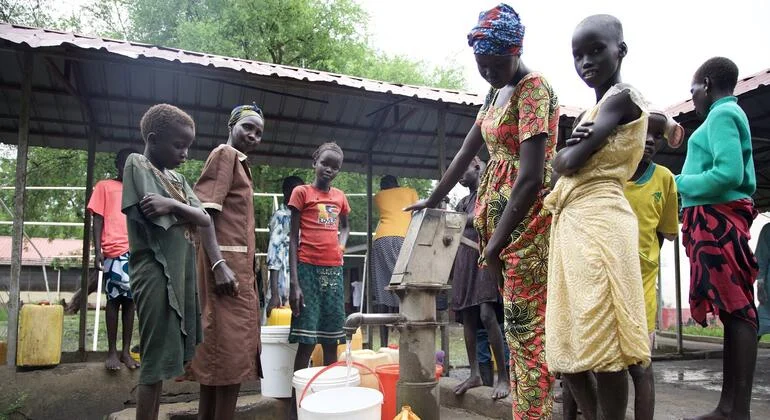
JONGLEI, South Sudan — In the heart of South Sudan’s volatile Jonglei state, a humanitarian emergency of staggering proportions has been unfolding behind a veil of conflict and isolation. After months of being cut off from the outside world due to escalating clashes between government and opposition forces, thousands of families—many of whom had been surviving without basic necessities since the turn of the year—have finally received a lifeline.
The United Nations Children’s Fund (UNICEF), through its Rapid Response Mechanism (RRM), recently completed a high-stakes mission to deliver over eight tonnes of essential aid to the remote communities of Wiechjol in Akobo County and Waat in Nyirol County. While the arrival of these supplies offers a temporary reprieve, the mission has laid bare a harrowing reality: the state is currently home to some of the highest malnutrition rates in the world, and the window of opportunity to prevent a wider catastrophe is rapidly closing.
The Geography of Conflict: A Chronology of Instability
The current crisis in Jonglei is not an isolated event but rather the latest chapter in a protracted history of instability that has defined the region since South Sudan gained independence.
- January 2026: The conflict intensified as armed clashes between government and opposition factions surged. The resurgence of fighting rendered major supply routes impassable, forcing the closure of vital health facilities.
- February – June 2026: As frontlines shifted, civilian populations were subjected to mass displacement. Families fled into the bush, abandoning their homes, livestock, and small-scale farms. During this period, the "humanitarian corridor" effectively collapsed, leaving remote pockets of Jonglei in a state of total isolation.
- July – August 2026: Reports of rising mortality rates among children reached aid organizations. Standardized Monitoring and Assessment of Relief and Transitions (SMART) surveys were conducted, revealing that malnutrition rates in areas like Akobo West had surged past the 40 percent threshold—a figure classified as critical by international humanitarian standards.
- September 14, 2026: UNICEF officially announced the successful completion of the RRM mission, marking the first time in several months that organized aid had reached the communities of Wiechjol and Waat.
Supporting Data: The Human Toll
The data gathered during the recent RRM mission provides a sobering snapshot of a population under siege. When the UNICEF teams arrived, they were met with the immediate challenge of addressing the nutritional and medical deficits created by months of neglect.
Nutritional Crisis
The mission’s primary objective was the screening of children under the age of five. The results were alarming:
- Screenings: 1,666 children were evaluated for signs of acute malnutrition.
- Admissions: 146 children were immediately admitted for life-saving therapeutic feeding programs.
- Referrals: 602 children were identified with moderate acute malnutrition and referred for urgent follow-up care to prevent further health deterioration.
- Caregiver Education: Recognizing that malnutrition is often exacerbated by a lack of knowledge regarding infant feeding, the teams provided counseling to 331 caregivers, focusing on methods to boost nutritional intake for infants using locally available, though limited, resources.
Healthcare and Sanitation
The collapse of local health infrastructure meant that common, preventable illnesses had been left untreated for months. The UNICEF teams provided primary healthcare to 1,241 patients, including 250 children under five. The most common ailments treated included:
- Malaria: A persistent threat exacerbated by displacement and poor shelter.
- Acute Respiratory Infections: Largely due to exposure and lack of adequate housing.
- Acute Watery Diarrhoea: A direct consequence of the breakdown in water infrastructure.
- Skin Diseases: Attributed to poor hygiene and lack of access to clean water.
To address the sanitation gap, the mission distributed water filters and purification supplies to 1,200 families. Furthermore, 200 women and girls were provided with dignity and hygiene kits, which are essential for maintaining health and safety in environments where infrastructure is nonexistent.
Official Responses: The Call for Sustained Access
Noala Skinner, the UNICEF South Sudan Country Representative, has been at the forefront of the advocacy efforts to keep the spotlight on Jonglei. Her assessment of the situation is blunt: the current intervention, while successful, is merely a stopgap.
"Access challenges in Jonglei state have left the lives of mothers and their children hanging in the balance," Skinner stated following the mission. She emphasized that the RRM missions, while effective at delivering rapid, life-saving aid, are not a sustainable substitute for a permanent, functioning humanitarian presence.
"The RRM missions are important, but operating conditions in northern Jonglei remain challenging," Skinner added. "For many families, this was the first help they had seen in months. But what we found shows how much more is needed, and how quickly conditions can deteriorate if access continues to be constrained in these areas."
UNICEF is currently lobbying for four key areas of intervention:
- Guaranteed Humanitarian Access: Negotiation with local and national actors to ensure that supply routes remain open, regardless of military developments.
- Long-term Infrastructure Rehabilitation: Moving beyond immediate food and medicine to repair damaged water boreholes and reopen health clinics.
- Child Protection Services: Addressing the heightened risks of family separation, gender-based violence, and the recruitment of child soldiers by armed groups—all of which have spiked in the wake of the recent displacement.
- Increased Funding: Reallocating resources to support persistent, rather than sporadic, humanitarian presence in Jonglei.
Implications: The Risk of Total Collapse
The implications of the current situation in Jonglei extend far beyond the immediate statistics of malnutrition and disease. The region serves as a microcosm of the risks facing the broader South Sudanese landscape.
The Cycle of Displacement and Violence
The connection between conflict and service provision is cyclical. When fighting erupts, families flee; when they flee, they lose access to clean water, food, and medicine. This loss of access creates a vulnerability that is then exploited by armed groups. The risk of children being recruited by these groups is particularly high when families are separated during flight or when parents can no longer provide basic sustenance.
The Threat of "Forgotten" Crises
Jonglei is increasingly becoming a "forgotten" theater of the South Sudanese conflict. As international attention shifts toward other global hotspots, the risk of "aid fatigue" looms large. However, experts note that the 40 percent acute malnutrition rate is a flashing red light for the international community. If the humanitarian community withdraws or is forced out, the mortality rate among the most vulnerable—infants and the elderly—is expected to climb sharply within weeks.
The Infrastructure Gap
The destruction of water infrastructure is perhaps the most difficult challenge to reverse. In many parts of Jonglei, the wells and sanitation systems are not just broken; they are non-functional due to years of neglect, theft of parts during conflicts, and a lack of spare materials. Without a concerted effort to rebuild these systems, the cycle of waterborne disease will continue to haunt the region long after the fighting stops.
Conclusion: A Precarious Future
The delivery of eight tonnes of supplies to Wiechjol and Waat is a testament to the resilience of humanitarian workers and the urgency of the situation in Jonglei. Yet, as the sun sets over the Sudd, the future of the families in these remote counties remains precariously balanced.
The success of the RRM mission is not a victory, but a reminder. It is a reminder that in the shadow of war, the most basic human needs—a clean drink of water, a medical check-up, a packet of therapeutic food—become luxury items that only external intervention can provide. As UNICEF continues its push for broader access and more robust support, the international community faces a critical choice: to provide the sustained resources required to stabilize the region, or to risk watching a generation of children in Jonglei succumb to the preventable consequences of a conflict they did not start.
 Nana Muazin
 Layla Zulfa
