

By Dominika Tomaszewska-Mortimer, Geneva
15 September 2026
The Republic of South Sudan, a nation already etched by decades of instability, is teetering on the precipice of a humanitarian collapse of unprecedented proportions. As of mid-September 2026, a lethal convergence of climate volatility, regional warfare, and systemic economic erosion has left millions of citizens without access to basic sustenance. The United Nations World Food Programme (WFP) issued a stark warning this Tuesday, declaring that the arrival of a "Super El Niño" weather phenomenon is effectively cannibalizing the country’s agricultural output and severing the lifelines of its most vulnerable populations.
The Convergence of Crises: An Overview of the Emergency
The humanitarian landscape in South Sudan is no longer defined by a single disaster, but by a complex, compounding series of shocks. According to Matthew Hollingworth, WFP Assistant Executive Director for Programme Operations, the situation is characterized by a "perfect storm."
"Conflict, displacement, economic hardship, climate shocks, and the situation in neighbouring Sudan are all converging to push millions of people deeper into vulnerability," Hollingworth stated during a press briefing in Geneva.
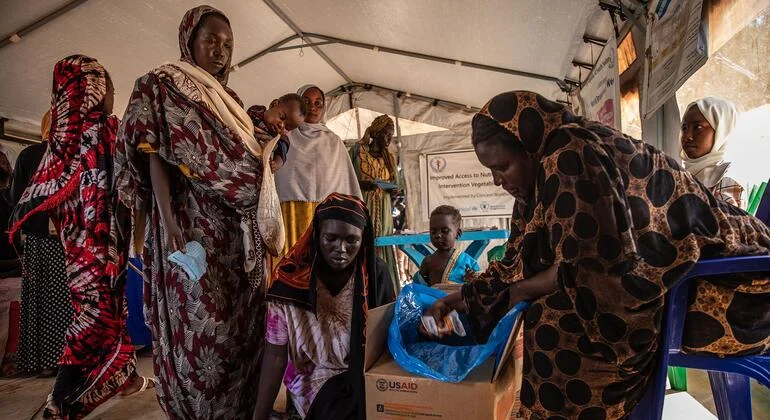
At the heart of this crisis is a staggering statistic: 7.8 million people—well over half of the nation’s total population—are currently trapped in a daily battle for food security. Perhaps more alarming is the demographic breakdown of those at risk. Approximately 2.2 million children and 1.2 million pregnant and breastfeeding mothers are suffering from acute malnutrition, requiring immediate nutritional intervention to stave off long-term physical and cognitive impairment.
Chronology of a Collapsing System
The downward spiral currently witnessed in South Sudan did not occur overnight. The trajectory of this crisis can be traced through several critical junctures:
- Early 2026: Initial reports of abnormal weather patterns began to circulate, with meteorological data suggesting an emerging El Niño event.
- April–June 2026: The onset of the traditional planting season was met with erratic rainfall. While some regions suffered from moisture deficits, others saw flash flooding that destroyed initial crop cycles.
- July 2026: The spillover effects of the war in Sudan intensified, with the influx of refugees and returnees increasing by 3,000 individuals per week.
- August 2026: The WFP identified a critical funding shortfall, signaling that without an immediate injection of capital, aid operations would be forced to scale back.
- September 2026: The "Super El Niño" effect was confirmed, with regional impacts hitting the Horn of Africa and the Nile Basin, leading to widespread crop failure even in the nation’s "breadbasket" zones.
The "Super El Niño" Phenomenon: A Climate Multiplier
The "Super El Niño" is not merely a natural weather variation; it is a climate-driven crisis being "supersized" by exceptionally warm global oceans. While El Niño cycles typically occur every two to seven years, the current iteration is exacerbated by anthropogenic climate change, resulting in temperatures and precipitation levels that deviate drastically from historical norms.
For South Sudanese farmers, the result is catastrophic. Even in fertile agricultural belts, the drought-like conditions have caused stunted crop growth and minimal yields. The phenomenon is not localized; it is regional. Neighboring nations—Sudan, Eritrea, Ethiopia, Uganda, and Kenya—are all grappling with the same atmospheric anomaly. As Hollingworth noted, the regional impact is creating a "bigger effect on food security in the entire area," effectively cutting off the possibility of importing food from nearby trade partners.
The Sudan Spillover and the Human Cost
The proximity of the war in Sudan—already labeled the world’s worst hunger and displacement crisis—is placing an unbearable strain on South Sudan’s limited resources. The border regions are receiving a steady, relentless stream of refugees and former refugees fleeing the violence in Khartoum and beyond.
During his recent visit to Renk, in the Upper Nile State, Hollingworth met families who had trekked for weeks on foot. "They arrive exhausted and hungry," he recounted, "into communities that are already struggling significantly to feed themselves and look after themselves." This creates a secondary crisis: the host communities, already pushed to their breaking point, are now forced to share their dwindling resources with the newly displaced, leading to an overall reduction in the standard of living for both groups.
Logistics of Despair: Illegal Levies and Obstruction
The logistical challenges of delivering aid are as daunting as the hunger itself. The River Nile, the primary artery for transporting commercial food and humanitarian aid, has become a gauntlet of exploitation.
"Aid and commercial food transported along the River Nile face illegal checkpoints and illegal taxation by soldiers across the entirety of the journeys that they take," Hollingworth reported. This systemic corruption creates a dual burden: it significantly increases the operational costs for the WFP and slows the delivery of aid to a crawl.
In the city of Malakal, the economic reality is stark. Because the road and river networks are subject to constant taxation and insecurity, the price of imported food is prohibitive. "If a family is eating something other than tomatoes, okra, chilies, and onions that are grown locally, anything else they are eating has been flown into Malakal," said Hollingworth. This reliance on air transport—the most expensive method of delivery—is unsustainable and illustrates a market that has effectively ceased to function under normal economic principles.
Official Responses and the October Deadline
The UN’s response to this crisis is a race against time. The WFP has issued a dire warning: a further one million people will lose access to life-saving food and nutrition assistance by October unless additional funding is secured immediately.
This deadline represents a point of no return for many. Without resources, the WFP will be forced to make the impossible choice of which programs to cut, potentially leaving millions of children and mothers without the therapeutic food required to survive.
The UN leadership, including Secretary-General António Guterres, has called for an urgent global mobilization. However, the current geopolitical climate and the competing demands of other global crises have left humanitarian coffers dangerously low. The appeal is clear: the cost of inaction is not merely measured in dollars, but in the lives of the most vulnerable.
Implications for the Future
The situation in South Sudan serves as a harrowing case study for the future of humanitarian aid in the age of climate change. The combination of conflict and "supersized" climate events is rendering traditional aid models less effective.
- Systemic Fragility: The crisis highlights how quickly a nation’s food security can collapse when it relies on external aid and imports that are vulnerable to both political interference and environmental shifts.
- The Need for Resilience: Long-term solutions must move beyond emergency food drops. There is an urgent need for investment in climate-resilient agriculture and localized food systems that can withstand the shocks of El Niño events.
- Humanitarian Access: The issue of illegal levies and taxation is a political one. It requires diplomatic pressure to ensure that humanitarian corridors remain open and free from the interference of armed actors.
As of mid-September, the world remains on watch. The "Super El Niño" is not just a meteorological event; it is a catalyst for a profound human tragedy that threatens to undo years of development and peacebuilding in South Sudan. The international community’s response to the October deadline will determine whether this crisis remains a manageable catastrophe or descends into a humanitarian disaster of historic proportions.
For those interested in the ongoing situation, the UN encourages the public to subscribe to daily updates or download the UN News app to remain informed as this developing situation reaches its critical October juncture.
 Nana Muazin
 Azzam Bilal Chamdy
 Layla Zulfa
