

By Valentina Di Liscia
Published September 15, 2026
Main Facts
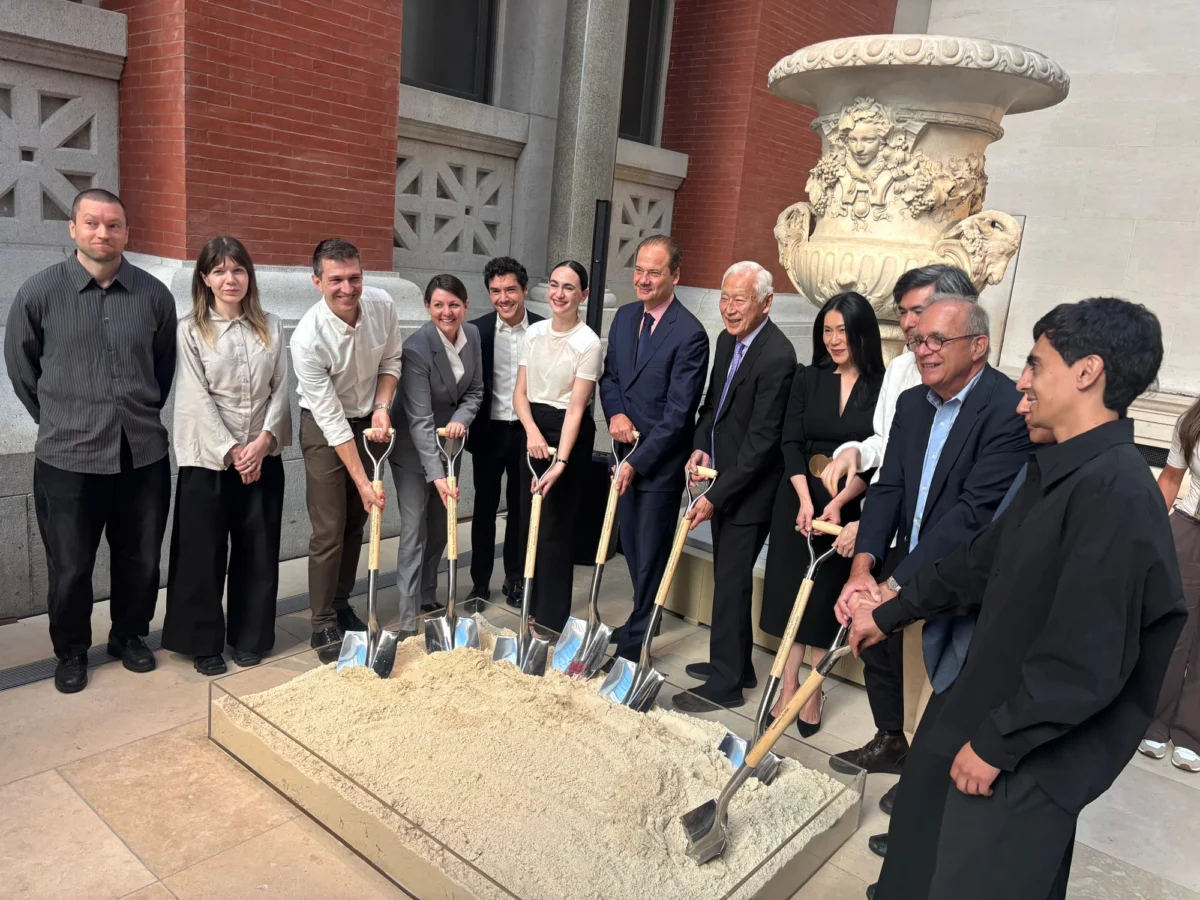
The Metropolitan Museum of Art officially broke ground today on its highly anticipated Oscar and Agnes Tang Wing for modern and contemporary art. Designed by renowned Mexican architect Frida Escobedo, the 126,000-square-foot facility marks a historic milestone for the cultural institution. Escobedo is the first woman ever to design a major wing for the venerable museum, injecting a fresh, global architectural vision into its sprawling Fifth Avenue complex.
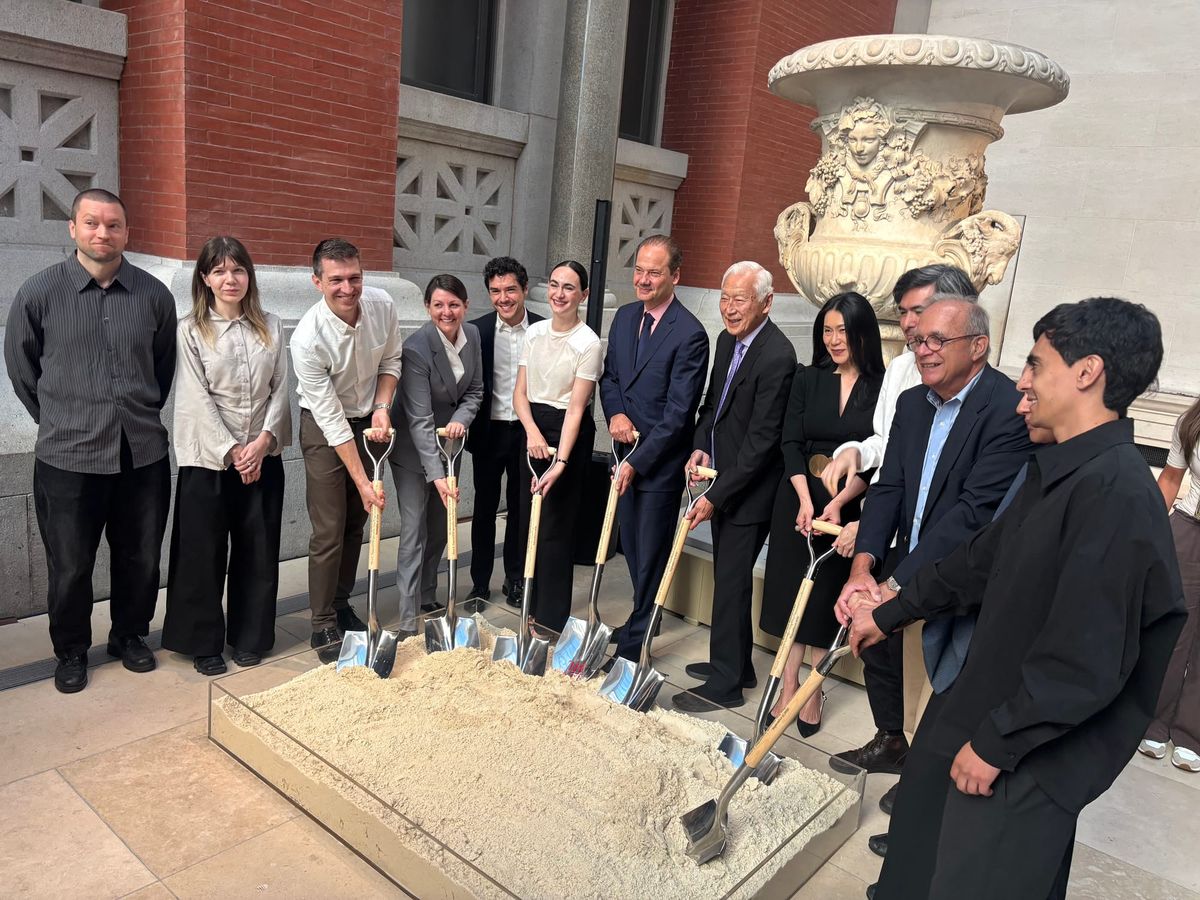
The groundbreaking ceremony, held on the morning of September 15, 2026, brought together museum leadership, key philanthropists, and elected officials inside the museum’s historic European Sculpture Court. The new wing—slated to open its doors to the public in 2030—will replace the aging Lila Acheson Wallace Wing at the southwest corner of the museum’s campus.
Upon completion, the Tang Wing will dramatically expand The Met’s footprint for 20th- and 21st-century art. It will increase the museum’s modern and contemporary exhibition space by nearly 50%, introducing 69,500 square feet of state-of-the-art galleries. Beyond spatial expansion, the project is engineered to modernize circulation, improve physical accessibility across multiple levels, and introduce cutting-edge sustainable infrastructure aimed at significantly reducing the institution’s energy consumption.
Chronology
The journey toward the Tang Wing has been years in the making, marked by visionary patronage, international architectural competition, and meticulous planning.
The Genesis of a Modern Vision (2018–2021)
The conversation around reimagining The Met’s modern and contemporary program gained serious momentum as the museum sought to rethink how it presented 20th- and 21st-century art on a global scale. Recognizing that the existing Lila Acheson Wallace Wing—which opened in 1987—no longer met the spatial, environmental, or curatorial demands of contemporary artistic practices, museum leadership began exploring options for a total redesign or replacement.
In late 2021, a pivotal $125 million lead gift from longtime museum supporters and trustees Oscar Tang and Agnes Hsu-Tang catalyzed the project, providing the financial bedrock necessary to launch an ambitious architectural search.
Selecting the Architect (2022)
In March 2022, The Met announced that Frida Escobedo had been selected to design the new wing following an exhaustive international search that considered over a hundred candidates. Escobedo, the founder of Frida Escobedo Studio based in Mexico City and New York, quickly gained international acclaim for her brilliant use of material, light, and historical context—notably her design of the 2018 Serpentine Pavilion in London. Her appointment was immediately hailed as a glass-ceiling-shattering moment for the institution.
Design Development and Approvals (2023–2025)
Over the subsequent three years, Escobedo and her team worked closely with Met Director Max Hollein, museum curators, and local stakeholders to refine the architectural blueprints. The design underwent rigorous reviews by municipal bodies, urban planners, and preservation groups to ensure seamless integration with the surrounding Central Park landscape and the museum’s landmarked historic facades. During this phase, sustainability benchmarks were established, positioning the wing to meet elite green-building standards.
The Groundbreaking Ceremony (September 15, 2026)
Marking the transition from planning to physical reality, museum leadership, major donors, and Escobedo gathered for the official groundbreaking ceremony. Festivities kicked off in the European Sculpture Court before shifting focus to the site of transformation at the southwest corner of the campus, signaling the official commencement of construction.
Supporting Data and Architectural Scope
The metrics behind the Tang Wing underscore the sheer scale of the undertaking. Replacing the Lila Acheson Wallace Wing requires a massive structural reimagining of The Met’s southwestern quadrant.
- Total Square Footage: 126,000 square feet of newly designed and optimized architectural space.
- Exhibition Growth: An increase of 69,500 square feet dedicated exclusively to galleries, expanding the museum’s modern and contemporary display capacity by nearly 50%.
- Projected Completion: 2030, with interior installations and curatorial staging slated for the months leading up to the grand public opening.
- Funding Foundation: Anchored by the historic $125 million gift from Oscar Tang and Agnes Hsu-Tang, alongside extensive supplementary fundraising from the museum’s board of trustees and international patrons.
- Environmental Impact: Integrated high-performance glass facades, advanced climate-control zoning, and smart-lighting systems designed to slash energy usage and align with New York City’s strict carbon-reduction mandates for municipal cultural institutions.
Official Responses and Perspectives
The atmosphere at the groundbreaking ceremony was one of profound celebration and intellectual reflection. Speakers emphasized not only the physical transformation of the museum, but also the philosophical shift in how a historical institution engages with the ongoing story of art.
Frida Escobedo delivered a deeply resonant keynote address. Beginning her remarks in Spanish, she invoked the expression la primera piedra ("the first stone"). She noted that the phrase immediately brought to mind the four piles of uncarved stone blocks resting atop the columns on The Met’s iconic Fifth Avenue facade. These curious pyramidal slabs are a historic vestige of architect Richard Morris Hunt’s unfulfilled 1894 expansion plan, which originally called for allegorical statues that were never carved or installed.
"It suggested the idea of becoming—that architecture, and perhaps institutions too, are never entirely finished," Escobedo reflected during her address. "They continue changing, accumulating, and adding meaning."
Metropolitan Museum of Art Director Max Hollein praised Escobedo’s visionary approach, emphasizing how her design bridges the gap between historical reverence and contemporary urgency.
"Today marks a transformative day for The Met," Hollein stated. "With Frida Escobedo at the helm of this monumental design, we are not merely constructing a new building; we are creating a dynamic, porous, and porous space where the art of our time can converse freely with the history of humanity. The Tang Wing will redefine how our visitors experience the breadth and depth of modern and contemporary art."
Philanthropists Oscar Tang and Agnes Hsu-Tang expressed immense pride in seeing their foundational vision come to life. In a joint statement, they highlighted the importance of fostering a global, inclusive dialogue within one of the world’s premier cultural institutions. They emphasized that the new wing will serve as a beacon for diverse artistic voices, ensuring that contemporary creators from every corner of the globe find a prominent home at The Met.
Implications
The construction and eventual opening of the Tang Wing carry profound implications for the global art ecosystem, New York City’s cultural landscape, and the internal operations of The Metropolitan Museum of Art.
Redefining the Museum’s Narrative
For decades, encyclopedic museums like The Met have faced institutional critiques regarding how they integrate modern and contemporary works into centuries-old historical narratives. By expanding the modern footprint by nearly 50%, the Tang Wing provides curators with the architectural freedom to present art not as a linear progression ending in the present, but as a sprawling, interconnected web of global perspectives. Escobedo’s porous, light-filled architectural language is specifically tailored to break down rigid gallery divisions, encouraging fluid transitions between movements, geographies, and mediums.
Elevating Female Leadership in Architecture
Escobedo’s role as the first woman to design a wing for The Met is a watershed moment for an industry long dominated by male architects. Her inclusion follows a broader, long-overdue cultural reckoning within major cultural institutions to diversify the creators entrusted with shaping public civic spaces. Furthermore, Escobedo’s historic participation earlier this year in The Met’s inaugural public event held entirely in Spanish signals a deliberate effort by the museum to engage directly with Spanish-speaking communities, embedding cultural inclusivity into both its programming and its physical spaces.
Urban and Environmental Integration
Located adjacent to Central Park, the Tang Wing’s design has been closely monitored by urban conservationists. By prioritizing energy efficiency, sustainable building materials, and improved pedestrian flow, the project establishes a new benchmark for how legacy institutions can modernize without compromising their historic character or ecological responsibilities. As the museum looks toward its 2030 opening, the Tang Wing stands as a testament to the idea that architecture is never truly finished—it is an ongoing dialogue between the stones of the past and the visions of tomorrow.
 Nana
Nana
 Iffa Jayyana
 Muslim
