

UNITED NATIONS — The United Nations Security Council convened today in a high-stakes session aimed at assessing the trajectory of Syria’s ongoing political transition. While diplomatic envoys acknowledge incremental progress in the nation’s long-standing peace process, the atmosphere at the UN headquarters in New York remained somber. The meeting serves as a critical juncture, balancing cautious optimism regarding political reform against the stark reality of escalating instability in the country’s southern provinces.
As of 17 September 2026, the international community finds itself once again focused on the Levant, where the tenuous peace is being tested by a resurgence of terrorist activity and a burgeoning domestic economic crisis that threatens to unravel years of painstaking diplomatic work.
The Core Conflict: A Nation at a Crossroads
The primary focus of today’s Security Council briefing revolves around the duality of the current Syrian crisis. On one hand, there is the formal, albeit slow, political process intended to finalize the post-conflict architecture of the state. On the other, there is the "on-the-ground" reality that often outpaces diplomatic deliberations.
Recent intelligence reports presented to the Council indicate that the Dara’a governorate—a region historically central to the Syrian uprising—has become a hotbed for renewed violence. Deadly armed clashes have erupted between state forces and factions linked to the Islamic State (ISIS). These skirmishes represent more than mere border scuffles; they signal a strategic effort by remnants of the terrorist organization to exploit the vacuum left by years of fractured governance and economic hardship.
Simultaneously, the civilian population is grappling with severe economic anxiety. Spontaneous protests have broken out across several provinces, sparked by the government’s recent decision to hike fuel prices. This domestic unrest provides a volatile backdrop to the high-level diplomatic discussions, illustrating that political transition cannot succeed in a vacuum if the basic socioeconomic needs of the populace remain unmet.
Chronology of Escalation: From Hope to Volatility
To understand the current situation, one must examine the timeline of the recent developments that necessitated today’s emergency briefing.
- Late July 2026: Initial reports emerge of "sleeper cell" activity in the southern corridor. Security analysts identify a shift in tactics, with ISIS-affiliated groups moving away from traditional hit-and-run attacks toward coordinated territorial challenges.
- 15 August 2026: The Syrian government announces a series of austerity measures aimed at stabilizing the national currency, including the removal of long-standing fuel subsidies.
- 28 August 2026: Demonstrations begin in urban centers, initially focused on economic relief but quickly evolving into broader calls for government accountability.
- 5 September 2026: A significant escalation in violence occurs in the Dara’a governorate. A series of ambushes targeting local security outposts results in the highest single-day casualty count for government forces in the region this year.
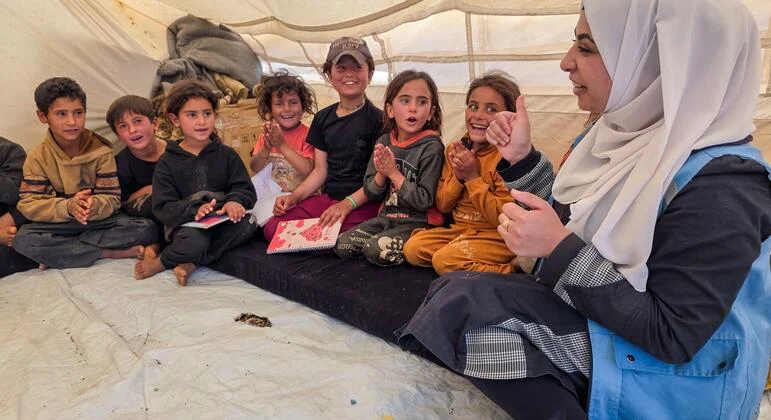
- 12 September 2026: UN humanitarian agencies report that safety awareness sessions for children in camps—such as those in Mleihat—are being interrupted by the sound of artillery fire, highlighting the immediate threat to the most vulnerable.
- 17 September 2026: The UN Security Council meets to address the dual crises, seeking a unified path forward.
Supporting Data: The Humanitarian and Security Toll
The data underpinning the current crisis is as sobering as the headlines. According to the most recent UN assessment, the combination of security threats and economic inflation has pushed an additional 1.2 million Syrians into extreme poverty within the last six months alone.
Security Metrics
The resurgence of terrorist activity is measurable. Since June 2026, there has been a 40% increase in improvised explosive device (IED) incidents in southern Syria. These attacks are not merely aimed at military targets; they are designed to disrupt the fragile restoration of local services and public infrastructure.
Economic Indicators
The fuel price hike, which triggered the recent wave of protests, represents a 150% increase in transport and heating costs for the average household. With the Syrian Pound continuing to struggle against foreign exchange benchmarks, the purchasing power of the average citizen has evaporated. The UN’s World Food Programme (WFP) has warned that food insecurity is reaching levels not seen since the height of the conflict, as transport costs now make the delivery of humanitarian aid prohibitively expensive.
Official Responses and Diplomatic Posturing
The debate within the Security Council chamber reflected a deep divide in how to address the crisis.
The Western Bloc
Representatives from the United States, France, and the United Kingdom emphasized that the political transition is being sabotaged by the government’s failure to secure its borders and provide basic relief. "You cannot expect a transition to hold when the state is perceived as either predatory or absent," remarked the French Ambassador. They urged the Syrian government to reconsider the fuel price hikes and focus on decentralizing the aid distribution process to bypass corrupt intermediaries.
The Syrian Perspective
The Syrian representative to the UN argued that the nation is being "strangled" by international sanctions that have crippled the economy. "The protests you see are not merely about fuel; they are the result of an economic blockade that prevents the state from rebuilding," the representative stated. They characterized the ISIS-affiliate attacks as a "direct consequence of foreign interference" that has left the southern borders porous and vulnerable.
The UN Secretariat
The UN Special Envoy for Syria, speaking before the Council, called for an immediate "humanitarian pause" in the violence to allow for the assessment of food security and medical needs in the Dara’a region. The Envoy stressed that the political process—the constitutional committee and the path toward elections—must remain insulated from the day-to-day fluctuations of the battlefield.
Implications for the Future: A Fragile Transition
The implications of the current standoff are profound. If the Security Council fails to find a consensus, the political transition risks being labeled a "failed endeavor."
- The Risk of Radicalization: The economic despair in the south is an ideal recruiting ground for extremist groups. If the state cannot provide stability or bread, the population may become increasingly susceptible to the false promises of militant ideologies.
- Regional Spillover: The instability in southern Syria is already causing friction with neighboring Jordan. Increased border incursions could lead to a wider regional conflict that the UN is currently ill-equipped to mediate.
- The Humanitarian Dilemma: With aid budgets stretched thin globally, the UN is facing a "donor fatigue" scenario. If the security situation in Syria continues to deteriorate, humanitarian agencies may be forced to withdraw staff, leaving the civilian population without a safety net.
Conclusion: The Path Forward
As the Security Council session concluded, the consensus remained elusive. While all member states agreed on the necessity of a stable Syria, the "how" remains the subject of intense debate.
The images of children attending safety sessions in Mleihat serve as a poignant reminder that for the people of Syria, the "political transition" is not a abstract debate held in the halls of New York—it is a matter of daily survival. Whether the international community can pivot from debating policies to delivering tangible security and economic relief will determine whether Syria moves toward a new era of governance or slides back into the chaos of the past.
For now, the world watches, the cameras remain on, and the people of Syria continue to wait for a peace that remains frustratingly out of reach.
For ongoing updates regarding the situation in Syria, viewers are encouraged to follow the official UN Web TV broadcasts and subscribe to the daily UN News newsletter for real-time reporting from the field.
 Nana Muazin
 Azzam Bilal Chamdy
 Layla Zulfa
