

By Anna Lee
September 17, 2026
Depending on who you ask, "affordable art" can mean a million-dollar steal for a blue-chip painting at a high-end Manhattan auction house, or a $2 plastic-wrapped print bought off a makeshift table in Washington Square Park. While the latter tends to be far more aligned with the average art lover’s tax bracket, a middle ground exists—one where original, gallery-vetted works can be acquired without emptying one’s retirement savings.
That sweet spot was on full display at the opening night of the semiannual New York Affordable Art Fair, which kicked off in Manhattan’s vibrant Chelsea neighborhood. Running through Sunday, September 20, at the historic Starrett-Lehigh Building, this year’s exhibition brings together a sprawling labyrinth of works by 620 artists, the vast majority of whom are based internationally.
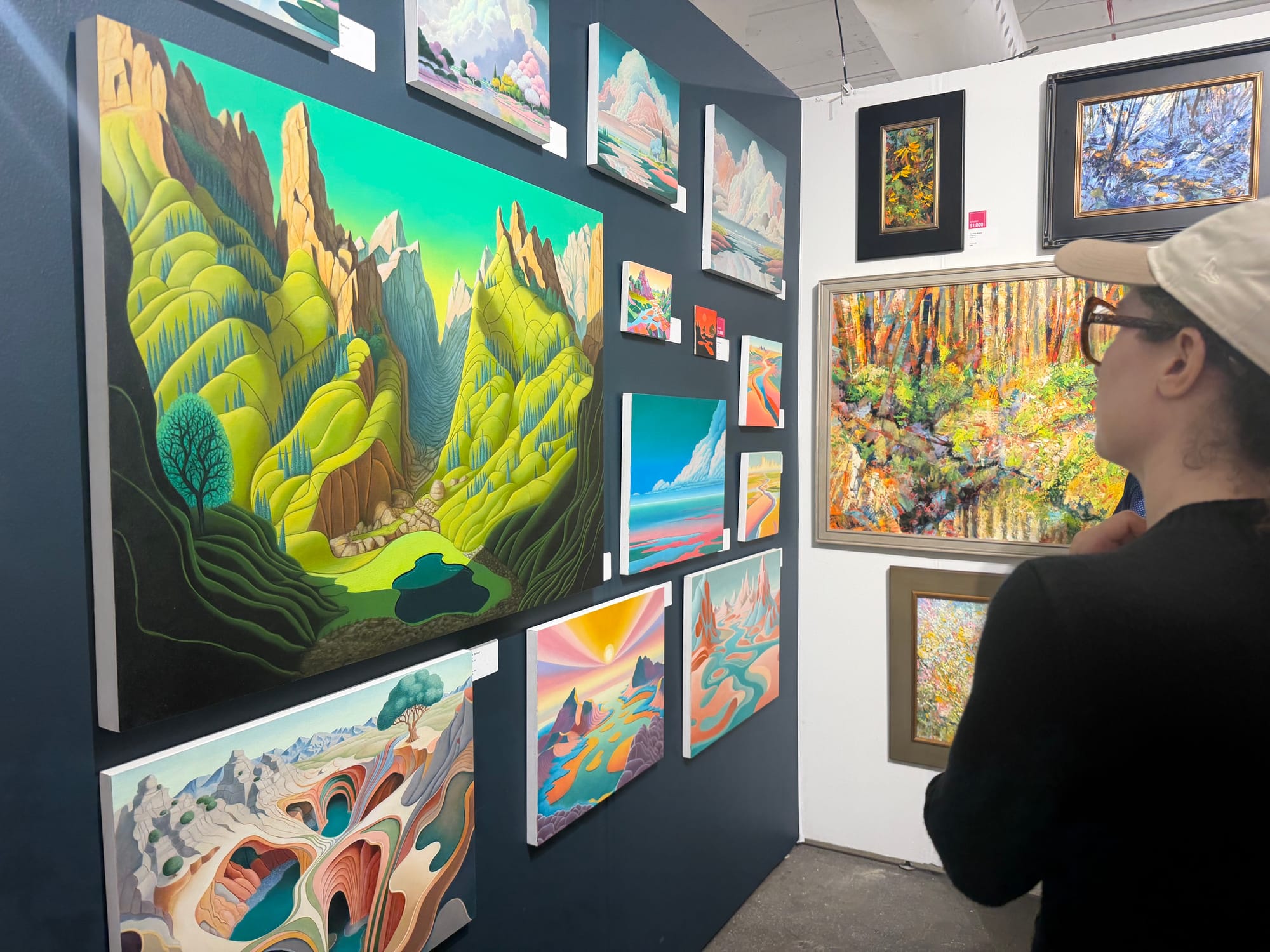
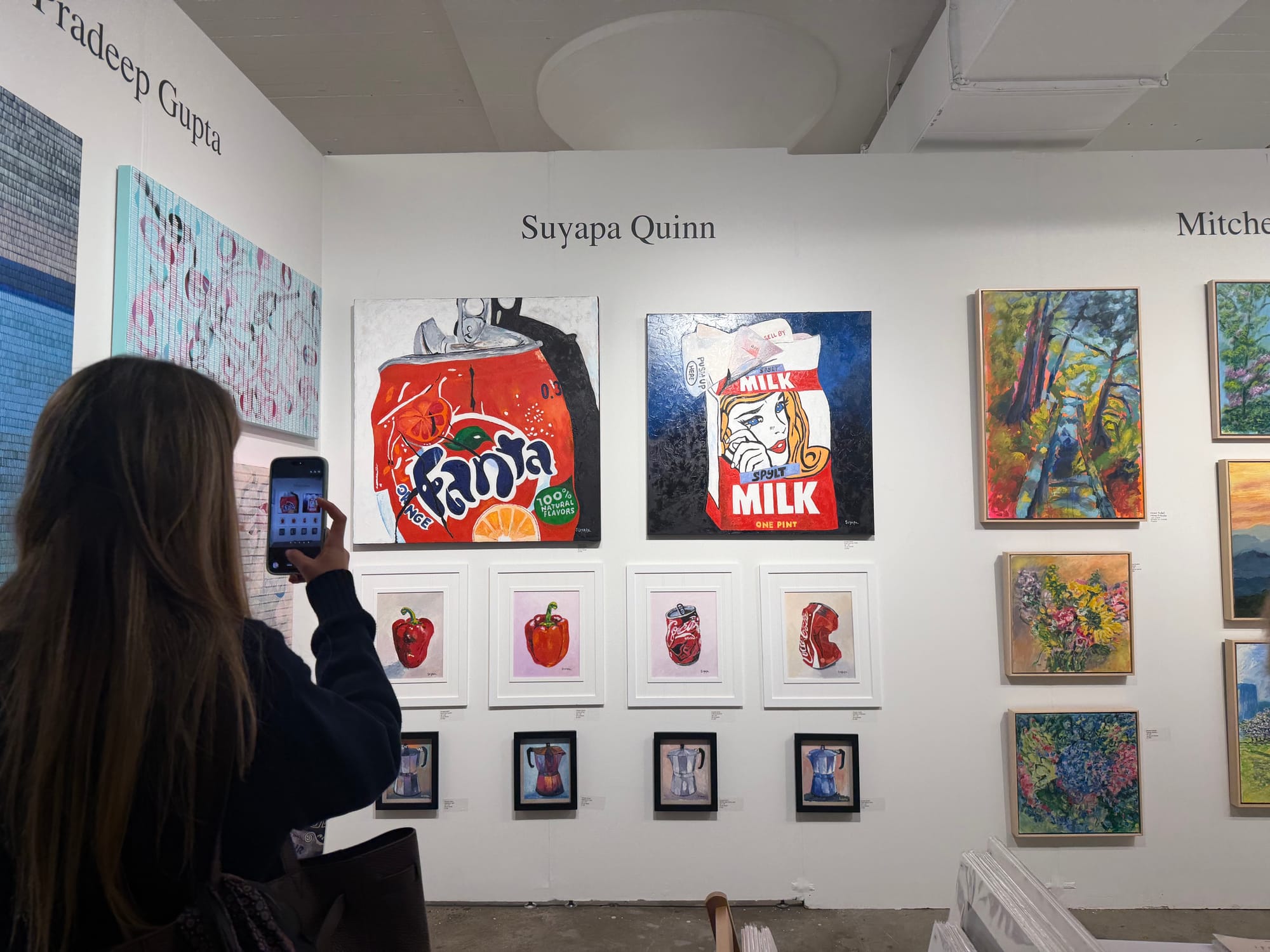
With prices deliberately capped between $100 and $12,000, the atmosphere cultivates a markedly different energy than exclusive, intimidating blue-chip fairs. Navigating the venue feels approachable, welcoming seasoned collectors and curious first-timers alike with dedicated installations like the "Works Under $1,000" wall, alongside countless booths offering curated bins of budget-friendly prints.
Main Facts: Breaking Down the 2026 NYC Edition
The New York edition of the Affordable Art Fair remains a cornerstone for accessible contemporary art acquisition. Key facts regarding the 2026 event include:
- Dates: September 17–20, 2026.
- Location: The Starrett-Lehigh Building, Chelsea, New York City.
- Scale: Features 91 distinct gallery booths showcasing works from 620 artists, with a heavy emphasis on international talent.
- Price Range: Artworks are strictly priced between $100 and $12,000, ensuring a diverse entry point for buyers.
- Special Features: Dedicated budget-conscious zones, including the "Works Under $1,000" curated wall and specialized print bins.
Global in its footprint, the parent organization was founded in October 1999 and now hosts editions in 15 major cities worldwide, including global cultural capitals like Brussels, Hong Kong, and Berlin. Its core mission has always remained simple yet revolutionary: demystify the art market and make contemporary art ownership attainable for everyone.

Chronology: Opening Night Unfolded
6:00 PM – The Doors Open and First Impressions
As attendees streamed into the sprawling, industrial-chic floors of the Starrett-Lehigh Building, clutching plastic thimbles of complimentary opening-night wine, the mood was immediately buoyant. Dressed entirely in black—a quiet stylistic choice that repeatedly led bewildered visitors to mistake me for gallery staff—I began charting a path through the labyrinthine aisles.
Mistaken identity proved to be a reliable icebreaker. Within the first hour, about a dozen attendees approached me with questions about booth locations, artist biographies, and pricing sheets. I witnessed a spirited domestic debate between a couple fiercely arguing over whether to purchase a sculptural display made of glued-together vintage cookbook spines. Nearby, an ecstatic attendee stood mesmerized before Gabe Benzur’s surrealist oil paintings, loudly declaring to anyone within earshot that the canvases vividly mirrored their last trip on LSD. Later, while rifling through a flat-file bin of butterfly prints priced under $1,000, a passing patron unceremoniously thrust a stack of their favorite selections straight into my arms for safekeeping.
7:30 PM – Engaging with the Artists
Unlike traditional museum openings where artists are often absent or cordoned off behind security, the Affordable Art Fair thrives on direct creator-buyer interaction.
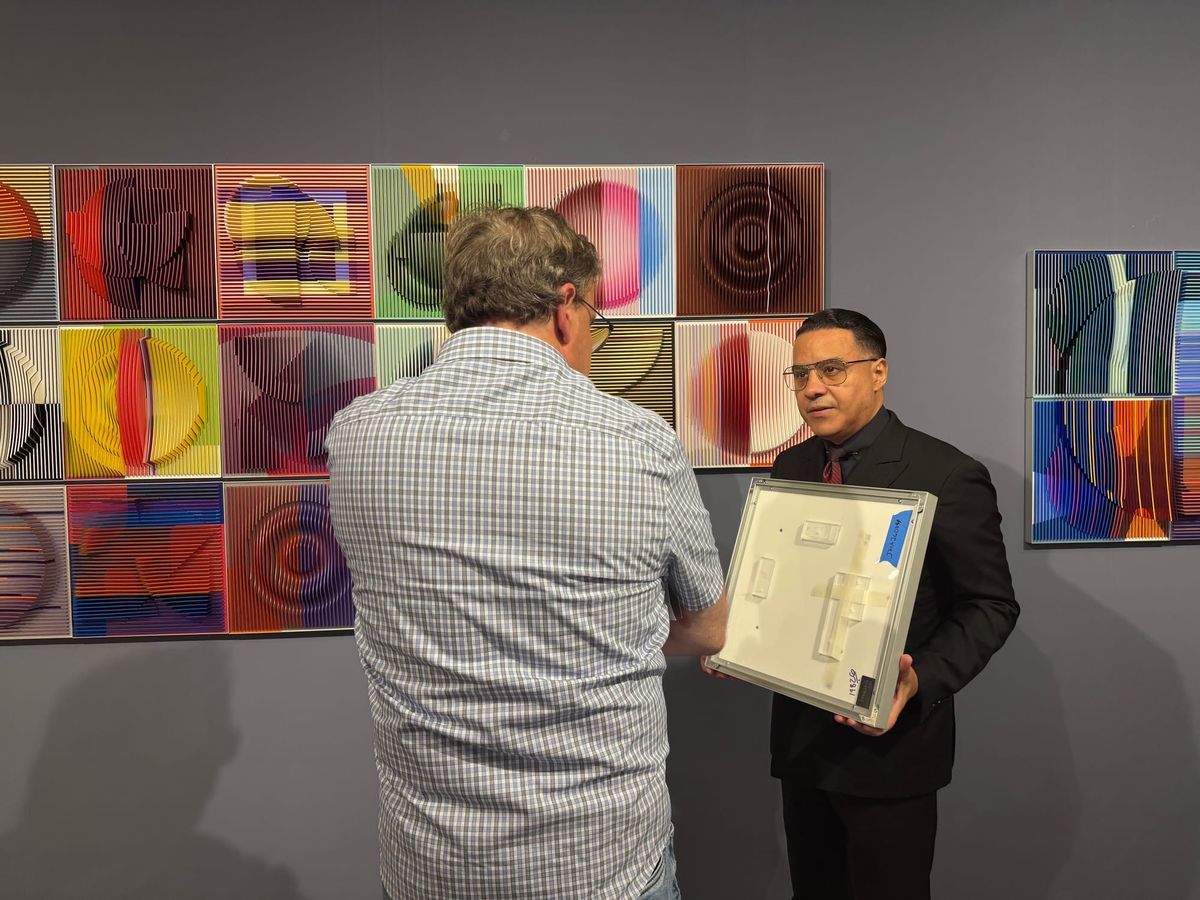
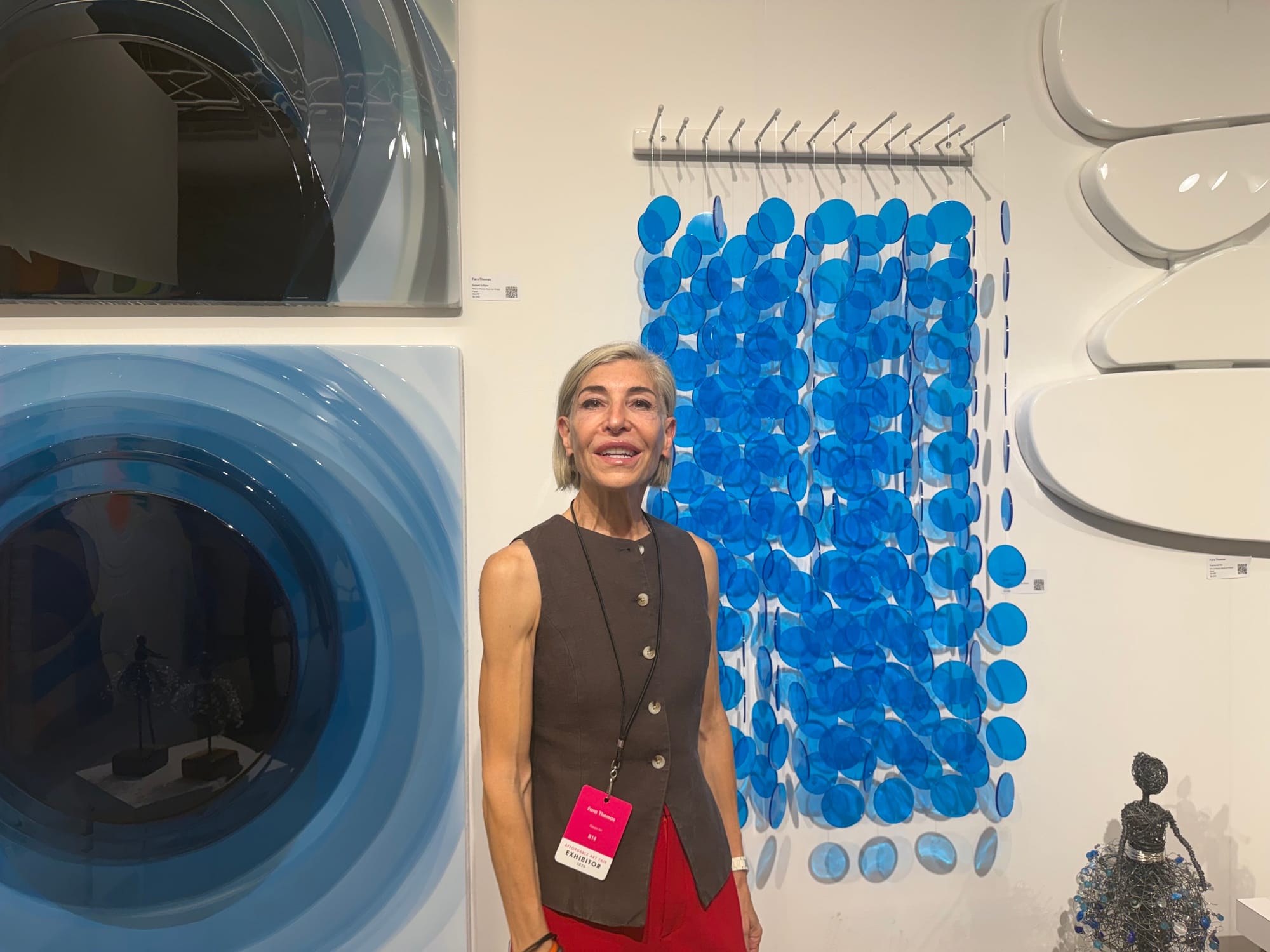
Iranian American artist Fara Thomas operated a bustling, one-woman operation from her designated booth. Standing fluidly before her suspended resin-based creations—sculptures that brilliantly blur the line between two-dimensional painting and three-dimensional form—she articulated her philosophy with raw candor.
"Color is my language," Thomas remarked, gesturing toward a floating blue sculpture that caught the gallery lights. "Even though it can be a pain in the ahem."
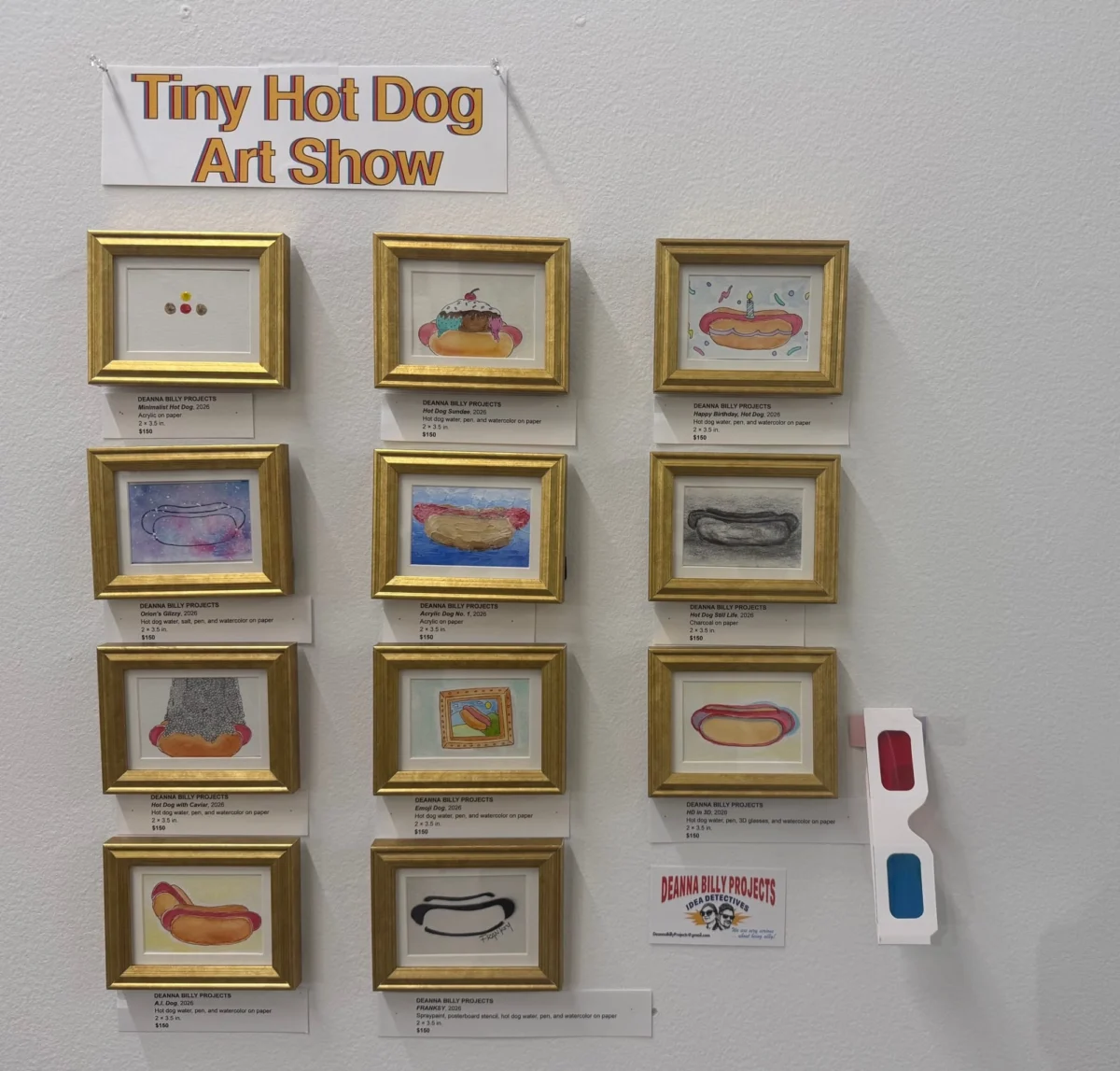
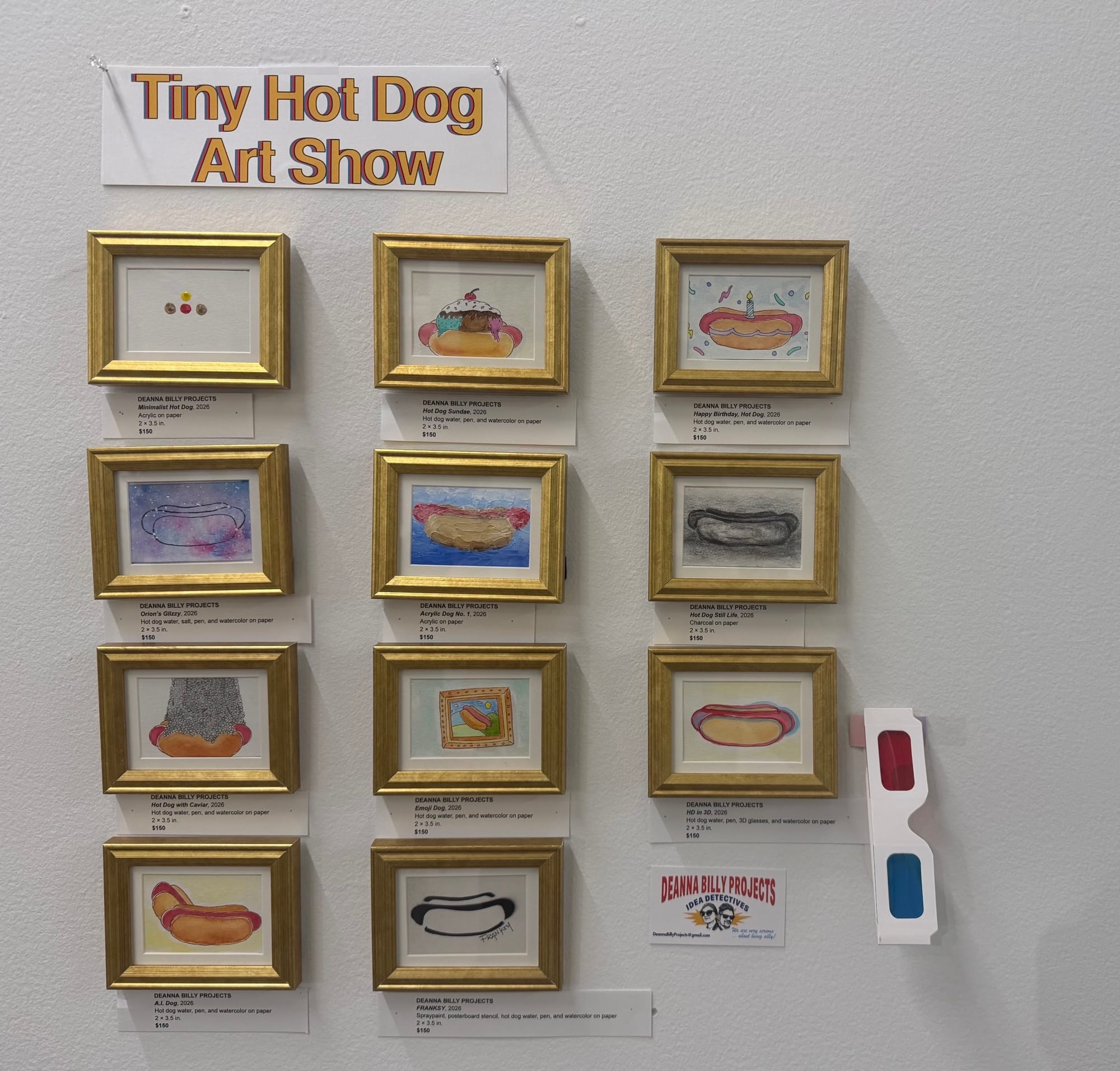
Further down the aisle, the charm continued at Deanna Billy Projects, where crowds gathered around the Tiny Hot Dog Art Show. Featuring painstakingly detailed miniature paintings of hot dogs priced at a modest $150 per wiener, the tongue-in-cheek exhibition drew continuous chuckles and steady inquiries. Similarly, Amelia Coward’s clever vintage map assemblages—which optically trick the eye into seeing bubble wrap from a distance—commanded prices ranging from $1,300 to $3,500.
9:00 PM – The Climax of Commerce and Community
As the night progressed, the aisles grew densely packed. The initial polite wandering devolved into lively, wine-fueled camaraderie as artists, gallery owners, and prospective buyers struck up spontaneous conversations.
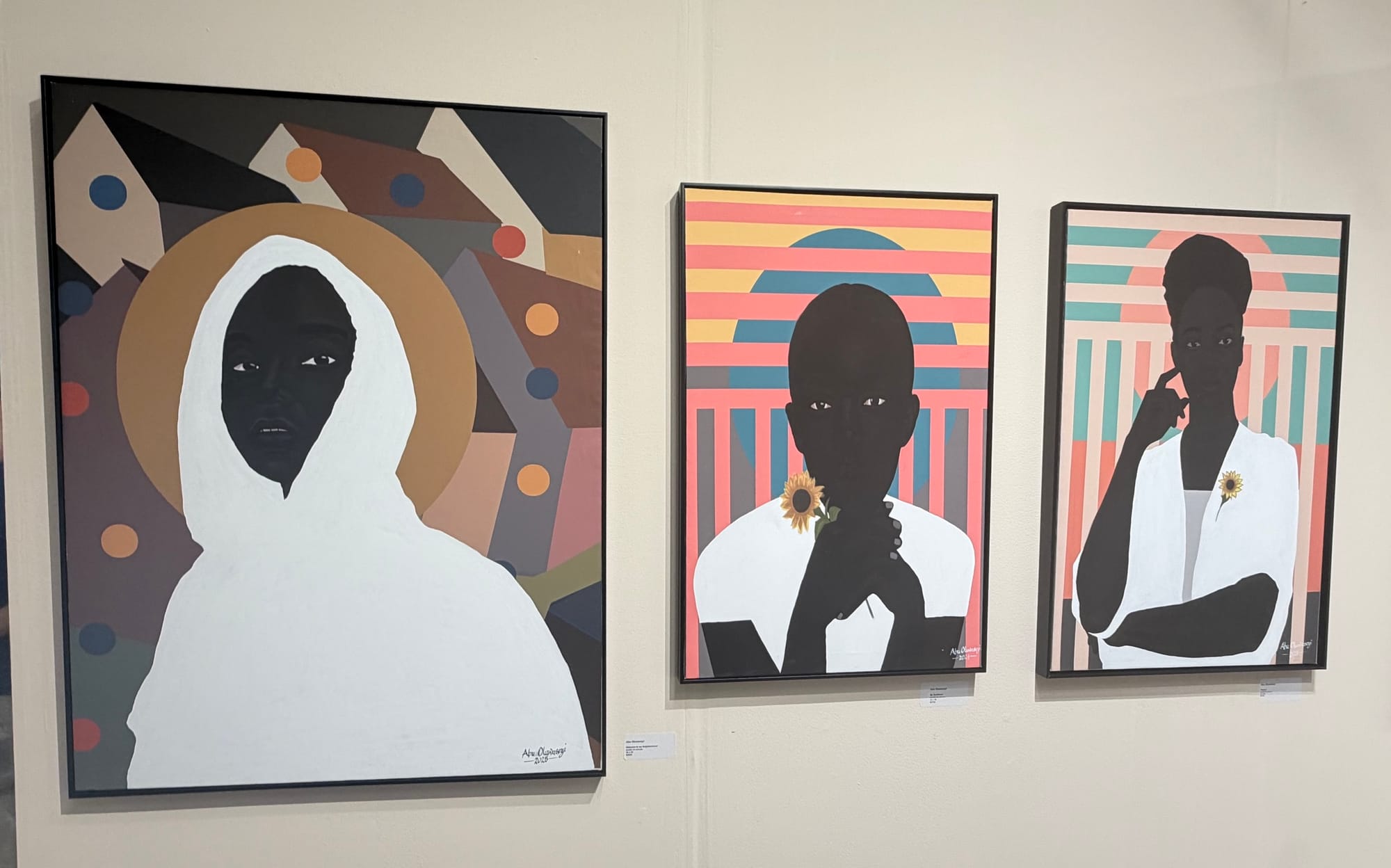
At Spiralis Gallery’s booth, multimedia works by Nigerian artist Abu Oluwaseyi drew me back repeatedly. His striking abstract portraits melded intricate patterns with deeply piercing gazes.
"Oluwaseyi is special to me because he only paints strong women, by themselves, looking directly at the audience," explained curator Gail Patterson, pausing in front of the artist’s $4,850 abstract portrait, Welcome to my Neighborhood (2025). "I wouldn’t be displaying these works if I wouldn’t buy them myself."
By the end of the evening, the fair’s central packaging station was operating with the mechanical precision of a well-oiled assembly line, wrapping newly purchased canvases and sculptures for thrilled buyers eager to take their new treasures home.
Supporting Data: Highlights and Market Trends
The 2026 fair successfully balanced high conceptual art with whimsical, accessible everyday objects. Notable standout works driving conversation and sales included:
- Dylan Martinez’s Glass-Blown Water Balloons ($800): Hyper-realistic glass sculptures that compelled visitors to double-take, terrified they might accidentally puncture them.
- Tom Pfannerstill’s Carved-Wood Objects ($1,150): Painstakingly hand-painted everyday debris, such as a remarkably convincing "Apple and Eve" juice box carved from solid wood.
- Gabe Benzur’s Surrealist Oil Paintings: Vibrant, hallucinatory canvases that captivated younger collectors looking for bold, mind-bending visual narratives.
- Historical Precedents: The fair continues a tradition of welcoming college students and young professionals, echoing past breakout hits like Emily Howard’s bite-sized macaron sculptures, Mookntaka’s hefty gallery inflatables, and Joyce Pommer’s textured mixed-media abstractions.
Official Perspectives and Curatorial Insights
Galleries participating in the Affordable Art Fair view the venue as an essential bridge between commercial survival and public education. For emerging artists, the barrier to entry in traditional Chelsea or Upper East Side galleries can often feel insurmountable. The fair provides a high-visibility platform without the prohibitive overhead normally associated with major international art fairs like Art Basel or Frieze.
Curators on-site emphasized that affordability does not equate to a compromise in quality. Gail Patterson of Spiralis Gallery noted that platforms like this allow galleries to take risks on international and underrepresented artists who might otherwise struggle to find a foothold in the notoriously guarded New York market.
"When you strip away the intimidation factor of the art world—the velvet ropes, the whispered prices, the exclusionary gatekeeping—people are genuinely eager to connect with art on a human level," one exhibiting gallerist observed anonymously. "They want to buy something because it speaks to their soul, not just because an investment banker told them it will appreciate in five years."
Implications: The Democratization of Art Collecting
The ongoing success of the Affordable Art Fair model points to a broader, shifting paradigm within the global art market. For decades, fine art acquisition was treated strictly as an asset class reserved for the ultra-wealthy. However, the rise of millennial and Gen Z collectors—demographics that prioritize personal emotional resonance, interior aesthetics, and direct financial agency—has reshaped market demands.
By lowering the financial threshold while maintaining curatorial integrity, events like the NYC Affordable Art Fair cultivate a new generation of patrons. Attendees who purchase a $150 miniature hot dog painting today are actively building the confidence, taste, and financial habits required to become major collectors tomorrow.
As the art world navigates economic uncertainties and shifting cultural values, the formula proven at the Starrett-Lehigh Building offers an optimistic blueprint: art does not need to cost a fortune to be valuable, and the joy of collecting belongs to everyone.
 Nana
Nana
 Iffa Jayyana
 Muslim
