

By Aaron Short
Published by Hyperallergic
Main Facts
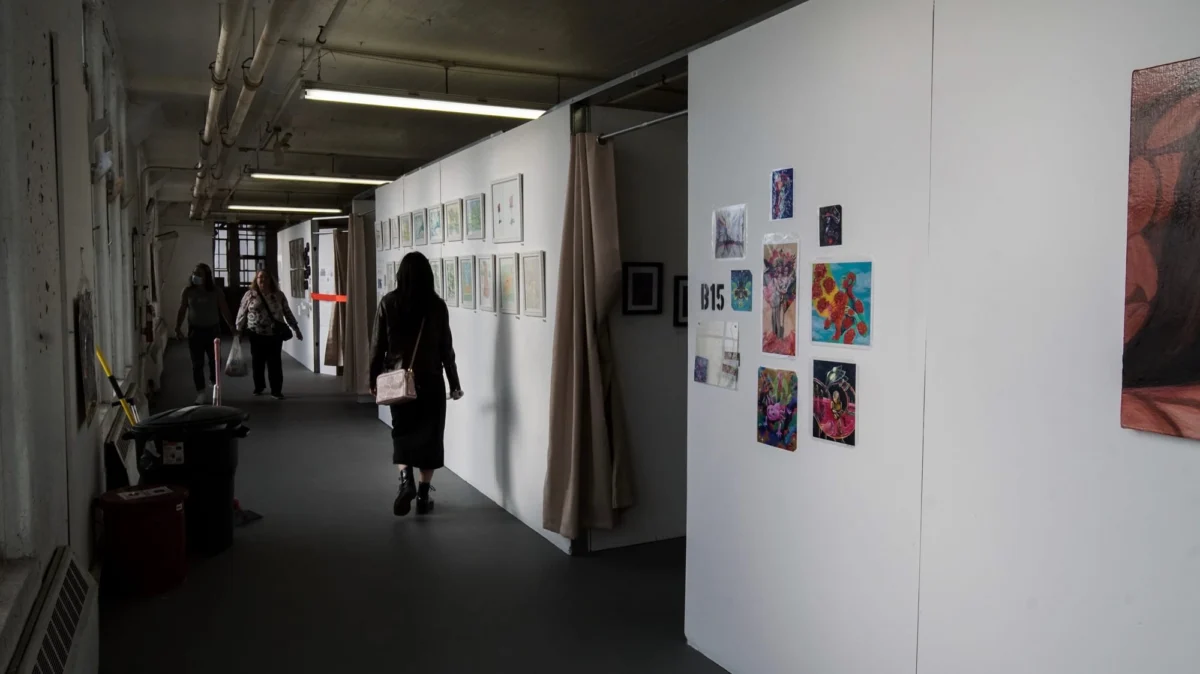
A beloved and long-standing fixture of New York City’s cultural landscape is facing a major contraction. ChaShaMa, a venerable arts nonprofit dedicated to providing affordable, subsidized workspaces for local creatives, is being forced to surrender half of its footprint inside the historic Brooklyn Army Terminal. The sweeping reduction means that 29 artists will lose their studios—spaces many of them have occupied for nearly twenty years.
The mandate stems from a directive issued by the New York City Economic Development Corporation (NYCEDC). City officials informed ChaShaMa in August that it must completely vacate its sprawling 20,000-square-foot wing located on the third floor of Building A. The deadline for the exodus is the end of October, with artists instructed to pack up their studios and clear out their materials by October 12.
The justification provided by the city is commercial expansion: a neighboring tenant within the city-owned industrial complex requested additional space, prompting the NYCEDC to reallocate ChaShaMa’s territory to accommodate the growing enterprise. Remarkably, neither the NYCEDC nor ChaShaMa has publicly disclosed the identity of the expanding tenant, leaving the displaced artists and the broader community in the dark regarding the commercial forces superseding grassroots cultural infrastructure.
ChaShaMa currently operates 107 subsidized art studios spread across two buildings at 140 58th Street in Sunset Park, Brooklyn. The loss of the Building A wing strips the organization of roughly half its capacity at the site. In response to the crisis, the nonprofit has entered high-stakes negotiations with the city to lease an alternative space within Building B. If successful, the move could theoretically yield 70 new studios, consolidating ChaShaMa’s footprint at the former military supply base. However, for the 29 creators currently facing eviction, a future promise offers little immediate comfort as they scramble to relocate their practices, equipment, and livelihoods mid-career.
Chronology of Events
The sudden eviction of ChaShaMa’s artists is the latest chapter in a long history of the Brooklyn Army Terminal serving as an incubator for local manufacturing, commerce, and the arts. Understanding the timeline of this displacement highlights the speed with which the city can upend long-standing cultural investments.
- 2007: ChaShaMa establishes its presence at the Brooklyn Army Terminal in Sunset Park, Brooklyn. For nearly two decades, the nonprofit acts as a vital cultural anchor, transforming industrial spaces into affordable havens for painters, sculptors, mixed-media artists, and makers who are continuously priced out of the traditional New York real estate market.
- August 2025: City officials from the New York City Economic Development Corporation (NYCEDC) approach ChaShaMa leadership with an ultimatum. Citing an unnamed neighboring tenant’s desire to expand its operational footprint within Building A, the city orders the nonprofit to vacate its entire 20,000-square-foot third-floor wing.
- Late August – September 2025: ChaShaMa breaks the news to its tenant artists. Panic and frustration ripple through the 29 affected studios. Concurrently, organizational leadership begins intense negotiations with the NYCEDC to secure an alternative space in Building B to mitigate long-term losses.
- October 12, 2025: The hard deadline set by ChaShaMa for artists to pack up their studios, box their supplies, and clear out their workspaces from the Building A wing.
- End of October 2025: The final contractual deadline mandated by the NYCEDC for ChaShaMa to fully surrender the 20,000-square-foot space to the incoming, undisclosed commercial tenant.
- Late 2025 and Beyond: Ongoing negotiations between ChaShaMa and the NYCEDC regarding the potential acquisition of space in Building B, which could theoretically house up to 70 new studios if agreements are finalized, though questions remain regarding cost, build-out timelines, and displacement mitigation.
Supporting Data and Context
To fully grasp the magnitude of the displacement at the Brooklyn Army Terminal, it is necessary to examine the scale of ChaShaMa’s operations, the unique architecture of the site, and the broader economics of studio space in New York City.
The Scale of ChaShaMa’s Footprint
Before the August eviction notice, ChaShaMa managed a thriving community of 107 studios across its spaces at 140 58th Street. The third-floor wing of Building A represented a massive 20,000-square-foot ecosystem where creators could work without the crushing overhead of commercial Manhattan or gentrified North Brooklyn rents. By losing this wing, the organization instantly forfeits half of its capacity at the terminal, cutting its direct support system for local practitioners in half.
The Brooklyn Army Terminal Ecosystem
Originally designed by renowned architect Cass Gilbert and opened in 1919, the Brooklyn Army Terminal served as the largest military supply base in the United States during World War II. In the decades following, the complex transitioned from federal military logistics into a municipal industrial park managed by the NYCEDC. Today, the sprawling waterfront campus houses a diverse mix of light manufacturing, biotechnology firms, garment makers, tech startups, and artists.
However, as Sunset Park has undergone rapid commercial development and industrial gentrification, tensions have inevitably risen between high-revenue industrial tenants and low-revenue cultural stewards. While the NYCEDC often champions the terminal as a driver of equitable economic development, the prioritization of an anonymous expanding tenant over a 20-year cultural anchor exposes the precarious nature of municipal leases for the arts.
The Broader Crisis of Artist Displacement
New York City has long struggled with a chronic shortage of affordable workspaces for creatives. According to various municipal and independent cultural assessments, rising property values, commercial speculation, and post-industrial redevelopment have systematically pushed artists out of Manhattan, Long Island City, Williamsburg, and Bushwick.
Sunset Park had long served as a crucial pressure valve—a place where industrial grit met creative ingenuity. The displacement of artists who have maintained roots in the terminal since 2007 demonstrates that even city-owned, publicly subsidized properties are not immune to the pressures of commercial prioritization. When artists are uprooted after nearly twenty years in the same location, it does not just disrupt individual careers; it severs the institutional memory, mentorship networks, and community bonds that sustain New York’s global cultural reputation.
Official Responses and Stakeholder Perspectives
The friction between municipal economic development goals and grassroots cultural preservation has brought forth pointed responses from the organizations involved, as well as deep anxiety from the affected creative community.
ChaShaMa’s Position: Managing Crisis and Seeking Solutions
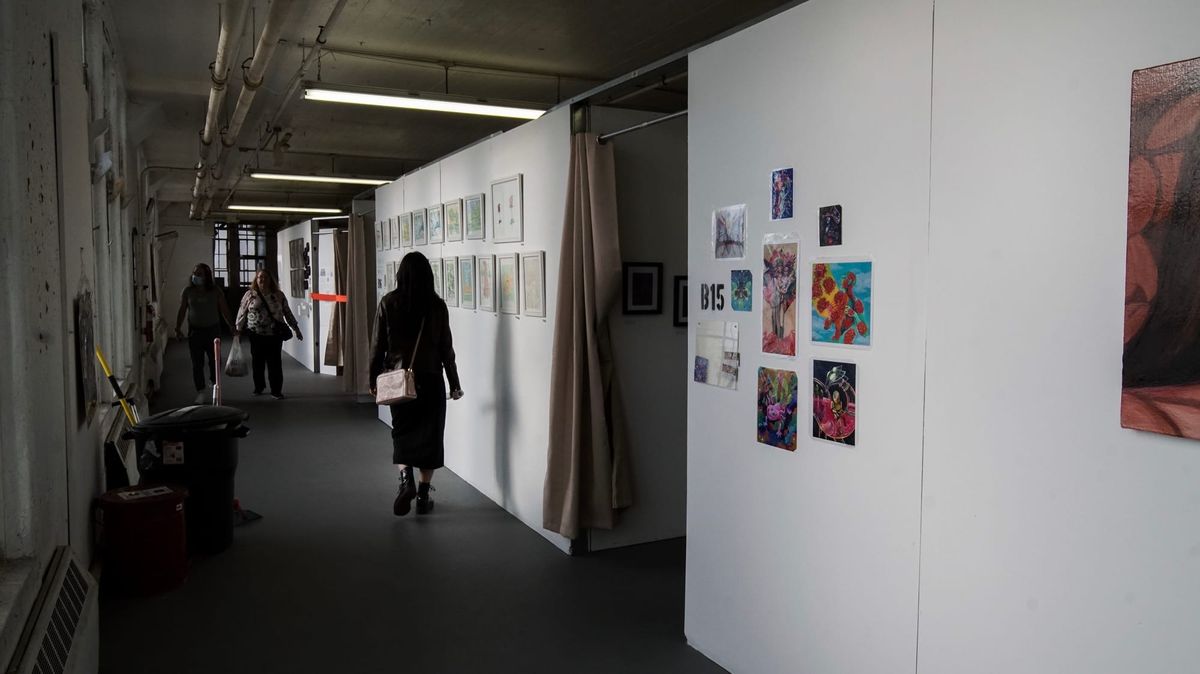
ChaShaMa, founded in 1995 by Anita Durst, has spent decades transforming unused, underutilized, and vacant real estate into creative spaces for artists and communities. The nonprofit’s model relies heavily on partnerships with private landlords and municipal agencies to secure below-market rents, which are then passed down to artists in need of studios, rehearsal spaces, and presentation venues.
Faced with the NYCEDC’s mandate, ChaShaMa leadership has walked a delicate tightrope. On one hand, the organization must comply with city directives regarding city-owned property; on the other, it must advocate fiercely for its displaced constituents. In public statements, ChaShaMa has emphasized its ongoing negotiations to secure a footprint in Building B. The promise of 70 potential new studios is framed as a long-term consolidation strategy. Yet, organizational representatives acknowledge the immediate human cost: telling artists who have built their creative lives in Building A for nearly two decades that they must pack up by mid-October is a devastating blow.
The NYCEDC Perspective: Balancing Industrial Growth
The New York City Economic Development Corporation operates as the city’s primary engine for job creation and economic growth. In its view, managing a massive municipal asset like the Brooklyn Army Terminal requires constant balancing acts between competing sectors—manufacturing, logistics, technology, and culture.
When a commercial tenant already operating within the complex presents a viable plan for business expansion, job creation, or capital investment, the NYCEDC often evaluates the request through the lens of maximizing square footage utility and municipal revenue. While the agency has defended its overall commitment to the arts—pointing to long-term partnerships with organizations like ChaShaMa—its decision to prioritize an anonymous expanding tenant over a 20-year cultural stalwart illustrates the stark reality of municipal real estate policy: economic metrics and job-count projections frequently outweigh intangible cultural value.
The Artist Perspective: Grief, Anger, and Uncertainty
For the 29 artists evicted from Building A, the administrative euphemisms of "lease reallocation" and "tenant expansion" translate into personal and professional crisis. Many of these creators moved into the Sunset Park terminal during the late 2000s, when the neighborhood was far less developed and the terminal itself was still finding its modern identity as a commercial hub.
Artists interviewed about the displacement highlighted the irreplaceable nature of their workspaces. A studio is not merely a room with four walls; it is a repository for heavy equipment, toxic materials, large-scale canvases, unfinished sculptures, and years of accumulated artistic research. Moving such a space requires immense financial resources, physical labor, and time—luxuries that many independent artists simply do not possess. Furthermore, the abrupt mid-October deadline gave tenants mere weeks to dismantle environments they had cultivated over generations.
Implications for New York City’s Cultural Future
The partial eviction of ChaShaMa from the Brooklyn Army Terminal carries profound implications that stretch far beyond the borders of Sunset Park, raising urgent questions about the future of creative infrastructure in New York City.
The Vulnerability of City-Owned Cultural Space
One of the most alarming aspects of the ChaShaMa situation is that the displacement is occurring within a city-owned facility. For decades, artists and cultural advocates have argued that municipal real estate should serve as a bulwark against the ravages of the private commercial market. If city agencies like the NYCEDC are willing to displace long-standing arts organizations to make way for anonymous, expanding commercial enterprises, artists are left wondering where safe harbor can truly be found.
If public assets cannot guarantee long-term stability for cultural producers, the city risks signaling that art is merely a transitional placeholder—useful for branding and neighborhood revitalization during economic slumps, but expendable the moment a corporate tenant offers higher square-footage yields.
The Ripple Effect on Neighborhood Cultural Identity
Sunset Park has evolved dramatically over the last twenty years, transitioning into a vibrant hub of diverse immigrant communities, culinary destinations, and creative enclaves. Artists working out of the Brooklyn Army Terminal have contributed immensely to the local ecosystem, opening their doors during annual open studio events, collaborating with local schools, and enriching the public fabric of South Brooklyn.
When an artist community is abruptly fractured, the neighborhood loses a vital layer of its cultural vitality. The displacement of these 29 creators diminishes the economic and social diversity that makes New York City an attractive destination for global talent in the first place.
Looking Forward: Will Building B Deliver?
As negotiations between ChaShaMa and the NYCEDC continue regarding the potential space in Building B, the ultimate outcome remains uncertain. Even if the organization succeeds in building out 70 new studios, the transition period will leave a painful gap in services. Moreover, questions linger over whether the new spaces will match the specific infrastructure, light, and accessibility of the historic Building A wing, or whether the build-out costs will introduce new financial pressures for the nonprofit.
For now, the situation at the Brooklyn Army Terminal stands as a sobering reminder of the constant precarity facing New York City’s artistic community. As commercial pressures mount and municipal priorities shift, the city’s creative soul remains caught in a delicate balance between economic expansion and cultural survival.
 Muslim
 Evan Lee Salim
 Jia Lissa
