

By Global Arts Correspondent
Published: September 2026
Main Facts
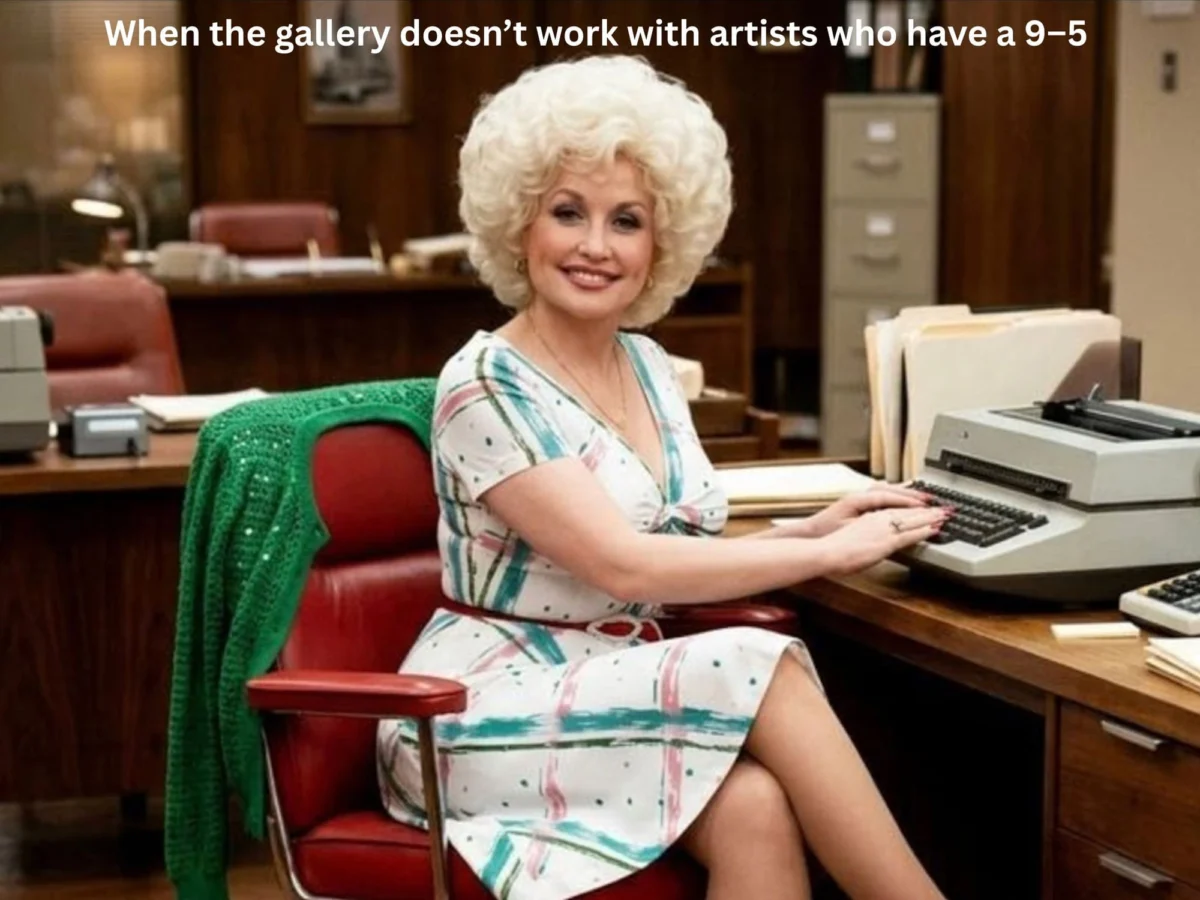
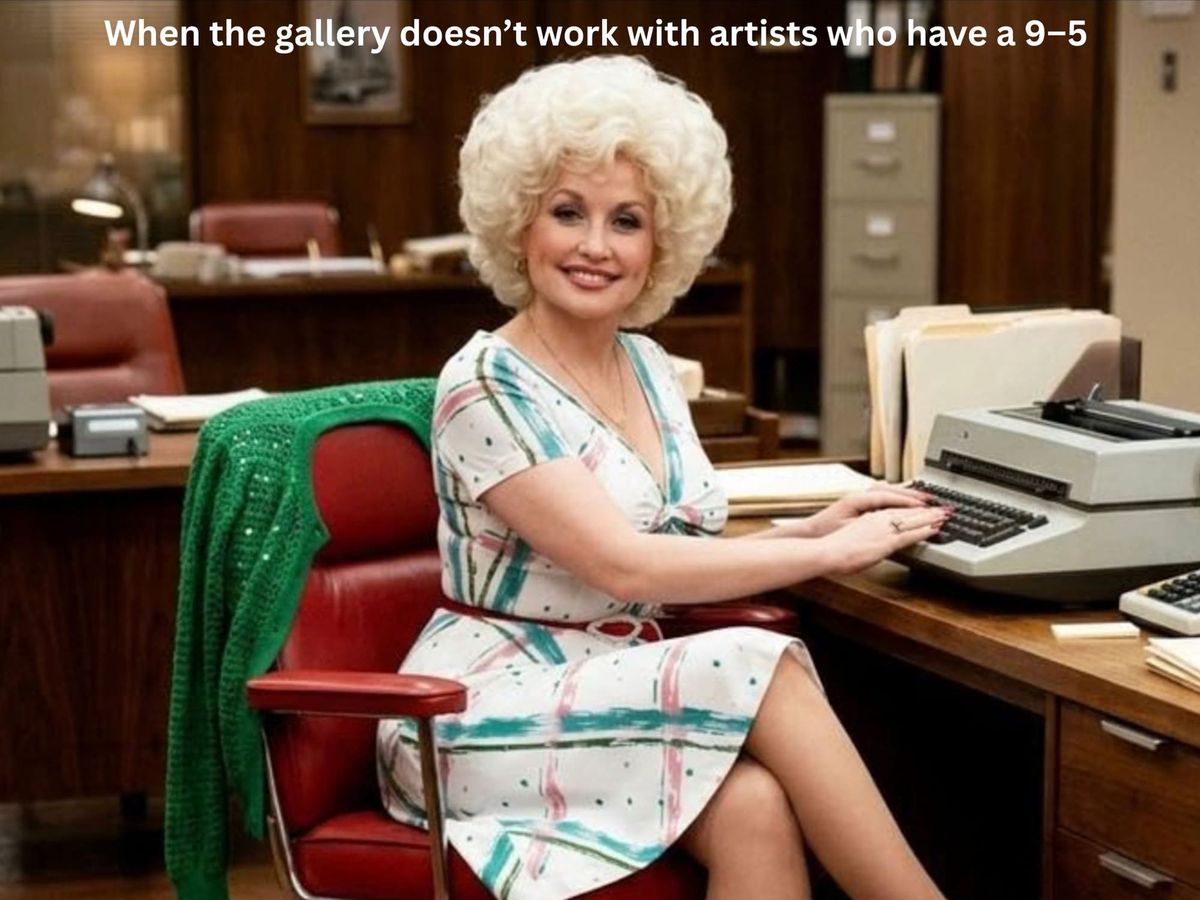
In the contemporary art world, a persistent and pernicious cultural myth continues to thrive: the notion that a "real" artist must dedicate every waking hour exclusively to creative production, unburdened by the mundane realities of a traditional paycheck.
Writing for Hyperallergic, critic and artist Paddy Johnson recently dissected this pervasive prejudice, shedding light on how the fine art community frequently stigmatizes creators who maintain conventional nine-to-five jobs. This bias—often perpetuated by galleries, curators, and peers—ignores the harsh economic realities of the modern creative landscape, where selling work is rarely a reliable or sufficient source of income.
The core dilemma centers on how the art world evaluates legitimacy. Unlike licensed trades, such as plumbing or electrical work, which rely on standardized certifications, apprenticeships, and predictable pay scales, the visual arts possess no formal benchmark for validation. Consequently, the cultural ecosystem has invented a series of arbitrary, class-based proxies to measure an artist’s "seriousness."
These markers include:
- Maintaining a dedicated studio space outside the home.
- Holding an advanced degree from an Ivy League institution or prestigious art school.
- Teaching within academia.
- Living entirely off art sales—or possessing the independent wealth to do so without holding external employment.
According to Johnson and various sociological studies on creative labor, these benchmarks are deeply entwined with generational wealth and socioeconomic privilege. Yet, artists who are forced to balance traditional employment with their creative practices continue to face professional shaming, occasionally even being rejected by galleries that flatly refuse to represent individuals with day jobs.
Chronology of the Crisis: From Bohemian Myth to Gig Economy Reality
To understand how the stigma of the day job became so deeply embedded in contemporary art culture, it is necessary to examine the historical evolution of the artist’s lifestyle.
The Romantic Era and the Myth of the Starving Bohemian (19th Century)
The archetype of the suffering, totally dedicated artist was largely forged during the 19th-century Romantic movement. Figures like Henri Murger—whose novel Scènes de la vie de bohème inspired Puccini’s opera La Bohème—romanticized poverty, isolation, and absolute devotion to art at the expense of financial stability. This cultural baseline established the romantic fiction that true artistic genius cannot coexist with commercialism or routine labor.
The Post-War Institutional Boom (Mid-20th Century)
As the global art market expanded rapidly following World War II, institutional patronage grew. The rise of the university-affiliated art department and government-funded arts councils created a new class of artist-academics. During this period, holding a teaching position became the gold standard for stabilizing an artistic career without resorting to "vulgar" commercial employment. However, it also set a precedent that having any job outside of art or academia marked a creator as an amateur.
The Neoliberal Shift and the Rise of the Gig Economy (Late 20th – Early 21st Century)
By the late 1990s and 2000s, traditional part-time jobs that allowed flexible hours for artists—such as bookstore clerking, waiting tables, or low-level administrative work—began to disappear or transform under the pressures of corporate optimization. The modern gig economy emerged, promising flexibility but delivering precarity.
The Contemporary Reckoning (2020s)
In the post-pandemic economic landscape, soaring inflation, skyrocketing urban rents, and a stagnant primary art market for mid-tier creators have forced a reckoning. More artists than ever are returning to steady nine-to-five employment—not just for survival, but for health insurance and retirement stability. Yet, the cultural gatekeepers of the art world remain stubbornly attached to 19th-century ideals, creating a sharp friction between economic survival and professional inclusion.
Supporting Data: The Economics of the Creative Class
The disdain for traditional employment ignores comprehensive economic data regarding who actually survives and thrives in the visual arts.
1. The Wealth Gap in Art Sales
According to numerous industry analyses, the contemporary art market operates on a winner-take-all model. A minute fraction of artists command multi-million-dollar sales at top-tier galleries, while the vast majority struggle to cover production costs. A study by the Arts and Culture Research Lab indicates that over 75% of visual artists make less than $10,000 annually from their art alone.
2. The Cost of "Seriousness"
Maintaining the markers of a "serious" artist requires significant capital:
- Studio Space: In major art hubs like New York, Los Angeles, London, and Berlin, renting a dedicated studio space can easily cost upwards of $1,000 to $3,000 per month.
- Materials: The cost of raw materials (canvas, paint, bronze, digital hardware, framing, and shipping) has risen exponentially over the past decade.
- Education: An MFA from a top-tier institution frequently saddles graduates with $50,000 to $120,000 in student loan debt, making a reliable income stream an absolute necessity.
3. The Myth of the Freelance "Buffer"
Many critics and peers view contract work or freelance gigs more favorably than a structured nine-to-five job, under the assumption that freelancing provides flexible studio hours. However, labor economists point out that the gig economy often leaves workers vastly more exposed. Freelancers lack employer-sponsored healthcare, paid sick leave, parental leave, and retirement contributions—necessitating even more working hours just to maintain basic security.
Official Responses and Perspectives from the Art Community
As discussions around labor rights and equity take center stage across industries, voices within the arts are pushing back against institutional snobbery.
Gallery owners, arts administrators, and working artists hold deeply polarized views on the intersection of employment and artistic integrity.
The Traditionalist Gallery Perspective
Certain commercial galleries continue to enforce strict availability requirements. A representative from a prominent Chelsea gallery, speaking anonymously to industry reporters, defended the hesitation to work with day-job artists:
"When a collector calls on a Tuesday afternoon wanting a studio visit or an immediate inventory check, an artist tied to a corporate desk cannot drop everything. High-end art sales require a level of responsiveness and immersion that is difficult to maintain if your primary focus is elsewhere."
The Progressive and Unionized Labor View
Conversely, advocacy groups and labor organizers argue that this mindset is exclusionary and elitist. Organizations dedicated to fair pay for artists have increasingly highlighted how gallery policies systematically discriminate against working-class creators who cannot afford to live on art sales or family wealth alone.
Paddy Johnson’s commentary encapsulates this counter-movement, pointing out the hypocrisy of an industry that claims to champion diversity while maintaining financial barriers that lock out anyone without a safety net.
"Imagine you’re a plumber who works a nine-to-five job during the week and fixes pipes on the evenings and weekends," Johnson writes. "Do you lie awake wondering whether you’re a real plumber? Of course not. Plumbing pays reliably… Art has no equivalent. The pay’s shit, when it happens at all, and nothing ‘certifies’ you to make it."
Art historians and sociologists echo this sentiment, noting that some of history’s most celebrated creators—including Paul Gauguin (who worked as a stockbroker) and T.S. Eliot (who worked at Lloyd’s Bank)—maintained conventional employment while producing revolutionary work.
Implications for the Future of the Art World
The ongoing stigma surrounding the nine-to-five artist has profound structural and cultural implications for the future of creative communities.
1. Homogenization of Art and Thought
When the art market penalizes artists who hold ordinary jobs, it effectively filters out anyone who cannot afford financial precarity. This creates an echo chamber populated almost exclusively by individuals from wealthy backgrounds or those willing to endure crushing debt. Consequently, the perspectives, lived experiences, and socio-economic realities reflected in contemporary art become increasingly homogenized, losing touch with the broader public.
2. Mental Health and Burnout
The pressure to maintain the illusion of an uncompromised, full-time bohemian existence takes a severe toll on creators’ mental health. Artists frequently report feelings of intense shame, impostor syndrome, and exhaustion as they attempt to hide their day jobs from peers and curators out of fear of professional marginalization.
3. A Shift Toward Radical Transparency
Despite the lingering stigma, there are signs of cultural shift. A growing cohort of millennial and Gen-Z artists are utilizing social media platforms like TikTok, Instagram, and Substack to openly discuss their day jobs, debunk the myth of effortless creative success, and build solidarity. By normalizing the "W-2 artist," these creators are dismantling the romanticized tropes of the past in favor of a more honest, sustainable framework for artistic survival.
Ultimately, the debate over the nine-to-five artist is about more than just scheduling conflicts; it is a battle for the soul and accessibility of the art world. Until the cultural gatekeepers recognize that financial survival does not diminish creative vision, the myth of the "real artist" will continue to serve as a gatekeeping mechanism for the privileged few.
 Nana
Nana
 Muslim
