

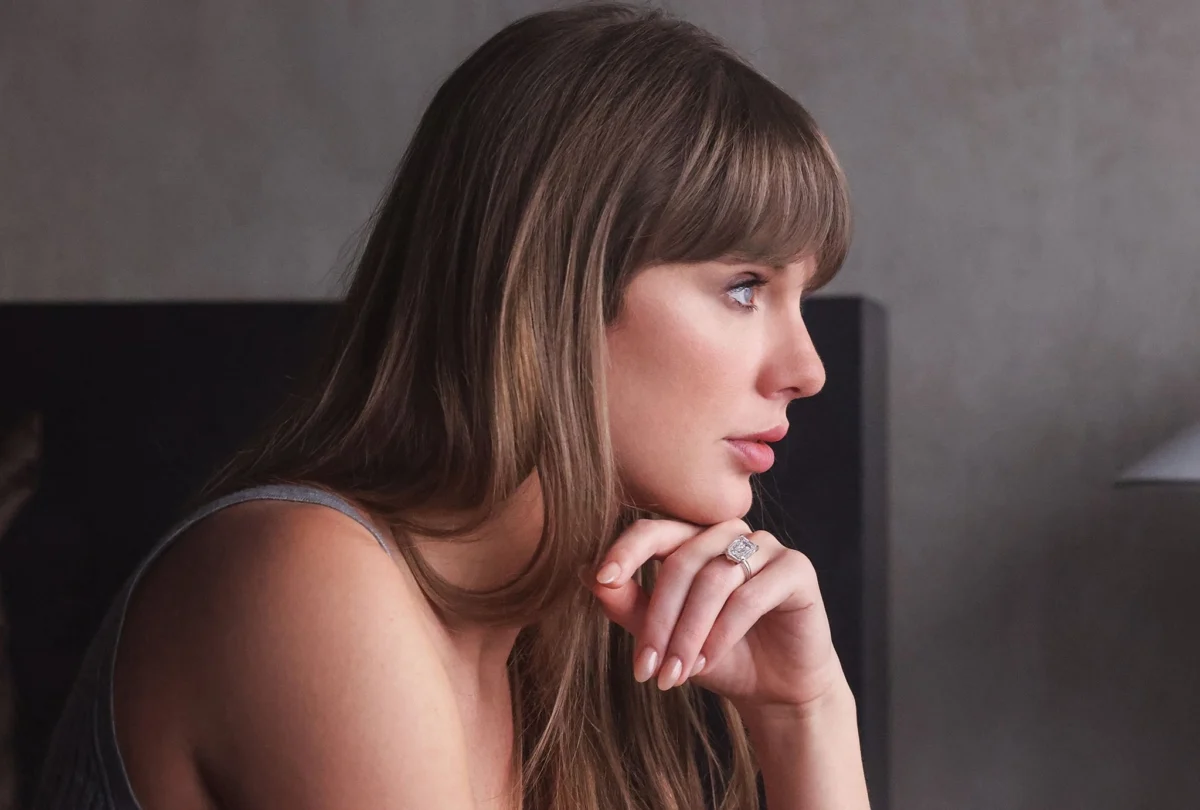
The eyes—and ears—of the entertainment industry are once again fixed firmly on Taylor Swift. With the highly anticipated release of her latest studio album, The Life of a Showgirl: The Encore, the pop icon has shifted the cultural conversation toward her visual output. While the music itself is commanding the charts, industry insiders are fixated on a specific, high-stakes piece of media: the music video for the track "Patient Zero."
The video is scheduled to make its global premiere on Sunday, September 27, 2026, during the MTV Video Music Awards. The event carries extra weight this year, as Swift is set to receive the inaugural Artist Director Honors, a testament to her increasing influence as a visual storyteller. However, beneath the glitz of the VMA stage, a more pointed question is circulating among Hollywood’s awards pundits: Is this the project that finally bridges the gap between Swift’s musical dominance and the Academy Awards stage?
A Pedigree of Prestige: The Craft Behind the Lens
The "Patient Zero" short film is not merely a promotional music video; it is a meticulously crafted production that signals Swift’s intent to be taken seriously as a director. The project features a powerhouse cast, including Oscar nominee Colin Farrell and BAFTA Award nominee Dakota Johnson. Perhaps most significant is the involvement of cinematographer Emmanuel "Chivo" Lubezki. A legend in his own right, Lubezki’s involvement adds a layer of technical prestige that is impossible to ignore. By securing the lens of an Oscar-winning visionary, Swift is signaling a departure from standard pop music aesthetics toward something more akin to high-end, independent cinema.
Chronology: A Trajectory of Directorial Growth
To understand why "Patient Zero" is being scrutinized through an Oscar-tinted lens, one must look at the trajectory of Swift’s career as a filmmaker over the last five years.
- 2022: The "All Too Well" Campaign. Swift’s directorial debut for the All Too Well: The Short Film served as her first foray into serious awards campaigning. While the project ultimately did not land a shortlist nomination for Best Live Action Short, it was a masterclass in industry networking. Her participation in Variety’s "Directors on Directors" series, where she engaged in a deep-dive conversation with The Banshees of Inisherin filmmaker Martin McDonagh, elevated her status among the creative elite.
- 2023: Academy Recognition. While the short film didn’t result in a nomination, the effort bore fruit in other ways. Swift was invited to join the Academy of Motion Picture Arts and Sciences, a symbolic nod that she had arrived as a member of the filmmaking community.
- 2024–2025: Building a Portfolio. Swift continued to release high-profile, narratively driven music videos. Projects like "Fortnight," which starred Ethan Hawke and Josh Charles, and "Opalite," featuring Greta Lee, Domhnall Gleeson, and the voice of Cillian Murphy, showcased a consistent visual language. Collaborations with four-time Oscar-nominated cinematographer Rodrigo Prieto (Killers of the Flower Moon) further solidified her reputation as a director who attracts top-tier talent.
- 2026: The Present Moment. With the debut of "Patient Zero," Swift appears to be testing the waters once more, leveraging her status as an Artist Director Honoree to present her work on one of the largest platforms in the world.
Supporting Data: The Hurdles of Qualification
While the ambition is clear, the path to an Academy Award is notoriously difficult. The primary obstacle for any music video seeking Oscar contention is the "Best Live Action Short" qualification process.

According to Academy rules, for a short film to be eligible, it must undergo a qualifying theatrical run—typically a week of screenings in major markets. As of late September 2026, there is no indication that "Patient Zero" is slated for a theatrical release. Without this distribution, the film remains, by technical definition, a music video rather than a short film in the eyes of the Academy.
Historical precedent is also a factor. Swift’s previous video, "The Fate of Ophelia," premiered in theaters via AMC but was ineligible for consideration. Because the project was culled from materials created for a larger, publicly exhibited feature film, it violated the Academy’s rules against using content that is not an original, standalone work. Swift seems to have learned from these structural limitations, but until she commits to a theatrical release strategy, the "Best Live Action Short" category remains an unlikely destination.
The "Toy Story 5" Strategy: Chasing Best Original Song
While her directorial ambitions are the subject of much debate, Swift’s most realistic path to an Oscar remains the "Best Original Song" category. Her contribution to Toy Story 5, the track "I Knew It, I Knew You," is currently dominating the cultural discourse.
The song has performed exceptionally well, not just commercially, but in terms of sustained presence. Having topped the Billboard Hot 100 and remained in the Top 10 for 15 weeks, it is the year’s most successful song associated with a film.
Historically, the Music Branch of the Academy is known for being insular and unpredictable. However, Swift has been steadily building goodwill. Her 2023 track "Carolina," from Where the Crawdads Sing, reached the shortlist, proving that she can navigate the Academy’s voting criteria. The strategy here is "ubiquity as an asset." By aligning herself with a massive, universally acclaimed animated franchise like Toy Story, she removes the barrier of "niche" appeal, making her song an undeniable part of the year’s cinematic conversation.

Implications: The Long Game
What does this mean for Swift’s future in film? Even if "Patient Zero" fails to secure an Oscar nomination, the broader implications are significant. By consistently working with figures like Lubezki and Prieto, Swift is engaging in a long-term strategy of professional integration.
The filmmaking community is notoriously protective of its own, but it is also highly responsive to talent that demonstrates genuine growth. If Swift continues to produce work that prioritizes visual craft and narrative depth, the "Academy" label will eventually cease to be a question of if and become a question of when.
Furthermore, her 2022 deal with Searchlight Pictures for a feature-length directorial debut—though quiet—remains a major piece of the puzzle. The industry is still waiting for that project to materialize. When it does, the goodwill she has built through these high-budget, high-concept music videos will serve as her foundational resume.
In the immediate term, the premiere of "Patient Zero" will serve as a litmus test. If the film is received not just as a music video, but as a genuine piece of short-form cinema, it will validate her pivot to directing. If it is dismissed as a vanity project, it may stall her momentum.
For now, the industry watches. The VMA stage in September will be the first glimpse into whether Taylor Swift is truly the next great auteur of the musical-film hybrid, or if she will ultimately find her seat at the Oscars through the more traditional, songwriting route. Either way, the message to Hollywood is clear: Taylor Swift is not just playing the game; she is attempting to redefine the playing field entirely.
 Lina Hope
 Azzam Bilal Chamdy
 Pevita Pearce
