

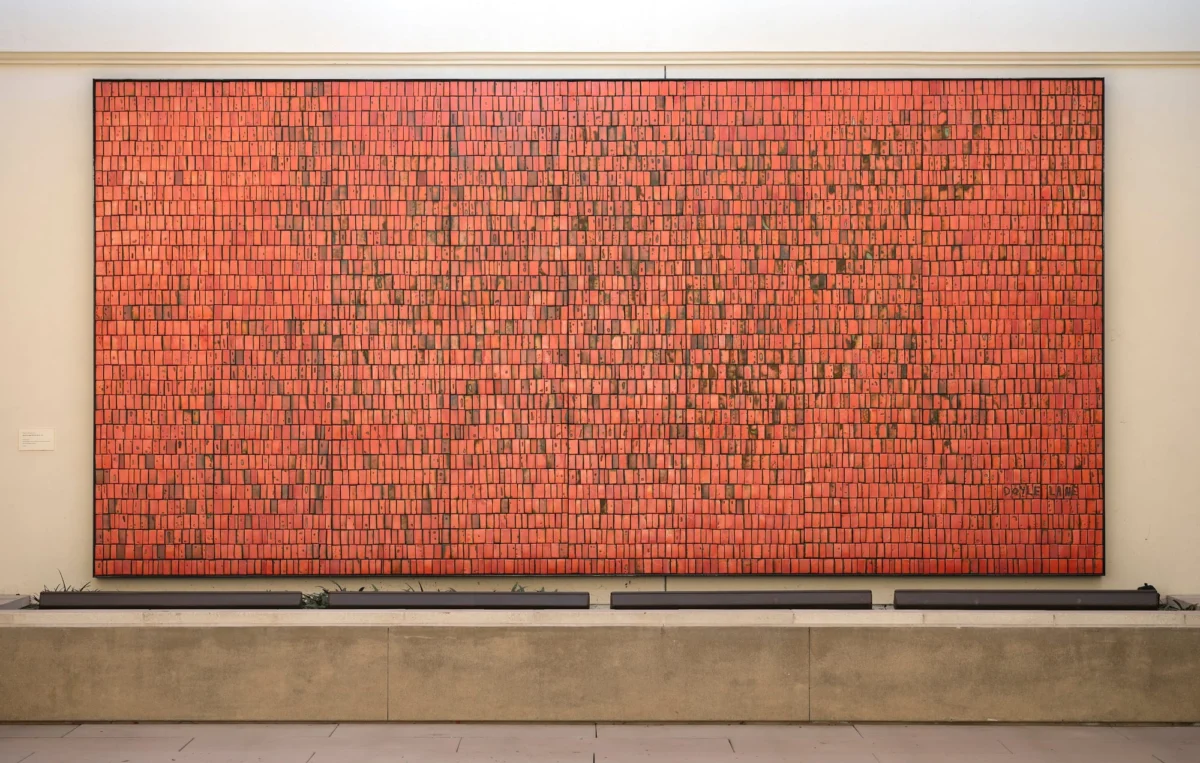
SAN MARINO, California — For decades, the name Doyle Lane was a whispered legend among West Coast ceramic historians, midcentury modern architectural enthusiasts, and dedicated collectors of Southern California craft. Yet, despite his profound technical mastery and his status as a trailblazer who fused fine art with functional design, Lane’s contributions remained largely outside the mainstream art historical canon.
That narrative is finally shifting.
Doyle Lane: Master of Clay, the first major museum retrospective dedicated to the influential Los Angeles ceramicist, is now officially on view at The Huntington Library, Art Museum, and Botanical Gardens. Bringing together over 100 works, rare archival documents, and monumental public pieces, the exhibition offers a breathtaking, comprehensive look at an artist who transformed humble clay into luminous, abstract constructions of light and color.
Running through March 1, 2027, the exhibition not only celebrates Lane’s dazzling technical versatility—ranging from his iconic, delicate "weed pots" to sprawling architectural murals—but also critically examines his place within midcentury California modernism, the vibrant Southern California studio ceramics movement, and the systemic barriers he navigated as a Black artist working in twentieth-century America.
Main Facts: A Landmark Retrospective at The Huntington
Doyle Lane: Master of Clay serves as a long-overdue institutional reckoning with one of California’s most innovative midcentury artists.
The exhibition spans Lane’s entire career, charting his artistic evolution from traditional functional pottery to boundary-pushing, large-scale abstract installations. Visitors to The Huntington are greeted by a comprehensive layout that categorizes Lane’s prodigious output:
- Functional and Intimate Forms: Early utilitarian pieces that display Lane’s foundational mastery of wheel-throwing and glazing.
- The "Weed Pots": Lane’s iconic, exquisitely textured, miniature vessels designed specifically to showcase single stalks of dried or fresh flora.
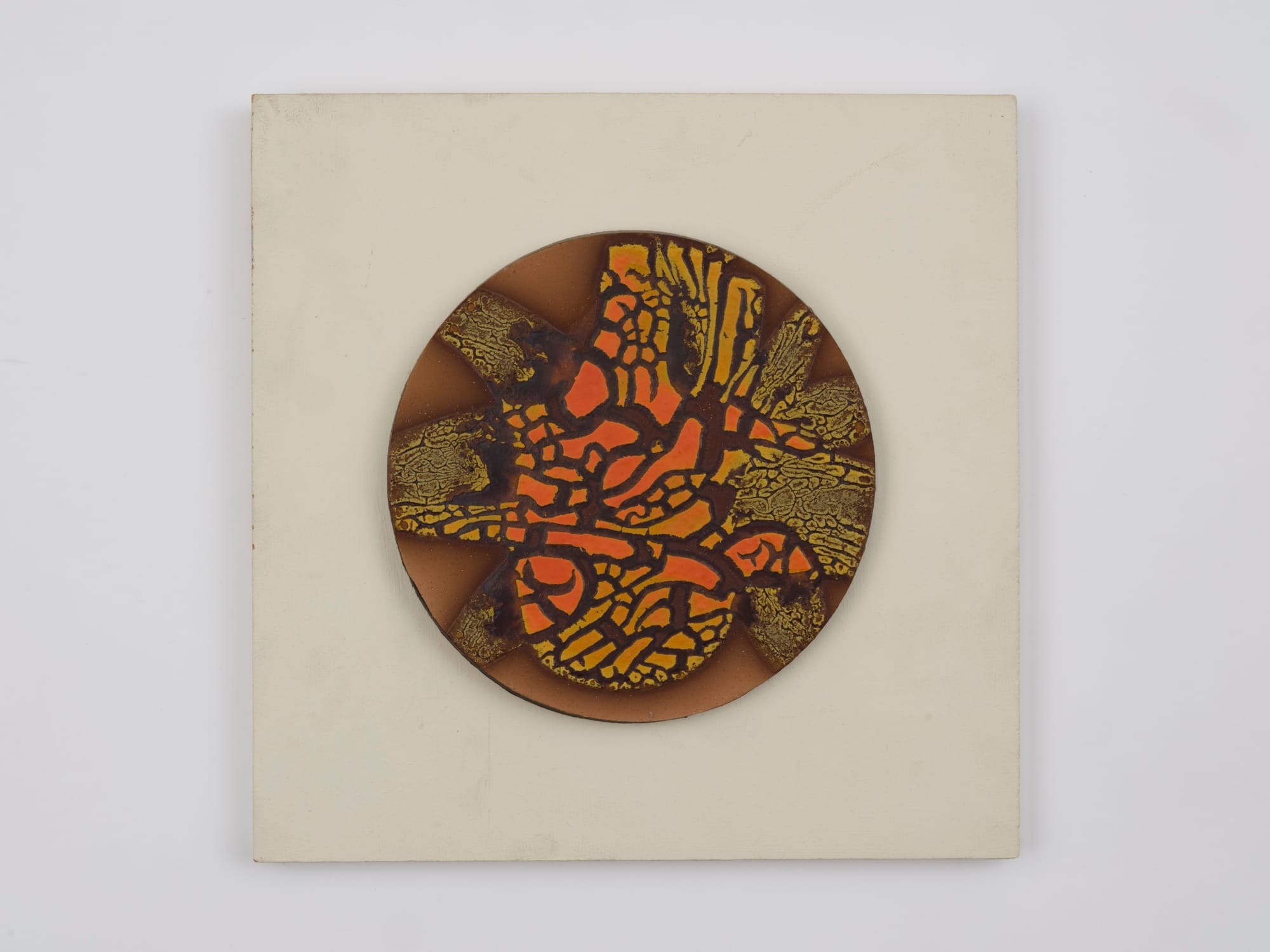
- "Clay Paintings": Vibrant, abstract glazed ceramic tiles mounted on wood or board that bridge the gap between traditional sculpture and midcentury abstract expressionist painting.
- Wearable Art and Adornment: Rare examples of Lane’s handcrafted jewelry and ceramic beads.
- Architectural Commissions: Large-scale, monumental glazed earthenware installations, including sections of his celebrated public murals.
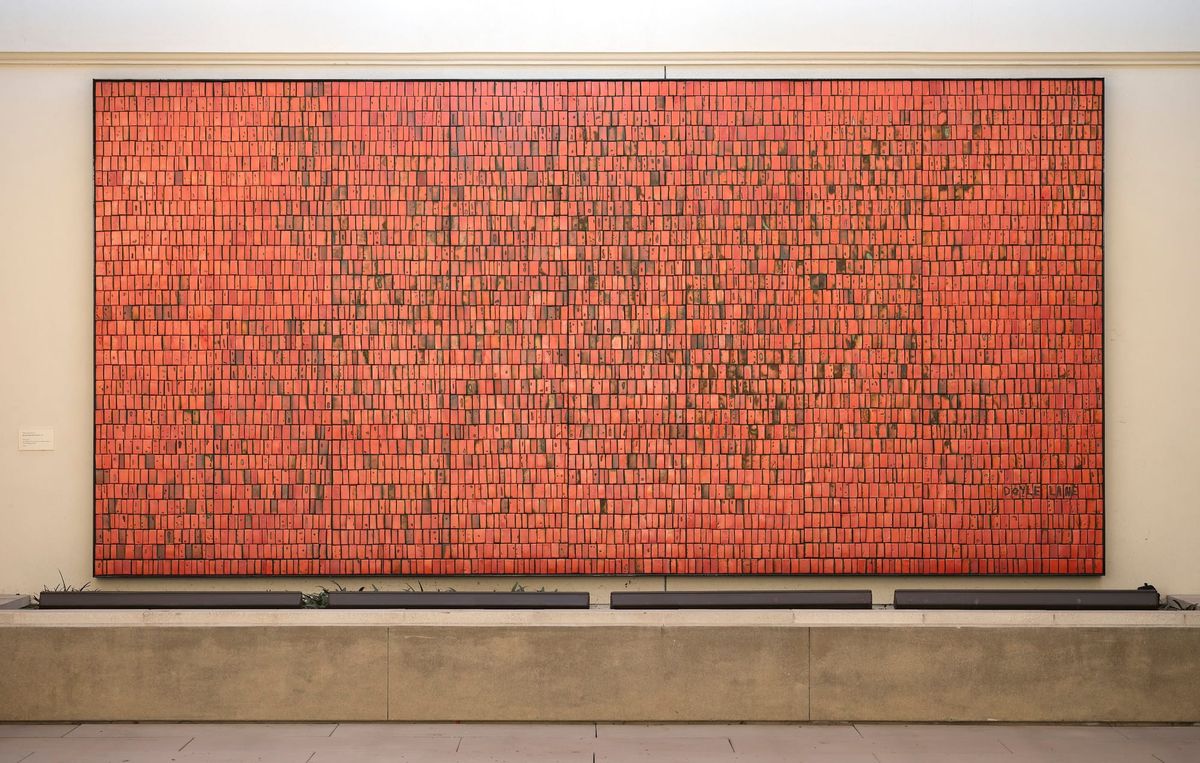
The exhibition is anchored by centerpiece works such as Lane’s 1964 Mutual Savings and Loan Mural—a stunning, massive glazed earthenware installation measuring 100 by 216 inches. Through these works, visitors witness how Lane elevated clay from a "craft" material typically associated with utility into a radiant medium capable of capturing the brilliant, shifting Southern California light.
Chronology: The Life and Artistic Evolution of Doyle Lane
To understand the weight of Doyle Lane: Master of Clay, one must trace the trajectory of an artist who quietly revolutionized West Coast ceramics over a career spanning several decades.
Formative Years and Early Career
Born in New Orleans in 1925, Doyle Lane moved to Los Angeles in the late 1940s, a period when the city was rapidly emerging as a crucible for avant-garde design, architecture, and craft. Lane studied at Los Angeles City College and later at the University of Southern California (USC), immersing himself in a burgeoning local scene that was beginning to challenge the rigid boundaries separating fine art from craft.
During the 1950s, Lane established himself as a virtuoso potter. While many contemporaries were experimenting with heavy, expressionistic forms influenced by the Abstract Expressionist movement, Lane developed a reputation for immaculate craftsmanship. His wheel-thrown vessels were known for their impossibly thin walls, precise geometries, and deeply textured, multi-layered glazes.
The Innovation of the "Weed Pot" and "Clay Paintings"
By the 1960s, Lane had achieved renown for his "weed pots"—small, highly tactile vessels featuring rough, pitted, or organic surfaces contrasted with smooth interior necks and brilliant color fields. These pots became ubiquitous in sophisticated Southern California homes, beloved by architects and interior designers who saw them as the ultimate synthesis of organic form and modernist simplicity.
Simultaneously, Lane began pushing beyond the limitations of the traditional vessel. He pioneered what he termed "clay paintings"—flat or low-relief glazed ceramic tiles mounted onto rigid supports. These works allowed Lane to explore color theory, texture, and composition with the freedom of a painter, using kilns and mineral glazes instead of oil and canvas. Pieces like his ca. 1970 orange, black, and red butterfly clay painting demonstrate his ability to make hard-fired earth feel fluid, lyrical, and deeply expressive.

Architectural Triumphs and Late Career
Lane’s mastery of scale culminated in major architectural commissions throughout Los Angeles. As the city underwent a midcentury building boom, architects sought out Lane to create monumental ceramic wall installations for corporate offices, banks, and civic buildings. His murals transformed corporate architecture, bringing warmth, tactile human scale, and rich chromatic depth to cold modernist steel and glass facades. Lane continued to produce groundbreaking work and mentor younger artists until his passing in 2002, leaving behind an artistic legacy that has quietly shaped generations of West Coast makers.
Supporting Data: The Scope of the Exhibition
Doyle Lane: Master of Clay is underpinned by extensive curatorial research and loans from major private collections and public institutions. Key metrics defining the exhibition include:
- Artwork Count: More than 100 objects, including ceramics, jewelry, and archival ephemera.
- Chronological Range: Spanning over four decades of artistic production, from the late 1940s through the late 1990s.
- Key Artifact Dimensions: The Mutual Savings and Loan Mural (1964) spans an impressive 100 x 216 inches, showcasing Lane’s command of monumental space.
- Exhibition Duration: On view for nearly six months, closing on March 1, 2027.
- Venue: Hosted in the premier galleries of The Huntington Library, Art Museum, and Botanical Gardens in San Marino, California, a premier cultural institution known for its deep holdings in American art and West Coast history.
Official Responses and Curatorial Perspectives
Museum leadership and curators have emphasized that Doyle Lane: Master of Clay is designed to correct historical oversights, placing Lane firmly in the upper echelon of American modernist creators.
"Doyle Lane was an absolute titan of twentieth-century ceramics, yet his story has far too often been relegated to the footnotes of design history," noted a representative from The Huntington. "With this exhibition, we have the profound privilege of presenting the full breadth of his genius—from the exquisite, meditative intimacy of his weed pots to the awe-inspiring scale of his architectural murals. This is not just a retrospective of a local artist; it is a vital re-examination of the American modernist canon."
Art historians contributing to the exhibition catalog have likewise pointed to Lane’s unique ability to transcend the artificial dichotomy between "fine art" and "craft."
"Lane approached clay with the soul of a painter, the precision of a master craftsman, and the spatial ambition of an architect," notes one essayist tied to the exhibition. "His glazes were not merely surface decoration; they were living fields of color that interacted dynamically with Southern California’s unique atmospheric light. To view his work is to understand how deeply he understood the material poetry of earth and fire."
Implications: Rewriting the History of Midcentury Modernism
The opening of Doyle Lane: Master of Clay carries profound implications for the art historical landscape, touching on issues of race, regionalism, and the historical marginalization of craft within museum spaces.
Dismantling Racial Barriers in the Midcentury Art World
While Lane achieved significant local acclaim during his lifetime—exhibiting widely and securing prestigious architectural commissions in Los Angeles—he faced substantial systemic barriers as a Black artist operating in a predominantly white midcentury art establishment. Major museums and high-end galleries of the era frequently overlooked Black artists working in the medium of studio craft, pigeonholing or entirely excluding them from national narratives of American modernism.
By centering Lane’s career in a major museum retrospective, The Huntington takes a crucial step toward dismantling these historical omissions. The exhibition does not merely showcase Lane’s aesthetic achievements; it contextualizes the hurdles he navigated, inviting contemporary audiences to consider how institutional biases shaped—and limited—the historical recognition of Black artists in the craft and design sectors.
Elevating West Coast Studio Ceramics
For decades, the narrative of American midcentury modernism was heavily East Coast-centric, often prioritizing New York abstract expressionism and industrial design over the experimental, craft-based movements of the American West. The Southern California studio ceramics movement—anchored by figures like Lane, Peter Voulkos, and Harrison McIntosh—pioneered a radical reimagining of functional media. By granting Lane a definitive, museum-scale platform, The Huntington reinforces Los Angeles’s status as a powerhouse of twentieth-century artistic innovation.
A Catalyst for New Scholarship
Ultimately, Doyle Lane: Master of Clay is expected to spark a new wave of academic research, gallery exhibitions, and market appreciation for Lane’s work. As collectors, scholars, and art lovers flock to The Huntington through March 2027, Doyle Lane is finally stepping out of the shadows of design history to take his rightful place as a foundational master of American art.
Visitors wishing to explore "Doyle Lane: Master of Clay" and plan their trip to The Huntington Library, Art Museum, and Botanical Gardens can find ticketing information, visitor guidelines, and programming schedules at huntington.org.
 Nana
Nana
 Iffa Jayyana
 Muslim
