

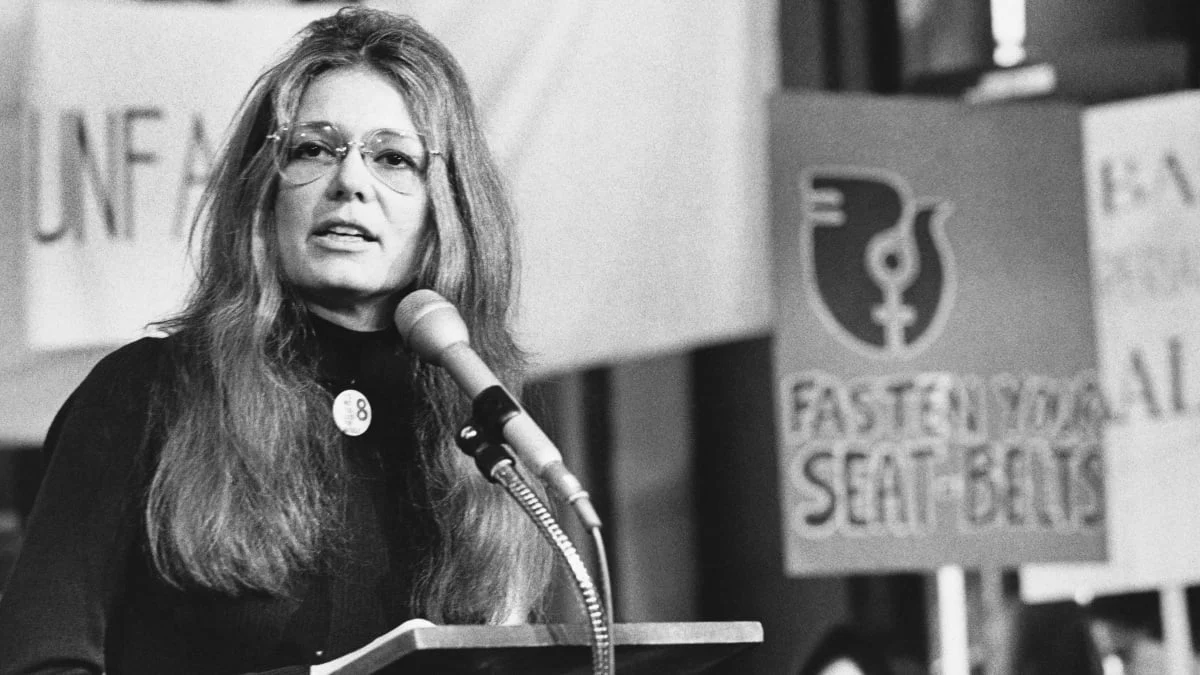
NEW YORK — Gloria Steinem, the pioneering journalist, feminist activist, and undisputed intellectual architect of the modern women’s liberation movement in the United States, passed away peacefully on Wednesday at her home in New York City. She was 92 years old.
Surrounded by a close-knit circle of loved ones in her final moments, Steinem’s death was announced early Thursday via a statement shared on her official Instagram account. The news immediately sent shockwaves across the globe, prompting an outpouring of grief, gratitude, and fierce resolve from political leaders, cultural icons, writers, and everyday citizens whose lives she fundamentally altered.
While no official cause of death was provided, the statement emphasized that Steinem’s nearly century-long life was "well-lived," noting that she remained actively engaged in the global fight for equality until her very last days.
"Gloria’s greatest gift was her ability to listen to others, to make others feel seen and heard," the statement read. "Her words, actions, and example gave people permission to be their truest selves. Gloria lived true to her independent spirit, always with curiosity and a great sense of humor."
Chronology of a Revolution: From Undercover Reporter to Global Icon
To understand the trajectory of modern feminism in America is to trace the footsteps of Gloria Steinem. Born in Toledo, Ohio, in 1934, Steinem’s early life was marked by frequent travel with her nomadic family before she settled in New York City to pursue journalism.
Her ascent to national prominence began in earnest in 1963, during the nascent stages of second-wave feminism. In a masterclass of immersive investigative journalism, Steinem went undercover as a Playboy Bunny at the New York Playboy Club. Her subsequent exposé laid bare the exploitation, low wages, and grueling working conditions faced by the women working there, thrusting her into the national spotlight and exposing the insidious realities of corporate sexism.
Throughout the late 1960s and 1970s, Steinem solidified her role as a primary leader of the women’s liberation movement. She co-founded Ms. magazine in 1972, serving as a dynamic platform for feminist discourse that tackled taboo subjects head-on, including domestic violence, systemic pay inequality, and reproductive freedom. Ms. was revolutionary not only for its content but because it was edited, managed, and owned entirely by women.
Steinem’s intellectual rigor and unflinching public advocacy made her a frequent target of anti-feminist backlash, yet she navigated the turbulent sociopolitical landscape with trademark grace and wit. She traveled the world as an organizer, lecturer, and media commentator, advocating tirelessly for the Equal Rights Amendment (ERA), reproductive healthcare rights, and intersectional solidarity among marginalized groups.
In recognition of her monumental contributions to civil rights and gender parity, then-President Barack Obama awarded Steinem the Presidential Medal of Freedom—the nation’s highest civilian honor—in 2013.
Supporting Data: A Lifetime of Community and Activism
Unlike many aging public figures who retreat from public life, Steinem’s activism remained deeply rooted in direct, grassroots engagement up until her final days. According to the family and estate statement, Steinem spent her recent years anchored by two passions: writing and building community.
Central to her later-life activism was the tradition of "Talking Circles"—intimate gatherings hosted in her New York living room where she welcomed hundreds of guests, activists, thinkers, and writers to debate, strategize, and imagine a more equitable future. These gatherings, documented frequently on her social media channels, continued unabated, with one circle taking place less than two months before her passing.
Amanda Litman, president of the political advocacy group Run For Something, reflected on her experiences attending Steinem’s Talking Circles in a poignant tribute:
"The two talking circles I went to at her home—the first in August 2024, when I was sweating my ass off 8 months pregnant with my second daughter as we talked about the possibility (again!) of electing the first woman president & the second earlier this year, where after a long convo on the future, I got to give her a copy of my book—were experiences I’ll never forget."
In lieu of traditional floral arrangements, Steinem’s estate announced that she requested donations be made to Gloria’s Foundation. The organization supports fellowships and residencies for individuals working on vital social justice initiatives while explicitly funding and facilitating the continuation of her beloved Talking Circles.
Official Responses and Global Tributes
Within hours of the announcement, digital platforms transformed into a global memorial site. Writers, entertainers, politicians, and journalists shared deeply personal recollections of a woman who had fundamentally shaped their professional and personal lives.
Acclaimed author Roxane Gay took to Instagram to capture the magnitude of the loss:
"Gloria was one of a kind. Genuine, generous, curious, thoughtful. She lived a staggering life and her passing is a staggering loss tempered only by the ferocity of her legacy."
Comedian and actor Amy Sedaris offered a rallying cry:
"She was our leader. We have to be more like her. Carry her fight."
Prominent television producer Shonda Rhimes remembered her warmth:
"She was fierce and kind and full of grace. What a loss for the world."
Musical legend Carole King wrote:
"As we elders, our daughters, and our granddaughters continue the fight for power, equality, and respect, we hold you in our hearts with love and gratitude."
Actor and comedian Sandra Bernhard posted a photograph alongside Steinem, emphasizing the urgent need to protect what Steinem spent her life defending:
"It was an honor to have a conversation with the great Gloria Steinem. Classy, funny, she didn’t take any punches, she had no time to suffer fools & baby she encountered a whole lot of them! Let’s honor her life & work & rededicate it to reclaiming our reproductive rights!"
Tia Levings, author of A Well-Trained Wife, addressed those who had been conditioned to view Steinem with skepticism:
"If you, like me, grew up hearing that Gloria Steinem was evil, please use this time of her visible impact to educate yourself on her extraordinary life and fight for all women."
Political leaders also paused to honor her vast impact. Former Speaker of the House Nancy Pelosi wrote on X (formerly Twitter):
"Gloria Steinem was a fearless trailblazer who transformed the fight for equality in America and inspired generations of women to know their power."
Former Georgia gubernatorial candidate Stacey Abrams shared her personal admiration:
"Meeting heroes always risks disappointment, but knowing Gloria was an honor, where her humor and kindness were matched by a relentless belief that we could be better."
Christiane Amanpour, CNN’s chief international anchor, contextualized Steinem’s historic weight:
"Gloria Steinem will go down in history as one of the most important activists of all time, leading a movement for the equality of half the world: its women."
Steinem’s death follows closely on the heels of the passings of other towering cultural giants, including music icon Dolly Parton. Fittingly, one of the final archival photographs shared on Gloria’s Foundation Instagram account featured a warm, smiling moment between Steinem and Parton—two women who defined their respective fields and expanded the cultural imagination of what women could achieve.
Implications: The Future of the Feminist Movement Without Its Matriarch
The passing of Gloria Steinem marks the end of an era for second-wave feminism, raising profound questions about the stewardship of the gender equality movement in an increasingly polarized political climate.
Steinem’s unique genius lay in her bridge-building capacity. She bridged the intellectual theory of academia with the practical realities of working-class women, while continually updating her worldview to embrace intersectionality, racial justice, and LGBTQ+ rights. As the United States grapples with fierce rollbacks on bodily autonomy, voting access, and civil rights protections, the absence of Steinem’s moral clarity and steady public voice leaves a palpable vacuum.
Yet, her estate and closest allies insist that her blueprint remains entirely intact. By institutionalizing her community-building efforts through Gloria’s Foundation and ensuring the persistence of grassroots initiatives like the Talking Circles, Steinem engineered her legacy not as a monument to be admired from afar, but as a toolkit for ongoing resistance.
The estate statement invoked a powerful metaphor that encapsulates her life’s work:
"Gloria loved the tradition of lighting signal fires on hills to light the way to the other side of the mountain. Lighting your own candle for Gloria makes you part of this global and celestial community circle."
As the world mourns the loss of a titan, the fires she lit across the globe continue to burn—a testament to a revolutionary life dedicated entirely to the proposition that women are full human beings entitled to dignity, safety, and self-determination.
 Neng Nana
 Azzam Bilal Chamdy
 Muslim
