

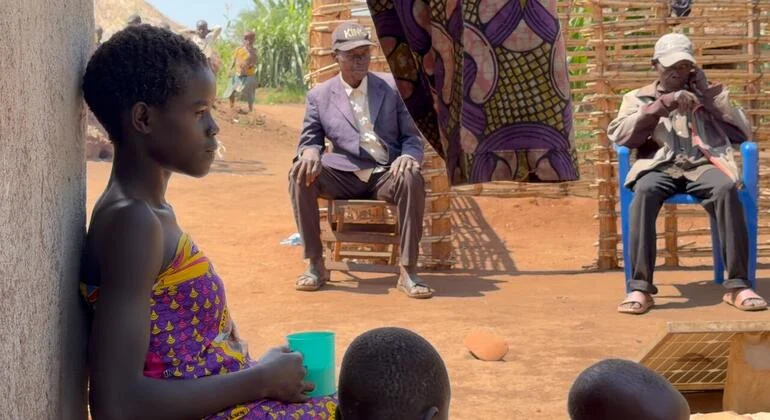
NEW YORK — The United Nations Security Council held a high-stakes emergency session on Tuesday, September 29, 2026, to address the rapidly deteriorating security and humanitarian situation in the Democratic Republic of the Congo (DRC). Despite a succession of internationally brokered peace agreements, the eastern provinces of the nation remain locked in a brutal cycle of violence, while a concurrent, historic Ebola outbreak has pushed the country’s fragile healthcare infrastructure to the brink of collapse.
Main Facts: A Dual Crisis of Conflict and Contagion
The situation in the eastern DRC has reached a critical juncture. Sustained clashes between the Congolese Armed Forces (FARDC) and the M23 rebel group continue to destabilize the region, displacing hundreds of thousands of civilians. The Security Council meeting served as a somber acknowledgment that diplomatic efforts, which promised a path to stability, have largely failed to translate into a reduction of hostilities on the ground.
Parallel to the military volatility, the DRC is grappling with its most lethal Ebola outbreak in recorded history. Health officials confirmed that the death toll has now surpassed 3,900, with transmission rates accelerating in areas heavily affected by the ongoing fighting. This convergence of war and disease has created a "perfect storm," where the movement of displaced populations exacerbates the spread of the virus, while the violence prevents health workers from reaching those in need of life-saving treatment and vaccination.
Chronology of the 2026 Escalation
The current crisis did not emerge in a vacuum. The following timeline outlines the rapid descent into the current state of emergency:
- January 2026: Initial reports of renewed M23 activity in the North Kivu province signal the breakdown of the previous year’s fragile ceasefire.
- March 2026: Tensions between the DRC and Rwanda flare as Kinshasa accuses Kigali of providing tactical support to rebel factions—a charge Rwanda consistently denies.
- May 2026: The first clusters of a mutated Ebola strain are detected in the Ituri province. The combination of population displacement and poor sanitation leads to an exponential rise in cases.
- July 2026: International peace mediators attempt a high-level summit in Nairobi, resulting in a fresh "cessation of hostilities" agreement. The deal fails within 72 hours as both sides accuse the other of territorial incursions.
- August 2026: The death toll from the Ebola outbreak crosses the 2,000 mark. UN agencies report that over 40% of the affected territory is inaccessible to humanitarian aid due to the presence of armed groups.
- September 2026: A series of major offensives by M23 forces near the village of Kampala, Ituri, prompts the UN Security Council to convene an urgent session to discuss the viability of the current peacekeeping mandate.
Supporting Data: The Human Cost
The statistics emerging from the DRC present a harrowing picture of human suffering. According to the latest UN reports, the displacement crisis has become one of the most severe in the world.
- Displacement: Over 1.2 million people have been forced to flee their homes in the last eight months alone.
- Public Health: The mortality rate of the current Ebola outbreak stands at approximately 65%, significantly higher than recent outbreaks in West Africa. The disruption of routine immunization programs for other diseases, such as measles and polio, threatens to trigger secondary health crises.
- Food Insecurity: The conflict has disrupted critical agricultural cycles in the eastern breadbasket of the DRC. International food agencies estimate that 4.5 million people in the affected regions are currently facing "emergency" levels of food insecurity.
- Peacekeeping Efficacy: Despite the presence of the UN Stabilization Mission in the DRC (MONUSCO), the scale of the rebel insurgencies has often outpaced the mission’s logistical capacity, raising questions regarding the necessity of a strategic shift in UN engagement.
Official Responses and Diplomatic Friction
The Security Council chamber in New York was a theater of intense debate. Representatives from the DRC government demanded a more robust interventionist mandate, calling for international sanctions against those accused of supplying the M23.
"We are witnessing a systematic effort to carve out territory through violence," the Congolese ambassador stated. "Peace agreements are being treated as mere pauses for rearmament. The international community cannot remain a passive observer while our citizens die from bullets and pathogens alike."
In response, the representative from Rwanda reiterated their government’s commitment to regional stability. "Rwanda has no interest in the destabilization of the DRC," the diplomat remarked. "We encourage all parties to respect the borders and look toward a political solution rather than the propagation of baseless allegations that serve only to distract from internal governance failures."
The United States, France, and the United Kingdom issued a joint statement urging both nations to engage in transparent communication and to allow "unimpeded humanitarian corridors" for the delivery of vaccines and essential medical supplies. Meanwhile, China and Russia emphasized the principle of national sovereignty, urging that any further intervention be strictly coordinated with the Congolese government.
Implications: The Road Ahead
The implications of this crisis extend far beyond the borders of the DRC. The failure of the peace process threatens the stability of the entire Great Lakes region. If the Ebola outbreak is not contained, it risks becoming a regional health security threat, with potential for cross-border transmission into Uganda and Rwanda, both of which have been on high alert since early summer.
Furthermore, the "diplomatic fatigue" surrounding the DRC is palpable. As the UN seeks to balance the necessity of peacekeeping with the reality of limited resources, there is a growing consensus that a traditional security-first approach is insufficient.
1. The Need for Integrated Humanitarian Diplomacy
The Security Council must move beyond mere ceasefire monitoring. Analysts suggest that the next phase of engagement must include "health-sensitive peacebuilding," where the cessation of hostilities is explicitly linked to the establishment of "health zones" where medical professionals can operate without fear of attack.
2. Accountability and Sanctions
There is increasing pressure to move toward targeted sanctions against individual commanders responsible for violating international humanitarian law. The use of drones and improved intelligence-gathering, as discussed in the closed-door sessions, may be essential in identifying the supply chains supporting the M23.
3. A Call for Global Solidarity
The UN has issued an appeal for an additional $1.2 billion to address the "syndemic" of war and disease. Failure to secure this funding will likely result in a catastrophic loss of life. As the world turns its attention to other global conflicts, the situation in the DRC remains a test of the UN’s core mission: the protection of human dignity in the face of overwhelming adversity.
As the Security Council session adjourned, the reality remained unchanged for the mother in Kampala, Ituri: the promise of peace remains a distant goal, and the threat of the invisible, lethal virus continues to loom over a population already exhausted by years of persistent conflict. The world’s diplomatic focus must now pivot from deliberation to immediate, actionable intervention if a wider regional collapse is to be averted.
 Azzam Bilal Chamdy
 Layla Zulfa
 Sagoh
Sagoh
