

By Olivia Tauber | Published: October 6, 2026
The people on screen do not exist. Their jawlines are meticulously sculpted by algorithms, their wardrobes are curated by automated trend-scrapers, and their voices are synthesized in fractions of a second. Yet, the businesses built around them are remarkably real, commanding millions of views, lucrative corporate partnerships, and direct funnels to adult subscription platforms.
More alarmingly, the material fueling these digital phantoms often belongs to flesh-and-blood creators who never consented to having their work, their jokes, or their personal brands copied.

Welcome to the wild west of the AI creator economy—a rapidly scaling digital ecosystem where making a hyper-realistic, viral persona requires nothing more than a prompt, a stolen video, and a few minutes of processing time.
Main Facts: The Rise of Synthetic Superstars
An AI influencer is a fully realized fictional character given a name, a simulated backstory, a face, and active social media accounts. Operated by individuals or specialized tech agencies, these avatars mimic human creators across every niche imaginable—from lifestyle vloggers and fashion models to stand-up comedians and fitness gurus.
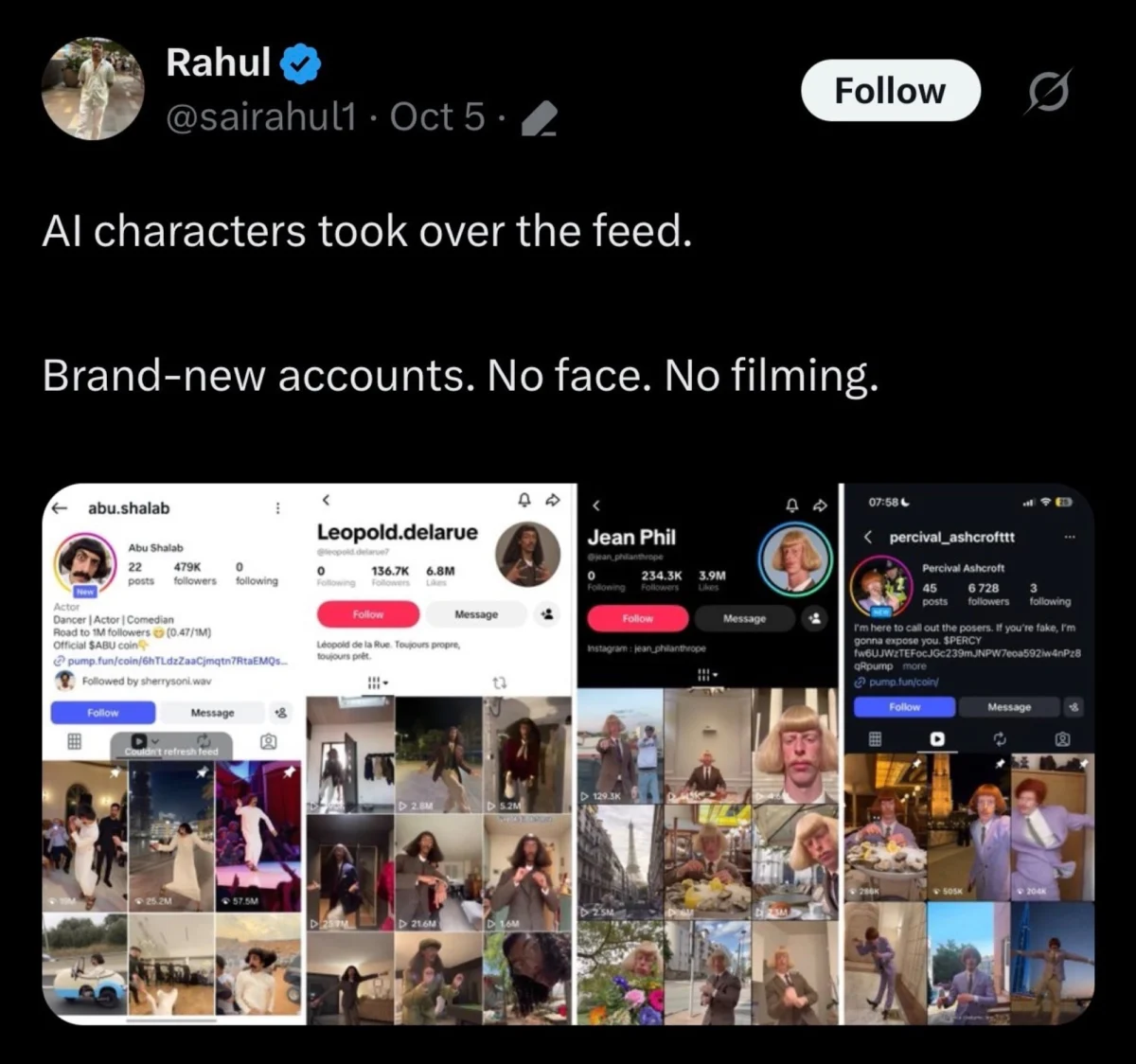
The core value proposition driving this gold rush is frictionless production. Proponents of the business model promote it with the fervor of early e-commerce evangelists. Social media feeds are currently flooded with tutorials boasting headlines like: "AI characters took over the feed. Brand-new accounts. No face. No filming."

Using next-generation video and face-swapping tools, operators can take a piece of existing viral content—such as a comedian’s stand-up routine or a luxury lifestyle reel—and seamlessly map a custom AI face onto the original performer. The lighting, motion, framing, and color grading of the original footage remain intact, while the identity of the human on screen is entirely replaced.
The industry is already generating massive commercial footprints:
- The Clueless Agency (Barcelona): The firm behind Aitana López, a 26-year-old pink-haired virtual fitness and lifestyle influencer with over 400,000 Instagram followers. López has secured brand deals with high-profile companies including L’Oréal, Coca-Cola, and Amazon.
- Inception Point AI: A management roster featuring over 100 autonomous digital characters that host podcasts, generate celebrity gossip, and interact directly with audiences.
- Pioneering Pioneers: Longstanding virtual models like Lil Miquela (2.2 million followers, BMW campaigns) and Shudu (Balmain’s "Virtual Army") paved the way, but today’s automated boom has democratized the technology, enabling anyone with a laptop to spin up a digital clone farm overnight.
Chronology: From Novelty CGI to Automated Plagiarism
The evolution of synthetic media has moved at breakneck speed, shifting from expensive CGI novelties to low-barrier, mass-produced social media spam.

- 2016–2020 (The CGI Era): Early virtual influencers like Lil Miquela and Shudu required extensive 3D modeling, graphic design rendering teams, and substantial budgets. They functioned primarily as digital art projects or exclusive brand experiments for high-end fashion houses.
- 2023–2025 (The Generative Tool Explosion): The arrival of advanced text-to-image and text-to-video platforms lowered the barrier to entry. Companies like HeyGen introduced talking AI avatars, while ElevenLabs perfected hyper-realistic synthetic voice cloning. Platforms began rolling out mandatory disclosure labels (such as Meta’s "AI info" tags and TikTok’s deepfake guidelines) to manage the flood of synthetic media.
- Late 2025–2026 (The Viral Bot & Joke-Stealing Wave): The current era is defined by extreme automation and low-cost execution. Creators armed with tools like Higgsfield’s Genjutsu began mass-producing "face-swapped" short-form content. Accounts like "Tiffany Sloane" (@tiffany.bbyx) emerged on Instagram and TikTok, racking up hundreds of thousands of followers in weeks by lip-syncing jokes stolen verbatim from real-world stand-up comedians—all while funneling traffic to monetized OnlyFans and Fanvue profiles.
Supporting Data: The Mechanics of Fictional Monetization
While viral view counts provide algorithmic momentum, they rarely pay out directly on platforms like Instagram or TikTok. Instead, savvy operators leverage automated avatars as top-of-the-funnel marketing tools to drive real-world revenue through distinct streams:
- Adult Subscriptions: Many female-coded AI avatars feature hyper-sexualized proportions designed to capture male attention. Profile links routinely direct viewers to NSFW subscription platforms like OnlyFans and Fanvue, where operators monetize the illusion of intimacy through paid messaging and exclusive posts.
- "How-to" Courses and Academies: The most lucrative product for many AI creators is selling the blueprint to others. For instance, Aitana López’s Instagram links directly to AI Creator Aicademy on Skool.com, a $9-per-month community promising subscribers the systems needed to build and monetize their own profitable AI avatars.
- Ad Revenue and Brand Deals: While YouTube’s Partner Program explicitly bans unoriginal, mass-produced AI content from monetization, other networks and direct brand sponsorships continue to throw millions of dollars at virtual influencers who carry zero risk of human scandal.
Implications: Real Creators Push Back Against Digital Theft
The normalization of AI influencers has triggered profound economic and ethical crises for human artists, particularly in the comedy and modeling sectors.
The Comedy Community Under Siege
In October 2026, real comedians began publicly exposing the rampant theft of their material. Comedian George Brett Olsen shared a side-by-side comparison of himself and an AI character named Tiffany Sloane, proving that the digital bot had stolen his exact outfit, physical gestures, and punchline.

Other comics, including Olivia Carter, Sarah Purdum, and Julia Jasunas, discovered that their stand-up routines—some performed on major networks like Netflix and The Tonight Show—were being lifted word-for-word, mapped onto hyper-sexualized AI models, and used to drive traffic to automated adult content pages.
Sarah Purdum voiced her frustration to journalists, noting a targeted trend: "It seems to be that female comedians’ work is being stolen and repurposed for sexy AI models… I feel annoyed that my work is being taken for the purpose of drawing in men."
Body Image and Societal Standards
Beyond copyright infringement, cultural critics warn that mass-producing idealized, impossible bodies via AI deepfakes is actively harming public discourse. Sara Ziff, founder and executive director of the Model Alliance, cautioned that relying on synthetic perfection risks "narrowing our definition of beauty instead of broadening it."

Official Responses and Regulatory Struggles
Major tech platforms find themselves racing to plug legal and structural loopholes as user complaints mount.
- Platform Policies: Fanvue explicitly welcomes AI creators but prohibits intellectual property infringement. OnlyFans requires explicit verification that accounts feature real individuals. YouTube updated its guidelines to disqualify repetitive, generic AI templates from its Partner Program.
- Labeling Limitations: While Meta, TikTok, and YouTube have deployed mandatory AI content disclosure labels, critics point out that these tags do little to solve the root problem. A label indicates that a video is synthetic, but it does not trace the origin of the stolen script, nor does it secure compensation or consent from the human creator whose performance was co-opted.
- Platform Testing: In response to widespread outcry from musicians and influencers whose likenesses have been scraped and cloned, sources at TikTok confirmed the company is actively testing new countermeasures—such as "AI Cast" protections—designed to safeguard human likenesses on the app.
Conclusion
The rise of the AI creator business represents a fundamental shift in digital culture. What began as an experimental fusion of art and technology has matured into an industrial-scale machine capable of bypassing human labor entirely.
However, as long as the system permits automated accounts to lift material from real stages and paste it onto synthetic faces, the human element of internet culture remains under threat. For working comedians, models, and creators, the battle lines are clear: they are no longer just fighting each other for algorithmic attention; they are fighting ghost versions of themselves.
 Suro Senen
 Nana Wu
 Laily UPN
