

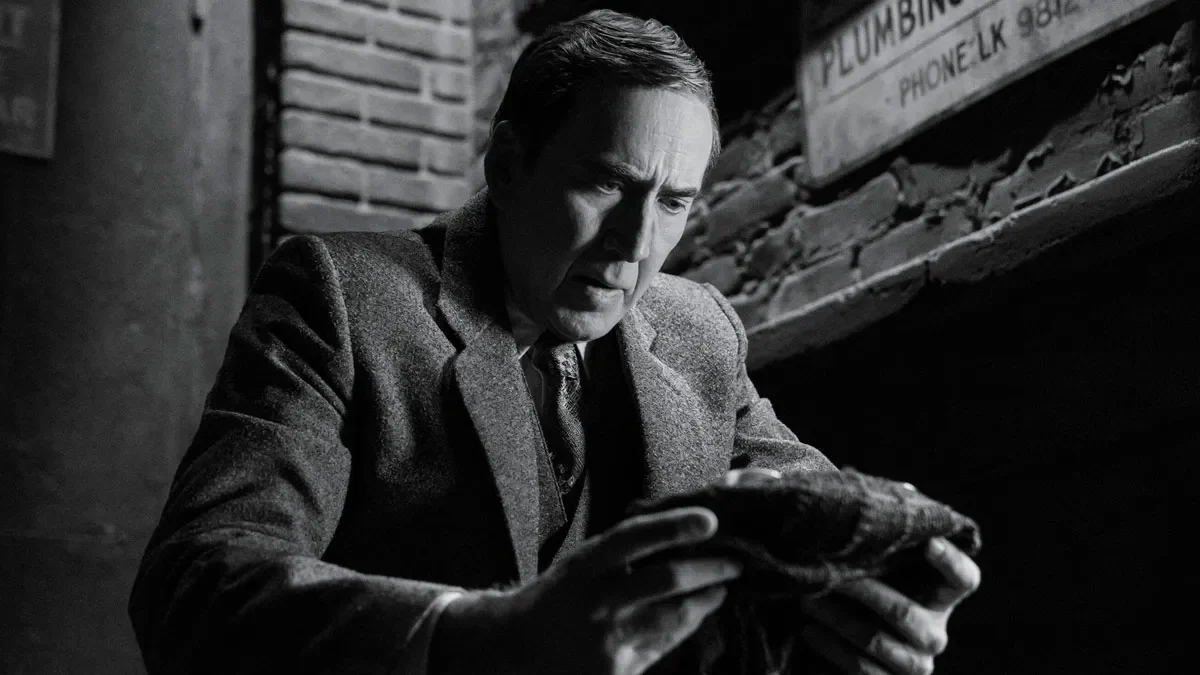
NEW YORK — Academy Award-winning actor Nicolas Cage has blown the lid off the sudden and shocking cancellation of Prime Video’s acclaimed series Spider-Noir. Speaking before a packed crowd on the Empire Stage at New York Comic Con, Cage revealed that he flatly refused to sign an artificial intelligence waiver requested by Amazon—a steadfast stand for artistic integrity that he believes directly triggered the demise of the hit show and burned his bridges with the multi-trillion-dollar tech and entertainment conglomerate.
The revelation provides a stunning backstage look at the collision between Hollywood talent and corporate technological ambition. It also explains the mysterious fate of one of 2026’s most celebrated streaming television events, leaving media analysts, industry unions, and comic book fans reeling.
Main Facts: The Battle Lines of Artificial Intelligence in Hollywood
The core conflict centers on the intersection of modern streaming economics and generative AI technology. According to Cage, Amazon executives sought his signature on a waiver that would have granted the studio the legal right to utilize artificial intelligence capabilities concerning his likeness, performance, or digital doubles during the production of Spider-Noir.
Cage, renowned for his visceral, highly physical, and deeply personal acting style, drew a hard line in the sand.
"Amazon is a very AI-friendly company, to the tune of $50 billion invested in OpenAI," Cage told the New York Comic Con audience, cutting straight to the heart of the matter. "I didn’t sign the waiver to let them use AI on Spider-Noir. I’m probably not going to be working with that studio again, but that’s okay."
The actor pulled no punches when connecting the dots between his refusal and the show’s abrupt axing. "I am not an AI-friendly actor, so it’s like, connect those dots! I’m not a member of their club."
The stakes of this high-profile standoff extend far beyond a single actor and a single series. As streaming services look for aggressive ways to trim budgets and maximize efficiency through emerging technologies, talent agencies and guilds like SAG-AFTRA have been locked in tense negotiations regarding the ethical use of digital replicas. Cage’s public disclosure transforms Spider-Noir from a standard Hollywood cancellation story into a watershed moment for actor autonomy in the age of generative algorithms.
Chronology: From Marvel Page to Prime Video Screen, and the Sudden Fall
To understand the magnitude of the fallout, one must look at the meteoric rise and abrupt erasure of Spider-Noir.
- The Origins (2009–2023): The project drew its primary inspiration from the acclaimed 2009 Marvel comic Spider-Man Noir. Nicolas Cage had previously cultivated a deep connection to the material, having memorably voiced a monochromatic, hard-boiled incarnation of the character in Sony’s Spider-Verse animated film franchise.
- Development and Deal-Making: Amazon MGM Studios struck a high-profile co-production deal with Sony Pictures Television to bring the live-action adaptation to life. Developed by Oren Uziel, the series marked a historic milestone for Cage: his very first starring role in a television series.
- May 2026: Spider-Noir officially premieres on Prime Video. Set in gritty, shadow-drenched 1930s New York City, the narrative follows Ben Reilly (Cage), a super-powered detective operating under the moniker "The Spider," who is desperately attempting to leave his violent, masked past behind until a labyrinthine conspiracy pulls him back in. Critics and audiences praise the show’s atmospheric noir styling, intricate world-building, and Cage’s mesmerizing lead performance.
- September 2026: Despite dominant cultural traction, Amazon announces the shocking cancellation of Spider-Noir after just a single season. The decision leaves viewers, critics, and industry insiders baffled, given the show’s massive viewership and critical acclaim.
- October 2026: Speaking at New York Comic Con, Nicolas Cage publicly links his refusal to sign Amazon’s AI waiver to the show’s cancellation, confirming an irreparable fracture in his relationship with the studio. At the same time, he announces his next major television venture: a starring role in HBO’s prestigious dark mystery franchise, True Detective.
Supporting Data: A Critical and Commercial Triumph
The narrative that Spider-Noir was canceled due to poor performance or a lack of audience interest is thoroughly dismantled by hard metrics. By every objective standard, the series was a powerhouse for Amazon Prime Video.
According to audience measurement data from Nielsen, Spider-Noir pulled in a staggering 2.6 billion minutes of viewership during its initial run. Fans embraced the unique blend of pulp fiction, superhero mythology, and period-piece drama. Critics similarly rallied behind the series; Consequence awarded the show a glowing B+ grade in its review, praising it as "surprising… especially a TV show this well-executed" and lauding Cage’s total commitment to the hard-boiled aesthetic.
Awards season further validated the series’ artistic success. Spider-Noir dominated the conversation, racking up 11 Emmy nominations—more than any other Amazon original series released in 2026. When the dust settled, the series walked away with five Emmy Awards, cementing its status as a prestige crown jewel in Prime Video’s catalog.
These numbers make the decision to pull the plug just four months after its premiere all the more anomalous—unless viewed through the lens of executive retaliation, creative irreconcilable differences, and corporate friction over technological boundaries.
Official Responses and Industry Repercussions
As of press time, Amazon MGM Studios has not issued a formal, detailed statement directly addressing Cage’s claims regarding the AI waivers. Representatives for the studio previously attributed the cancellation of Spider-Noir to broad programming shifts and portfolio restructuring—standard corporate phrasing that rarely satisfies suspicious fans or investigative entertainment journalists.
However, the ripple effects within the entertainment industry are already palpable.
- SAG-AFTRA and Labor Watchdogs: Union representatives and digital rights advocates have privately—and in some cases publicly—praised Cage’s transparency. The protection of actors’ likenesses, voices, and performances against unauthorized or coercive AI training datasets and synthetic generation remains one of the most volatile labor issues in Hollywood.
- The Talent Pool: Cage’s declaration that he is "probably not going to be working with that studio again" sends a chilling message to other A-list creators who value artistic sovereignty. For a major studio attempting to attract elite cinematic talent for high-end franchise television, burning bridges with an actor of Cage’s global prestige and cultural relevance is a severe strategic misstep.
- The Fandom Outcry: Dedicated fanbases, accustomed to social media campaigns attempting to save canceled shows (such as #SaveSpiderNoir), have pivoted their anger toward corporate AI policies. Online forums and comic book communities have exploded with anti-AI sentiment, amplifying Cage’s comments and turning the canceled series into a martyr for human-crafted art.
Implications: What This Means for the Future of Television
Nicolas Cage’s explosive revelations at New York Comic Con serve as a stark warning flare for the future of entertainment production. As technology conglomerates with vast financial ties to artificial intelligence developers continue to absorb traditional Hollywood studios, the friction between automated efficiency and human artistry will only intensify.
If a series as decorated, critically lauded, and commercially viable as Spider-Noir—boasting 11 Emmy nominations, five wins, and 2.6 billion minutes viewed—can be unceremoniously erased because its lead actor refuses to yield his digital rights to an algorithm, no project is truly safe.
For Cage, the path forward is clear. Having severed ties with Amazon, the veteran actor is already pivoting to projects that respect traditional artistic boundaries, confirming his upcoming transition to HBO’s prestige crime anthology True Detective.
As the television landscape navigates this uneasy transition into the AI era, the industry will undoubtedly look back at the sudden death of Spider-Noir as a defining inflection point—the moment a legendary actor chose his integrity over a corporate paycheck, exposing the hidden machinery driving decisions in the modern streaming era.
 Layla Zulfa
 Nana Muazin
 rifanmuazin
