

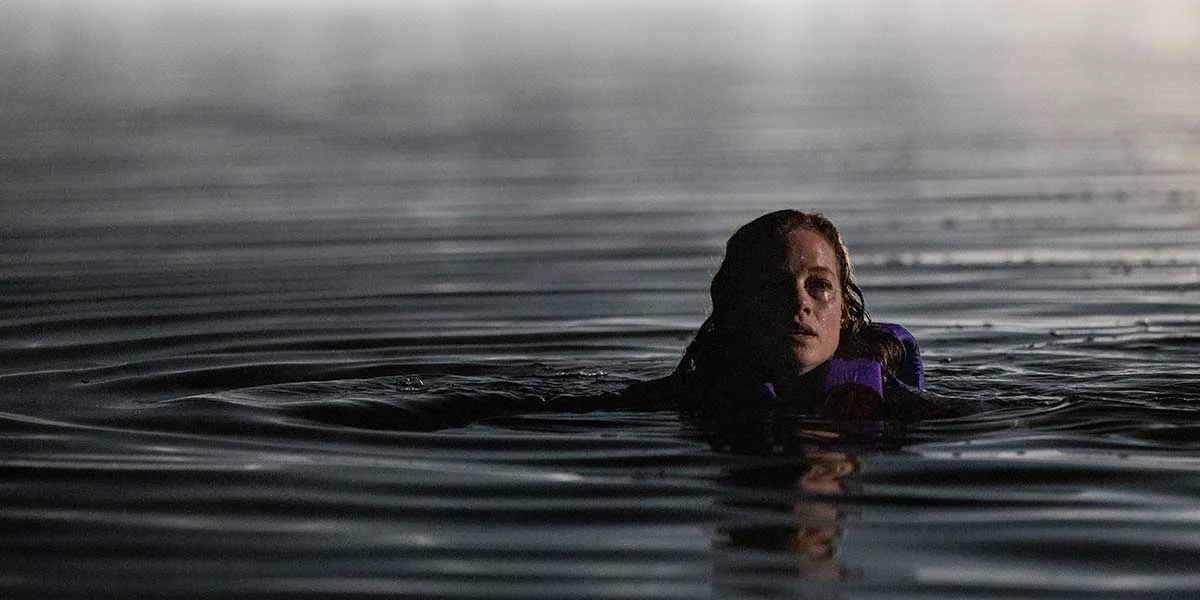
The survival slasher has long been a genre defined by its limitations: a group of isolated youths, an unstoppable antagonist, and a countdown to inevitable carnage. Yet, in the hands of director Joshua Giuliano, the new feature River—which premiered to visceral acclaim at the 2026 Toronto International Film Festival—manages to transcend these tropes through a masterful blend of character-driven drama and high-stakes terror. River is not merely a "scare machine"; it is a cinematic study in atmosphere, grief, and the casual cruelty of a killer who views his victims as nothing more than meat for the slaughter.
The Anatomy of an Opening: Setting the Stage
The film’s opening sequence serves as a masterclass in tension-building. Rather than relying on the tired visual of a masked figure stalking the periphery, cinematographer Nick Matthews opts for a sensory approach. We are introduced to the killer’s initial victims through sound alone—the intimate, playful chatter of a young couple echoing through the woods. Matthews frames the setting with classic horror iconography: an abandoned sedan, scattered beer cans, and the filtered sunlight of a forest clearing.
We hear the struggle, but we are denied the visual of the violence until it is too late. The reveal is sudden and haunting: a young man’s bloodied corpse sprawled against the vibrant, verdant grass. The contrast is deliberate and jarring. In one fluid motion, the camera catches a terrified woman fleeing toward the lens, only to be snatched from the frame by an unseen force. It is a visually arresting, technically precise sequence that establishes the core thesis of the film: this is a beautiful place where evil thrives.
A Chronology of Grief: The Siblings’ Descent
While the slasher genre often prioritizes the kill count over character development, River grounds its horror in the complex, simmering resentments of three estranged siblings. The narrative follows Lucy (Jane Levy), Carla (Jessica Rothe), and Drew (Max Mattern) as they attempt to honor their late father’s final request: to scatter his ashes on his favorite river.
The trip begins in the sterile, hollow environment of their childhood home. Here, the director establishes the psychological stakes through archival footage of a happier past, a stark reminder of what has been lost. The following morning, the trio heads out on their father’s boat, a vessel that serves as both a sanctuary and a prison.

The tension escalates from the emotional to the physical. During the eulogies, the siblings’ true colors emerge:
- Lucy (Levy): The dutiful daughter, still clinging to the traditional narrative of their father’s life.
- Carla (Rothe): The pragmatist who broke free, shedding the trauma of an upbringing marred by their father’s alcoholism and infidelity.
- Drew (Mattern): The vulnerable peacemaker, whose mumbled recollections of A Perfect Storm provide a fleeting, humorous respite before the horror begins.
The breakdown of the boat is the turning point. In a modern era of hyper-connectivity, the isolation of the river—the dead radio, the lack of cell service, the mechanical failure—is rendered absolute. When Carla attempts to swim for shore, the film sheds its emotional skin and transforms into a pulse-pounding survival thriller.
Supporting Data: The Craft Behind the Carnage
The production design and technical execution of River elevate it above the standard direct-to-streaming fare. Central to this is the performance of Dane DiLiegro. Standing at 6-foot-8, DiLiegro brings an imposing, almost mythic physicality to the role of the killer. Eschewing the complex backstories of recent "slasher-with-a-twist" films, Giuliano keeps his villain enigmatic. The killer’s mask, fashioned from the face of a former victim, is a grotesque touch that emphasizes the lack of motive; there is no personal vendetta, only the pursuit.
The performances by Levy and Rothe are particularly noteworthy. Both actresses have established themselves as modern "scream queens," and their chemistry—even when their characters are at their most volatile—provides the film with its emotional anchor. However, the true star of the production remains the environment. Under Matthews’ lens, the river transforms from a scenic backdrop into an almost mystical character, an indifferent witness to the slaughter unfolding on its banks.
Official Perspectives and Creative Intent
In discussions following the TIFF premiere, director Joshua Giuliano emphasized his desire to create a "visceral, economical" experience. By adhering to a lean script, Giuliano forces the audience to confront the characters’ thin yet relatable sketches. There is no time for exposition when a 6-foot-8 predator is closing the distance.

"Horror is not simply a scare machine," Giuliano noted during a press roundtable. "Even the most basic stories benefit from color, composition, and craft." This philosophy is evident in every frame of River. The film does not apologize for its genre roots; instead, it embraces them, proving that the classic slasher formula remains one of the most effective ways to explore the fragility of human life.
The Broader Implications for the Genre
The release of River marks a significant moment for the genre, particularly as the industry continues to navigate the balance between theatrical exhibition and the dominance of platforms like Shudder. While River is destined to find a massive audience on home screens, the consensus among critics is that its technical polish—the lush cinematography and sound design—demands the scale of a cinema screen.
Furthermore, the film serves as a rebuke to the trend of "elevated horror" that occasionally loses its way in metaphor. Giuliano’s commitment to the "casual cruelty" of the slasher genre acts as a reminder that fear, when executed with precision, is a universal language. The twist regarding family dynamics, which arrives in the final act, adds a layer of thematic depth that stays with the viewer long after the credits roll, but it never overrides the immediate, terrifying reality of the hunt.
As Independent Film Company and Shudder prepare for the film’s wider release, River stands as a benchmark for independent horror in 2026. It is a reminder that the most compelling stories often happen in the quiet spaces between the screams, and that sometimes, the most dangerous things are found in the most beautiful places.
Film Details:
- Director: Joshua Giuliano
- Cast: Jane Levy, Jessica Rothe, Max Mattern, Dane DiLiegro
- Grade: B
- Distributor: Independent Film Company / Shudder
- Festival Premiere: 2026 Toronto International Film Festival
 Jia Lissa
 Lina Irawan
 Iffa Jayyana
