

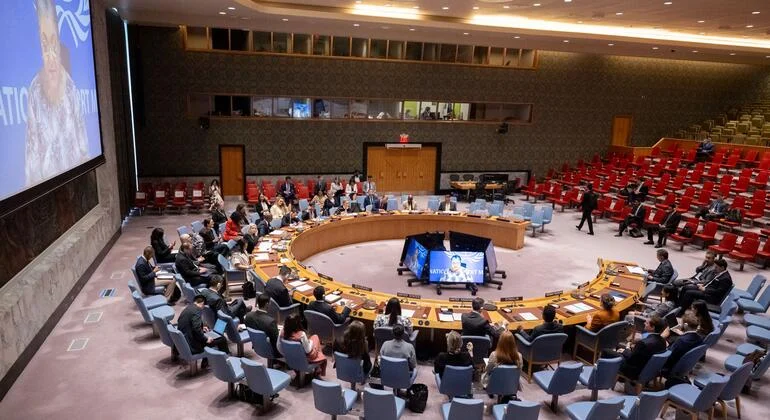
In a significant diplomatic breakthrough, the United Nations Security Council has issued a robust endorsement of a landmark agreement aimed at breaking Libya’s long-standing political deadlock. The deal, finalized on August 30 through the UN Support Mission in Libya’s (UNSMIL) "Smaller Convening" track, provides a roadmap for national elections within two years, potentially ending years of institutional fragmentation that has paralyzed the North African nation since the 2011 uprising.
As the international community watches with cautious optimism, the challenge now shifts from the negotiating table to the volatile reality on the ground. For a country defined by a decade of competing administrations, divided security apparatuses, and a struggle for control over its vast oil wealth, this agreement represents perhaps the most tangible progress in years.
The Path to the "Smaller Convening": Breaking the Impasse
The agreement, hailed by UN officials as a triumph of patient mediation, addresses two of the most obstructive barriers that have historically derailed electoral efforts: the composition of the High National Elections Commission (HNEC) and the legal linkages between parliamentary and presidential voting cycles.
Resolving Structural Disputes
For years, the HNEC was the subject of intense regional rivalries, with factions in the east and west vying for control over the body tasked with administering the vote. The new deal mandates a reconstituted board that ensures equitable representation across Libya’s three historical regions—Tripolitania, Cyrenaica, and Fezzan. By institutionalizing regional balance, the UN hopes to strip away the "winner-takes-all" mentality that has historically sabotaged electoral processes.
Furthermore, the agreement clarifies the legal framework governing the concurrent timing of legislative and presidential elections. By untangling these requirements, the parties have removed the pretext that opposing sides previously used to delay polls indefinitely.
A Unified Approach
Special Representative of the Secretary-General (SRSG) Hanna Tetteh, who has spearheaded these negotiations, noted that the success of this track relied on a shift in strategy. Instead of engaging in the traditional "shuttle diplomacy" between two rival legislative bodies—the Tripoli-based Government of National Unity and the eastern-based Libyan National Army command—UNSMIL brought all primary stakeholders to the same table. This joint negotiation process, Tetteh argued, forced factions to move beyond rhetoric and address the technical realities of governance.
Chronology of a Crisis: From 2011 to the Present
To understand the weight of the August 30 agreement, one must look at the historical trajectory of the Libyan state since the collapse of Muammar Gaddafi’s regime.
- 2011: The civil conflict and subsequent international military intervention result in the fall of the Gaddafi regime, triggering a rapid collapse of state institutions.
- 2014: A second round of major conflict results in the division of the country, with rival parliaments and administrations emerging in Tripoli and the east.
- 2015-2020: The signing of the Skhirat Agreement attempted to forge a unified government, yet the country remained effectively partitioned by armed groups and foreign influence.
- December 2021: A planned national election is indefinitely postponed due to deep disagreements over candidate eligibility and the legal framework for the vote.
- 2022–2025: A period of "stalemate politics" ensues, characterized by the emergence of parallel governments and a perpetual struggle over the Central Bank of Libya and oil revenues.
- December 2025 – June 2026: UNSMIL initiates a comprehensive structured dialogue, consulting with over 120 Libyan stakeholders to build grassroots support for a new electoral path.
- August 30, 2026: Parties reach the "Smaller Convening" agreement, setting the stage for elections within a two-year horizon.
Official Responses: The International Community’s Mandate
The UN Security Council’s response has been one of unequivocal support, emphasizing that this moment must not be squandered. In a formal statement released Tuesday, the Council urged all Libyan political leaders to move past self-interest and prioritize the implementation of the agreement.
"The council reaffirms its full support for UNSMIL and the leadership of SRSG Hanna Tetteh," the statement read. This backing is crucial, as it provides the necessary political cover for the mission to continue its mediation efforts in an environment often hostile to international interference.
SRSG Tetteh has been candid about the limitations of this success. Speaking to UN News, she acknowledged that while the agreement solves long-standing legal disputes, it is merely the "initial opportunity" to build the trust required for a credible national poll. She emphasized that the UN is not a replacement for the Libyan people, but a facilitator for their aspirations for peace, security, and accountable governance.
Fragile Foundations: Challenges to Implementation
Despite the optimism surrounding the deal, the road ahead is fraught with systemic risks. The SRSG has identified several key "flashpoints" that could threaten the timeline.
The Crisis of Public Trust
Perhaps the most significant hurdle is the deep-seated skepticism among the Libyan populace. Years of failed promises have left many citizens cynical about the electoral process. The "structured dialogue" conducted by UNSMIL throughout 2025 and 2026 was specifically designed to address this, acting as a bridge between the political elite and the civil society actors who have been largely excluded from power.
The "Security Dilemma"
Libya’s military and security landscape remains a fractured mosaic of armed groups. While tensions in the western regions are currently being managed through local negotiations, the lack of a unified national army remains a critical vulnerability. Without a unified security sector, the prospect of holding nationwide elections—which requires the secure movement of ballot boxes and voters—remains technically and physically daunting.
Gender, Harassment, and Civic Space
A disturbing trend identified by Tetteh is the rising tide of online hate speech and targeted harassment against women in public life. In a nation where women were instrumental in the grassroots dialogue process—comprising 35 percent of participants—this intimidation is not merely a social issue; it is a political tactic designed to suppress democratic participation.
"We need stronger legal protections," Tetteh noted, emphasizing that democracy cannot flourish if half the population is systematically coerced into silence. The UN is calling for a robust legal framework that safeguards the rights of female activists, ensuring they can participate in the transition without fear of retaliation.
Implications for Regional Stability and Oil Markets
The implications of this deal extend far beyond Libya’s borders. For years, the instability in Libya has been a source of regional volatility, contributing to migration crises in the Mediterranean and serving as a proxy theater for international powers.
Economic Sovereignty
Central to the Libyan struggle is the control of its oil and gas reserves. The fragmentation of the country has often resulted in "oil blockades," where various militias seize production facilities to extract political concessions. A unified government, as envisioned by the new deal, would theoretically allow for the professionalization of the National Oil Corporation (NOC) and the transparent management of revenues. For global energy markets, a stable Libya represents a critical, if currently unreliable, supplier.
The Role of International Stakeholders
The success of the August 30 deal hinges on whether foreign powers—many of whom have supported rival factions—will finally align their interests with the UN-led process. The Security Council’s call for "full support" is effectively a signal to regional actors to cease the supply of arms and the political backing of spoiler groups.
Conclusion: Seizing the Moment
As Libya stands at this precarious juncture, the international community’s message is clear: the window of opportunity is open, but it will not stay that way indefinitely. The August 30 agreement is not an end in itself; it is a structural foundation upon which a new, unified state must be built.
The months ahead will require immense political courage from Libyan leaders. They must navigate the difficult transition from a landscape of competing militias to one of institutionalized governance. They must address the grievances of a weary population and ensure that the electoral process is inclusive, transparent, and, above all, safe.
For the United Nations, the focus remains on "supporting, not replacing." As SRSG Tetteh succinctly put it, the goal is to help the Libyan people achieve their political aspirations. Whether this translates into a stable, democratic, and unified nation will depend on the commitment of those in Tripoli, the east, and the south to honor the spirit of the Smaller Convening. The world is watching, and for the first time in many years, there is a tangible, albeit fragile, hope that the cycle of conflict in Libya may finally be yielding to the ballot box.
 Lina Hope
 Asro
Asro
 Layla Zulfa
