

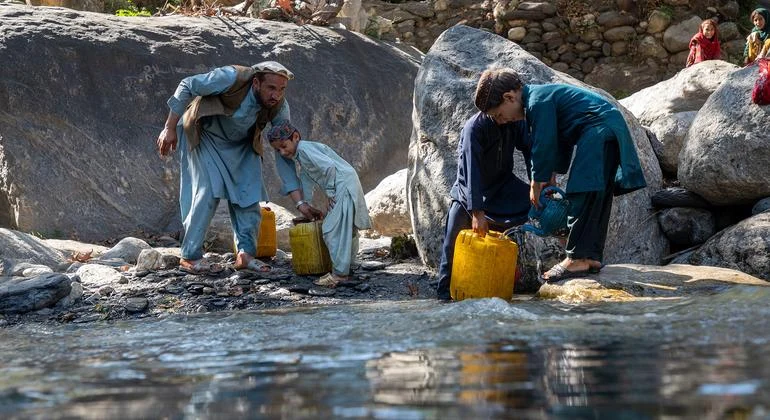
The humanitarian landscape in Afghanistan has deteriorated into a state of profound despair, characterized by a systematic erosion of fundamental human rights and a staggering decline in living standards. Volker Türk, the United Nations High Commissioner for Human Rights, recently issued a clarion call to the international community, warning that the situation is moving “from bad to worse” while the global appetite for addressing the Afghan crisis appears to be vanishing.
“It seems the world has forgotten and abandoned the people of Afghanistan to a plight deepening by the day,” Türk stated. “The silence is deafening.” As the de facto Taliban authorities consolidate their control through increasingly draconian measures, the Afghan population—already reeling from decades of conflict—finds itself isolated, impoverished, and silenced.
Main Facts: The Anatomy of a Nation in Collapse
The current crisis in Afghanistan is not merely a political struggle; it is a comprehensive societal breakdown. The de facto authorities have implemented a rigid interpretation of governance that effectively criminalizes basic expressions of personal autonomy and public life.
At the heart of this oppression is the Office for the Propagation of Virtue and Prevention of Vice. This body has become the primary instrument for enforcing social compliance. Citizens are routinely detained for minor "infractions," such as non-compliance with strict dress codes, the length of a man’s beard, or the simple act of listening to music. Beyond these daily indignities, the Taliban has targeted former members of the previous government and security forces, as well as religious minorities, including the Shi’a and Ismaili communities.
The media landscape has been systematically dismantled. Independent journalism has been replaced by state-sanctioned narratives, with media outlets suffering from forced closures, censorship, and the persistent threat of arrest for any journalist brave enough to report on the realities on the ground. Perhaps most chillingly, the UN has documented at least 449 instances of corporal punishment—public floggings and other forms of physical retribution—in the first half of this year alone.
A Chronology of Decline: From Withdrawal to “Gender Apartheid”
The current state of affairs is the culmination of a rapid decline following the August 2021 withdrawal of international coalition forces.
- August 2021: The Taliban reclaims control of Kabul, leading to the collapse of the Islamic Republic of Afghanistan. Initial promises of a "moderate" government are quickly undermined by policy shifts.
- 2022: The systematic exclusion of women begins in earnest, starting with the ban on girls’ secondary education. The international community maintains a wait-and-see approach, hoping for diplomatic concessions.
- 2023: The "gender apartheid" framework hardens. Women are banned from working for NGOs and the United Nations, and beauty salons—a rare space for female socialization and economic independence—are shuttered.
- 2024: The crisis shifts from political instability to a full-scale humanitarian and human rights emergency. The international community, preoccupied with conflicts in Ukraine and the Middle East, largely relegates the Afghan crisis to the periphery of its diplomatic agenda.
Supporting Data: The Statistics of Suffering
The human cost of these policies is quantifiable and devastating. According to data provided by the UN and international humanitarian agencies, the breadth of the catastrophe is as follows:
- Educational Erasure: Since 2021, over two million Afghan girls have been barred from secondary and higher education. This represents a lost generation, stripping the nation of its future doctors, engineers, and educators.
- Humanitarian Necessity: Approximately 21.9 million people—roughly 45 percent of the total population—are currently in urgent need of humanitarian assistance.
- The Refugee Crisis: The lack of safety at home has forced millions to flee, yet those who seek sanctuary abroad are finding doors closing. Over 400,000 Afghans have been forcibly returned from neighboring countries, including Pakistan, Iran, Türkiye, and several EU member states. These returnees are often sent back to areas they do not know, facing extreme poverty, food insecurity, and a complete lack of basic healthcare.
- Financial Stagnation: Foreign aid inflows, which once sustained the Afghan economy, have slowed to a trickle as international donors struggle to find ways to assist the population without legitimizing or financially empowering the Taliban regime.
Official Responses and the "Deafening Silence"
The international response to the situation has been marked by a dichotomy between verbal condemnation and practical inaction. While Western governments and the UN continue to issue statements denouncing the Taliban’s actions, there has been a noticeable shift in focus toward "pragmatic engagement"—a euphemism for the cooling of diplomatic efforts to pressure the regime.
Volker Türk’s statement serves as a critique of this very shift. By prioritizing geopolitical stability over the rights of Afghan citizens, the international community has inadvertently signaled to the Taliban that the cost of their repression is low. The exclusion of women from all public decision-making fora, and the specific decree preventing female UN staff from accessing their own offices, represent a direct challenge to the international order—a challenge that has yet to be met with a unified, high-stakes response.
Furthermore, the forced repatriation of refugees by host nations has drawn sharp criticism from the Office of the High Commissioner for Human Rights (OHCHR). The UN argues that such returns violate the principle of non-refoulement—the practice of not forcing refugees to return to a country where they are liable to be subjected to persecution or inhumane treatment.
Implications: A Future in Jeopardy
The implications of the current trajectory in Afghanistan are profound, both regionally and globally.
1. The Normalization of Gender Apartheid
The Taliban’s systematic dismantling of women’s rights serves as a global precedent. If the international community fails to effectively challenge the institutionalized oppression of women, it risks normalizing the concept of "gender apartheid." This could embolden other authoritarian regimes to adopt similar policies, rolling back decades of progress in global human rights.
2. Regional Instability
The forced return of hundreds of thousands of refugees into a collapsing economy creates a powder keg of instability. As the domestic population faces starvation and the loss of essential services, the likelihood of radicalization or mass migration spikes, potentially destabilizing the broader Central and South Asian regions.
3. The Humanitarian-Political Dilemma
The international community remains trapped in a dilemma: how to provide aid to 21.9 million vulnerable people without the aid being diverted by the de facto authorities? The "trickling dry" of aid is a result of this impasse. If donors continue to retreat, the death toll from preventable causes—malnutrition and lack of basic medicine—is projected to rise sharply through the coming winter months.
4. A Crisis of Credibility
Finally, the "deafening silence" mentioned by Türk highlights a crisis of credibility for the UN and the Western democratic bloc. By failing to intervene or effectively leverage aid to secure human rights, the international community appears to have abandoned the very values of human dignity it claims to uphold.
Conclusion: A Final Imploration
The plight of the Afghan people is not an inevitability; it is the result of political choices—both by the Taliban, who enforce their will through fear, and by the international community, which has chosen the path of least resistance.
As Volker Türk concluded in his address: "I implore all States to reconsider their actions, and to put the lives of the suffering population first." Whether the world will heed this call remains uncertain. What is certain, however, is that for millions of Afghans, time is running out. The silence from the global stage is not just a diplomatic stance; for a mother in Kabul or a girl denied her schoolbooks in Kandahar, it is a death sentence. The world’s departure from the Afghan narrative may be convenient for policymakers, but the human cost of that abandonment is a tragedy that will haunt the conscience of the international community for generations to come.
 Lina Hope
 Layla Zulfa
