

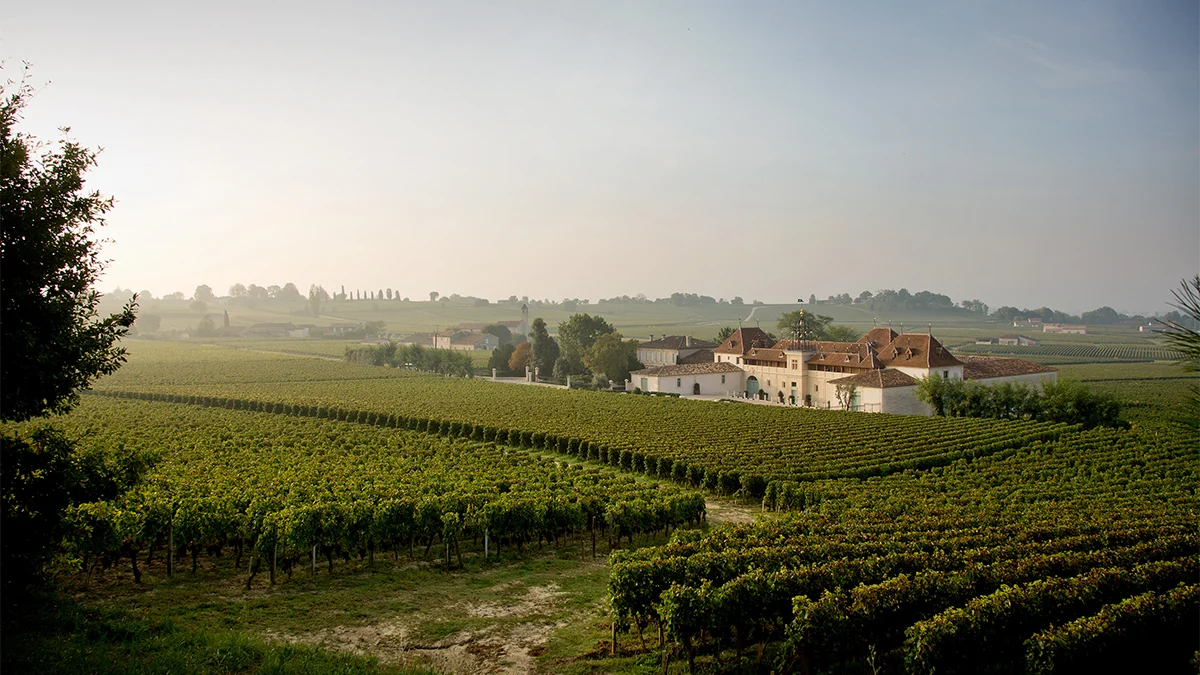
In the hallowed, rolling landscapes of Saint-Émilion, where tradition is often measured in centuries rather than fiscal quarters, a quiet revolution has taken root. At the heart of this transformation is Stéphanie de Boüard-Rivoal, a visionary leader who has shattered a glass ceiling that stood for eight generations. As the first woman to take the helm of the illustrious Château Angelus, de Boüard-Rivoal has not merely assumed a title; she has redefined the trajectory of one of Bordeaux’s most prestigious estates.
Born in 1982—a year celebrated by oenophiles as a "Bordeaux vintage"—de Boüard-Rivoal’s ascension to majority shareholder of the 200-plus-year-old estate marks a definitive shift in the dynasty’s history. Her leadership represents a bridge between the deep-seated heritage of the Boüard de Laforest family and the forward-thinking demands of the modern global wine market.
The Architect of the Future: A Profile in Leadership
Stéphanie de Boüard-Rivoal’s path to the top was neither impulsive nor incidental. Growing up on the Angelus holding, she was immersed in the sights, sounds, and rhythms of viticulture from childhood. Her academic foundation—comprising a degree from Bordeaux University’s Faculty of Economics and further training at the prestigious ESCP-EAP business school—provided the analytical framework necessary to manage a sprawling, multi-faceted business enterprise.
Today, she leads a workforce of 170 people, overseeing everything from the precise science of the cellar to the complexities of international trade. Her management style is characterized by a blend of pragmatism and passion. While her professional life is consumed by the rigors of running a world-class wine estate, she maintains a grounding in personal interests, including equestrianism, global travel, and a love for culinary arts. She resides in the region with her husband, Marc Rivoal, who brings his own expertise to the industry as a wine négociant, and their three children.
A Chronology of a Dynastic Legacy
To understand the magnitude of de Boüard-Rivoal’s tenure, one must look at the timeline of the Boüard de Laforest family, whose stewardship of the land has been an ongoing act of devotion.
- Early 20th Century: Maurice de Boüard de Laforest inherits the estate. His ambition expands the footprint of the property, most notably with the acquisition of the three-hectare enclosure known as L’Angelus in 1920.
- 1954: A watershed moment for the estate as the first official classification of Saint-Émilion wines awards Château Angelus the prestigious Grand Cru Classé status.
- 1985–2012: Jacques and Christian de Boüard de Laforest steward the estate through a period of significant growth. In 1985, Hubert de Boüard takes the reins, setting the stage for international acclaim and technical excellence.
- 2012: Stéphanie de Boüard-Rivoal officially joins the family business, beginning an intensive apprenticeship under her father.
- Present Day: Having assumed the role of managing director and majority shareholder, de Boüard-Rivoal oversees a massive operation spanning 131 hectares and producing eight distinct cuvées.
Technical Mastery and the "Angelus Style"
The wines of Château Angelus are distinct, defined by their terroir and a specific philosophical approach to blending. The estate is characterized by its clay-limestone soils, which impart a particular structure to the fruit. A signature of the house is the generous use of Cabernet Franc, which can constitute up to 55 percent of the blend. This varietal choice, combined with meticulous cellar practices, results in a wine with remarkable longevity, capable of evolving for 15 to 50 years—or even longer in exceptional vintages.
Under de Boüard-Rivoal’s guidance, the "Angelus style" has undergone a subtle, sophisticated refinement. She has championed a shift toward a fresher, more vibrant profile. This is not a rejection of the estate’s history, but an evolution. By focusing on precision in the vineyard and a lighter touch in the winery, she has managed to preserve the complexity for which Angelus is world-renowned while appealing to the palates of a new generation of collectors.
Her mentor, the legendary former CEO of Krug Champagne, Maggie Henriquez, has been instrumental in this evolution. Together, they have focused on modernizing the brand’s image without compromising its historical integrity.

Beyond the Bottle: Hospitality and Diversification
Stéphanie de Boüard-Rivoal’s vision extends far beyond the production of fine wine. She has recognized that in the 21st century, a luxury estate must be an experience. Consequently, she has aggressively expanded the family’s hospitality portfolio, creating a comprehensive ecosystem of luxury services in Saint-Émilion.
Her acquisitions include:
- Logis de la Cadène: An exquisite culinary destination in the heart of Saint-Émilion.
- Maison de la Cadène: A boutique guest house established in 2016, offering an intimate look at the region’s architectural beauty.
- Auberge de la Commanderie: Added to the portfolio in 2017, this hotel further solidified the family’s presence in the luxury travel sector.
- Le Gabriel: In 2019, she expanded into the city of Bordeaux itself with the acquisition of this two-Michelin-starred restaurant, signaling her intent to connect the estate to the wider gastronomic map of France.
Sustainability as a Core Mandate
Perhaps the most significant long-term shift under de Boüard-Rivoal is the commitment to environmental stewardship. Recognizing that the future of Bordeaux is tied to the health of its soil, she has implemented rigorous sustainable viticulture practices. These efforts focus on the preservation of local biodiversity, the optimization of water and energy resources, and a move toward chemical-free farming where possible. By treating the land as a legacy to be protected rather than a resource to be exhausted, she is ensuring that the terroir of Angelus remains viable for the ninth, tenth, and subsequent generations.
Implications for the Global Wine Industry
The story of Stéphanie de Boüard-Rivoal is more than a profile of a successful executive; it is a signal of the changing guard in the Old World. For centuries, the Bordeaux region was perceived as a bastion of conservative, male-dominated tradition. By taking the helm, de Boüard-Rivoal has demonstrated that heritage and innovation are not mutually exclusive.
Her influence is already being felt across the industry. By successfully balancing the demands of a global luxury brand with the intimate requirements of a family-run vineyard, she provides a blueprint for other dynastic estates. As she continues to integrate sustainable practices, expand hospitality footprints, and refine the profile of her wines, she is positioning Château Angelus not just as a historical monument, but as a dynamic participant in the modern luxury market.
For those interested in witnessing the intersection of this rich history and the future of fine wine, the upcoming Golden Vines® 2026 event in London offers a rare opportunity. The event will showcase the talents of leaders like de Boüard-Rivoal, providing a platform for the next generation of viticultural excellence.
In conclusion, Stéphanie de Boüard-Rivoal is not merely the successor to a name; she is the curator of a legacy. With a steady hand on the pulse of both the vineyard and the boardroom, she is ensuring that the chime of the Angelus bells will continue to resonate for decades to come, sounding for a new, more inclusive, and deeply sustainable era of excellence in Bordeaux.
 Evan Lee Salim
 Asep Darmawan
 Laily UPN
