

EDINBURGH, Scotland — A white boy pauses to light a cigarette against the hum of urban life. A Black girl floats effortlessly on a scratched, weather-beaten seesaw. A rock band strums aggressively from the flatbed of a pickup truck parked squarely between looming, austere housing projects. On a nearby door, a pasted poster bears a stark command: "End Unemployment. GET THEM OUT!"
These arresting fragments of everyday existence form the visual lexicon of Sandra George, a brilliant yet historically overlooked Black British photographer whose lens captured the raw heartbeat of urban Scotland during the tumultuous decades of the 1980s and 1990s.
Today, a sweeping and long-overdue institutional correction is underway at the City Art Centre in Edinburgh. Titled Sandra George: Start from the Level, the exhibition—produced in partnership with the community arts organization Craigmillar Now—represents the largest retrospective of George’s work to date. Running through September 27 as part of the Edinburgh Art Festival, the exhibition makes a compelling, persuasive case to elevate George from the footnotes of art history into the pantheon of essential British social documentary photographers.
Rejecting the voyeuristic tendencies of "poverty porn"—where marginalized communities are flattened into spectacles of despair—George offered an intimate, deeply respectful masterclass in solidarity, resilience, and profound human dignity.
Main Facts: Unveiling a Hidden Archive
The core of Start from the Level centers on George’s prolific output as a freelance photojournalist, community worker, and activist living and working in Scotland. Her photographs document a nation grappling with the seismic, often devastating shifts of Thatcher-era privatization, deindustrialization, and widening economic inequality.

- The Artist: Sandra George (died 2013) was a Black British photographer and single mother whose own experiences with minoritization deeply sensitized her to the structural fractures faced by outsiders and the urban working class.
- The Exhibition: Sandra George: Start from the Level is on view at the City Art Centre (2 Market Street, Edinburgh) through September 27, featuring an extensive selection of vintage prints, archival materials, and personal notebooks.
- The Focus: Spanning the 1980s and 1990s, George’s photography chronicles public housing developments in Edinburgh (such as Craigmillar and Leith), labor movements, anti-nationalist protests, international solidarity actions, and tender domestic scenes from her own life as a mother.
- The Philosophy: Drawing from her personal manifesto—"Stop making assumptions about people. Start from the level that people are based"—George approached her subjects as equals, embedding herself within the communities she documented rather than observing them from an external, clinical distance.
Chronology: A Life Behind the Lens and Beyond
To understand Sandra George’s unique visual perspective is to trace a trajectory shaped by active community engagement, radical political awakenings, and deeply personal milestones.
The 1980s: Thatcherism, Activism, and the Urban Landscape
As Margaret Thatcher’s conservative government systematically dismantled Britain’s industrial base and social safety nets, Scottish urban centers experienced severe economic shocks. George was on the ground with her camera, documenting the visceral fallout and the spirited resistance.
Her lens captured pivotal moments of historical and local resonance: a student caught in the chaos of an anti-nationalist protest; crowds thrusting bouquets into the air at a political rally celebrating the release of Nelson Mandela from prison; and multi-racial coalitions of women gathering at community centers under banners declaring, "Every Mother is a Working Mother."
The 1980s–1990s: Documenting the Margins
During these decades, George focused heavily on neglected public housing complexes. In Edinburgh’s Craigmillar district, she photographed buildings bearing raw expressions of class anger, such as graffiti reading "Rich Scum fuck off" on a housing unit door in 1994. Yet, her lens refused to wallow in despair. In Leith, she captured a group of children who had transformed a hazard of discarded timber and abandoned mattresses into a majestic makeshift playground, beaming down like conquerors scaling a mountain peak.
The Domestic Sphere and Self-Representation
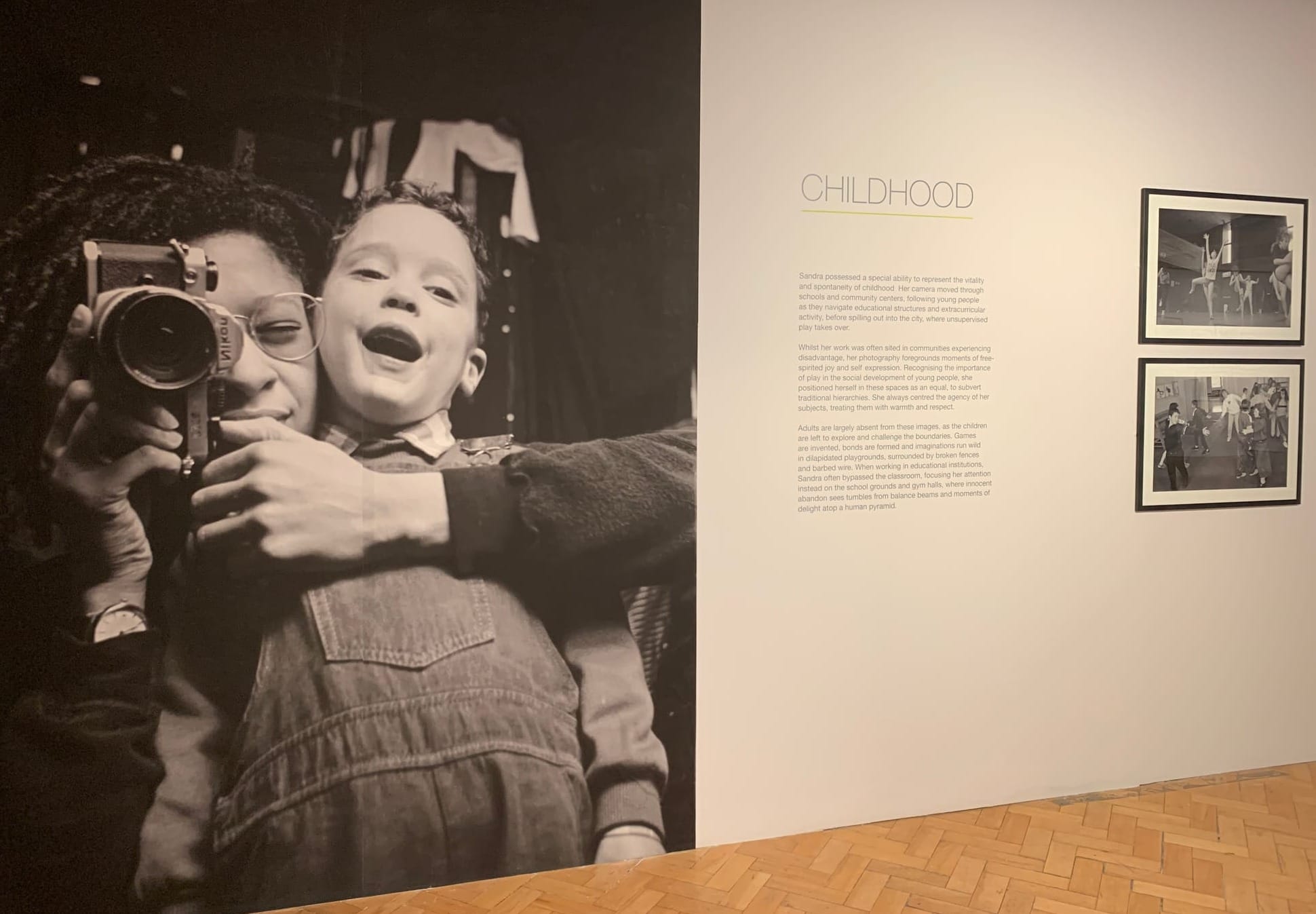
Alongside her public reportage, George turned her camera inward, creating an extensive, tender visual chronicle of her son, Tyler. From his fragile beginnings as a premature baby wired to hospital incubators to a boisterous toddler, child, and teenager, these images depict a humble, creative home environment where imagination flourished. Simultaneously, her rare self-portraits present a pensive single mother defined by an unwavering, fierce composure and undeniable creative swagger.

Posthumous Recognition (2013–Present)
Following her untimely death in 2013, George’s vast archive remained largely under-recognized by mainstream cultural institutions. The meticulous preservation of her estate, coupled with grassroots partnerships like Craigmillar Now, eventually brought her negatives and prints to light. Start from the Level marks a watershed moment in correcting this historical oversight, introducing a new generation of art critics and museum-goers to her vital legacy.
Supporting Data & Visual Analysis
George’s work occupies a critical space within the history of British photography, standing in stark contrast to the sensationalized media tropes that historically defined depictions of Britain’s council estates.
| Curatorial Element | Detail & Significance |
|---|---|
| Primary Locations | Edinburgh (Craigmillar, Leith, Portobello Beach, Heathfield Nursery) |
| Core Themes | Class solidarity, labor rights, anti-racism, single motherhood, childhood agency |
| Methodological Approach | Immersive photojournalism; operating as a community insider rather than an objective outsider |
| Key Archival Artifacts | Personal notebooks containing artist manifestos; vintage silver gelatin prints of marginalized workers |
Art critic and exhibition reviewer Eileen G’Sell notes the striking emotional resonance of walking through the galleries on a drizzly Edinburgh afternoon:
"The eclectic and expressive faces on display seemed to illuminate the walls, united in a common struggle."
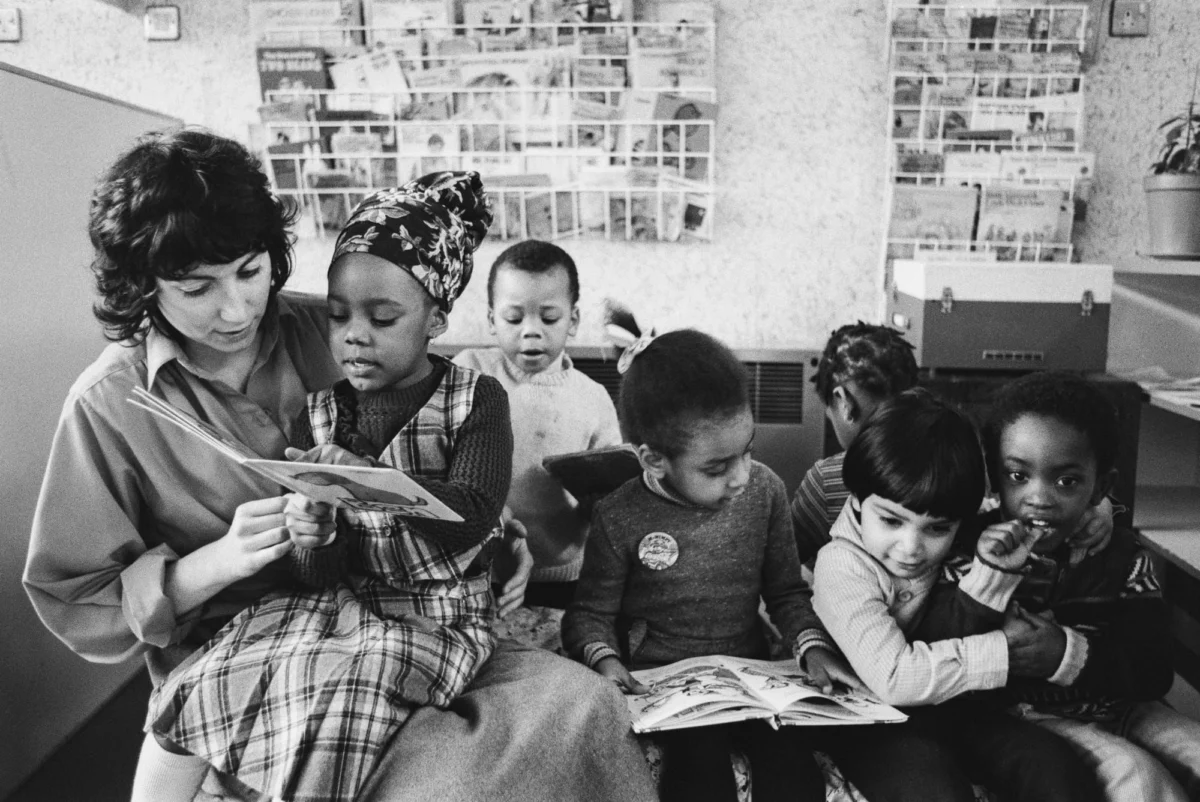
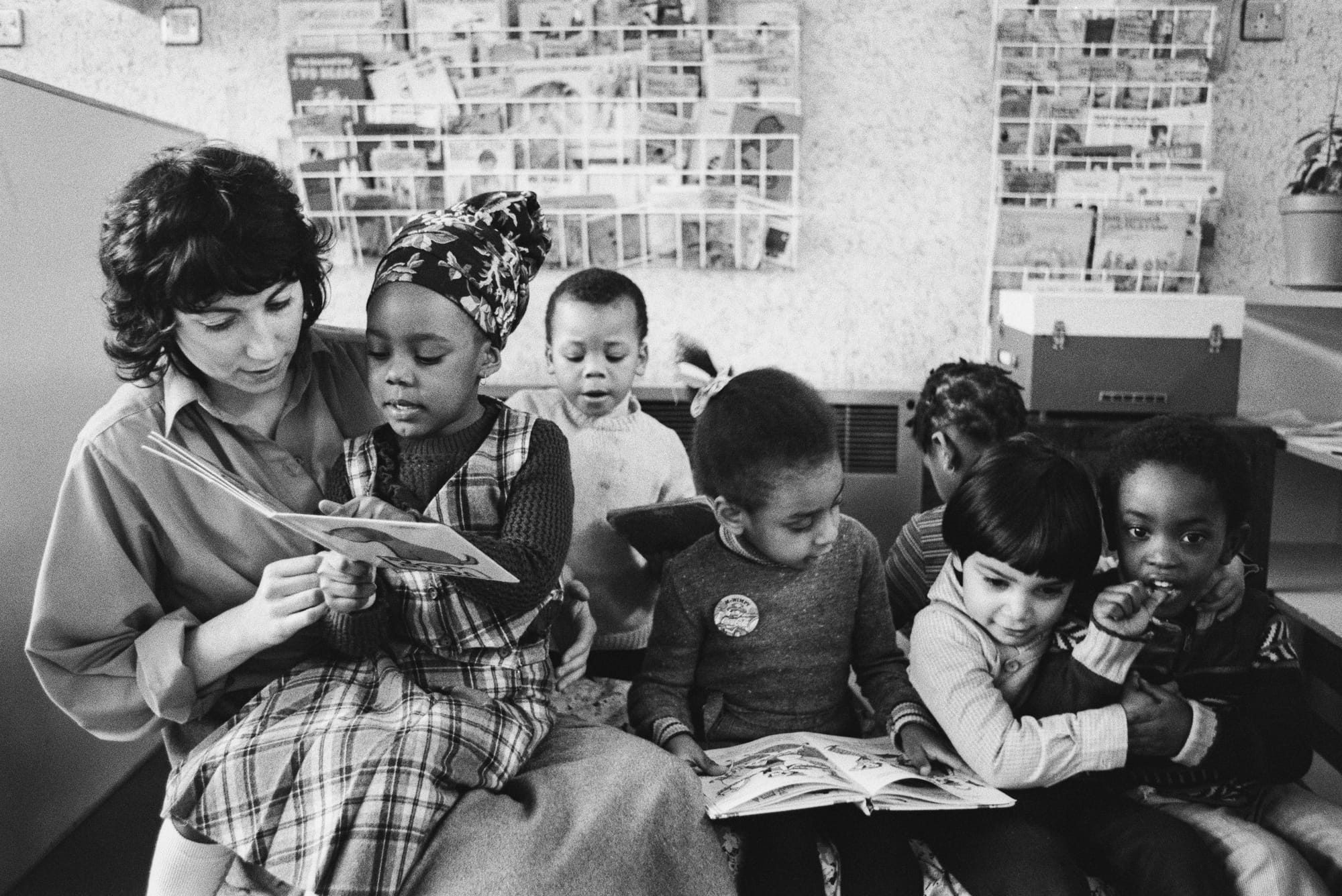
Whether framing elderly receptionists at BlindCraft—a specialized bed factory staffed entirely by visually impaired individuals—or children casually drawing geometric patterns in the sand at Portobello Beach, George balanced rawness with deep empathy. Her photographs bypass cliché, presenting the working class not as passive victims of economic policy, but as active agents crafting their own vibrant social fabrics.
Official Responses and Curatorial Perspectives
The unveiling of Sandra George: Start from the Level has drawn critical acclaim from arts organizations and festival organizers who emphasize the urgent contemporary relevance of her archive.
Representatives from Craigmillar Now, who partnered closely to bring the exhibition to fruition, have highlighted the importance of returning George’s work directly to the communities that inspired it. By anchoring the retrospective within the Edinburgh Art Festival, organizers have successfully framed local Scottish history within a broader, national dialogue on race, class, and representation in Britain.
Cultural commentators have drawn direct parallels between George’s artistic ethics and contemporary conversations surrounding documentary accountability. In an era where image-making is increasingly democratized yet prone to digital exploitation, George’s mandate to "Start from the level that people are based" serves as a timeless ethical compass for photographers, documentarians, and visual artists alike.
Implications: Why Sandra George Matters Today
As global economic inequality deepens—with wealth gaps in both the United Kingdom and the United States widening significantly since the peak of George’s career—the socioeconomic pressures that she documented have only intensified.
The rediscovery of Sandra George is not merely an exercise in art-historical retrospection; it is a vital call to action. Her photographs challenge contemporary viewers to interrogate their own assumptions about poverty, community, and human worth. By refusing to aestheticize suffering and instead choosing to highlight mutual aid, creative resilience, and uncompromising dignity, George’s legacy offers a blueprint for how art can bear witness to injustice without stripping its subjects of their agency.
As the exhibition at the City Art Centre concludes its run this September, the challenge for cultural institutions is clear: to ensure that pioneering artists from minoritized backgrounds who documented the social fabric of modern Britain are permanently integrated into the national narrative. Sandra George’s voice was quiet during her lifetime, but through Start from the Level, it rings out with unmistakable, enduring clarity.
 Neng Nana
 Ali Ikhwan
 Basiran
