

The world of Gilead, as established in Hulu’s seminal adaptation of Margaret Atwood’s The Handmaid’s Tale, is perhaps one of the most visually distinct landscapes in modern television history. Defined by its oppressive shadows, stark symmetries, and, most iconically, the piercing, blood-red robes of the Handmaids, the series set a high bar for thematic cinematography. However, as the franchise transitions into its highly anticipated sequel series, The Testaments, a new creative mandate has emerged: to revisit this terrifying theocracy without merely duplicating its established aesthetic.
During IndieWire’s 2026 Craft Roundtable for cinematography, Greta Zozula, the cinematographer tasked with bridging the gap between the two series, revealed the radical shifts in tone and color that define the new show. Her approach marks a departure from the claustrophobia of the original series, opting instead for a visual language that reflects a new generation’s perspective on a world they have never known to be any different.
Main Facts: A Post-Red Gilead
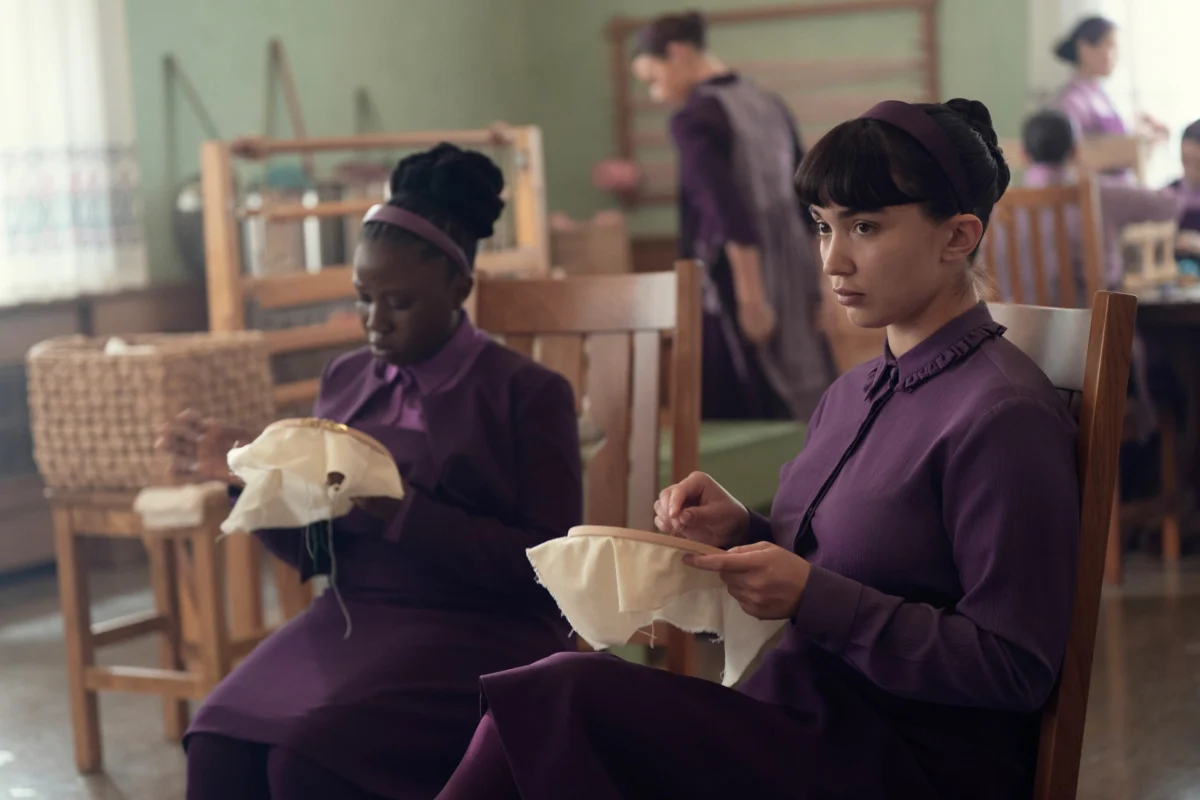
The most striking revelation from Zozula’s discussion is the intentional abandonment of the color red—the very hue that became a global symbol of resistance and female subjugation through June Osborne’s (Elisabeth Moss) journey. In The Testaments, the visual hierarchy is being rebuilt from the ground up.
The Removal of the Iconic Red
“The initial conversations were really about tone and color. Color was a big thing,” Zozula explained during the roundtable. “When you think of handmaids, you think of red, and that was the color that we completely got rid of.”
This decision is not merely aesthetic; it is deeply rooted in the narrative shift of the sequel. While The Handmaid’s Tale focused on the generation of women who remembered the "Time Before" and were forcibly transitioned into the roles of Handmaids, The Testaments—based on Atwood’s 2019 novel—shifts the focus to those who have grown up within the system. By removing the visual dominance of the Handmaids, the show signals that the era of June Osborne has given way to a more entrenched, normalized version of Gilead.
A Softer, More Open Environment
In contrast to the high-contrast, often suffocating visuals of the original series, Zozula aimed for "more openness and a softer environment." This shift is designed to align the camera’s eye with the perspective of Agnes McKenzie (played by Chase Infiniti). Unlike June, who viewed Gilead through a lens of trauma and external loss, Agnes views it as her home. The cinematography, therefore, must reflect a sense of childhood innocence—however warped—and the mundane nature of living under a theocratic regime.
Chronology: From Resistance to Normalization
To understand the visual evolution of The Testaments, one must look at the timeline of the franchise’s development and the narrative leaps taken between the two series.

2017–2024: The Era of June Osborne
When The Handmaid’s Tale premiered in 2017, cinematographer Reed Morano set the visual template: shallow depth of field, intimate close-ups (the "June face"), and a color palette where the red of the Handmaids and the teal of the Wives popped against a desaturated, often gray-blue world. This era was defined by the shock of the new—the horror of a modern society collapsing into extremism.
2019: The Literary Shift
Margaret Atwood released The Testaments more than thirty years after the original novel. The book introduced a tripartite narrative structure featuring an older Aunt Lydia, a young woman in Gilead (Agnes), and a teenager in Canada (Daisy/Nicole). This expansion of the world demanded a broader visual scope that the television adaptation is now tasked with realizing.
2025–2026: The Production of ‘The Testaments’
Greta Zozula joined the production of the sequel series with the goal of establishing a "visual language" for the next chapter. Shooting six episodes of the first season, Zozula worked to ensure that while the geography of Gilead remained recognizable, the "feeling" of the space was fundamentally altered. Her work coincided with a broader shift in the television industry toward "prequel-sequel" storytelling, where visual continuity is often traded for stylistic evolution to keep long-running franchises fresh.
Supporting Data: The Cinematography of Perspective
The technical shift in The Testaments can be analyzed through the lens of "The Gaze." In cinematography, the way a scene is lit and framed dictates how the audience perceives the protagonist’s psychological state.
| Feature | The Handmaid’s Tale | The Testaments |
|---|---|---|
| Primary Color | Crimson/Red (Handmaids) | Naturalistic tones / Gilead Green |
| Lighting Style | High Contrast / Chiaroscuro | Softer, more diffused light |
| Camera Movement | Claustrophobic, handheld tension | More "open," stable compositions |
| Protagonist View | Adult Survivor (June) | Native Child (Agnes) |
| Thematic Focus | Trauma and Escape | Indoctrination and Discovery |
Zozula’s previous credits, including the coming-of-age film The Half of It and the character-driven Three Women, suggest a specialty in capturing internal emotional landscapes. By applying these skills to The Testaments, she moves the camera away from the "spectacle of suffering" and toward a more nuanced exploration of how a repressive society shapes the identity of a child.
Official Responses: Creative Philosophy from the Craft Roundtable
The IndieWire Craft Roundtable serves as a platform for the industry’s leading technical minds to discuss the "why" behind the "how." Zozula was joined by other prominent cinematographers and editors, highlighting a collective movement in television toward more experimental, character-first visual storytelling.
Zozula emphasized that the goal was never to "copy" what came before. "We wanted to create a different perspective entirely," she stated. This sentiment echoes the broader creative philosophy of showrunner Bruce Miller and the Hulu executive team, who have expressed a desire for The Testaments to stand as a standalone epic rather than just a "Season 6" of the original show.

The casting of Chase Infiniti as Agnes McKenzie was a pivotal factor in Zozula’s visual strategy. As a newcomer, Infiniti brings a raw, unfiltered energy to the screen. Zozula’s task was to frame this energy in a way that felt hopeful yet ominous—reflecting a girl who finds beauty in the only world she knows, even as the audience recognizes the darkness lurking beneath the "softer" lighting.
Implications: The Future of the Gilead Franchise
The visual pivot of The Testaments has significant implications for how audiences consume dystopian media in the late 2020s.
1. The Normalization of Dystopia
By making Gilead look "brighter" and "softer," the series may actually be creating a more terrifying version of the theocracy. When horror is presented in harsh shadows, it is easy to identify. When it is presented in the "openness" of a sunny afternoon, it suggests that the regime has successfully integrated itself into the fabric of everyday life. This reflects a shift in political storytelling from the "shock of the coup" to the "stagnation of the regime."
2. A New Visual Standard for Sequels
Zozula’s work provides a blueprint for how to handle "legacy" cinematography. Instead of being beholden to the filters and framing of the 2017 original, The Testaments proves that a sequel can—and perhaps should—evolve its look to match the evolution of its characters. This approach allows the franchise to age with its audience and its narrative.
3. The "Agnes McKenzie" Lens
The shift toward Agnes’s perspective suggests that The Testaments will be a more internal, psychological journey than the often action-oriented later seasons of The Handmaid’s Tale. The cinematography will likely focus on the "cracks in the porcelain"—the small, visual inconsistencies that lead a true believer to start questioning their reality.
Conclusion
As The Testaments prepares to make its debut on Hulu, the work of Greta Zozula stands as a testament to the power of cinematography in world-building. By "getting rid of the red," Zozula has not just changed a color palette; she has signaled a change in the very soul of the story. Gilead is no longer a prison to be escaped; for the characters of The Testaments, it is a world to be navigated, understood, and eventually, perhaps, dismantled from within.
The brighter, softer visuals of this new era do not promise a kinder Gilead, but rather a more complex one—a world where the most dangerous things are not found in the shadows, but in the clear, uncompromising light of day.
 Jia Lissa
 Iffa Jayyana
