

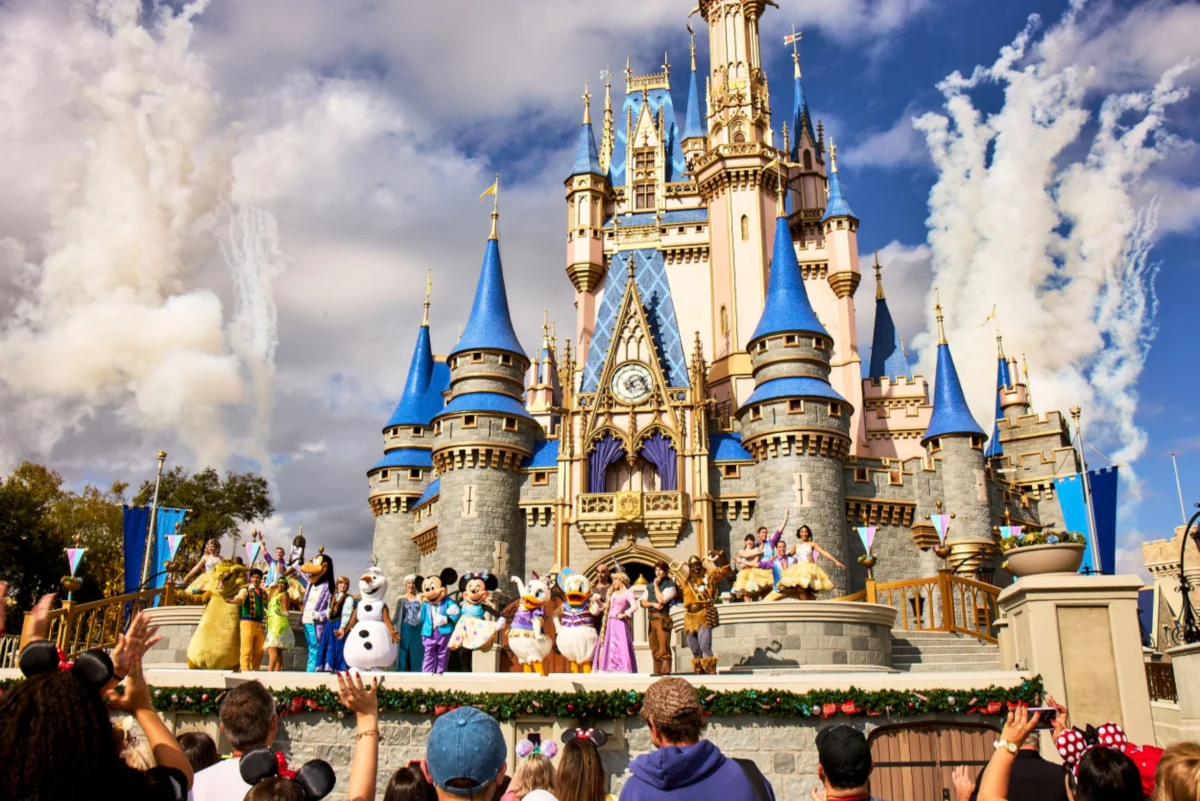
For the lifelong devotee of the original Disneyland in Anaheim, stepping into the sprawling, multi-park ecosystem of Walt Disney World in Orlando feels less like a vacation and more like a tactical deployment. As a parent to seven-year-old Julian and five-year-old Paloma, I entered the gates with a singular directive: do not compare the two. Yet, comparison is the inevitable engine of human judgment, and as a West Coast native accustomed to the quaint, claustrophobic intimacy of our local Magic Kingdom, the sheer scale of the Florida resort—a self-governing municipality stitched together by highways, monorails, ferries, and skyways—felt less like a theme park and more like a logistics marathon.
The Core Reality: Navigating the Disney Scale
When enthusiasts call Disney World a "city," they aren’t speaking metaphorically. With six distinct parks and dozens of resort properties, the scale is designed to overwhelm. For those raised on the compact charm of California’s original park, the Florida iteration demands a shift in mindset. It is not a place you visit; it is a place you inhabit.
The skepticism that often surrounds Disney—the critique that it is too corporate, too expensive, or too crowded—is valid. But to dismiss it is to ignore its singular, potent achievement: the ability to manufacture genuine wonder. That magic is not reserved solely for children; it is accessible to adults, provided they possess the self-awareness to stop pretending they are above the artifice.
Chronology of a Three-Day Odyssey
Our mission was ambitious: three parks in three days. The primary enemy was not the heat or the crowds, but the dreaded West Coast jet lag.

Day One: Magic Kingdom and the "Rope Drop" Philosophy
While I am a firm believer in the "rope drop"—the practice of arriving 15 to 30 minutes before official opening to beat the queues—the realities of traveling with young children meant we were perpetually behind schedule. However, by leveraging our stay at Disney’s Contemporary Resort, we managed to navigate the park with relative efficiency.
The day was a series of small, hard-won victories. A lost shoe during a ride on Pirates of the Caribbean—a mystery that remains unsolved—led to an unexpected interaction with a "cast member" who provided a replacement pair of Mickey Crocs, turning a potential crisis into a core memory of kindness. We capped the evening with a ride on The Magic Carpets of Aladdin. At 9:30 p.m., as we ascended into the air, the park’s fireworks display ignited, providing a private, sky-high view that felt orchestrated just for us.
Day Two: The Epcot Evolution
I approached Epcot with low expectations, having been told it was "sleepier" and more adult-oriented. I was wrong. Epcot acts as an eternal World’s Fair, a surreal, optimistic, and expansive journey through global culture. While my partner, Adam, and our son gravitated toward the high-octane Guardians of the Galaxy: Cosmic Rewind, I found solace in the World Showcase.
We indulged in the unofficial adult pastime of "drinking around the world"—though with more restraint than the partying crowds surrounding us. We found refuge in the dark, cool air of La Cava del Tequila within the Mexican pavilion. It is a venue that would hold its own in any metropolitan city, offering a moment of respite while our children slept in a rented double stroller. When the Florida sky inevitably opened up for a torrential downpour, leaving us soaked to the bone, I found that my enchantment with the park remained intact.

Day Three: Hollywood Studios and the Thrill of the Flow
By our final day at Hollywood Studios, we finally hit our stride. We achieved the "rope drop," granting us access to the Slinky Dog Dash before the wait times ballooned to nearly two hours.
The highlight, however, was the immersion into Star Wars: Galaxy’s Edge. Having visited the California version, I knew what to expect, yet the scale here remains staggering. Rise of the Resistance—a $500 million technical marvel—remains the apex of modern theme park engineering. Yet, it was the quieter moments, such as the atmosphere of Oga’s Cantina, that truly resonated. Sipping a "Carbon Freeze" mocktail while surrounded by droids and intergalactic décor, the barrier between adult cynicism and childhood imagination finally dissolved.
Supporting Data: The Mechanics of the Trip
A Disney World vacation is, by any metric, an intensive labor. By the end of our three-day run, we were averaging 20,000 steps daily. The physical toll, coupled with the inevitable meltdowns, necessitates a strategic approach.
- Logistics: The use of Lightning Lane passes is non-negotiable for families. These digital tools allow for the circumvention of standard lines, turning hours of waiting into hours of experience.
- Accommodations: Staying at an on-property resort like the Contemporary is a strategic advantage. It allows for the "mid-day reset"—the ability to retreat to the hotel for a nap or swim, which is essential for managing overstimulated children.
- Planning: Involving children in the planning process using park maps and height-requirement lists does more than just organize the trip; it builds anticipation, which serves as a crucial buffer when the reality of crowds sets in.
Official Perspectives on the "Disney Magic"
Disney’s success is not merely in its rides, but in its management of the human experience. The "cast members" are trained to maintain a shared illusion. They speak of Mickey Mouse not as a brand asset, but as a mutual friend.

According to industry analysts, Disney’s "quietest achievement" is the deliberate collapsing of the distance between parent and child. By engineering an environment where both generations share the same goal, the same mythology, and the same wonder, the park creates a rare alignment. As I noted in my journal, this is not just spectacle; it is an ancient form of mythmaking, updated for the 21st century.
Implications: The Multi-Generational Legacy
The decision to bring children to Disney World is often debated, but the underlying motivation is frequently rooted in legacy. My mother took me to Disneyland because her parents had taken her. I now take my children to Disney World, not for the sake of the rides, but for the rare alignment of excitement and delight that the environment fosters.
The takeaway from such a trip is not found in the line times or the cost of the snacks; it is found in the moments where the parent and child are truly, deeply present in the same story.
Expert Recommendation for First-Timers
For those planning their own excursion, the consensus is clear: do not go in blind. The complexity of the Disney World infrastructure requires either significant research or professional guidance. We worked with Michelle Allen of Travel Magic, whose expertise in booking entry times and navigating the complex landscape of resort properties was the difference between a chaotic trip and a successful one.

In conclusion, a Disney World vacation is an exercise in surrender. It is loud, it is expensive, and it is exhausting. Yet, if you are willing to let go of the need for total control and lean into the engineered joy of the experience, it remains one of the most effective ways to manufacture shared wonder in an increasingly fractured world. It is, against all odds, entirely, undeniably epic.
 Asro
Asro
 Siti Muinah
