LONDON — In the upper echelons of ultra-high-net-worth (UHNW) lifestyle management, the definition of luxury is undergoing a fundamental transformation. For decades, the industry standard was defined by the classic concierge model: a single, generalist assistant on speed dial, ready to secure a last-minute table at a Michelin-starred restaurant, orchestrate front-row tickets to a sold-out show, or arrange a private jet at a moment’s notice. It was a business built entirely on the currency of access.
However, as the wealth management and lifestyle sectors mature, that paradigm is shifting. Consumers who command immense fortunes no longer struggle merely to gain entry into exclusive spaces; their challenge is distilling an overwhelming sea of choices into what is genuinely meaningful, restorative, and tailored to their exact ethos.
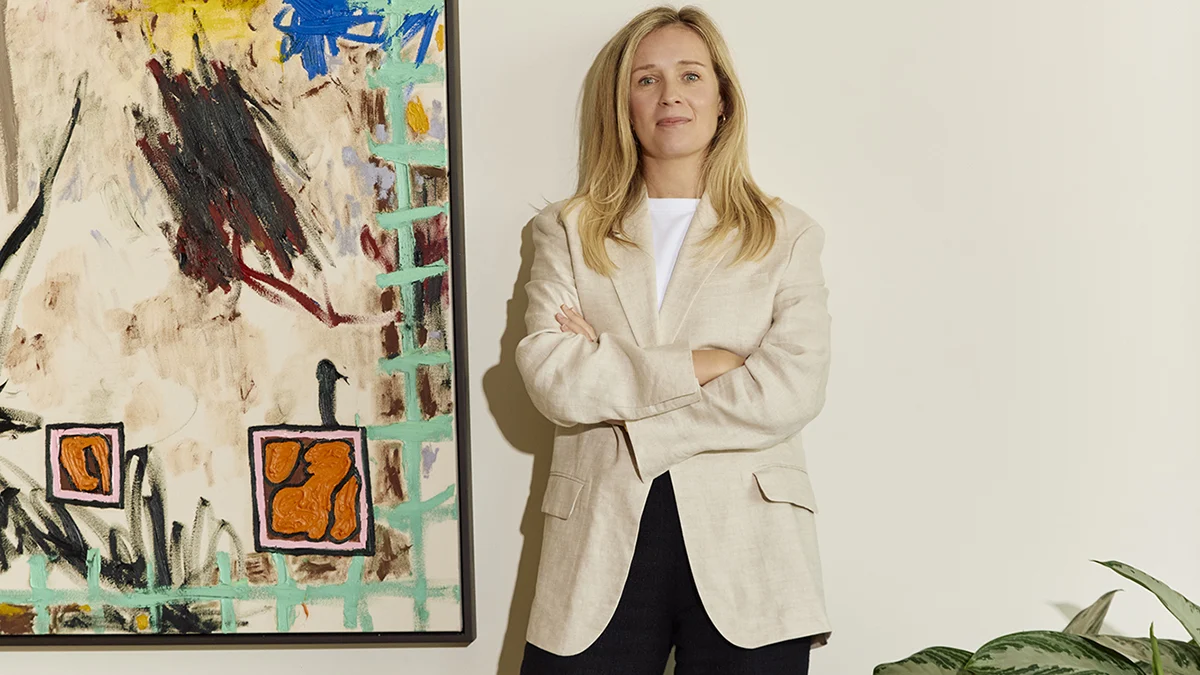
Reflecting this evolution, London-based lifestyle firm Calder and Co has officially announced it is dropping the "concierge" moniker entirely. Founded in 2021 by industry veteran Laura Fursdon—who brings two decades of experience working exclusively with UHNW clientele—the firm is repositioning itself as a private office. While the rebrand might appear subtle on the surface, it signals a major industry pivot toward hyper-personalized service, holistic asset management, and a radical departure from the generalist-for-hire model.
Main Facts
The core of Calder and Co’s operational model rejects the traditional reliance on a single point-of-contact generalist. Instead, the firm provides members with a dedicated board of global specialist advisors.
The Collective Expertise Model: Rather than forcing one individual to manage every facet of a client’s life, Calder and Co deploys a multidisciplinary board whose members are recognized leaders in discrete industries: aviation, maritime/yachting, automotive, high-end dining, culture, and physical or mental well-being.
The Rebrand: Moving away from the "concierge" label, the firm now operates explicitly as a private office, bridging the gap between bespoke lifestyle curation and family office support.
Membership Economics: Annual membership fees start at £25,000 (approximately $33,700 USD). Rather than a rigid, bureaucratic vetting protocol, acceptance relies on an in-depth introductory dialogue assessing a candidate’s passions, unfulfilled wishlist items, and operational pain points.
Scope of Service: The firm covers everything from superyachts and off-market alpine chalets to private islands, while deliberately steering clear of direct financial investments, choosing instead to focus on lifestyle assets and family office coordination (such as managing yacht and jet crews).
Chronology of Evolution: From Access to Curation
To understand why Calder and Co is shedding its old title, one must look at how the luxury service market has transformed over the past quarter-century.
The Early 2000s: The Era of Access
At the turn of the millennium, high-net-worth lifestyle firms built their empires on exclusivity. The primary value proposition was simple: Can you get me in? Wealthy clients sought out agencies that could penetrate velvet ropes, source rare goods, and manage logistical friction. The concierge was a gatekeeper, and the industry thrived on the sheer scarcity of information and connections.
2021: The Birth of Calder and Co
Recognizing that globalized digital access and hyper-connected networks had largely democratized basic luxury logistics, Laura Fursdon established Calder and Co in London. The founding thesis was that modern affluent clients did not need someone to Google reservations or book standard commercial flights; they needed seasoned judgment. Fursdon engineered a framework where clients were assigned a collaborative board of experts rather than a single overworked assistant.
2024–2026: The Shift to the "Private Office"
After five years of refining this collective-expert model—and boasting remarkably high client retention rates—Fursdon and her leadership team determined that the term "concierge" no longer accurately described their scope of work. By officially rebranding as a private office, Calder and Co is aligning its identity with its operational reality: acting as a deeply integrated, strategic partner in a client’s daily existence.
Supporting Data and Real-World Applications
To appreciate how Calder and Co’s multidisciplinary board operates in practice, one must examine the granularity of its commissions. The firm’s value lies not in executing isolated requests, but in synthesizing seemingly unrelated passions into cohesive, restorative experiences.
Case Study 1: The Petrolhead’s Rejuvenation
Consider a recent request from a highly successful entrepreneur whom Fursdon describes as a "total petrolhead." The client approached the firm simply needing a weekend away to escape intense professional pressures and recharge.
A traditional concierge might have booked a high-end luxury spa resort and arranged airport transfers. Recognizing the client’s psychological and physical makeup, however, Calder and Co’s wellness and automotive advisors collaborated on a vastly different prescription. They secured a secluded private villa in Mallorca and had the client’s personal motorcycle shipped and waiting in the driveway.
"He was able to ride around the Mallorcan hills and have that adrenaline and rejuvenation that he needed," Fursdon notes.
By understanding that true relaxation for this individual involved mechanical adrenaline rather than silent meditation, the firm delivered an outcome that a generalist could never have conceptualized.
Case Study 2: The Deep South Cultural Odyssey
In another ongoing project, the team is organizing an immersive road trip through the American Deep South for a client deeply passionate about automobiles, culinary arts, and music.
This itinerary showcases how different advisory verticals intersect within the firm:
Automotive Experts curate the driving routes and vehicle logistics.
Dining Specialists secure tables at the finest regional establishments along the trajectory.
Culture and Entertainment Advisors arrange private, behind-the-scenes recording studio tours and facilitate private meet-and-greets with the client’s favorite legacy musicians prior to their live performances.
Onboarding Strategy: Replaces corporate vetting committees with a diagnostic conversation focusing on unfulfilled aspirations, family dynamics, and executive bottlenecks.
Client Loyalty: According to leadership, the firm enjoys an exceptionally high renewal rate, pointing to the stickiness of a service model that treats the client as a multi-dimensional puzzle rather than a transaction list.
Official Perspectives and Industry Commentary
In an exclusive interview with Robb Report, Laura Fursdon elaborated on the philosophical underpinnings of the rebrand and the changing expectations of the ultra-wealthy.
"If we’re thinking about the early 2000s, it was very much about access," Fursdon explained during a Zoom briefing. "But, as time has gone on, we feel that it’s less about access and more about what’s right for a particular person."
This perspective highlights a core truth about modern wealth: abundance can be burdensome. When capital is no longer a limiting factor, decision fatigue sets in. Clients are constantly bombarded with choices regarding where to travel, what assets to acquire, and how to spend their limited leisure time. Calder and Co’s response is to substitute endless optionality with authoritative curation.
"Our whole ethos is being experts in our members," Fursdon added, emphasizing the psychological depth required of modern private advisors, "and having the judgment to be able to advise them properly."
Furthermore, Fursdon detailed how the firm interacts with traditional financial structures without overstepping boundaries:
"Members might come to us for advice on who should run or manage their jets and their yachts, and that feeds into the family office support. So we do work very closely with family offices in that way, but we stay clear of our members’ actual investments."
Implications for the Luxury Service Sector
Calder and Co’s strategic pivot away from the concierge title is likely to spark a broader trend across the global luxury service landscape. Several key implications emerge from this rebrand:
1. The Demise of the Generalist Assistant
As artificial intelligence and automated digital platforms assume control over baseline transactional tasks—such as standard flight bookings, hotel reservations, and routine calendar management—human concierge services relying purely on execution face obsolescence. Firms must evolve into advisory bodies possessing deep, vertical-specific domain expertise to justify premium membership fees.
2. Convergence of Lifestyle Management and Family Offices
Ultra-high-net-worth individuals increasingly demand seamless communication between their financial managers, legal counsel, and lifestyle handlers. By adopting the "private office" designation, Calder and Co explicitly signals its readiness to integrate with existing family office infrastructure—handling the physical manifestations of wealth (yachts, aviation, residences, wellness) while traditional institutions manage the balance sheet.
3. Redefining Hyper-Personalization
True personalization is shifting from cosmetic customization (e.g., monogrammed luggage or welcome champagne) to behavioral architecture. By deploying specialized advisors who "live and breathe" their respective industries, firms like Calder and Co are proving that luxury management is becoming an applied science of human psychology and lifestyle optimization.
As the industry moves forward, the message from London is clear: in an age where anyone can access anything with the tap of a screen, the ultimate luxury is no longer access—it is expert guidance on what truly matters.




 Evan Lee Salim
 Asep Darmawan
 Laily UPN
