

By Tomas Franzese
Published September 14, 2026
Main Facts
At BlizzCon 2026, Blizzard Entertainment officially pulled back the curtain on Diablo 5, announcing a sweeping design pivot for the franchise’s next major entry. Marking a major departure from its predecessor, Diablo 5 will reintroduce procedural generation for its overworld, moving away from the static, unchanging map structure that defined Diablo 4.
During a developer Q&A panel attended by Polygon, game director Joe Shely and executive producer Matt Zitterman addressed player criticisms head-on, admitting that Diablo 4’s open world ultimately lacked long-term replayability regarding exploration. Furthermore, Blizzard confirmed a massive quality-of-life win for hardcore fans: a fully functional overlay map will be available on day one, addressing one of the community’s longest-standing grievances from the previous launch.
Diablo 5 is currently slated for a 2029 release, and early details suggest the title is leaning heavily into the classic, dark-fantasy roots of Diablo 2 and Diablo 3 while applying decades of technical evolution to modern hardware.
Chronology and Evolution of the Franchise’s World Design
To understand why Diablo 5’s design shift is such a seismic moment for the community, it helps to look backward at how Blizzard has handled Sanctuary across the decades:
- The Golden Age of Randomization (Diablo II & Diablo III): For years, the franchise relied on procedural generation not just for dungeons, but for outdoor expanses as well. Every time a player booted up a session or created a new character, the connections between waypoints, fields, and zones shifted. While this occasionally led to frustrating navigation, it meant that the thrill of discovery never truly faded.
- The MMO-Lite Shift (Diablo IV): When Diablo 4 entered development, Blizzard pivoted toward a shared-world, live-service framework. To accommodate multiplayer events, world bosses, and smooth social interactions, the team opted for a completely static open world.
- The "One and Done" Realization (2023–2026): While Diablo 4’s map was lauded for its artistic design and dense atmosphere during the initial campaign playthrough, it quickly stagnated. Once players cleared the fog of war across the open regions, subsequent playthroughs and seasonal resets offered zero geographical surprises.
- The BlizzCon 2026 Announcement: Recognizing the limits of a static environment, Blizzard announced that Diablo 5 will return to its randomized roots, using an advanced tile-based system to keep the overworld fresh, unpredictable, and genuinely dangerous.
Supporting Data: Addressing Repetition and Technical Hurdles
One of the most immediate concerns raised by the gaming community whenever procedural generation is mentioned—particularly in the wake of recent titles like Bethesda’s Starfield—is the risk of repetitive environments, copy-pasted structures, and visual fatigue.
When questioned about how Blizzard plans to prevent Diablo 5 from falling into the trap of monotonous, algorithm-generated layouts, the development team expressed deep confidence in their proprietary tech stack.
According to Joe Shely, the team is heavily focused on striking a delicate balance:
"Part of it is creating a balance between having an area of the world have some identity so that you have something that makes it like a place, but also have elements that can be different. So there’s a balance between those two things that creates that sense [that] it’s not just like we grabbed a pile of blocks and dumped them out on the floor and that’s what you get. It’s intentional."
Backing this up, executive producer Matt Zitterman noted that the underlying architecture powering this system isn’t being built from scratch. Instead, it is an evolution of procedural frameworks the studio has been iterating on since the days of Diablo 3. Blizzard has promised a deeper technical deep-dive into how these systems operate as the game gets closer to its 2029 release window.
Additionally, the introduction of a day-one overlay map is a vital technical and design concession. In a static world like Diablo 4, a traditional mini-map and localized UI map sufficed. However, in a dynamically generated world where layouts constantly morph, relying solely on a corner mini-map would quickly become disorienting. Bringing back the classic full-screen overlay map on launch day proves that Blizzard is listening closely to veteran player feedback.
Official Responses and Developer Insights
The transparency displayed by Blizzard leadership during the BlizzCon 2026 press sessions was striking. Rather than brushing off the architectural shortcomings of Diablo 4, executives openly acknowledged where the team missed the mark.

Matt Zitterman candidly spoke about the psychological impact of map exploration on the player base:
"Players had so much fun in Diablo 4 unfurling the fog of war… That was an experience that was kind of one and done, right? But players want that. They want that sense of constant discovery."
Zitterman explained that watching players explore the eastern continent in Diablo 4 highlighted a glaring design paradox: the joy of discovery was brilliant, but finite.
"One of the reasons that we returned to the procedural world for Diablo 5 is because we saw that it was this great, amazing experience to explore what the full world of the eastern continent looked like in Diablo 4, but that was an experience that you really only were able to have once, and we wanted to be able to provide that as a more constant experience."
A Bleak New Setting: The Western Continent
The narrative backdrop of Diablo 5 directly informs its new structural design. In this installment, the western continent has entirely fallen under the absolute tyranny and control of Diablo himself. Because the region is entirely subjugated, players will not find traditional, thriving towns that can be permanently liberated and restored simply by clearing local demon nests.
Instead, civilization is on the move. Players and their crew will utilize a mobile caravan as their primary base of operations. Venturing out from this safe haven into the wild means stepping straight into the unknown, where both overworld zones and subterranean dungeons are dynamically generated using advanced tile systems.

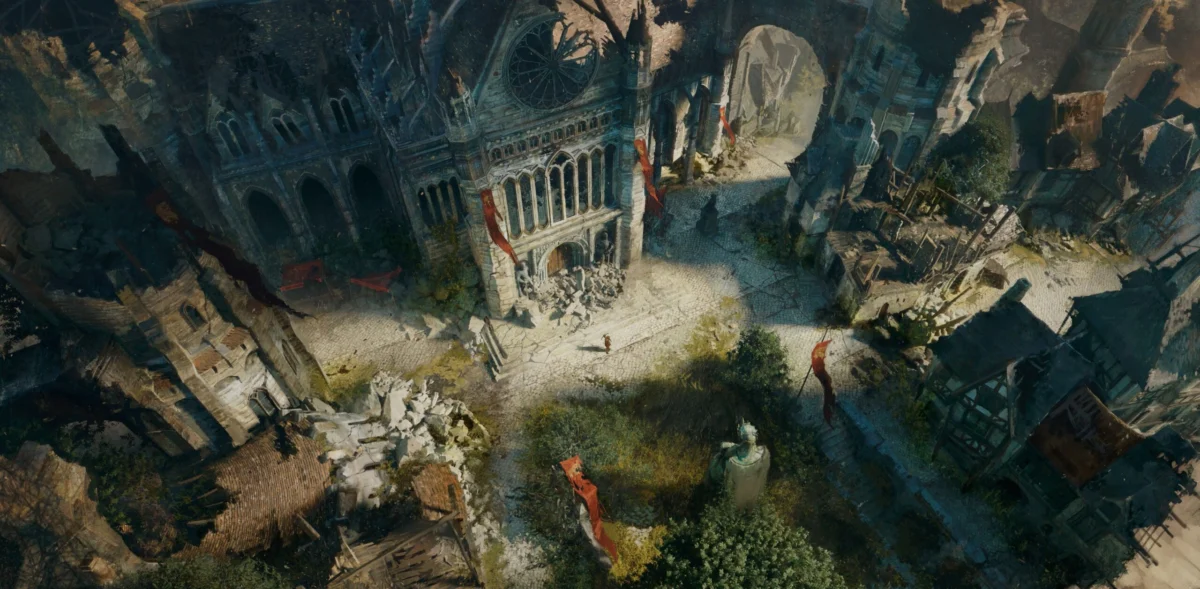
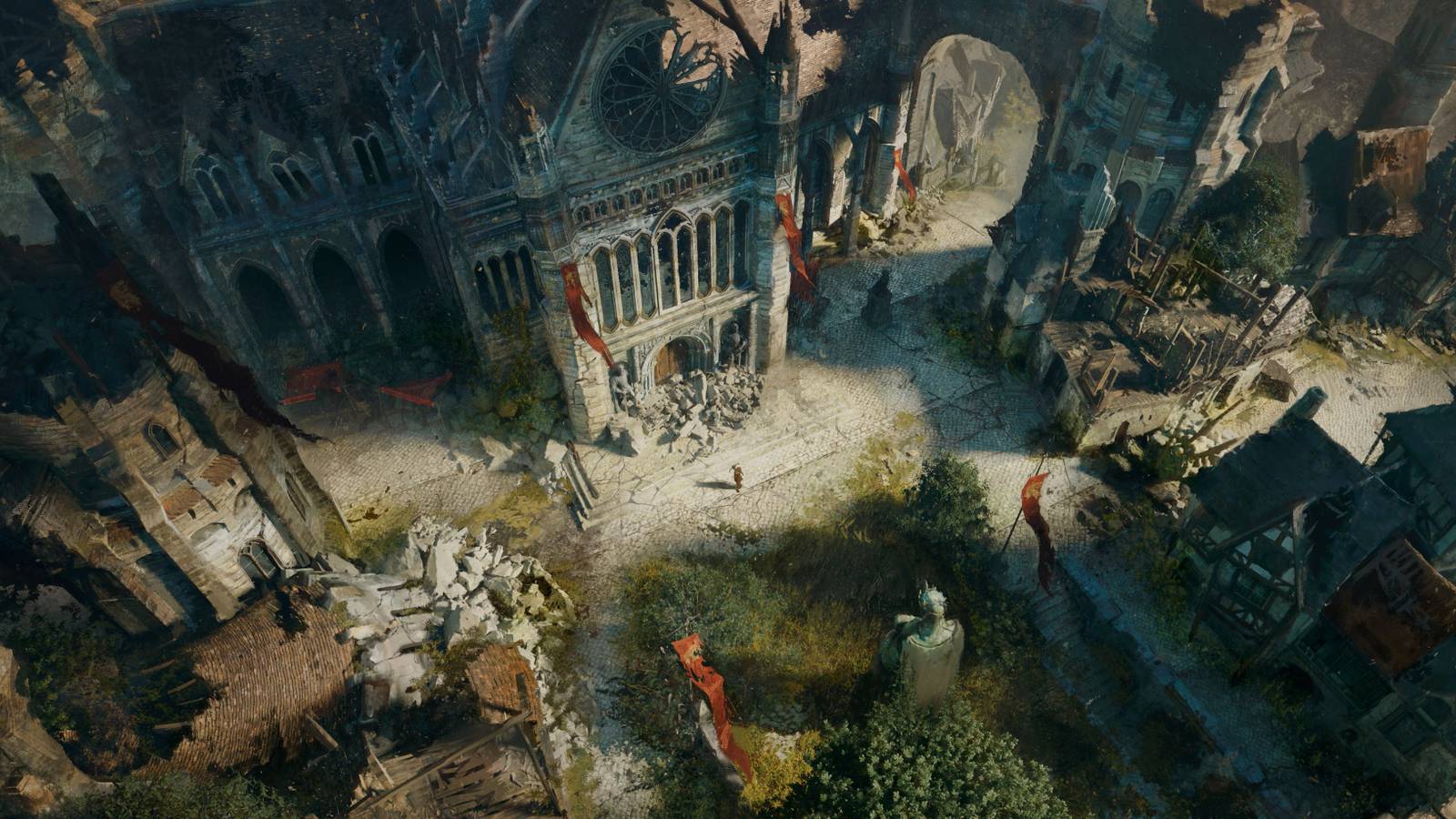
These tiles dynamically alter encounters, enemy placements, and loot containers based on the current political and supernatural state of the region. For instance, if a specific territory happens to be under the direct control of one of Diablo’s Dread Commanders, common landmarks will reflect that oppression—transforming ordinary ruins or structures, like a local church, into horrific, altered bastions of terror depending on active world states.
Broader Implications for the ARPG Genre
The pivot back to procedural generation in Diablo 5 carries significant implications not just for Blizzard, but for the entire Action RPG (ARPG) landscape.
For years, the genre has wrestled with a core identity crisis: how to balance the deep, narrative-driven pacing of a modern blockbuster campaign with the endless, highly repetitive endgame grind required by live-service loot-hunters. Diablo 4 leaned heavily into the former during its launch phase, treating its open world almost like a single-player adventure game map first, and an ARPG playground second.
By returning to randomization for Diablo 5, Blizzard is signaling a return to the ethos that made the franchise a household name. It acknowledges that an ARPG’s greatest strength isn’t necessarily cinematic permanence, but rather infinite replayability. If every time a player logs in, the map layout shifts, the path to the next dungeon changes, and the world state reacts dynamically to the player’s progression, the moment-to-moment gameplay loop remains inherently exciting.
As the industry looks ahead to Diablo 5’s scheduled launch in 2029, fans and competitors alike will be watching closely to see if Blizzard can successfully merge modern technical fidelity with old-school randomization. If successful, it could redefine what players expect from the open worlds of next-generation role-playing games.
 Basiran
 Nana Muazin
 Layla Zulfa
