

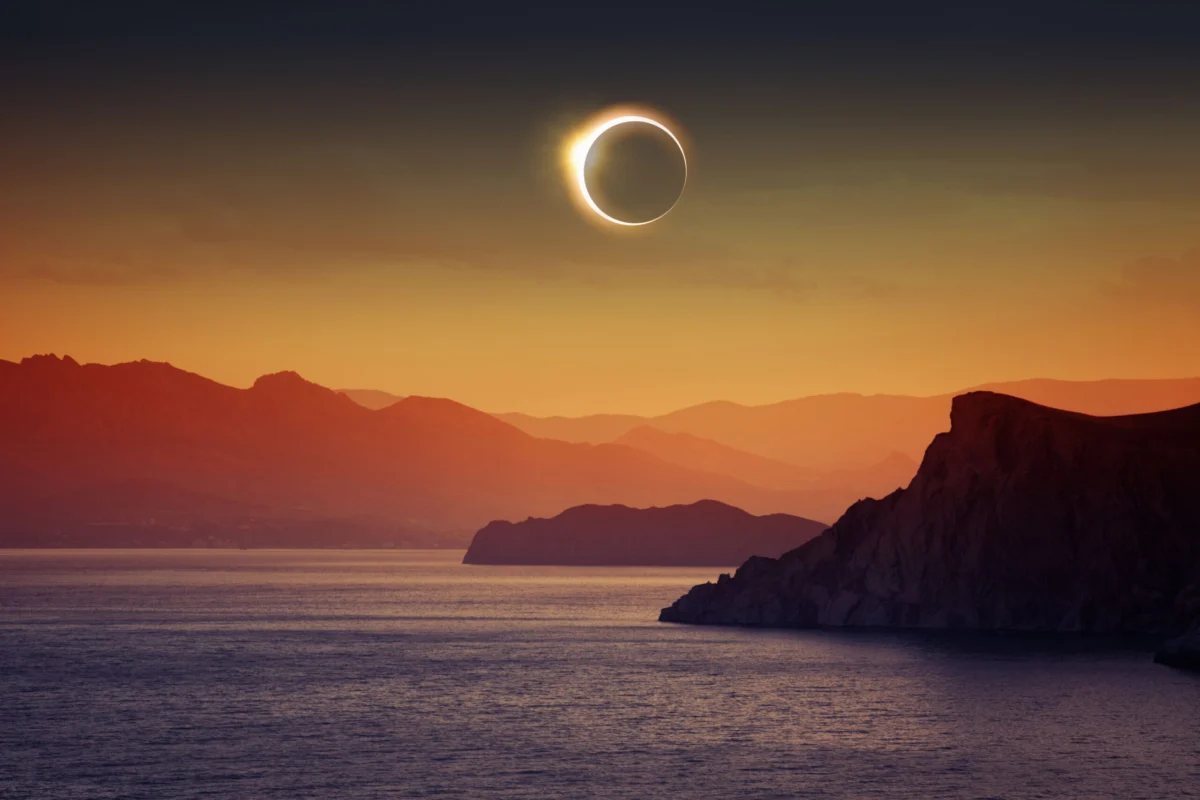
On August 12, 2026, the Iberian Peninsula will serve as the world’s most prestigious stage for a celestial event of historic proportions. For the first time in over a century, a total solar eclipse will sweep across Northern Spain, carving a path of darkness through the heart of the country. As the moon aligns perfectly between the Earth and the sun, approximately 40% of Spain will fall under the shadow of totality, transforming the nation into the global epicenter for astronomers, photographers, and curious travelers alike.
This rare phenomenon—the first of its kind in Spain since 1905—will offer more than just a fleeting moment of darkness; it will provide a masterclass in atmospheric optics, occurring at an hour that promises to deliver some of the most dramatic visual conditions in recorded history.
Main Facts: A Once-in-a-Century Spectacle
A total solar eclipse occurs when the moon’s orbit perfectly intersects with the sun’s path, casting a shadow that turns high noon into dusk. While partial eclipses occur with some frequency, the "path of totality"—where the sun is completely obscured—is a narrow, coveted corridor. Spain’s 2026 path is exceptionally significant because it traverses diverse geography, from the rugged, verdant cliffs of the Atlantic coast to the sun-drenched, rolling plains of the interior and the crystalline waters of the Balearic Islands.
Cities such as A Coruña, Bilbao, Zaragoza, and Valencia are slated to experience 100% totality. Major metropolitan hubs like Madrid and Barcelona will witness an extraordinary 99% partial eclipse. Because August is statistically one of Spain’s sunniest months, the probability of cloudless skies is remarkably high, setting the stage for an unobstructed view of the solar corona—the sun’s outer atmosphere, which is usually hidden by the brilliance of the solar disk.
Chronology: The "Sunset Eclipse" Phenomenon
Unlike the 2024 North American eclipse, which reached its peak at the height of the day, Spain’s 2026 event is being dubbed the "sunset eclipse." The celestial alignment is timed for the early evening, with totality expected between 8:26 p.m. and 8:32 p.m. local time.
This timing introduces a unique set of challenges and opportunities. Because the eclipse will occur low on the horizon, the sun will be framed against the landscape rather than the zenith of the sky. This positioning enhances the potential for the "diamond ring" effect—a brief, dazzling burst of light as the final sliver of the sun vanishes or reappears—to be captured against the silhouette of a mountain range or a coastal lighthouse.
.jpg)
The Timeline of Totality
- Arrival: The shadow will first make landfall at the tip of the Iberian Peninsula in Galicia.
- Mid-Path: The eclipse will traverse the wide, sweeping plains of central Spain.
- The Finale: The shadow will travel through the Mediterranean coast and eventually across the Balearic Islands, marking the final stage of its path over Spanish territory.
Supporting Data: Navigating the Path of Totality
For eclipse chasers, strategy is everything. Because the sun will be hanging low in the west-northwest sky, the topography of the viewing location is critical. Unlike a midday eclipse, where a high mountain peak is ideal, this event requires a clear, unobstructed line of sight to the horizon.
Ideal Viewing Locations
- Galicia: As the point of entry, the rocky promontories of Cape Ortegal are highly recommended for their expansive Atlantic vistas. The Tower of Hercules in A Coruña and the Monte de San Pedro park provide elevated, horizon-facing platforms perfect for viewing the shadow as it arrives over the ocean.
- Cantabria: The sandbars of El Puntal near Santander offer an unobstructed western view. Playa de Langre is another prime destination where the beach’s orientation allows for a clear look at the setting sun.
- The Mediterranean & The Balearics: In cities like Valencia, the traditional beaches face east, which is suboptimal for this specific event. Consequently, local maritime outfitters are already reporting a surge in bookings for boat charters. A vessel in the Mediterranean offers the ultimate advantage: a 360-degree horizon and the ability to maneuver into the exact center of the shadow’s path. Mallorca, Menorca, and Ibiza are all within the path of totality, while Formentera will experience a deep partial eclipse, often accompanied by thinner, more manageable crowds.
Official Responses and Strategic Preparation
The Spanish government and regional tourism boards are treating the event as a massive logistics operation. Because the eclipse coincides with the peak of summer tourism, authorities are preparing for an unprecedented influx of visitors to rural and coastal areas.
Scientific institutions, such as the Instituto Geográfico Nacional (IGN), have been instrumental in disseminating safety data and precise geographic mapping to ensure that residents and tourists alike can witness the event safely. There is an emphasis on "astrotourism" infrastructure—ensuring that areas identified as "prime viewing spots" have the necessary waste management, traffic control, and emergency services to handle the expected surge in population.
Local tourism boards are also emphasizing the "Iberian Trio"—a sequence of three eclipses spanning from 2026 to 2028. This rapid-fire series of events is positioning Spain as the undisputed leader in European astrotourism, with the government investing in educational outreach to ensure the phenomenon is viewed as both a scientific opportunity and a cultural celebration.
Implications: A Scientific and Cultural Milestone
The 2026 eclipse is more than a tourist draw; it is a profound scientific opportunity. The Perseids meteor shower, one of the year’s most prolific, will occur in tandem with the eclipse. Because the eclipse will leave the sky darker than a standard sunset, the conditions for observing the Perseids will be exceptionally favorable, providing a "double feature" for amateur astronomers.
Safety Protocols
The primary concern for officials remains eye safety. The intensity of the sun, even at sunset, remains dangerous to the human retina. Experts are issuing a blanket directive: standard sunglasses—even expensive luxury brands—are insufficient. Only ISO 12312-2 certified eclipse glasses provide the necessary protection to view the sun directly.

Environmental Responsibility
With thousands of visitors expected to descend upon the Galician coast and the Balearic islands, local councils are stressing the "Leave No Trace" ethos. The delicate ecosystems of Spain’s coastal bluffs and rural plains are vulnerable to foot traffic. Visitors are urged to respect local closures, follow marked paths, and adhere to the guidance of local rangers and authorities who are managing the sites to prevent environmental degradation.
Cultural Etiquette
As Spain welcomes the world, the importance of local integration cannot be overstated. While English is widely spoken in urban centers, the 2026 event will draw crowds to small, traditional villages. Learning basic Spanish phrases—such as “Buenas tardes” (Good afternoon), “Por favor” (Please), and “Gracias” (Thank you)—is encouraged to foster a respectful relationship between visitors and the communities that are opening their doors to host this celestial event.
Conclusion: The Dawn of a New Era in Astrotourism
The 2026 total solar eclipse will be a defining moment for Spain. By combining the country’s natural beauty—its rugged lighthouses, golden beaches, and expansive plains—with the rare mechanics of a sunset eclipse, Spain is set to host an experience that will likely remain in the collective memory of the public for generations.
Whether you are a seasoned eclipse chaser planning to charter a boat in the Mediterranean or a casual traveler heading to the cliffs of Galicia, the key to a successful experience lies in preparation. By prioritizing a clear western horizon, securing certified protective eyewear, and respecting the local landscape, visitors can ensure that they are not merely watching the sky, but participating in one of the most magnificent natural displays on Earth. As the sun dips low and the shadow of the moon rolls across the Iberian landscape, Spain will truly become the center of the universe.
 Sagoh
Sagoh
 Asro
Asro
