

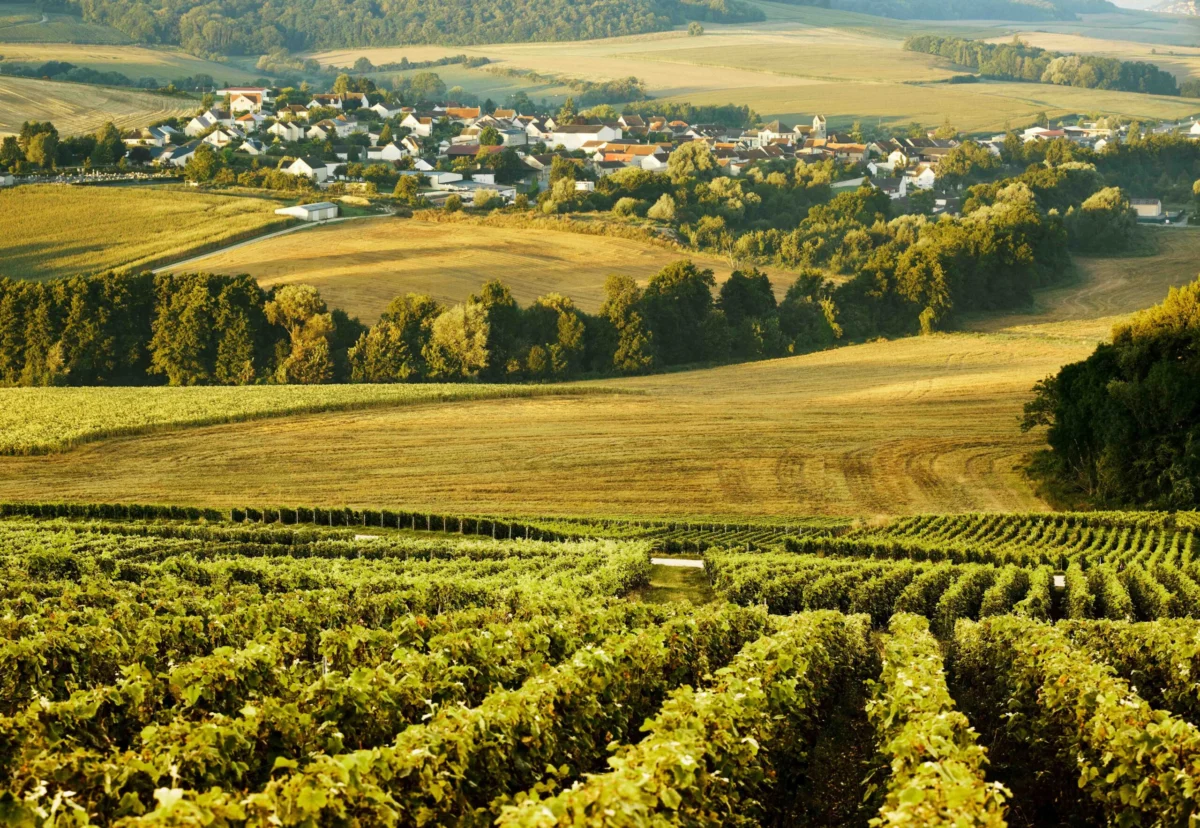
Marriage is often described as a joining of two lives, but for those who marry a sommelier, it is also a joining of two distinct sensory vocabularies. When my husband, Dan, and I planned our honeymoon, we chose a route that bridged our disparate backgrounds: a journey from the bustling, flavor-forward streets of New York City to the quiet, rolling, and storied vineyards of Champagne, France.
What began as a classic "wine tour" evolved into a profound meditation on how we perceive taste, memory, and the unspoken barriers that exist between the professional palate and the personal experience of flavor.
The Geography of Bubbles: A Journey to the Source
The Champagne region, located less than a hundred miles east of Paris, is a landscape defined by its undulating hills and a strict legal protection that ensures only sparkling wine produced within this specific appellation can bear its name. For a sommelier, this is hallowed ground. For a writer who grew up equating flavor with the visceral intensity of Szechuan peppercorns or the sharp tang of adobo vinegar, it was an education in restraint.
Our pilgrimage included visits to some of the most prestigious names in the industry. At Champagne Bollinger, a house established in 1829, we stood on the slopes of La Côte aux Enfants. The lore of the site—that the steep elevation once required children to aid in the harvest—was a stark reminder of the physical labor beneath the prestige. Even as we stood in the rain, sipping wine that offered faint notes of hazelnut and strawberry, I found myself less interested in the technical descriptors of the wine and more captivated by the cinematic, verdant geography of the region itself.

The Science of the Cellar: From Barrel to Glass
The backbone of the Champagne industry is, perhaps surprisingly, the infrastructure of aging. Our tours frequently led us away from the lush sunlight of the vineyards and into the cavernous, subterranean limestone cellars. These cool, stone environments are where the wine undergoes its transformation, often in barrels sourced from Burgundy—some of which have been in service for over a century.
The Role of the Cooper
The maintenance of these historic vessels is a specialized craft. Several houses employ a full-time cooper, an artisan dedicated to the manufacturing and replacement of individual staves. This level of dedication highlights a crucial fact: Champagne is not merely an agricultural product; it is a manufactured legacy.
However, as the days progressed, the relentless focus on technical history—the miniature models of estates, the biographical accounts of long-dead founders, and the obsessive documentation of label evolutions—began to take a toll. I found myself struggling with the "sommelier’s exam" of daily life. Dan, whose professional life involves distilling a complex cocktail into a singular, evocative phrase—“It reminds me of Froot Loops left in milk”—was looking for that same poetic precision from me. I, conversely, felt the weight of the expectation.
The Disconnect: Professional Palate vs. Personal History
A recurring theme in our courtship was the divergence in our sensory processing. Dan, a former bartender turned sommelier, views a drink as a puzzle to be solved. My palate, shaped by family dinners and a career in descriptive writing, is more concerned with the emotional resonance of a meal.

When we sat in the cellar of Bérèche et Fils, a family-owned grower, the experience was intimate and intense. We listened to the fermentation bubbling in the barrels, a sound so potent with carbon dioxide that we were warned against inhaling too deeply. When the tasting began—five distinct Champagnes—I felt a sense of inadequacy. I was tasting the best wine of my life, yet I had nothing "professional" to say.
The implication here is significant: Is there a "correct" way to taste? The pressure to identify "flint," "brioche," or "stone fruit" can strip the joy from the act of consumption. For many, the wine becomes a test rather than an experience.
Chronology of a Sensory Awakening
The arc of our trip can be categorized by the shifting focus of our sensory intake:
- Phase 1: The Romantic Prelude (Brooklyn/Paris): A focus on high-impact flavors—steak tartare, vibrant bistro dining, and the immediate enjoyment of wine as an accompaniment to life.
- Phase 2: The Technical Deep-Dive (Champagne): A period of fatigue induced by excessive education. The constant demand to "dissect" the wine led to a sensory overload and a growing sense of detachment.
- Phase 3: The Synthesis (The Return to Paris): The realization that flavor is inextricably linked to memory. The visit to Laïzé, a Taiwanese coffee shop in Paris, proved to be the turning point.
The Coffee Shop Epiphany: A Lesson in Subjectivity
On our final day in Paris, we stopped at Laïzé. The barista offered two distinct profiles: a floral Taipei blend and a fermented, "wine-like" Tainan blend. I ordered the latter, expecting a sommelier-style experience. Instead, I was hit with an overwhelming, nostalgic wave of stinky tofu—a dish my Taiwanese father loved, but one I had struggled to embrace in my youth.

When I asked Dan if he tasted it, he couldn’t. His lack of personal history with that specific, pungent ingredient meant he was physically incapable of identifying it. This was the epiphany: Flavor is not an objective reality; it is a manifestation of your personal archive.
Dan’s realization was equally profound: “It means that there’s something on your palate that I don’t have. It reminded you of something that I don’t know the same way.”
Implications: The Language of Memory
This trip, which began as an attempt to harmonize our tastes, ended by validating our differences. The professional training of a sommelier provides a language, but it is a universal, technical language. It lacks the idiosyncratic depth of the "imagistic reach into the past" that only personal memory can provide.
What Champagne Means Now
If I were asked today what Champagne reminds me of, the answer is no longer a list of fruit notes or mineral characteristics. It is the basement chill of the limestone caves; it is the "delicate electricity" of the bubbles; and it is the memory of standing in the rain, two months into a marriage, finding that our differences were not barriers, but the very things that made the landscape so rich.
.PNG)
Summary of Findings
- The Industry Perspective: Champagne is defined by its history, its strict appellation laws, and its reliance on traditional aging methods (barrels and underground cellars).
- The Sensory Perspective: While sommelier training focuses on objective identifiers, true flavor perception is deeply subjective and rooted in personal history.
- The Relational Perspective: The act of "tasting together" is a practice in vulnerability. By moving away from the need to be "right" about a vintage, one can reach a deeper, more emotional understanding of the beverage and the partner.
Ultimately, the lesson of our honeymoon was that we don’t need to taste the same thing to enjoy the glass. Whether it is the subtle acidity of a Bérèche et Fils or the fermented notes of a Taiwanese coffee, the value of the experience lies not in the dissection, but in the memories it helps us build. We may be a sommelier and a writer, but we are, first and foremost, two people finding a common language in the bubbles and the bitterness, the history and the present.
 Asro
Asro
 Siti Muinah
