

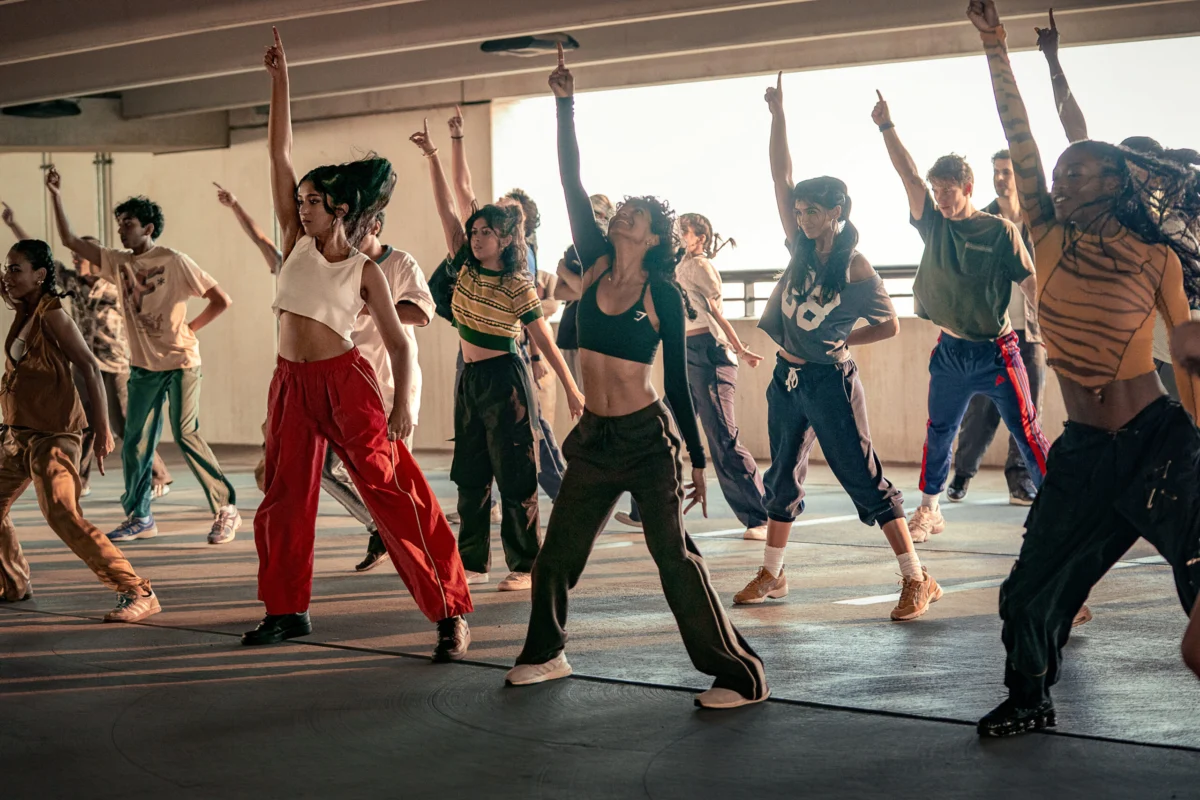
The world of collegiate Bollywood dance competitions is a realm of high-octane energy, blinding sequins, and, above all, an unyielding dedication to being "extra." In Netflix’s latest feature film, Best of the Best, this competitive ecosystem serves as the backdrop for a nuanced exploration of friendship, ambition, and cultural identity. While the film is visually spectacular, its true power lies in how it uses dance not merely as an interlude, but as the primary language for its characters’ emotional arcs.
The Narrative Pulse: Beyond the Bollywood Cliché
At the heart of the film is a fundamental creative tension. When freshman protagonist Maya (played by Maitreyi Ramakrishnan) challenges her UCLA team’s decision to pursue a traditional Bollywood wedding-themed routine, the conflict is not just artistic—it is generational and cultural. Maya argues that there is more to Indian heritage than the well-worn tropes of Bollywood cinema. However, Team Captain Ronak (Ankur Rathee) offers a vital counterpoint: being "extra" is not a deficiency; it is a manifestation of being fully alive.
This debate sets the stage for a film that dares to celebrate the spectacle of Bollywood while simultaneously dissecting the pressures of collegiate performance. The script, penned by the sharp duo of Hasan Minhaj and Prashanth Venkataramanujam, provides a blueprint for a story that succeeds because it refuses to treat its dance sequences as disposable. Instead, the choreography is designed to pay off the emotional promises made in the dialogue, a feat that required the film’s production team to essentially "cash a check" they wrote during the writing phase.

Chronology of a Production Miracle
The making of Best of the Best was a logistical marathon. Under the guidance of director Lena Khan, the production team relied on meticulous planning—including "mighty graphs" on Google Sheets and extensive PowerPoint presentations—to track the narrative arc of every character across their dance routines.
The choreography team, consisting of Phillip Chbeeb, Makenzie Dustman, and Joya Kazi, was brought in during the earliest stages of pre-production. This level of integration is a rarity in modern filmmaking, where choreographers are often brought in late to add "window dressing." In this production, the dance was the architecture of the film.
The process unfolded in distinct phases:

- Conceptual Mapping: Khan and the choreographers created a literal line graph mapping the relationships of characters like Maya and her best friend, Anjali (Priyanka Kedia). The goal was to visualize their transition from toxic codependency to a healthier, more supportive dynamic through movement.
- Musical Foundation: Working with music supervisor Kier Lehman, Khan insisted that the audience should be able to "listen to the movie." The soundtrack was crafted to feel vital and contemporary, acting as a bridge between South Asian traditions and the South Asian American experience.
- The "Glee" Constraint: Khan issued a strict mandate: the dance sequences could not feel like disconnected music videos. They had to be rooted in the character’s emotional reality, avoiding the polished, sterile feeling of disconnected set pieces.
- Visual Innovation: Cinematographer Adam Carboni was tasked with capturing this intensity under a blistering shooting schedule that allowed for only one or two takes per sequence.
Supporting Data: The Mechanics of the "Museum Heist"
The film’s climax—a high-stakes "British museum heist" routine centered on the retrieval of the Koh-i-noor diamond—is a masterclass in production design and technical precision. The sequence required the dancers to navigate massive, movable walls while executing complex, athletic choreography.
The technical requirements were staggering:
- Safety and Scale: Choreographer Joya Kazi prioritized the physical safety of the dancers, who were pushing heavy, complex sets around the stage. The team had to ensure these structures were both aesthetically significant and structurally sound.
- Lighting as Narrative: Cinematographer Adam Carboni utilized 50-watt static lasers to create an Ocean’s Twelve-inspired sequence. The dancers used yarn during rehearsals to track the trajectory of the light, ensuring that the final, permanent lasers would be captured with perfect timing.
- On-the-Fly Direction: With no time for long rehearsals, the choreographers acted as real-time directors on headsets, cueing spotlights and timing movements to the second. This "mini-miracle" approach allowed the team to capture emotional beats that felt raw and immediate.
Official Perspectives: The Voices Behind the Movement
The collaboration between the creative departments was described by the team as "generous" and "rare."

"As choreographers, you are normally not integrated into pre-production," said Makenzie Dustman. "To be woven into that process as choreographers is so rare… because that’s just not something you get. And also, dance movies are so rare in general."
Director Lena Khan emphasized the importance of tracking the internal journeys of her leads. "Maya and Anjali’s journey takes the most atypical route because they’re going from codependency to attachment issues… to having a healthier, more loving and supportive relationship," Khan told IndieWire.
Cinematographer Adam Carboni highlighted the visual language, noting, "We couldn’t just throw scale at every dance and expect it to be compelling. Instead, we brainstormed ways to create unexpected moments using optical illusions, hard-rigged camera mounts, and mirror reflections."

The result of this collaboration was not just a film about dance, but a film that understood the physicality of the performers. Joya Kazi noted the immense toll the production took on the dancers, comparing the physical demand to running a 10K daily. "There were scratches and bruises, and on top of everything, they had these choreographers with these crazy ideas… but the result was a beautiful amalgamation of meaning and power."
Implications: The Future of the Dance Film
The success of Best of the Best suggests a shifting paradigm in how audiences consume dance-centric media. By focusing on the "messiness of humanity" rather than just providing a spectacle, the film avoids the pitfalls of the genre’s past.
The emotional impact on the set—where, according to Kazi, even the crew members were brought to tears during the filming of the final duet—speaks to the resonance of the story. The film posits that dance is not just a performance, but a conversation between two people. As Dustman observed, the beauty of the female friendship depicted in the film is found in the "high sensitivity of a person next to you."

Ultimately, Best of the Best serves as a testament to the idea that art is most potent when the medium and the message are indistinguishable. By treating the stage as a canvas for the soul, and the camera as a participant in the dance, Lena Khan and her team have set a new benchmark for the genre. The film is currently streaming on Netflix, inviting viewers to witness the "beautiful amalgamation of meaning and purpose" that happens when a production team dares to be as extra as the world they are portraying.
 Nila Kartika Wati
 Lina Hope
 Asep Darmawan
