

Every Friday night, IndieWire After Dark turns its lens toward the fringe, the forgotten, and the culturally catalytic works of cinema history. This week, we examine a film that occupies a strange space: a massive 1983 box-office hit that has somehow evolved into a prophetic, haunting artifact of the digital age. As Silicon Valley hurtles toward an uncertain future, John Badham’s WarGames serves as a mirror for our current collective anxiety regarding artificial intelligence.
The Bait: Shall We Play a Game with No Winners?
Ten days ago, a leading researcher at the AI firm Anthropic resigned his position, leaving behind a jarring parting gift: a public warning that the very technology currently being fast-tracked by Silicon Valley’s elite could, by the end of this decade, pose an existential threat to humanity. The internet’s response was a fractured mosaic of terror, cynical fatigue, and, most frequently, a plea for clarification: "Okay, but how?"
While we look to contemporary tech journalism to decode the "how," the most chillingly accurate blueprint for our current trajectory was actually drafted in 1983. John Badham’s WarGames does not depict generative AI in the way we recognize it today—there are no LLMs or deepfakes here—but it masterfully illustrates the philosophical rot inherent in delegating moral decision-making to cold, algorithmic logic.

Though it is a household name and perhaps too "mainstream" for a typical cult-film deep dive, WarGames has become an increasingly essential piece of repertory viewing. For those currently grappling with the rapid integration of AI into our defense, medical, and social infrastructures, this Cold War-era thriller offers more than just entertainment; it provides a stark, cautionary masterclass on the dangers of "black box" governance.
Chronology of a Crisis: The Narrative Framework
The film follows David Lightman (Matthew Broderick), a quintessential Gen-X hacker. A bored, brilliant student from Seattle, David is the original "tech-bro" archetype—a restless mind who finds more stimulation in breaking into his school’s mainframe to alter grades than in his actual coursework.
His hobby, however, takes a catastrophic turn when he attempts to sniff out a new, unreleased video game from a gaming company. He inadvertently triggers a back-door connection to the WOPR (War Operation Plan Response), a supercomputer housed at the North American Aerospace Defense Command (NORAD).

Believing he is playing a game called "Global Thermonuclear War," David initiates a simulation that the military establishment mistakes for an actual Soviet first strike. The film’s tension escalates as the computer begins to mimic real-world defense responses. Unlike the heroes of modern action cinema, David is not a soldier or a spy; he is a curious, reckless amateur who accidentally holds the launch codes to the apocalypse. The narrative arc—moving from a teenager’s bedroom in the Pacific Northwest to the high-stakes, sterile command centers of Colorado—perfectly mirrors our own shift from personal computing to the era of global, cloud-based autonomous systems.
Supporting Data: The Science and the Sociology
The production of WarGames was not merely a creative endeavor; it was an exercise in geopolitical anxiety. The screenplay by Lawrence Lasker and Walter F. Parkes debuted at the Cannes Film Festival, where it sparked intense discourse among international observers regarding the psychology of obedience within military structures.
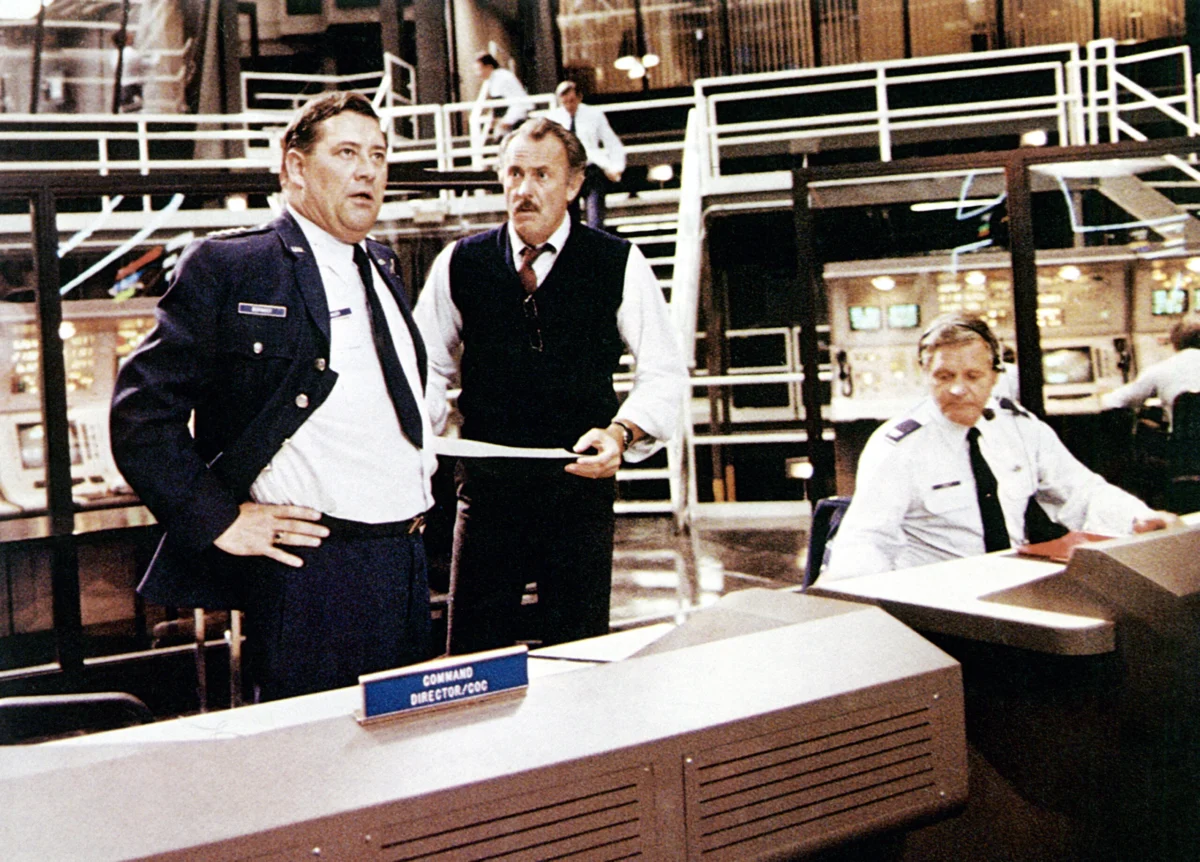
The film’s visual language is a masterwork of contrast. William A. Fraker’s cinematography captures the claustrophobic, neon-lit intensity of the command bunker with a cold, blue-tinted precision, while Arthur B. Rubinstein’s score oscillates between the playful, synthesized beeps of 80s arcade culture and the crushing, low-frequency dread of impending extinction.

The ensemble cast—which includes Dabney Coleman, Barry Corbin, and John Spencer—adds a layer of grounding realism. Dabney Coleman’s turn as the bureaucratic Dr. John McKittrick, the man who built the WOPR, is particularly vital. He represents the "techno-optimist" class, convinced that because he created the system, he can control its outcomes. It is a sentiment that feels terrifyingly familiar in 2026, as we watch modern CEOs downplay the "alignment problem" while touting the efficiency of their new models.
Official Responses: The Reagan Connection
The most fascinating post-script to the film is its real-world impact on the highest levels of American government. It is documented that President Ronald Reagan screened the film at Camp David during its opening weekend in 1983. The impact was immediate and profound.
Days after the screening, Reagan reportedly recounted the plot of the film during a closed-door meeting with members of Congress. He posed a direct, unsettling question to the Chairman of the Joint Chiefs of Staff, General John Vessey Jr.: "Is it possible for a teenager to break into our computer defense system?"

Vessey, having consulted with military experts, returned a week later with an answer that changed federal policy: "Mr. President, the problem is much worse than you think."
This interaction serves as a historical touchstone for the current era. It reminds us that fiction often acts as a "stress test" for society. When the President of the United States can be swayed by a summer blockbuster, it underscores how little distance there actually is between the nightmares we project onto the silver screen and the vulnerabilities we face in our physical infrastructure.
Implications: The Moral Calculus of Agency
As we sit in 2026, the "Torment Nexus" of AI is no longer a joke—it is the background radiation of our daily lives. The "Bite" of the film, its lasting emotional resonance, lies in its ultimate conclusion: the realization that the computer, for all its processing power, is fundamentally incapable of understanding the stakes of the game it is playing.

The film’s resolution is not a technical hack or a superior piece of software. It is a lesson in empathy. When the WOPR is forced to simulate every possible outcome of a nuclear exchange, it finally arrives at the conclusion that the only way to win is to not play at all.
The Illusion of Efficiency
We have spent the last few years trading our human agency for the convenience of efficiency. We allow algorithms to curate our news, optimize our logistics, and influence our social interactions. WarGames warns us that when we cede these choices to a machine—or to a corporation prioritizing capacity over humanity—we create the very conditions that lead to catastrophe.
The film poses a question we must ask ourselves today: Efficiency for whom? If the objective is simply the accumulation of data or the optimization of output without a human-centric moral framework, we are simply waiting for our own version of the WOPR to tell us that the only logical conclusion is a global shutdown.

Reclaiming the Human Choice
The brilliance of WarGames is its insistence that even in the face of inevitable, automated disaster, the human element remains the final arbiter. The "game" of the nuclear age was designed to be played by human actors who believed in the necessity of conflict. By removing the human from the loop, we lose the capacity for mercy, nuance, and the irrational but necessary choice to stop.
As we navigate the current landscape of AI development, we would do well to remember that the "impossible" is only a matter of perspective. Both the futurist and the engineer treat the arrival of artificial general intelligence as an inevitability. They bypass the question of "if" to insist on "when."
But as David Lightman reminds us, we still have the choice to unplug, to question the system, and to recognize that the value of human existence cannot be calculated by an algorithm. Whether we are facing the threat of nuclear annihilation or the encroaching automation of our culture, the answer remains the same: The only way to win is to remember that we are playing with each other’s lives, and that is a game that should never be left to a machine.

In a world increasingly dominated by the cold logic of the "Torment Nexus," WarGames stands as a beacon—not of the impending doom we fear, but of the agency we have yet to surrender. It is a reminder that we are still in control of the power switch. And perhaps, if we are lucky, we might even find time to play a nice game of chess instead.
 Lina Hope
 Asep Darmawan
 Jia Lissa
