

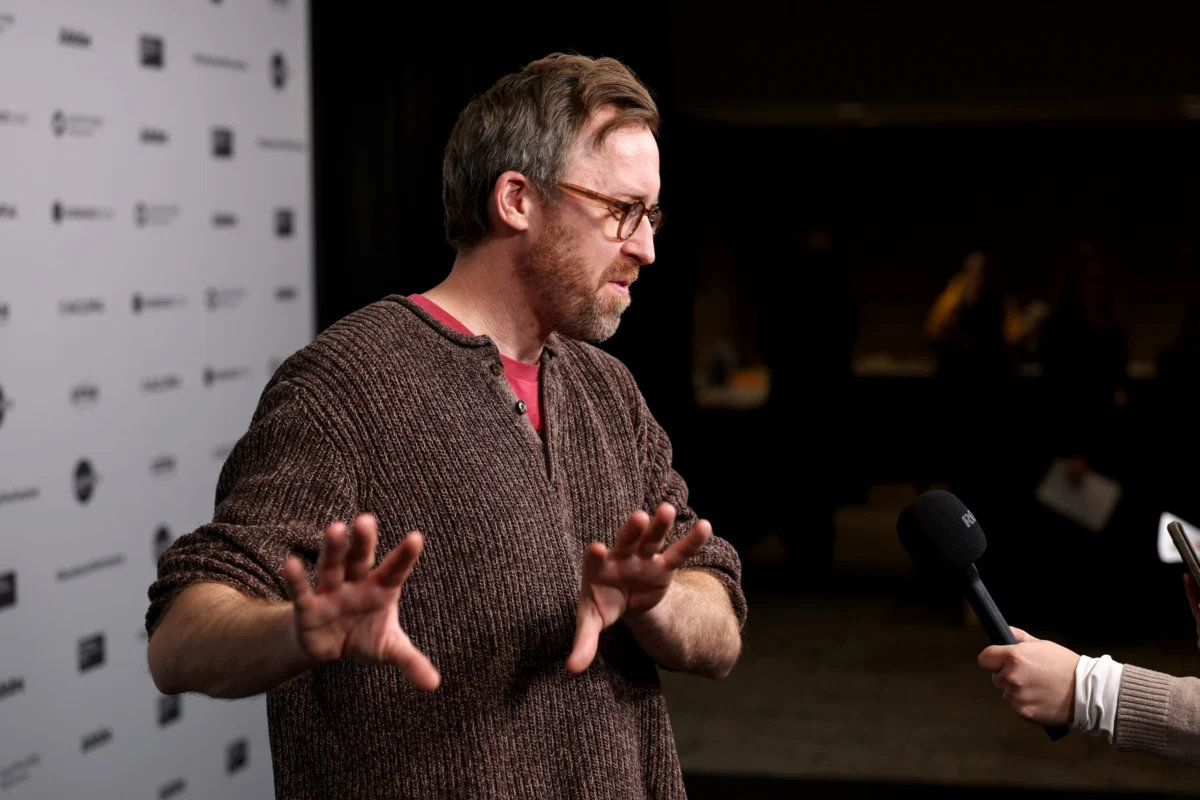
In the landscape of modern documentary filmmaking, few figures capture the poetic friction of urban existence quite like John Wilson. Best known for his uncanny ability to weave profound existential truths out of the discarded detritus of New York City life, Wilson has spent years documenting the "ordinary"—from brick-laying conventions to the chaotic energy of Long Island metal shows. His latest endeavor, the feature-length documentary The History of Concrete, serves as a culmination of this observational mastery. Yet, as he was capturing footage of everything from the architectural bones of the five boroughs to an unmediated, candid encounter with Kim Kardashian at a high-profile GQ event, Wilson was simultaneously engaged in a physical, community-anchored project that mirrors the very themes of his films: the founding of "The Low."
Located in the heart of Ridgewood, Queens, The Low is more than just a venue; it is a 42-seat, one-screen microcinema that stands as a testament to the necessity of local, tactile cultural experiences.
A Chronology of Obsession: From Documentarian to Exhibitor
The gestation of The History of Concrete and the launch of The Low were not parallel tracks, but rather two sides of the same coin. For Wilson, the process of documenting the world and the process of building a space for that world to congregate were inextricably linked.
The Genesis of the Project
Wilson began work on his documentary feature around the same time he and his creative partners, Davis Fowlkes and Cosmo Bjorkenheim, began scouting locations for their cinema. The timing was, by Wilson’s own admission, partially pragmatic. As he noted during a recent appearance on the Filmmaker Toolkit Podcast, the decision to open a theater felt "almost involuntary."
"Maybe because I needed to have a movie theater play my movie if nobody else wanted to distribute it," Wilson joked, though the sentiment speaks to a deeper frustration with the modern exhibition landscape. For an artist whose work relies on the specific, intimate rhythms of local life, the sterile, corporate environment of multiplexes felt increasingly antithetical to his artistic vision.
Launching The Low
Over the past year, The Low has established itself as a fixture in Ridgewood. The space operates on a philosophy of accessibility and eclecticism. According to its website—a design that reflects the project’s charmingly lo-fi ethos—the theater programs a dizzying array of content: romantic comedies, legal thrillers, Technicolor musicals, sports epics, and observational documentaries. It is a "living room" for cinema, where the programming is designed to be as permeable and unpredictable as the neighborhood it serves.

Supporting Data: The Microcinema Renaissance
The success of The Low is not an isolated phenomenon. It is part of a broader, burgeoning movement in New York City that is pushing back against the "mega-theater" industrial complex.
The Decline of the Mega-Theater
Wilson is quick to point out the historical turning point that led to the current crisis in theatrical exhibition. He cites the 2009 digital transition—pushed by the massive technological requirements of James Cameron’s Avatar—as a pivotal moment that effectively decimated many independent theaters. The transition to expensive digital projection systems placed a massive financial burden on small-scale exhibitors, forcing many to shutter.
"James Cameron fucked everything up by making us all convert to digital," Wilson remarked. "I’m not saying that was what decimated all indie theaters, but it was this final swell of the mega-theater, as it continued to grow into this unsustainable place."
The New Wave of Independent Spaces
In response to this, a "renaissance" of small, community-run cinemas has begun to take root. Alongside The Low, Wilson points to other vital cultural nodes:
- Negative Space (Bushwick): Known for experimental and avant-garde programming.
- The Spectacle Theater (Williamsburg): A volunteer-run powerhouse of revival and cult cinema.
- Film Noir Cinema (Greenpoint): A boutique space dedicated to specific aesthetic and genre curation.
These venues represent a shift toward "cultural nodes"—micro-theaters that are nimble, community-responsive, and inherently sustainable because they exist to serve a specific audience rather than a mass-market demographic.
Official Perspectives: The Philosophy of Community
For Wilson, the act of showing a film is a "magic trick." He views his documentaries as tools that help people see the familiar world in wondrous ways, and he views The Low as the physical manifestation of that goal.

The "One Movie Man" Theory
Wilson’s commitment to community engagement extends beyond his own directorial work. He organizes monthly screenings at an older adult center, often aided by his girlfriend, who volunteers there. These screenings provide a window into the transformative power of cinema.
"They get to choose the movie. It’s usually something very horny," Wilson shared with a laugh. Recounting a recent screening of The Notebook, he noted the joy of introducing classic narratives to people who have never encountered them. When an elderly attendee noted that he had seen West Side Story a million times but never The Notebook, Wilson felt a sense of mission: "I was like, ‘Thanks. You [came here] a one-movie man; now you’re a two-movie man.’"
Beyond the Screen
The importance of a microcinema lies in its permeability. Unlike massive chains like AMC or Alamo Drafthouse, which are beholden to corporate release schedules, The Low can pivot instantly. Whether it’s responding to a community request for a specific genre or finding a unique way to frame a wide release, the theater functions with a level of agility that the conglomerates cannot replicate.
Wilson views this as a vital antidote to the "ennui" that often follows the completion of a massive project like The History of Concrete. "You could tell people just needed it," he said of the space. "We need to bring back movie theaters that are the size of porno theaters that don’t necessarily show porn."
Implications for the Future of Urban Culture
The trajectory of John Wilson’s work, both on and off-screen, suggests a fundamental shift in how we perceive the role of the filmmaker in the 21st century.
Re-populating the City
Wilson’s philosophy is rooted in the belief that cities are meant to be dense, interactive, and culturally rich. By establishing "cultural nodes" like The Low, he is advocating for a return to neighborhood-centric living. "That’s why you live in cities," he says—referring not just to the convenience, but to the collective experience of sharing space and stories with one’s neighbors.

The Legacy of ‘The History of Concrete’
The History of Concrete is ultimately a meditation on how we build our world and what we leave behind. The film, much like the theater, argues that art is the "composite of aggregate and fluid cement" that binds a community together. If concrete is the physical foundation of the city, cinema is its social foundation.
As The History of Concrete continues its theatrical run, the success of The Low provides a blueprint for filmmakers and community organizers alike. The model is simple: start small, keep it local, and ensure the community has a stake in the project’s survival. In an era of streaming saturation and corporate consolidation, Wilson has demonstrated that the most effective way to preserve the magic of cinema is to bring it back down to the human scale—42 seats at a time.
The History of Concrete is currently playing in select theaters nationwide. Information on upcoming screenings at The Low can be found on their official website.
 Jia Lissa
 Lina Irawan
 Iffa Jayyana
