

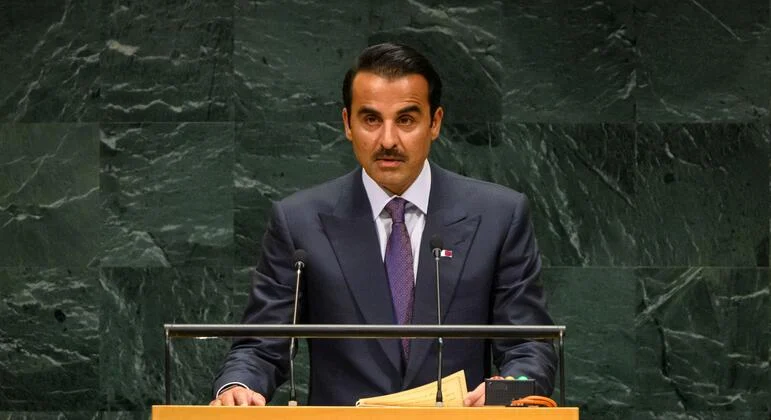
UNITED NATIONS, New York — The 2026 session of the United Nations General Assembly reached a pivotal moment on Tuesday as the Emir of Qatar, Sheikh Tamim bin Hamad Al Thani, delivered a scathing critique of the current state of Middle Eastern geopolitics. Addressing the world body, the Emir argued that the persistent volatility in the Gulf is not an accidental byproduct of recent events, but rather the "cumulative result of years of delay," systemic policy failures, and a dangerous reliance on temporary, patch-work crisis management.
At the heart of the Emir’s address was a call for a fundamental restructuring of regional security, shifting away from transactional diplomacy toward a comprehensive, rules-based collective security framework.
The Core Thesis: A Failure of Regional Architecture
The Emir’s primary contention is that the Gulf region lacks a cohesive, formalized collective security architecture. In his address, Sheikh Tamim articulated that the instability currently plaguing the Gulf is an inevitable consequence of the absence of a regional system that inherently respects the sovereignty, territorial integrity, and political independence of its constituent states.
"The essence of the dangerous situation we are witnessing is the absence of a regional system of collective security—one that respects the sovereignty, integrity and territorial unity of States, encourages the peaceful resolution of disputes, and rules out interference in the internal affairs of nations," the Emir stated.
This critique serves as an indictment of the current "status quo," where regional dynamics are often dictated by external power players and unilateral escalations rather than a unified regional consensus. The Emir argued that by failing to establish a framework that prioritizes diplomatic mediation over brinkmanship, the international community has allowed the Gulf to drift into a cycle of permanent tension.
A Chronology of Instability: From Managed Crisis to Structural Failure
To understand the weight of the Emir’s words, one must look at the historical trajectory of the Gulf region over the past decade.
- 2017–2021: The Gulf Cooperation Council (GCC) blockade of Qatar served as a primary example of how the lack of a formal security mechanism can lead to years of regional fragmentation and the disruption of vital economic and social ties.
- 2022–2024: Following the tentative thaw in regional relations, the focus shifted toward maritime security in the Strait of Hormuz. Repeated escalations between Iranian forces and international naval coalitions highlighted the vulnerability of global energy supplies.
- 2025: The intensification of the conflict in Gaza triggered a wider regional spillover, drawing in non-state actors and escalating tensions across the Levant and the Arabian Peninsula.
- September 2026: The current moment, as defined by the Emir, represents a breaking point where the accumulation of these crises necessitates a total rethink of regional security protocols.
The Emir emphasized that "crisis management" has failed. By treating every flare-up as an isolated incident, regional powers have consistently ignored the underlying structural deficits. He urged an immediate return to negotiations between Iran and the United States, alongside a concerted effort to ensure the safety and neutrality of the Strait of Hormuz—the world’s most critical maritime oil chokepoint.
The Gaza Crisis: A Stain on Global Conscience
While the Gulf security architecture was the primary theme, the Emir’s address was punctuated by a visceral condemnation of the ongoing destruction in Gaza. Sheikh Tamim did not mince words, labeling the situation as "genocide, in every sense the word carries."
He argued that the international response to the humanitarian catastrophe in Gaza has been woefully insufficient, creating a "gap" that future generations will look back upon with profound bewilderment and shame. The Emir challenged the credibility of the international order, asserting that it is impossible to speak of a "just" world system while the Palestinian cause remains a glaring, unresolved blind spot in international law.
The Test of International Integrity
The Emir placed the responsibility for the implementation of a ceasefire squarely on the international community. He warned that the deal must not be allowed to become a bargaining chip or be held hostage by actors who have a track record of reneging on commitments.
Furthermore, he highlighted the dire situation in the West Bank, citing "apartheid," "settler terrorism," and the systematic desecration of holy sites, including the Al-Aqsa Mosque. For the Emir, the way the world addresses the conduct of Israel—specifically regarding its adherence to international law—is the "real test" by which the international community’s commitment to justice will be measured.
Regional Implications: Syria, Lebanon, and Sudan
The Emir’s speech functioned as a comprehensive review of the Arab world’s most pressing challenges. Beyond the Gulf and Palestine, he signaled Qatar’s policy priorities across the Middle East and North Africa:
- Lebanon: Sheikh Tamim voiced strong support for the sovereignty of the Lebanese state. He specifically condemned ongoing Israeli attacks within Lebanese territory and called for a strict adherence to UN Security Council Resolution 1701, which governs the border region and the cessation of hostilities.
- Syria: Qatar maintains its stance in support of the Syrian people, emphasizing the need for reconstruction and the restoration of national unity and sovereignty, independent of external coercion.
- Sudan: Addressing the devastating civil war in Sudan, the Emir called for an inclusive, comprehensive dialogue. He warned that without a swift, peaceful resolution, the structural integrity of the Sudanese state remains in jeopardy.
- Yemen: The Emir reaffirmed Qatar’s commitment to UN-led mediation efforts, aiming for a political settlement that addresses the humanitarian crisis and ends the protracted conflict.
Supporting Data and Geopolitical Context
The call for a collective security system is not merely a rhetorical flourish; it is supported by the economic and security data of the region. The Gulf region remains the primary provider of global energy security, yet it lacks the institutional framework to protect its own trade routes.
- Maritime Risk: According to recent maritime security reports, the frequency of incidents in the Strait of Hormuz has increased by 14% annually since 2024, driving up insurance premiums for global shipping and threatening the supply chain stability of the Eurozone and East Asia.
- The Humanitarian Cost: The UN’s own figures suggest that the "blind spot" in the international response to the Palestinian conflict has contributed to a 40% increase in regional humanitarian aid requirements over the last two years, straining the resources of regional donors.
By advocating for a collective system, the Emir is essentially proposing an insurance policy for the global economy. A stable Gulf, governed by a shared security framework, would reduce the risk of global energy shocks and minimize the frequency of large-scale military interventions.
Official Responses and Diplomatic Fallout
The international community’s reaction to the Emir’s speech has been a mix of cautious support and defensive silence. Representatives of the "P5" (the five permanent members of the UN Security Council) have largely acknowledged the need for regional stability but remain divided on the mechanics of such a framework.
Western diplomats have privately expressed concern over the Emir’s characterization of the Gaza situation, noting the difficulty of reconciling his critique with the ongoing diplomatic efforts to maintain the status quo in the Levant. However, regional observers note that the Emir’s speech was designed to place the onus on the UN to act as a guarantor of security rather than a mere observer of conflict.
"The Emir has set a high bar," said a senior policy analyst at the Doha Institute. "By linking the Gulf’s security to the resolution of the Palestinian conflict and the stabilization of states like Lebanon and Syria, he is telling the world that these are not separate issues. They are parts of a single, failing system that requires a holistic, regional fix."
Implications: The Road Ahead
The path toward a collective security system in the Gulf is fraught with challenges. Historical grievances, deep-seated ideological divides, and the presence of competing international military bases make the formation of a unified security bloc difficult.
However, the Emir’s speech highlights a growing consensus among regional powers that the "old way"—relying on external powers to manage local crises—is no longer sustainable. As the world moves toward a multipolar order, the Gulf states are increasingly looking to establish a domestic security architecture that can withstand the whims of external political cycles.
In conclusion, Sheikh Tamim’s address at the 2026 UN General Assembly marks a significant shift in Qatari diplomacy. It moves beyond the role of a "mediator" and toward the role of a "reformer." Whether the international community has the political will to support such a shift remains to be seen. For now, the message from Doha is clear: the era of temporary fixes is over, and the time for a structural, regional, and just peace has arrived.
For ongoing coverage of the UN General Assembly and real-time updates on regional security, subscribe to the official UN News feed or download the UN News application on your mobile device.
 Lina Hope
 Asro
Asro
 Layla Zulfa
