

By Anna
Published on the final day of Bisexual Visibility Month
As the sun sets on Bisexual Visibility Month, a familiar ritual has played out across the digital landscape. It is a debate as old as internet subcultures themselves, a high-stakes turf war over definitions, boxes, and the boundaries of human desire. Once again, the sapphic community online has found itself embroiled in a fierce controversy over sexuality labels, this time centered around musician King Princess and her candid, unfiltered remarks regarding her sexual history.
While pop culture frequently grapples with the fluid nature of contemporary queerness, this latest firestorm cuts straight to the heart of what it means to claim—and to reject—specific identity markers in the twenty-first century.
Main Facts: The Podcast Clip That Set the Internet Ablaze
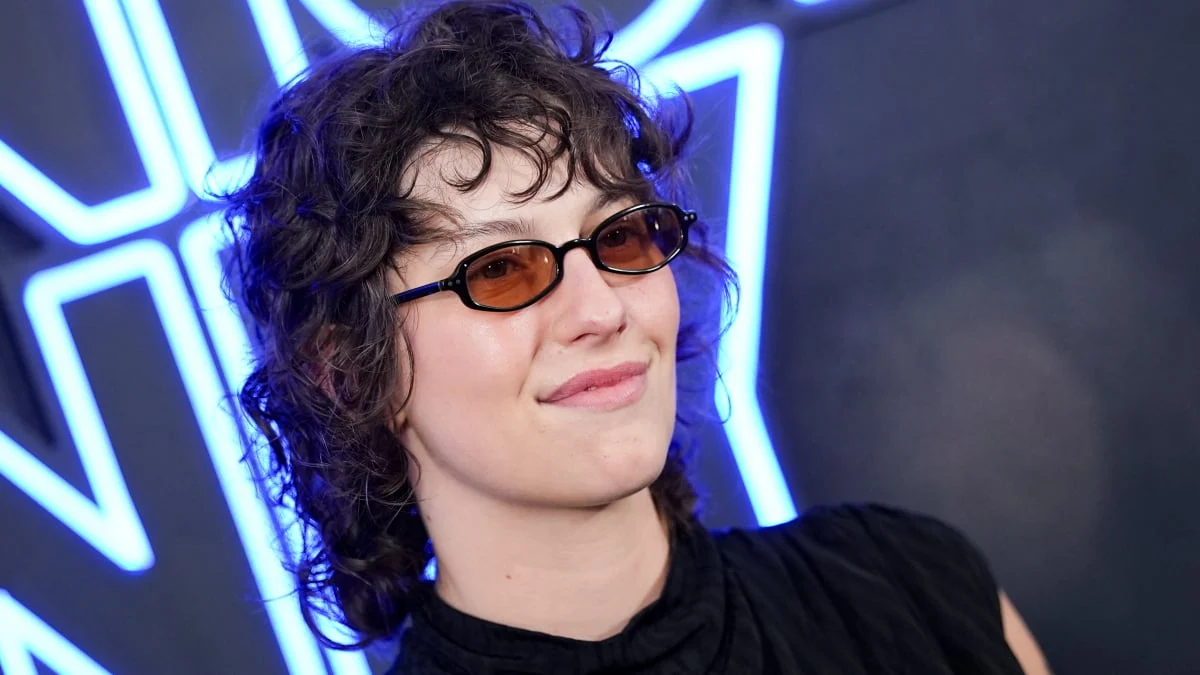
The controversy centers around singer-songwriter King Princess, who publicly identifies as a lesbian. The spark that ignited a multi-platform wildfire was a resurfaced November 2024 appearance on the podcast Celebrity Book Club with Steven & Lily.
During the episode, the conversation turned toward intimate choices and unexpected desires. King Princess delivered a series of remarks that immediately raised eyebrows outside the studio and sent shockwaves through queer digital spaces once clips began recirculating online.
"I’ve taken a lot of dick," the musician said candidly during the podcast.
"Sometimes you get bored, and you’re just like, ‘I’m just gonna ride a cock,’" she continued. "People get really shook when I say that… I’m not bi, but why would I exclude myself?"
She added for emphasis, "I would fuck a dude if I was bored enough."
For an online community hyper-sensitive to the nuances of monosexuality, the comments were explosive. Within days, King Princess’s name was trending on Reddit, with agitated threads populating dedicated subreddits such as r/lesbiangang and r/lesbianactually, where users expressed deep disappointment, confusion, and frustration. The discourse quickly bled onto X (formerly Twitter), Instagram, and TikTok, transforming into a cross-platform debate that forced a broader cultural reckoning over how celebrities navigate—and perhaps distort—established queer terminology.
Chronology: From a 2024 Podcast to a Full-Scale Social Media Witch Hunt
To understand how a months-old podcast clip escalated into a cultural flashpoint, it helps to trace the timeline of the fallout:
- November 2024: King Princess appears on Celebrity Book Club with Steven & Lily, making the unscripted remarks about sexual encounters with men while maintaining her identity as a lesbian. The episode initially passes without major mainstream turbulence.
- Late Spring/Early Summer: The clip resurfaces on TikTok and X, rapidly gaining traction among online sapphic communities.
- The Backlash Peak: Subreddits and Instagram comment sections light up. Critics accuse the artist of undermining the lesbian label, while defenders argue for sexual flexibility within queer identities.
- The TikTok Defense: King Princess responds to the escalating criticism via a series of short-lived TikTok videos. She clarifies that she has never dated or fallen in love with men, maintaining that her physical encounters with them were casual. She rejects the "gold star" lesbian concept (a colloquial term for lesbians who have never slept with men) and insists she is not bisexual because her romantic or sexual interest in men is negligible.
- The Escalation: In a subsequent, now-deleted post, King Princess broadens the scope of the controversy by suggesting that fans "might wanna check on the pop divas who are actively lying about being gay… in fully committed relationships with men on the DL." This comment inadvertently sparks a speculative witch hunt across social media platforms, with users trying to decode which mainstream artists she might be referencing.
- Present Day: The dust settles into a lingering debate about community standards, biphobia, societal stigma, and the policing of queer identities.
Official Responses and Public Reactions
The reaction to King Princess’s remarks was sharply polarized, dividing the online queer community into distinct ideological camps.
On one side, critics on Instagram and X argued that her comments reinforce harmful tropes about the flexibility of lesbianism. Commenters labeled her everything from "a bisexual cosplaying as a lesbian" to someone who is making a mockery of women who exclusively love women. Many voiced a sentiment that "lesbians deserve better than this," arguing that if a person is openly willing to have sexual intercourse with men—even out of boredom—the utility of the word "lesbian" becomes completely diluted.
On the other side, defenders framed the backlash as rigid gatekeeping. They argued that sexuality is a spectrum, that a lifetime of romantic attraction to women can coexist with rare, opportunistic physical encounters with men, and that policing an artist’s personal label violates core tenets of queer self-determination.
King Princess herself attempted to bridge these conflicting views through her deleted social media responses. She maintained that calling herself bisexual would be fundamentally inaccurate because the emotional and romantic space that men occupy in her life is virtually nonexistent.
"The amount that I actually care about men romantically or sexually is so small… it would be inappropriate to call myself bisexual," she stated. "You can’t tell me what my sexuality is."
However, her attempt to distance herself from bisexuality while simultaneously boasting about sexual encounters with men rankled many bisexual advocates, who saw her logic as an indirect slight against the bi community—implying that bisexuality is a garbage can label for anyone who doesn’t fit neatly into monosexual boxes, rather than a valid, distinct orientation.
Supporting Data: The Burden of Bisexuality and Societal Stigma
This controversy does not exist in a vacuum. It taps into a deep, historical anxiety within the LGBTQ+ community regarding how identities are perceived both internally and by the broader public. Bisexual people, in particular, are frequently plagued by the exhausting worry that they are "not queer enough" and routinely find themselves serving as the punching bag of Pride season discourse.
The societal stigma attached to bisexuality is well-documented, and recent data underscores how pervasive these biases remain. According to comprehensive research published by YouGov, the external pressures facing bisexual individuals are staggering:
- Two-thirds of straight women (roughly 66%) report that they are entirely unwilling to date a bisexual man.
- One-third of straight men express an unwillingness to date a bisexual woman.
- One in five lesbians hold a similar hesitation regarding dating bisexual women.
When researchers probed participants for the rationale behind these exclusions, many struggled to articulate a coherent reason. Roughly one in six respondents offered non-answers, attributing their stance to a vague "preference." Others explicitly cited deep-seated fears that a bisexual partner would inevitably cheat—a persistent, damaging stereotype that paints bisexual individuals as inherently unfaithful or hyper-promiscuous.
Given this cultural landscape, it is perhaps easier to understand why some public figures might experience an aversion to the "bisexual" label. The bi community is not universally beloved; its members are frequently subjected to slurs, skepticism, and erasure, told alternately that they are just greedy, confused, or secretly straight/gay. Yet, paradoxically, demographic data from organizations like the Pew Research Center consistently shows that the majority of LGBTQ+ adults in the United States actually identify as bisexual.
Broader Implications: Policing Identity in the Modern Era
What does the King Princess controversy ultimately tell us about the state of queer culture?
At its core, the uproar highlights a fundamental tension in modern identity politics: the war between descriptive labels and prescriptive boundaries. Labels are theoretically designed to fit the individual, serving as shorthand to communicate one’s internal reality to the world. But in digital spaces, labels have increasingly become gated communities with strict membership criteria.
When high-profile artists like King Princess, JoJo Siwa, and Renée Rapp navigate their fluid or evolving sexualities in the public eye, it creates a ripple effect of anxiety. For monosexual communities—particularly lesbians who have fought hard to carve out a distinct space free from male-centric desires—seeing a self-identified lesbian casually discuss encounters with men feels like an existential threat to the integrity of their community.
Conversely, when public figures reject the bisexual label while exhibiting behavior that defies traditional monosexual definitions, it reinforces the societal marginalization of actual bisexual people, who already bear the brunt of public distrust.
King Princess’s final parting shot—her ominous warning about other "pop divas who are actively lying about being gay"—adds a toxic layer to the discourse, dragging the community into speculative witch hunts rather than fostering genuine dialogue about desire, behavior, and language.
Ultimately, how King Princess chooses to identify remains her own business. Strangers on the internet cannot legislate the private thoughts and desires of a musician. But the intensity of the backlash proves that in 2026, society is far more interested in policing who gets to hold an identity card than in understanding the messy, contradictory, and often uncomfortable realities of human sexuality.
 Layla Zulfa
 Ali Ikhwan
 Siti Muinah
