

By Staff Sports and Culture Correspondent
Published: September 2024
Main Facts: The Birth of NFL Deli Culture
Football season is officially back, bringing with it the familiar roar of stadium crowds, the high-stakes drama of fantasy football, and a surprisingly carb-loaded linguistic evolution. Across social media platforms like X (formerly Twitter), TikTok, and Reddit, sports fans have forged a bizarre, highly specific culinary lexicon to mock struggling quarterbacks.
When a signal-caller throws a costly interception, the blunder is no longer just a turnover; it is a "meatball sub," a "pastrami on pumpernickel," or a "fully loaded shrimp po’boy."
This viral phenomenon—colloquially dubbed "sandwich slander"—represents the cutting edge of modern sports meme culture. Blending the unpredictable nature of athletic performance with absurdly detailed artisanal and fast-food deli orders, fans are transforming the traditional art of athlete roasting into a gourmet guessing game.
While baseball has long claimed the term "meatball" to describe an easy, fat pitch thrown right down the heart of the plate, football Twitter has cleverly co-opted and expanded the concept. Because footballs possess a distinct, oblong, bread-like geometry, internet wits reasoned that a clumsy turnover deserved a more substantial culinary metaphor: the deli sandwich.
What began as a trickle of isolated internet jokes during the 2023 season has exploded into a full-scale viral movement following Week 1 of the current NFL and college football seasons. As quarterbacks toss interceptions that alter the trajectory of games, fans are waiting in the wings—menus in hand—ready to assign them their next hypothetical order at a sandwich counter.
Chronology: Tracing the Evolution of the Meme
While the trend reached a fever pitch at the kickoff of the current football season, the timeline of sandwich-based quarterback slander reveals a gradual boiling point driven by viral moments and specific player misfortunes.
Late 2023: The Piquant Pioneer
The earliest documented instances of this specific brand of culinary humor trace back to late 2023. Sharp-eyed social media users began pairing quarterback miscues with elaborate sandwich descriptions. A notable early catalyst appeared in late November 2023, when a viral post targeted then-New Orleans Saints quarterback Derek Carr:
"They got Carr in 4K throwing a fully loaded shrimp po’boy."
The joke struck a chord not only because of its descriptive absurdity, but because of the local culinary flavor—tying a Louisiana staple directly to the performance of New Orleans’ starting pivot. It was clever, specific, and planted the seed for a wider linguistic trend.
The 2024 Offseason: Simmering Resentment
During the spring and summer months of 2024, sports discourse looked for new ways to channel off-season boredom. "Hate-watching" became a dominant mode of fan engagement, particularly directed toward emerging stars and revitalized dynasties. Enter New England Patriots quarterback Drake Maye.
Following a surprising run that placed him high in MVP voting during just his second year in the league, Maye found himself the target of intense skepticism. Detractors weary of a Patriots resurgence—and those skeptical of his sophomore accolades—began laying the groundwork for a heavy narrative pushback should he stumble out of the gate.
Week 1, 2024: The Deli Counter Opens for Business
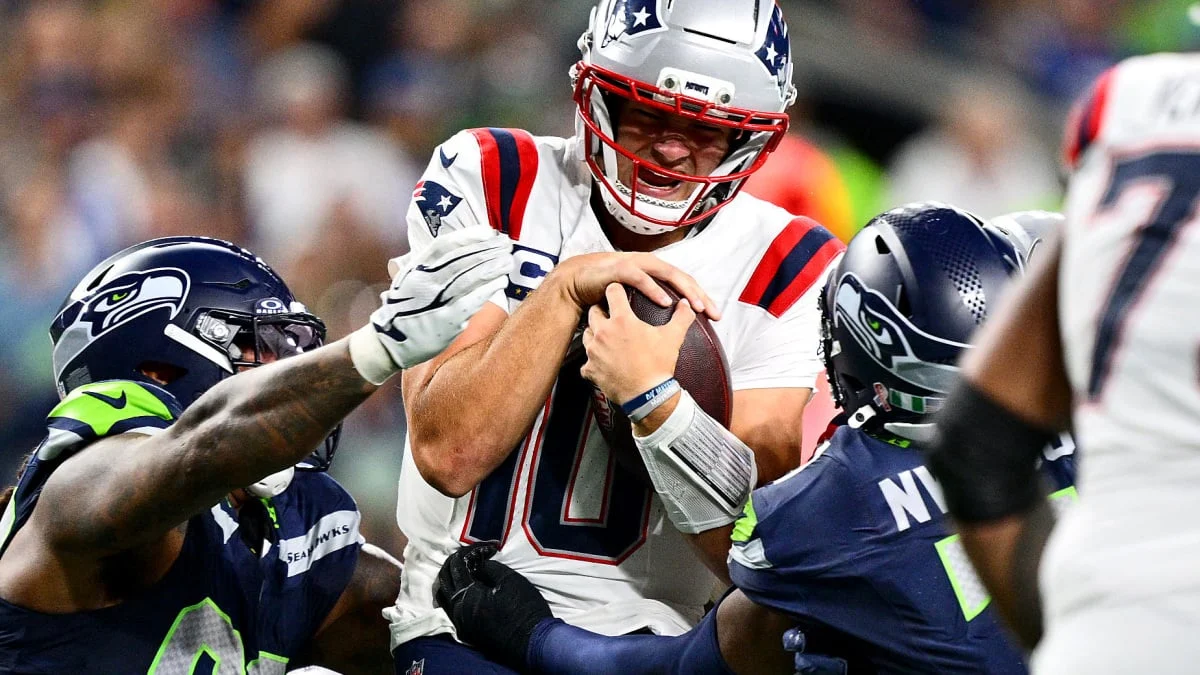
The linguistic dam broke during the opening week of the NFL season. In a high-profile Super Bowl rematch against the Seattle Seahawks, Drake Maye suffered a disastrous outing, throwing three costly interceptions.
Adding an eerie layer of serendipity to the unfolding internet lore, Maye had spent portions of the prior few years making public appearances at local Jersey Mike’s sandwich shops in the greater Boston area to support charity initiatives (specifically Best Buddies).
For football Twitter, the dots connected themselves instantly. A quarterback heavily linked to promotional sandwich partnerships putting up a multi-interception stinker against Seattle was too rich an irony to ignore. Within hours of the final whistle, timelines were flooded with menus. During a simultaneous Week 1 matchup between the Cleveland Browns and the Jacksonville Jaguars, another fan memorably tweeted of Deshaun Watson’s miscue:
"Watson with the early pastrami on pumpernickel."
The deli was officially open, and business was booming.
Supporting Data and Cultural Context: The Economics of Sports Slander
To understand why "sandwich slander" resonates so deeply, one must examine the broader ecosystem of online sports discourse, where hyperbole and creative degradation are currency.
The Evolution of Athletic Demotion Metaphors
In the modern sports meme economy, poor performance is rarely met with simple critique; it requires an elaborate narrative of professional exile.
- The NBA Blueprint: For years, the NBA fandom has perfected the art of the "flameout" meme. When a high-profile player or underperforming max-contract star (such as Ben Simmons) hits a rough patch, social media immediately dispatches them to international waters. Phrases like "Get ready to learn Chinese, buddy" and memes welcoming struggling players to the roster of the Chinese Basketball Association’s Shanghai Sharks have become foundational pillars of basketball shitposting. These jokes operate on the premise that an athlete’s ineptitude is so profound that they must instantly pack their bags and seek employment in foreign leagues.
- The NFL Reality: Unlike basketball or soccer, American football does not possess a sprawling, hyper-visible international professional ecosystem of equal prestige where an NFL flameout can easily rebuild their career. Consequently, when an NFL quarterback plays poorly, the internet cannot threaten them with the CBA—they must threaten them with the service industry.
The Fast-Food Pivot
When a quarterback looks incapable of reading a Cover-2 defense, internet culture pivots instantly to employment transition jokes. The underlying premise of sandwich slander is structural: a quarterback throwing interceptions isn’t just losing a game; they are actively working their way out of a multi-million-dollar contract and into an entry-level position at a local sub shop.
The specificity of the sandwich acts as a satirical equalizer. Calling a professional athlete "bad" is generic; describing their turnover as a "poorly constructed meatball sub with extra marinara liability" transforms sports analysis into performance art.
Official Responses and League Reaction
As is typical with grassroots internet subcultures born on platforms like X and Reddit, official league offices, franchise public relations teams, and players have largely maintained a strategic silence regarding the sandwich meme.
However, the intersection of sports broadcasting and digital culture means that viral vernacular frequently trickles upward. While traditional broadcast booth announcers—often bound by legacy media standards—have refrained from using terms like "pastrami on pumpernickel" during live play-by-play analysis, digital media teams employed by NFL franchises have increasingly leaned into internet humor to drive engagement.
Though no general manager has commented on the nutritional value of their quarterback’s decision-making, anonymous league insiders acknowledge that players are increasingly aware of their digital footprints. Young quarterbacks entering the league today grew up entirely online; they speak the native language of meme culture. While scrolling through timelines after a tough loss, a player is just as likely to encounter a breakdown of their zone-read mistakes as they are to see a graphic detailing what kind of hoagie their interception resembled.
Implications: The Shelf-Life of a Viral Meme
Every cultural phenomenon in the digital age faces the ultimate question: Is this sustainable, or is it a fleeting flash in the social media pan?
1. Short-Term Fatigue vs. Long-Term Compilation Gold
As the NFL season progresses past its opening weeks, seasoned observers of internet culture note early signs of fatigue. Some fans have taken to social media to complain that the sandwich joke is already being overused, stripped of its initial creative spark by copycat accounts trying to force culinary metaphors onto minor incomplete passes rather than catastrophic interceptions.
Nevertheless, media analysts predict that even if the day-to-day frequency of the trend dips, the lexicon has secured a permanent spot in the year-end retrospective canon. Just as "generational" lowlight reels and TikTok edits set to trending audio dominate the landscape in January and February, sandwich slander will undoubtedly anchor the comedic highlight packages summarizing the turbulence of the 2024–2025 season.
2. The Gamification of Fan Engagement
Ultimately, the sandwich trend highlights how modern sports fandom has transformed into a participatory, gamified experience. Watching a game no longer involves merely consuming the product on the screen; it requires real-time contribution to a collective, decentralized comedy writers’ room.
Whether the meme survives past the autumn leaves or melts away like warm provolone on a toasted sub, it has permanently altered how fans process a bad turnover. In the high-pressure, hyper-scrutinized world of modern professional sports, sometimes the only way to cope with a franchise quarterback’s collapse is to turn him into lunch.
 Nana Wu
 Neng Nana
 Reynand Wu
